


The renovation with the longest wish list isn’t always the one your household will support. Getting buy-in for a renovation project starts with agreeing on what needs to change, what matters most to everyone at home, and what can wait.
Household members often have different priorities. One person may want a more comfortable space, while another focuses on upkeep or potential resale value. A shared plan makes it easier to discuss those priorities without treating every idea as equally urgent.
This guide explains how to involve everyone, assess the home’s needs, and weigh potential value alongside day-to-day benefits. You’ll also learn how to turn those decisions into a practical proposal, moving the conversation from competing wish lists to a renovation plan your household can support.
Key Takeaways
- Separate essential repairs from comfort upgrades and improvements that can wait, then stage the work to suit your budget.
- Give everyone in the household a chance to share their priorities and concerns before settling on a plan.
- Take a careful inventory of the home’s condition so the proposed work addresses real needs, not just wish-list items.
- Weigh possible resale or equity benefits alongside the renovation’s costs and day-to-day value to your household.
- Build a clear proposal around the scope, operating costs, and a contingency fund for unexpected delays or supply-price increases.
Defining renovation goals and priorities
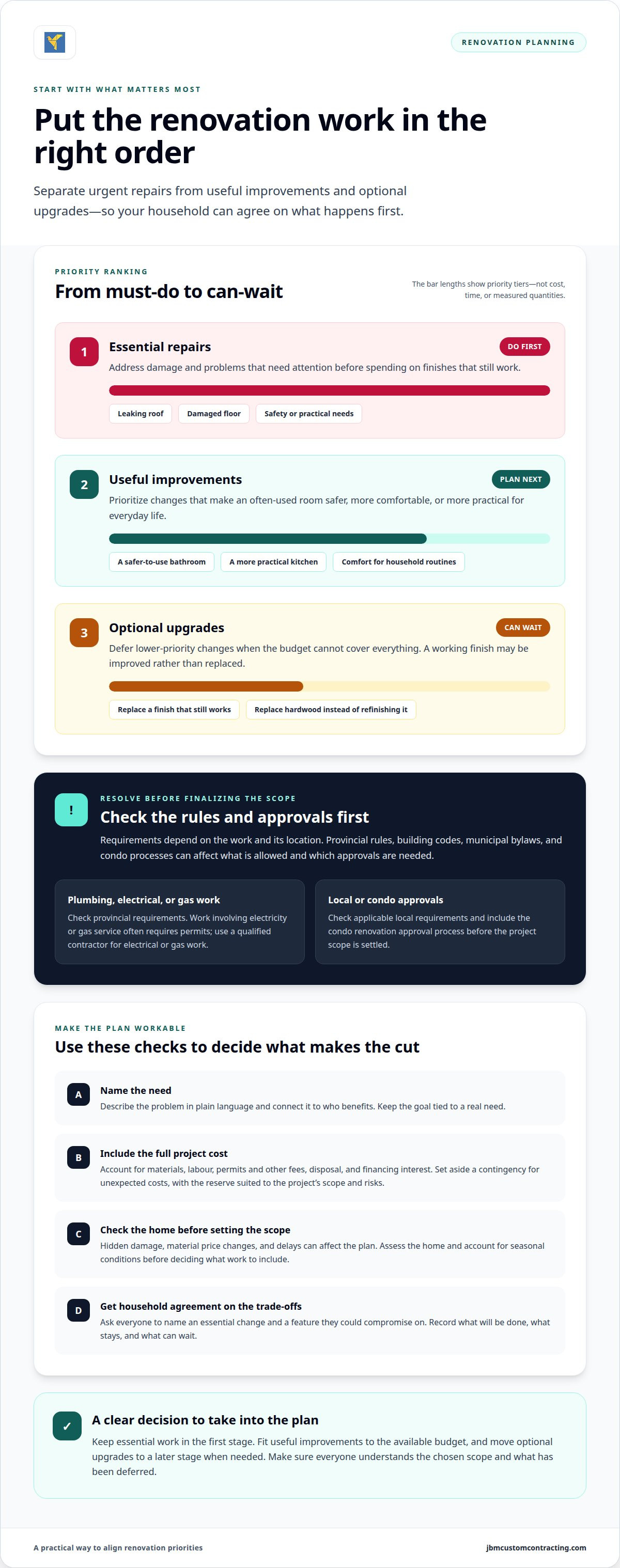
Getting buy-in for a renovation project starts with agreeing on why the work matters. A leaking roof needs attention before replacing a finish that still works, while a kitchen renovation may support everyday comfort or future needs.
In Canada, permit and approval requirements depend on the work and its location. Check provincial requirements before plumbing, electrical, or gas repairs and installations. Work involving electricity or gas service often requires permits.
Building codes, municipal bylaws, and condo rules can affect what work is allowed and which approvals are needed. Include applicable local requirements and, for a condo, its renovation approval process before finalizing the scope.
Include materials, labour, permits and other project fees, disposal, and financing interest in the budget. Set aside a contingency for unexpected costs, such as material price increases, wiring or plumbing problems, mould, or delays. Size the reserve according to the project’s scope and risks.
Hidden damage, changing material costs, delays, and work involving electrical or gas service can add risk. Reduce uncertainty by assessing the home before setting the scope, accounting for seasonal conditions, and using a qualified contractor for electrical or gas work.
- Write down the main goal. Describe the problem or improvement in plain language, then identify who benefits. “Make the bathroom safer to use” gives the household a clearer basis for decisions than “update the bathroom.” Keep the goal tied to a real need, such as fixing damage or making an often-used room more practical.
- Sort tasks by urgency and value. Group the work into essential repairs, useful improvements, and optional upgrades. An existing hardwood floor might be refinished rather than replaced. This helps homeowners decide what belongs in the first stage and gives the household a practical way to compare competing ideas.
- Set a workable budget before expanding the scope. List expected project costs, then consider whether the work can happen in stages to suit available funds. If financing is involved, include interest in the total cost and consider how long repayment will take. Don’t treat a hoped-for home value gain as guaranteed funding.
- Separate requirements from preferences. Note which work depends on provincial rules, local approvals, or condo processes, and which choices are optional. Electrical and gas work calls for qualified contractors. Resolve these constraints early, before choosing finishes or adding tasks that may not fit the project’s requirements.
- Agree on what can wait. For each proposed task, record its purpose, urgency, and effect on the household. If the budget cannot cover everything, keep essential work and move lower-priority upgrades to a later stage. Getting buy-in for a renovation project also means explaining why some improvements are deferred.
Getting everyone in the household involved
Invite everyone who lives in the home to explain how renovation work could affect their routines. It’s easier to get household support when people can share what matters to them and raise concerns early.
-
Address concerns and objections
Ask each person to describe their main concern, then connect it to a specific project detail. Someone worried about losing kitchen access may support replacing cabinets if meals remain manageable during the work. Discuss practical options, such as changing the work sequence or postponing a lower-priority task. Don’t dismiss concerns or promise that disruption, delays, or costs won’t arise.
-
Secure project approval
Present the agreed goal, work scope, budget, and likely disruption in one clear plan. Invite each person to approve it, suggest a change, or identify what needs more discussion. Record the decisions, including what the household will replace, what stays, and what can wait. If a mortgage or home equity will fund the work, include the interest and repayment implications.
- Give everyone a useful role. Ask household members how they use each room and what creates friction. Someone who cooks regularly can explain which kitchen features matter most; someone working from home can flag noise-sensitive hours. Children can share practical preferences about storage or shared spaces. This helps keep the conversation focused on everyday needs.
- Separate preferences from must-haves. Ask each person to name an essential change and a feature they could compromise on. For example, the household may agree that a damaged floor needs attention but disagree about its replacement material. Compare options with the project goal and budget rather than treating every preference as equally urgent.
- Review the decision together before work begins. Read the final plan as a group and confirm that everyone understands the chosen scope, sequence, and effects on daily routines. Ask whether any concerns remain unresolved. A written summary can prevent confusion about which rooms are involved, what will be replaced, and which improvements were deferred.
When shared priorities are ready to become a practical work plan, renovation services can help move the project forward.
The goal isn’t identical enthusiasm; it’s a plan that accounts for everyone who will live with the work. Make space for questions and reservations, and try to understand the reason behind a disagreement before deciding how to respond. Silence shouldn’t be mistaken for agreement.
If you’re considering a DIY renovation, talk about whether everyone is comfortable with the approach and how much they want to take part. Some may welcome hands-on involvement, while others may prefer a smaller role or have concerns. Keep those views in mind as plans take shape, so participation stays voluntary and everyone understands the plan.
Potential home value gains from renovations
Consider potential resale value alongside daily benefits and the full project cost. A clear comparison helps decision-makers discuss home improvement options without treating projected gains as certain.
-
Assess potential home value gains
Compare the planned work with similar homes in the neighbourhood and consider what buyers value there. A kitchen upgrade, for example, may improve everyday use as well as appeal to future buyers. The National Association of Realtors is cited for a kitchen-upgrade return on investment above 70%; treat that figure as a reference, not a Canadian forecast. Local conditions and project costs affect the outcome.
-
Present options, costs, and benefits
Prepare a short comparison for decision-makers showing each option’s scope, estimated costs, daily benefits, and potential effect on value. Explain how you arrived at the figures and which items are estimates. For example, compare completing essential work now with postponing optional upgrades. This helps the household discuss what each choice costs, delivers, or gives up.
- Calculate the full project cost before discussing returns. Include labour, materials, permits or fees, disposal, financing interest, and costs linked to disruption. Set aside a contingency for unexpected problems, such as material price increases, wiring or plumbing issues, or mould. A renovation’s value case weakens when important costs are missing.
- Compare financing choices by their total cost. Savings can avoid interest when they cover the work, but using too much may leave less available for unexpected expenses. Carrying a credit-card balance can increase the amount repaid through interest. A home equity line of credit charges interest on the amount used, and its variable rate can change payments. Show the household the funding source and its repayment effect.
- Set a clear threshold for proceeding. One recommendation is to take on renovation or construction projects only when they are expected to deliver roughly 20% profit or added equity after all costs. Use this as a decision benchmark, not a promise of future value. If projected gains depend on optimistic assumptions, compare them with the immediate comfort, maintenance, or usability benefits before deciding.
- Make the case easy to review. Put the preferred option first, then list alternatives and the reason for each. Identify the most important improvement, the costs driving the budget, and what could change the estimate. A concise written summary lets household members review the same facts and decide whether the expected benefits justify the expense.
Taking inventory of what needs to change
A useful inventory turns visible problems and household observations into a clear scope. Before seeking an estimate, record what needs attention, where it is, and how it affects the home.
- Walk through the home room by room. Note visible wear, damage, and features that no longer work as intended. For example, record a sticking door, water stain, or cracked walkway, including its location. Describe what you observe without assuming the cause. This gives the household and contractor a specific starting point for discussing the work.
- Separate symptoms from possible causes. A ceiling stain may point to an issue that needs investigation, while worn paint may need only surface work. Don’t add a repair to the scope based on appearance alone. When a home has visible wear and needs renovation, arrange a more thorough inspection so the plan addresses underlying issues as well as cosmetic signs.
- Arrange a detailed inspection for a home that needs work. A building inspection can examine plumbing, roofing, asbestos, and mould in the walls. Buyers may also consider an inspection when a home appears to need no work or major overhaul. A detailed report can identify issues that a casual viewing may miss and help clarify what needs attention first.
- Turn inspection findings into a written scope. Group each finding by room or system, then record the reported condition and work it may require. Share the report with a contractor when requesting a cost estimate. Keep observations, inspection findings, and proposed work distinct so the household can see what is known and what still needs assessment.
- Review the estimate against the available financing. Compare the proposed scope with available funds, financing plans, and work that can be staged. Keep a contingency for unexpected problems, such as concealed mould or wiring issues. If the estimate exceeds the budget, reconsider optional items rather than removing repairs that address documented damage.
- For a home you are buying, assess the neighbourhood too. Compare similar homes in the same neighbourhood, then account for renovation and restoration costs before deciding whether the property fits your plans. Don’t rely on a general impression of future value. The home’s condition, proposed work, and comparable local properties all inform the decision.
- Include seasonal conditions in the inventory. Note whether exterior work depends on weather or access, and whether indoor work affects essential rooms. For example, closing a main bathroom or kitchen changes daily routines differently from working in an unused area. Recording these effects helps the household choose a practical sequence and prepare for temporary disruption.
How to create a compelling renovation project proposal and business case
Turn the household’s decisions into a written proposal that explains the work, its purpose, and how success will be assessed. A clear business case helps everyone compare the expected benefits with the full commitment.
- State the outcome first. Open with the problem the renovation will solve and who benefits. For example, explain that repairing a damaged area will protect the home, while updating a frequently used room will improve everyday function. Keep the goal specific enough to guide choices about scope, materials, and timing.
- Describe the work in plain language. List the rooms or areas involved, the main tasks, and what the finished result should achieve. Separate required work from optional additions. If a proposal includes a kitchen upgrade, identify which changes address daily use and which are mainly cosmetic. This prevents a broad project label from hiding important decisions.
- Show the complete financial picture. Include the upfront cost of the renovation, alongside any ongoing household expenses that may change afterward. Add permit and other fees, disposal, financing interest, and a contingency for unexpected delays or supply-price increases.
- Explain how each option creates value. Compare the preferred scope with a smaller alternative and a staged approach. For each, describe the practical benefit, the costs included, and any expected effect on comfort, upkeep, or potential equity. Keep projected value separate from guaranteed value, and explain which assumptions could affect the estimate.
- Set a way to measure success. Choose results the household can assess after completion. Examples include resolving a documented problem, making a room easier to use, or reducing a recurring maintenance concern. Link each result to a task in the proposal. This makes it easier to judge whether the renovation delivered its intended purpose.
- Make trade-offs visible. Identify what the household gives up if it chooses one option over another. A smaller scope may preserve savings, while a broader project may address several connected needs at once. Show which tasks can be deferred without undermining the main goal, and explain how staging changes the sequence.
- End with a decision and next step. Summarize the recommended option, the reason it fits, and the decisions still needed. Keep supporting estimates and inspection findings together so household members can review the same information. Ask for approval of the scope before treating optional upgrades as part of the plan.
Consider the upfront renovation cost alongside ongoing household expenses when planning a project. Keep both visible with the proposed scope, so the decision reflects the work being funded and the costs of running the home afterward. Before approval, confirm that the figures match the selected option and identify unresolved choices. This gives household members a shared basis for deciding whether to proceed, revise the scope, or pause for further estimates.
For commercial projects, prepare a realistic budget that accounts for the scope, project size, permits, and fees. Keeping these items together helps show whether the plan is financially complete and whether the estimates reflect the work under consideration.
JBM Custom Contracting: Renovations
JBM Custom Contracting provides renovation services for homeowners ready to move from an agreed plan to the work itself. Selected small demolition and removal can help prepare a site, with the removal scope and waste handling reviewed in advance. Junk removal can clear unwanted items, while moss and gutter cleaning can address exterior upkeep as part of a broader property improvement plan.
Bring your priorities and agreed project scope to JBM Custom Contracting. Sharing the changes you want to make helps clarify the next step and connect the project to your household’s renovation goals.
Contact JBM Custom Contracting to discuss your renovation project.
Take the next step with a shared plan
Agreement doesn’t mean every household member wanted the same changes. It means the people affected understand the decision and can see how it reflects the home’s needs. Keep that shared understanding visible as the project moves forward. If circumstances or priorities shift, revisit the agreed goals before changing the scope.
Getting buy-in for a renovation project is an ongoing conversation, not just a final approval. A clear plan gives everyone a useful reference point for decisions and keeps the work connected to what matters at home.
When you’re ready to move ahead, share your renovation plans with JBM Custom Contracting.
A considered next step can turn a shared decision into a home that works better for everyone.
Frequently Asked Questions
How do you build support for a renovation project?
Build support by showing each person involved how the renovation affects their needs and responsibilities. A homeowner may focus on comfort, while a property manager prioritizes access and maintenance. Share project information in a useful format, such as a room-by-room plan or photos with notes pointing out planned changes. Invite specific feedback, clarify who makes each decision, and record agreed changes to keep expectations aligned.


