


Acid etching may seem like a simple way to prepare concrete, but it does not reliably create the mechanical surface profile an epoxy coating needs to bond. Professional concrete grinding services prepare a slab by removing surface material and creating a precise texture suited to the coating.
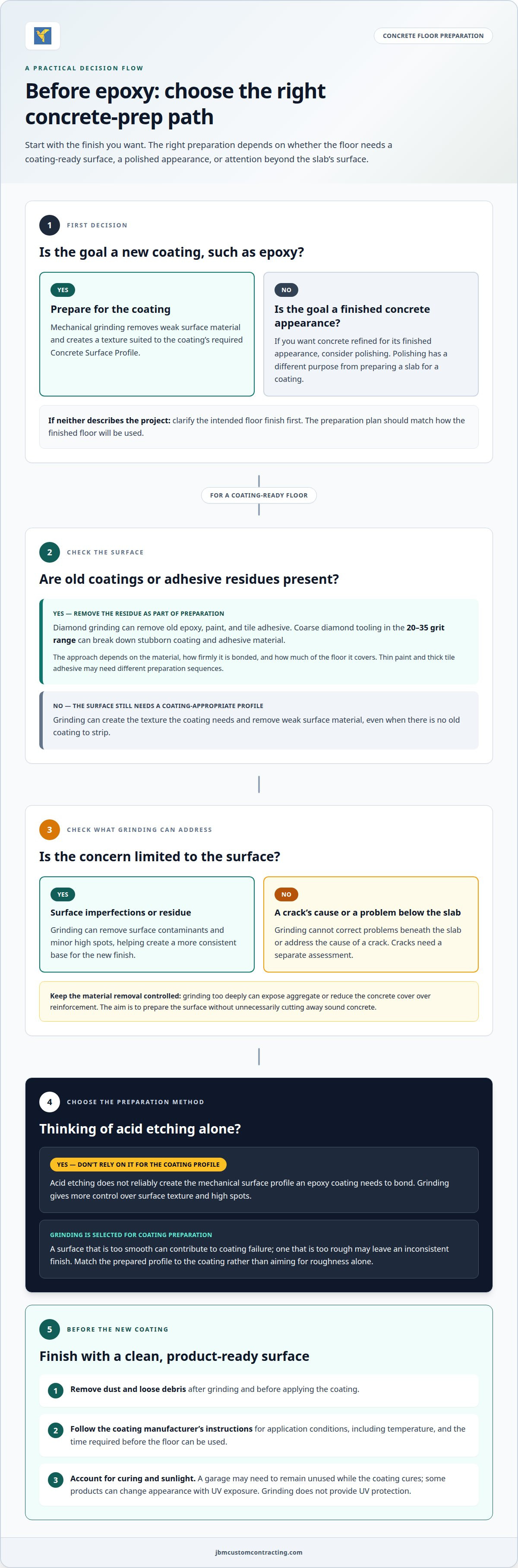
Preparation matters: a surface that is too smooth can contribute to coating failure, while one that is too rough may leave an inconsistent finish. Depending on the slab and existing material, grinding can also remove old coatings such as epoxy, paint, and adhesives.
This guide from JBM Custom Contracting explains how grinding prepares concrete for epoxy, what it can remove, and how it differs from polishing. It also covers factors that affect the cost of concrete grinding in Nanaimo and nearby Vancouver Island communities. Price depends on the floor area, concrete condition, and preparation required, and is provided in a written estimate after the project details are reviewed.
Key Takeaways
- Learn which surface imperfections, old coatings and adhesives grinding may remove before epoxy preparation.
- Understand how floor area, slab condition and dust-control needs affect a Toronto grinding quote.
- See why mechanical preparation can create a more reliable base for epoxy than acid etching alone.
- Compare grinding with polishing so you can choose the finish that suits your floor’s purpose.
- Explore the practical benefits of grinding and when JBM Custom Contracting’s concrete work or demolition services may fit your project.
Can grinding remove paint, old epoxy or tile adhesive?
Yes. Diamond grinding can remove most coatings cleanly, including old epoxy, paint and tile adhesive, while also cutting down surface imperfections before a new floor finish.
Removing Coatings and Adhesives
For coatings, epoxy and adhesive residues, coarse diamond tooling in the 20- to 35-grit range can break down stubborn material. The grinding approach depends on what is on the slab and how firmly it is bonded. A thin paint layer may come off differently from thick tile adhesive, so the material and its coverage affect the preparation sequence.
Grinding can remove surface contaminants and minor high spots, revealing sound concrete beneath a failed coating. It cannot correct problems below the slab, and grinding too deeply can expose aggregate or reduce the concrete cover over reinforcement. On a garage floor, the goal is to remove residue and create a consistent surface without cutting away sound concrete unnecessarily.
Preparing Concrete for New Coatings
Before applying epoxy, sealer, or dye, grinding creates a mechanical surface profile for the new material to bond with. Each coating calls for a specific Concrete Surface Profile, so the texture should suit the product rather than simply look rough. Preparation also removes weak surface material that could interfere with adhesion.
After grinding, dust and loose debris must be removed before applying a coating. A clean, evenly prepared slab provides a more consistent base than one with adhesive patches or smooth, sealed areas left behind. Polishing has a different purpose: it refines concrete for a finished appearance, while coating preparation focuses on the surface the new layer needs.
Grinding does not determine a coating’s cure time. Follow the coating manufacturer’s instructions for application conditions, including temperature, and the time required before the floor can be used. A garage may need to remain unused while the coating cures. UV exposure also matters when choosing a coating, as some products can change appearance in sunlight; grinding does not provide UV protection.
For commercial and industrial floors, preparation must account for the condition of the whole slab, not just visible patches. A professional grinding sequence removes old material, smooths selected imperfections, and creates the required profile. Polishing is not a substitute for this preparation. Matching the surface work to the planned coating helps account for how the finished floor will be used.
How much does concrete grinding cost in Nanaimo and Vancouver Island?
For concrete grinding projects in Nanaimo and nearby Vancouver Island communities, price depends on the floor area, slab condition, and preparation required. A written estimate reflects the project’s scope, dimensions, materials, access, preparation, equipment, disposal, and site conditions. Grinding can remove coatings or prepare concrete for a new finish. The right approach depends on whether the goal is a coating-ready surface or polished concrete.
Diamond grinding uses abrasive tooling to work the concrete surface. The quote can change with the amount of old material to remove and the condition of the floor. A smooth, open area may need a different preparation plan from a slab with uneven patches, stubborn residue, or damaged spots. These differences affect the work sequence and the time and equipment involved.
Dust control is an important part of grinding, especially inside a home or an operating business. The work plan should account for keeping dust within the work area, including suitable containment and equipment. For example, an indoor garage may need barriers around the work zone and a vacuum connected to the grinder. This helps limit dust spreading into nearby rooms or work areas.
A quote should describe the floor area, its condition, the intended finish, and the preparation included. It should also explain the dust-control approach for the site. These details make it easier to understand what the work covers, rather than comparing totals without knowing whether each proposal includes the same preparation. For a commercial or industrial floor on Vancouver Island, access and the need to protect nearby operations can also shape the work plan.
Choose a process that suits the floor’s purpose. A coating-ready slab needs an appropriate prepared surface; concrete polishing has a different finishing goal. The written scope should identify planned grinding, surface repairs or removal work, and dust containment. It should explain how the proposed steps relate to the slab’s condition and the finish you want.
For property projects in Nanaimo and surrounding Vancouver Island communities, JBM Custom Contracting’s concrete services include concrete work. The location and surface requirements should be clear in any project scope, particularly when planning work in a specific community.
Why grind a floor before epoxy instead of acid etching?
Grinding removes material from concrete and creates a mechanical profile for epoxy. Acid etching does not reliably create the profile a coating needs to bond. A surface that is too smooth can contribute to coating failure, while one that is too rough can produce an inconsistent appearance. Grinding offers more control over high spots and surface texture during preparation.
On an uneven floor, grinding can reduce raised areas and remove weak or contaminated concrete at the surface. For example, a high patch near a doorway can be ground down to help the prepared floor meet the surrounding slab more evenly. Grinding removes material, though, and will not fix movement, settlement, or other problems beneath the slab.
Cracks need a separate assessment. Grinding can remove damaged surface material around a crack, but it does not address the cause or prevent the crack from moving. If a warehouse floor has a crack or loose, deteriorated concrete, the work plan must distinguish surface defects from deeper slab problems. This prevents treating grinding as a complete repair.
Floor levelling also has limits. Grinding is generally used to remove material from high spots, while correcting low areas or an underlying slope may require a different approach. Drainage depends on the floor’s intended design and the direction water needs to flow. In a manufacturing space, removing a raised ridge may smooth movement across the slab, but it will not create a new drainage path.
Commercial floors need preparation suited to their use. A warehouse may need a coating-ready surface for regular equipment traffic, while a retail floor may call for an even appearance near entrances and display areas. In both cases, the concrete and planned coating determine the required profile. Removing too much concrete can expose aggregate or reduce the cover over reinforcement.
Acid etching may seem like a straightforward preparation step, but it does not reliably provide the mechanical profile needed for a coating bond. Grinding removes material and can address surface contaminants and high spots as part of the preparation. The right approach depends on the slab’s condition and the coating’s surface-profile requirements.
Grinding can also prepare a floor for concrete polishing, but the finish goals differ. Epoxy preparation focuses on creating the surface needed for coating adhesion. Polishing refines the concrete itself for a finished appearance. A warehouse planned for epoxy needs a coating-ready profile, not a polished finish that could leave the surface too smooth for the coating system.
For a floor in Nanaimo or another nearby Vancouver Island community, the practical sequence is to assess the slab, identify high or damaged areas, determine the required profile, and grind accordingly. This separates surface preparation from structural repair and matches the work to the intended use, whether the floor is in a warehouse, manufacturing space, or retail setting.
Differences between concrete grinding and polishing
Grinding removes or reshapes concrete; polishing refines it into a finished floor. Before grinding, clear the work area and identify the slab’s condition and intended finish.
Grinding for Surface Preparation
For epoxy, grinding prepares the concrete surface for the coating’s required profile. For polished concrete, grinding begins a longer finishing process. The choice depends on whether the floor needs a base for another material or an exposed, refined appearance. Preparation typically takes 1-2 days, depending on the space.
The same distinction applies to residential concrete floors: the desired result guides the work. A garage floor receiving epoxy needs preparation, while a floor intended to remain visible may need further polishing. A surface that is too smooth or too rough can affect a coating’s bond or appearance.
Grinding as the First Polishing Stage
Grinding is the first stage of polishing, not the finished look itself. A progressive grinding process typically involves 2 to 9 passes. Later polishing stages refine the surface; a densifier may also be applied. The number and sequence of passes depend on the slab and the planned finish, rather than a single standard recipe.
A Mississauga warehouse project completed in summer 2022 illustrates the distinction. The slab was ground, treated with densifier, polished to a high gloss, and sealed for chemical and wear resistance. The resulting floor was described as designed to withstand industrial traffic for decades. That finish is an aesthetic choice as well as a functional one.
For coating preparation, the goal is a suitable surface profile, not gloss. For polishing, the goal is to refine the concrete itself. Sealing may follow polishing, as in the Mississauga example, but it doesn’t make grinding and polishing interchangeable. A garage floor planned for epoxy and a commercial lobby planned for a polished appearance call for different finishing targets.
Time depends on the job’s size and the slab’s condition. Concrete preparation typically takes 1-2 days, depending on the space. Concrete grinding and polishing projects in Edmonton typically take three to five days, depending on floor area and slab condition. The Edmonton timing is for grinding and polishing together, not preparation alone.
How long a finished surface lasts depends on its use and care. A residential floor faces different demands from a warehouse exposed to industrial traffic. No single project example establishes the lifespan of every polished floor. The finish, sealing, and conditions of use all matter.
Benefits of concrete grinding
Concrete grinding can remove surface imperfections and prepare a slab for its next use. The practical benefit depends on the floor’s condition and the planned finish. In a Toronto garage, grinding may help remove old residue before a new coating. In an industrial space, it can address selected high spots that affect floor use.
Grinding can make uneven areas more consistent by removing material from raised sections. It can also expose weak or contaminated concrete at the surface, helping identify areas that need separate repair before a coating or other finish is applied. Grinding cannot fix structural cracks or movement beneath the slab, so distinguish these issues from surface defects.
A more consistent floor can support safer movement through a work area. For example, a raised edge along a warehouse route may catch wheels or interrupt equipment movement. Grinding can reduce that surface lip if the concrete is sound. The aim is to address the specific hazard without removing more concrete than necessary.
Appearance can matter as much as function. A retail showroom may need a uniform floor so patched, rough, or stained areas do not distract from the space. Grinding can remove some surface imperfections and create a more consistent base for a coating or polished finish. The chosen finish determines the final look; grinding alone does not create a polished appearance.
For an industrial floor, targeted grinding can prepare concrete for a new coating and remove unwanted surface material. For a residential garage, it can address old coating residue or minor surface irregularities before the next finish. In both cases, the key is matching the surface work to the floor’s use rather than treating every slab the same way.
Good preparation makes later work easier to plan. Start by assessing the concrete, identifying surface imperfections, deciding which areas need grinding, and preparing the slab for its intended finish. Cracks, deep damage, and low spots may need different work. Grinding removes surface material but cannot correct problems beneath the concrete.
Grinding is most useful when a floor needs controlled surface correction or preparation. It can improve consistency, remove selected contaminants, and help create a suitable base for coatings. It may also reduce certain raised surface hazards when the slab is stable. The result depends on the floor’s condition, the material being removed, and the planned finish.
JBM Custom Contracting: Demolition Services
JBM Custom Contracting is a natural next step when a concrete project also needs demolition or renovation work. Its concrete work can support property improvement projects, while Demolition Services can help clear existing materials before the next stage begins.
Consider demolition when damaged or unwanted structures need removal before a renovation. For concrete work, a clear project scope helps connect the floor’s condition with the work planned for the property. JBM Custom Contracting also handles Moss & Gutter Cleaning, a separate option for exterior maintenance.
Contact JBM Custom Contracting to discuss your project.
Plan the next step for your floor
Before planning the project, decide what the finished space needs to do. A garage used for storage has different priorities from a workspace that needs regular access during renovations. Concrete grinding services should fit into the wider plan, taking the intended floor finish and surrounding work into account.
A useful project brief identifies the rooms involved, the existing floor finish, the planned coating, and any access limits. These details help shape a practical work sequence and clarify how floor preparation fits with other property improvements. If demolition or renovation is also planned, coordinating the tasks can make the overall project easier to organize.
JBM Custom Contracting can help plan property improvement and maintenance work. Share the space, the result you want, and any related work you are considering. A clear starting point helps turn a floor project into a manageable next step.
With a defined goal and a practical plan, you can move forward with confidence.
Frequently Asked Questions
Can a trip hazard be ground down instead of replacing the slab?
Yes, grinding may reduce a raised edge if the concrete is sound and has stopped moving. For municipal sidewalks in Ontario, a vertical step greater than 2 cm is treated as a hazard that has to be repaired under the minimum maintenance standard. Grinding can address the height difference, but it won’t stabilize a slab that continues to shift or fix damage beneath it.
Can grinding fix my uneven sidewalk?
Grinding can lower a raised section of a sidewalk, but it cannot raise a low section or correct movement beneath the concrete. A stable, lifted edge may suit grinding; a slab that keeps shifting needs a different repair approach. For example, if water pools because part of a walkway has settled, grinding only the high edge will not restore the intended drainage path.
Can you remove old glue or paint from a floor?
Yes, grinding can remove many old glue and paint residues from concrete. The method depends on the material’s thickness, how firmly it is bonded, and the condition of the slab underneath. A floor with adhesive patches may need more work in those areas than a floor with a thin, even coating. Removing residue can also reveal previously hidden surface damage.
Grind it, or replace it?
Choose grinding for a sound slab with a surface issue, such as a raised edge or coating residue. Replacement may be more suitable when concrete is badly deteriorated, unstable, or damaged beyond the surface. A crack that continues to move signals a deeper problem that grinding cannot correct. Consider the slab’s stability, the affected area, and the floor’s intended use.
Is grinding covered by a warranty?
Warranty coverage depends on the written agreement for the work and any separate terms for a coating applied afterward. These may cover different things, so clarify whether the document addresses surface preparation, workmanship, coating material, or slab movement. For example, a coating issue caused by a product defect differs from a crack caused by movement in the underlying concrete.
Will the ground surface look finished?
Not necessarily. Grinding can leave concrete ready for a coating, but that preparation is not the same as polished concrete. Appearance depends on the grinding process, the slab’s existing colour and texture, and whether another finish will cover it. If the concrete will remain exposed, agree on the intended appearance before work begins. Grinding alone does not create a decorative, high-gloss result.
How much does concrete grinding cost per square foot in Canada?
There is no single reliable per-square-foot figure for every Canadian floor. Price depends on the area, slab condition, material to remove, access, and preparation required. JBM Custom Contracting prepares a written estimate based on the project’s scope, dimensions, materials, access, preparation, equipment, removal, disposal, and site conditions. A small floor with stubborn adhesive may require a different scope from a larger, clear slab.
What factors affect concrete grinding prices?
Cost depends on the floor’s dimensions, how uneven or damaged it is, and what the grinding must remove. Thick adhesive, old coatings, restricted access, and the need to protect nearby rooms can affect the work plan. The desired finish matters too: preparation for a new coating differs from polishing exposed concrete. Site conditions and dust control may also shape the quoted scope.


