


What problems can a loose shingle or blocked gutter cause after snow and ice arrive? Small exterior problems can let water in, and a ridge of ice on a roof, called an ice dam, can trap melting snow. Freezing temperatures also put outdoor plumbing and heating systems under strain. A thorough plan for getting your property ready for winter helps catch these issues before they become urgent repairs.
It makes sense to focus on the visible parts of a home first, but getting your property ready for winter also means checking the systems that support indoor comfort and safety. This guide explains what to look for, why each check matters, and when an issue may need attention before colder weather sets in.
You’ll learn how outdoor faucets and exposed plumbing are prepared for freezing conditions, what to check on roofs and in gutters, and how furnace filters and carbon monoxide detectors fit into a seasonal review. The goal is a practical overview of steps that help protect your property through a Canadian winter.
Key Takeaways
- A professional assessment of attic insulation and roof conditions can help identify heat loss and ice-dam concerns before winter.
- Having exterior faucets shut off and outdoor plumbing drained can reduce the risk of freezing and burst pipes.
- Clear gutters and downspouts help water drain away instead of contributing to ice buildup or water damage.
- Replacing furnace filters and testing carbon monoxide detectors are important seasonal checks for home comfort and safety.
- Prompt attention to loose shingles and roof damage can help limit problems when snow and ice arrive.
1. Why Prepare Your Home for Winter?
Getting your property ready for winter means checking for heat loss, vulnerable pipes, and roof concerns before freezing weather arrives. An expert can check the insulation and look for conditions that may cause ice dams—ridges of ice that form along roof edges—then help prioritize improvements. The review can show where heat escapes and where cold conditions may affect plumbing or indoor comfort.
In the attic, the inspection can cover insulation depth, coverage, and gaps near roof edges. Attic insulation should be topped up when its depth is less than 4 inches. A higher R-value means the insulation does a better job of slowing heat loss. The assessment can also consider heat escaping into the attic, which may contribute to uneven roof melting and ice buildup.
Unheated basements, attics, and crawl spaces deserve particular attention because pipes in cold areas can freeze. Thirty-seven percent of burst pipes occur in unheated basements. An inspection can identify exposed plumbing and suggest suitable insulation. Improving attic or basement insulation can also reduce heat loss and support a more energy-efficient home.
Weatherproofing is another useful part of the assessment. The inspector can check weather stripping, find cracks around window and door frames, and note damaged panes that may let heat escape. Caulking and weather stripping can help limit drafts. Foam outlet protectors may also address air leaks around outlets, helping keep indoor temperatures steadier without relying only on the thermostat.
What should homeowners know about snow removal bylaws and sidewalk rules in Canadian municipalities? Requirements vary by municipality, including who is responsible and when snow must be cleared. The applicable local bylaw sets the rules for each property.
How much does a home winterization inspection or energy audit cost in Canada? Cost depends on the home’s size, access, and the scope of the assessment. The work included and any required testing also affect the total.
What Canadian rebates are available for home insulation, air sealing, and heating upgrades? Programs and eligibility vary by location and by the work being completed. Review the terms of any applicable federal, provincial, or municipal program before planning upgrades around a rebate.
How can an expert help protect a vacant property from freezing, water damage, and break-ins over winter? They can check insulation, exposed pipes, heat settings, signs of leaks, and the condition of doors and windows. Keeping the thermostat at 65°F or above during colder months can help protect pipes from freezing.
A practical plan for getting your property ready for winter treats the building as a connected system. Better attic insulation may reduce heat loss, while protecting exposed basement pipes addresses a separate freezing risk. An assessment can help identify suitable improvements and which concerns need attention first.
2. Having a professional turn off exterior faucets and drain outdoor plumbing
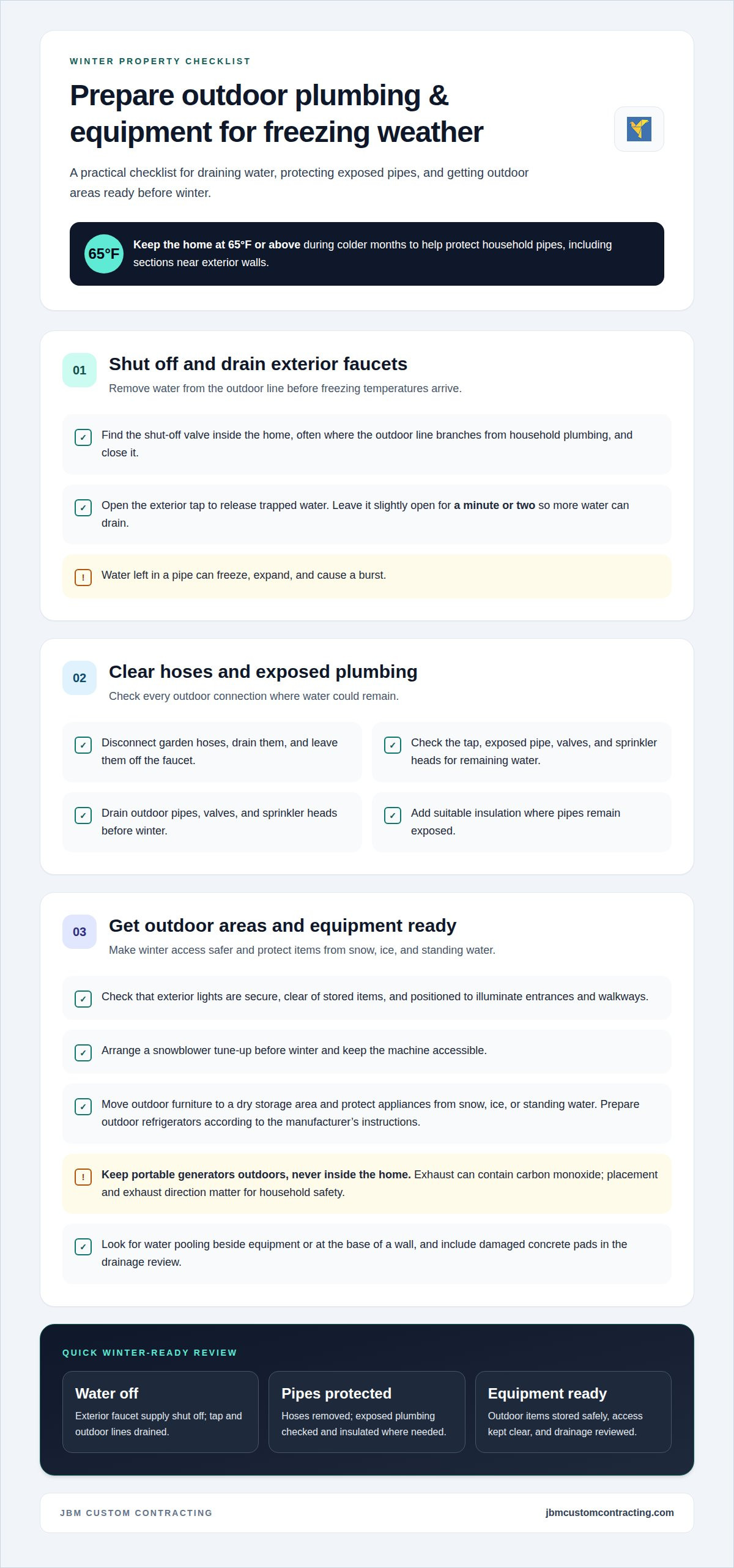
Before freezing weather arrives, a plumbing professional can shut off the water supply to exterior faucets and drain the remaining water. The shut-off valve is often inside the home, where the outdoor line branches from household plumbing. They can find the correct valve, close it, then open the exterior tap to release trapped water. Leaving the tap slightly open for a minute or two allows more water to drain. This matters because water left in a pipe can freeze, expand, and cause a burst.
Disconnecting garden hoses is part of the same preparation. A hose left attached can hold water against the faucet, increasing the chance of freezing at the connection. After removing it, a professional can drain the hose and check the tap, exposed pipe, valves, and sprinkler heads for remaining water. Drain outdoor pipes, valves, and sprinkler heads before winter. Where pipes remain exposed, suitable insulation can help protect them from freezing conditions.
What temperature should you keep a home at to prevent frozen pipes? Keep the home at 65°F or above during colder months. That setting can help protect household pipes, including sections near exterior walls, while the water supply to outdoor faucets is shut off and drained.
Outdoor preparation also includes lighting and equipment. Ask a professional to check that exterior lights are secure, clear of stored items, and positioned to illuminate entrances and walkways. Arrange a snowblower tune-up before winter and keep the machine accessible, rather than buried behind patio furniture. These steps make it easier to prepare for snowfall and use outdoor equipment safely.
Outdoor furniture and appliances also need a plan. A professional can help move furniture into a dry storage area and identify appliances that need protection from snow, ice, or standing water. Handle an outdoor refrigerator according to its manufacturer’s instructions before winter storage. Keep portable generators outdoors, never inside the home, because exhaust can contain carbon monoxide. Placement and exhaust direction matter for household safety.
Drainage around outdoor equipment deserves attention too. Water pooling beside an appliance or at the base of a wall can freeze and create slippery access routes. A damaged concrete pad beneath equipment can also affect how water drains. Include the surface in an exterior review, and see concrete work for outdoor areas when repairs are needed. A clear plan for faucets, hoses, equipment, and storage helps prevent avoidable winter damage.
3. Having a professional inspect the roof and clear gutters and downspouts
A roof and gutter inspection before winter can reveal loose shingles, leaks, and blockages while repairs are easier to arrange. The inspection should cover roof edges, valleys, flashing (the material that seals roof joints), and visible shingle damage. From the ground, an inspector can check whether the gutters and downspouts are secure and clear. Leaves and branches in gutters can obstruct drainage and contribute to ice dams when temperatures fall.
Gutters should be cleaned and checked at least twice a year. A gutter cleaner can remove leaves, moss, and other debris, then confirm water can flow through the downspouts. They can also check for sagging sections, loose fasteners, or separated joints. Extending a downspout away from the home helps direct water away from the foundation. Gutter guards can help keep debris out, but gutters still need inspection and maintenance.
A thorough seasonal service connects roof, gutter, and drainage checks. For example, a roof edge may look clear while a downspout remains blocked below. Clearing the gutters and downspouts before roof heating cables are installed helps ensure the drainage system is ready. An inspector can also look for signs of water backing up near the roofline. Consider professional gutter cleaning when debris or moss prevents proper flow.
Trees matter, too. An arborist can identify overhanging branches that could break under heavy snow and damage the roof or power lines. Winter is an ideal time to prune dormant trees, but trimming hazardous branches before snow arrives can reduce exposure sooner. This check complements roof maintenance. Smoke and carbon monoxide detectors need separate indoor safety checks.
How can a professional help prepare a driveway, walkways, and trees for snow and freezing rain? They can identify cracks or uneven concrete that may make shovelling harder and increase trip risks, then arrange repairs before icy weather. They can also assess overhanging branches and recommend pruning vulnerable growth before snow weighs it down.
Roof and gutter work requires attention to access, drainage, and visible damage. A roofing professional can review the roof from a safe vantage point, note loose shingles or leaks, and identify where water exits the downspouts. This gives homeowners a practical repair priority list before the season changes. Address active leaks or loose shingles promptly; gutter cleaning alone will not resolve roof damage.
Preparing your home for winter means considering the full route water takes, from roof edges through gutters and downspouts, then away from the foundation. A disconnected downspout section, clogged outlet, or cracked walkway can each create a different problem. A thorough inspection helps spot these issues and connect roof maintenance with safer access around the home.
4. Having a professional replace furnace filters and check for carbon monoxide
A furnace working through a Canadian winter needs clear airflow and a safety check. A professional can replace the air filter before the heating season and inspect the furnace during seasonal service. Furnace filters should be replaced monthly. The right timing can depend on the filter and household conditions, so ask the professional to explain the maintenance schedule for your equipment.
A clogged filter can restrict airflow, making it harder for heated air to circulate through rooms. During a visit, the technician can look at the filter, check how the furnace is running, and flag any issues that need attention. Testing the furnace early in the season leaves more time to arrange repairs before colder weather. A fall tune-up can also uncover problems before the system is needed every day.
Carbon monoxide detectors are an important part of winter preparation. Test detectors before winter and replace old batteries as needed. During routine furnace maintenance, a qualified technician can assess whether the furnace poses a carbon monoxide risk. This inspection does not replace working detectors: both the heating equipment and the alarms need attention.
How can a qualified professional prepare a furnace, heat pump, or boiler for winter? A technician can inspect the equipment, see how it is running, and identify maintenance or repair needs before regular heating begins. For a furnace, this includes checking the air filter and assessing carbon monoxide risk as part of routine maintenance.
Homes with fireplaces or chimneys need a separate heating-system check. A professional can look for damage and check for nests, creosote, soot, and debris before use. Creosote is a flammable, tar-like buildup inside a chimney. If a fireplace is used regularly, a chimney sweep can remove this buildup and help reduce chimney-fire risk. Chimneys and vents should also be inspected and cleaned to support airflow and reduce fire hazards.
Pay attention to basement and outdoor vents, too. A furnace in the basement still needs clear airflow and regular service. Snow or ice can block outdoor vents, so clear those openings when winter conditions threaten to obstruct them. Keep furnace maintenance separate from roof drainage work: leaves in gutters or downspouts affect water flow, but do not replace checks of heating equipment or vents.
A clear service record helps track filter changes, equipment inspections, and repair recommendations. Keep the date and work completed with your household maintenance records. If the technician finds a fault, address it before relying on the furnace for sustained heat. A clean filter, routine service, clear vents, and tested carbon monoxide detectors give each part of the winter heating setup its own practical check.
5. Having a professional inspect roofs and repair loose shingles
Loose shingles need attention before colder weather brings snow, rain, and freeze-thaw cycles. A professional can check for missing, lifted, cracked, or damaged shingles and find spots where water could get in. Repair roof damage and leaks promptly. Waiting can allow moisture to reach roof materials and interior ceilings, making the original problem harder to contain.
A thorough check looks beyond the visibly loose shingle. The roofer can examine nearby shingles, roof edges, valleys, and the metal strips that seal joints around roof features. If one shingle has lifted, nearby sections may also need attention. The aim is to find the cause and extent of the issue, then recommend repairs suited to the roof’s condition and materials.
Debris can hide trouble spots. Leaves and branches may collect around roof valleys or against roof features, obscuring damaged shingles and affecting water flow. A professional can clear debris during the assessment and examine the surface underneath. This is especially useful after strong winds or before the season’s first snowfall, when a clear view can reveal repairs that should not wait.
Professional repairs matter because a patch that misses the source of a leak may leave vulnerable areas exposed. The roofer can match the repair to the shingle damage and check that surrounding materials sit correctly. Describe any signs indoors, such as a water mark near a window or ceiling, and when you first noticed it. Those details help direct the check toward likely entry points.
A roof check can also help distinguish urgent damage from routine wear. A missing shingle or active leak calls for prompt attention, while other findings may need planned maintenance. Ask for a clear explanation of the damage, the affected roof area, and the proposed repair. A written scope makes it easier to understand what work addresses the loose shingles and what falls outside the repair.
Do not treat shingle repairs as a substitute for other winter checks. Outdoor pipes still need protection from freezing and bursting, while carbon monoxide detectors need working batteries. Each issue has a different cause and needs its own assessment. Keeping these tasks separate helps prevent a roof repair from creating a false sense that every part of the home is winter-ready.
After the repair, keep the findings with your property records. Note the date, affected roof area, and any recommended follow-up maintenance. If a later leak appears near the same location, those details can help a roofing professional compare it with earlier work. A timely check and focused repairs offer a practical way to fix loose shingles before winter weather tests the roof.
JBM Custom Contracting: property maintenance
JBM Custom Contracting provides property maintenance for homeowners preparing their exterior for winter. If roofline debris, moss, or blocked gutters need attention, its Moss & Gutter Cleaning can help keep drainage areas clear. Property maintenance is also a practical next step when an inspection reveals exterior upkeep or repair needs.
Turn to JBM Custom Contracting with a clear list of outdoor concerns, such as clogged gutters or maintenance work to handle before colder weather. If the findings point to broader property improvements, Renovations may also suit the project. The right scope depends on the work your home needs.
Contact JBM Custom Contracting to discuss your property maintenance needs.
Make Your Next Winter-Preparation Step Manageable
Getting your property ready for winter can start with a simple plan, not a rush of jobs. Use what you’ve learned to decide which work is most urgent, which areas need professional attention, and what can be scheduled later. A clear scope makes it easier to discuss your property’s needs and focus on practical improvements.
For outdoor upkeep, JBM Custom Contracting offers Moss & Gutter Cleaning. Renovations and Demolition Services can support broader improvement projects when they suit your property’s needs. Choosing the right scope keeps the next step focused on your home’s condition.
Keep your priorities together as the season approaches. A steady plan helps you move from identifying concerns to arranging the work that matters, without trying to do everything at once.
With a thoughtful plan and the right support, you can approach winter with greater confidence.
Frequently Asked Questions
Why Prepare Your Home for Winter?
Preparing ahead helps reduce cold-weather damage and keeps essential home systems ready for regular use. A seasonal review can also catch concerns that are easy to miss during everyday routines, such as a smoke alarm that needs attention or a blocked outdoor vent. Include indoor safety alongside exterior maintenance: test smoke alarms monthly and clear snow or ice from vents if it could block them.
What fall maintenance should homeowners in Canada do to prepare for winter?
Arrange a seasonal review that covers the home’s exterior, heating equipment, and basic safety features. Beyond roof and plumbing checks, test smoke alarms, replace their batteries if needed, and vacuum dust from beneath alarm covers every six months. Inspect the dryer duct behind the machine for lint buildup, too. Keeping these less visible areas on the list can help address fire and equipment concerns before winter routines begin.
How can a professional winterize outdoor faucets, pipes, and irrigation systems?
A professional can trace the outdoor water line to its shut-off, drain remaining water, and assess exposed pipes and irrigation components. Ask them to note the shut-off valve locations and any vulnerable sections for future reference. This is especially useful if the property has separate sprinkler zones or a hard-to-reach outdoor tap. A clear record helps make seasonal servicing more consistent.
How can a professional prepare a roof, gutters, and downspouts for snow and ice?
A professional can assess how water moves from the roof into the gutters and downspouts, then away from the building. They can note loose connections, damaged sections, or places where water may collect near an entrance or foundation. Share any history of leaks or overflow, including where it appeared indoors. Those details help focus the inspection on recurring trouble spots rather than treating every roof area alike.
What professional steps help prevent ice dams and roof leaks in winter?
A professional can look for roof damage and consider whether heat escaping into the attic may contribute to uneven snowmelt. The assessment can connect visible roof conditions with attic insulation gaps or drafts, then identify suitable repair priorities. If water has stained a ceiling or wall, point out where and when you noticed it. That information can help distinguish a roof leak from condensation or another source of moisture.


