


The carpet is only the visible part of a removal job. A carpet removal and disposal service typically starts by cutting carpet into manageable sections, rolling and carrying it out, then lifting padding and removing tack strips or staples as needed. The work depends on how the flooring is attached and what needs to come out.
It’s easy to think the job ends once the carpet is pulled up, but leftover padding, fasteners, rugs, mats, or old flooring may also need attention. In Nanaimo and nearby Vancouver Island communities, disposal options depend on the amount and type of material and local collection rules.
This guide explains how carpet and underlay are removed, what affects the scope, and how rugs, mats, tack strips, staples, and other flooring fit into the work. You’ll also learn what to consider for disposal and when professional help can make removal more manageable.
Key Takeaways
- Learn the usual order for lifting carpet and underpad, then dealing with tack strips and staples.
- See how carpet padding, rugs, mats, and other old flooring can change the scope of removal.
- Understand which project details affect disposal costs in Pickering, including the amount and type of material.
- Find out why disposal options can differ depending on local waste collection and the quantity being removed.
- Know when a larger demolition or renovation project may call for professional help with removal and cleanup.
Carpet, underpad, tack strip and staple removal
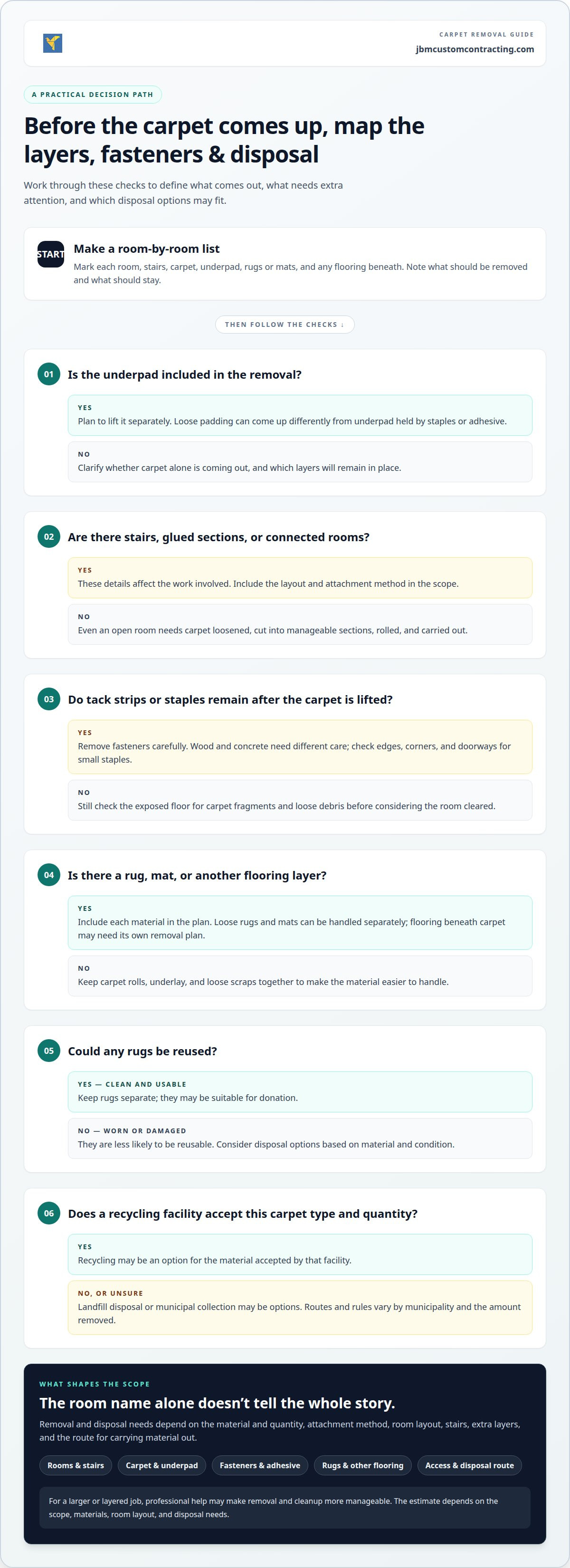
Carpet removal usually involves several layers, not just the visible floor covering. The work starts by loosening an edge, then cutting and rolling the carpet into manageable sections. Room size, stairs, attachment method, and access for carrying material outside all affect the work involved.
Carpet and Underpad Removal
Carpet is lifted from an edge or seam and separated from the floor. Once loosened, it can be cut, rolled, and carried out. The underpad may come up in separate pieces, especially when staples or adhesive hold it in place. Loose-laid padding, for example, lifts differently from underlay fixed to the floor.
Before work begins, identify which rooms and layers are included. A doorway may reveal where carpet meets another flooring material, while stairs add edges and transitions. These details help define the work and clarify whether the carpet, underpad, or both need removal.
Tack Strip and Staple Removal
After the carpet and underpad are lifted, tack strips and staples may remain around the room’s edges or across the floor. Tack strips hold carpet edges in place with sharp pins. They are removed carefully, followed by loose staples that could remain exposed or interfere with the next flooring installation.
The floor beneath the carpet affects how fasteners are handled. Wood and concrete, for example, need different care during removal. A careful pass along room edges, corners, and doorways helps locate small staples that can be missed among carpet fibres.
Underlay Disposal and Removal Timing
Removal takes a different amount of work in every room. An open room with loose carpet is not the same as stairs, glued sections, or several connected rooms. The amount of underlay and the route to the exit also affect how material is gathered and moved.
Disposal options vary by municipality and the amount of carpet involved. Keeping carpet rolls, underlay, and loose scraps together makes the load easier to handle. For larger removal projects, removal of unwanted materials can help clear the space without leaving debris in a hallway or driveway.
After removal, check the exposed floor for carpet fragments, staples, and remaining strips near walls, thresholds, and corners. A fastener beside a doorway, for example, can catch footwear or interfere with later flooring work. Gathering loose debris also makes the cleared room easier to use.
When practical, separate carpet and underlay from other renovation debris. Their size, condition, and quantity shape the disposal plan, while local collection rules determine the available options. A room-by-room list of carpeted areas, stairs, and extra layers gives a clear picture of the work.
Carpet padding, rugs, mats, and old flooring removal
Flooring removal can include more than fixed carpet and its padding. A room may also contain area rugs, entrance mats, or another floor layer beneath the carpet. Identifying each material helps define the work and keep the removal plan clear. A loose hallway runner, for example, can be lifted separately, while an attached floor covering may need more careful removal.
Rugs and mats are usually handled separately because their size, backing, and condition affect how they’re moved. A small mat can be carried out intact, while a large rug may need rolling to pass through a doorway. Old flooring beneath carpet also changes the job: removing one layer may expose another that needs attention before a new floor can be installed.
For a bedroom estimate, the room’s area is only one consideration. The amount of padding, any rugs or mats, and the type of flooring underneath can all add work. A main-floor estimate may also account for connected rooms, longer routes to the exit, and more material to gather for loading. The total scope, not the room name alone, shapes the estimate.
Planning removal alongside new flooring installation helps avoid delays between trades. First, decide which rooms and materials are included. Then clarify whether the existing floor must be fully cleared or a particular layer will stay in place. A bedroom with carpet over old vinyl, for example, needs a different plan from a room where carpet is the only floor covering.
DIY removal can reduce hired labour, but you’ll handle the lifting, sorting, loading, and disposal yourself. Professional help can simplify larger or layered jobs. The estimate depends on the materials, room layout, removal scope, and disposal needs, with the work described in a written estimate.
Related flooring may include vinyl, laminate, or another surface beneath the carpet. Each material can come up differently, so identify what stays and what goes before work begins. A clear room-by-room list helps prevent confusion, especially when only carpet and padding are being removed from some rooms.
Once old flooring is out, the cleared material still needs to leave the property. Bulky pieces can take up hallway or driveway space while awaiting disposal, so arranging loading as part of the project helps keep access clear. If a renovation also creates other unwanted debris, junk removal for renovation materials can help clear the space.
How much does carpet disposal cost in Nanaimo?
Carpet disposal options in Nanaimo depend on the amount removed and the available disposal route. Recycling, landfill disposal, and municipal collection may involve different steps. The material’s condition and quantity help determine what happens after removal.
Recycling, Donation, and Responsible Disposal
After removal, carpet can be assessed for recycling or disposal based on its material and condition. Clean, usable rugs may be suitable for donation, while worn or damaged carpet is less likely to be reusable. Keep reusable rugs separate from torn carpet and underlay so each can be considered for an appropriate next step.
Recycling options depend on whether a facility accepts the carpet type and quantity. Different fibres, attached backing, or contamination can affect whether a load is suitable. If recycling isn’t available for the material, it may need to go to an accepting waste facility. Sorting before transport keeps carpet separate from other renovation debris.
Protecting floors during removal matters too. Carpet from a hardwood room, for example, should be carried without dragging debris across the exposed surface. Keeping rolls and loose scraps together makes handling easier and reduces small pieces left behind.
Municipal Disposal Rules and Fees
Carpet disposal rules and fees vary by Canadian municipality. Local collection may not accept large quantities, which can mean using a designated facility or waiting for a bulk-pickup day. In Nanaimo, the amount of material and available local disposal options shape the plan and any applicable charge.
There isn’t one Canada-wide carpet removal cost per square foot. The total depends on floor area, stairs, padding, fasteners, furniture moving, loading, and disposal. JBM Custom Contracting prepares a written estimate based on the project scope, materials, access, and disposal needs.
To organize disposal, separate reusable rugs from carpet intended for removal. Group carpet and underlay by material, then estimate the overall load. These details help identify the type and amount of material to handle, especially when clearing several rooms.
Old carpet can go to an accepting recycling or waste facility, or through municipal bulk collection where available. The appropriate option depends on local rules, material type, and load size. Don’t assume curbside collection accepts a large carpet load, since accepted items and limits can differ between municipalities.
Ask for removal and disposal to be clearly described in the project estimate. This shows whether loading, transportation, recycling, or final disposal are included. It also clarifies how carpet, underlay, rugs, and any other flooring material will be handled.
What carpet removal includes
A complete removal job follows a clear sequence, from preparing the room to clearing the waste. The scope should identify which materials come out, how debris leaves the property, and the condition the floor should be left in. Removing carpet alone differs from clearing carpet, underpad, tack strips, and staples before new flooring arrives.
First, prepare the work area. Move furniture and loose belongings or include them in the agreed scope, and keep the route to the exit clear. A hallway from a bedroom to the front door, for instance, affects how carpet sections are carried and where they can be staged. The removal plan should also identify stairs, narrow turns, and rooms with separate flooring layers.
Next, lift and separate the materials. Cut and roll the carpet into manageable pieces, then gather the underpad separately if it comes up in sections. Tack strips, staples, and other fasteners may also need removal. The scope should state whether these steps are included, especially if the exposed floor is hardwood or another surface that needs careful handling.
Debris handling is another part of the job. The scope should say whether carpet, padding, and loose scraps will be loaded and taken away or left ready for a separate pickup. “Remove carpet” may describe lifting the floor covering without including disposal. A written description makes that distinction clear and helps avoid leaving rolled carpet indoors.
- Included rooms: Name each room, hallway, or stair area being cleared.
- Included materials: List carpet, padding, rugs, tack strips, staples, or additional flooring.
- Floor condition: Describe whether the goal is a cleared surface or preparation for another floor.
- Debris handling: State whether loading and disposal are part of the work.
These details also distinguish removal from later installation. Lifting carpet does not automatically include repairing or levelling the floor, or preparing it for a new finish. Name any additional steps separately. Removing carpet from one room, for instance, does not include installing replacement flooring.
Finally, clarify how the site should look when the crew leaves. A practical completion check can cover the agreed rooms, remaining fasteners, loose debris, and material removal. The word “licensed” alone doesn’t explain the work scope; the useful details are the specific tasks and handling steps. A clear list gives everyone the same understanding before removal begins.
Carpet removal and disposal services near me Canada
Carpet disposal in Canada depends on the municipality and the quantity being removed. A small amount may fit a local garbage program, while a larger load may need another disposal route. On Vancouver Island, the first practical step is separating carpet, underlay, rugs, and other renovation debris so the load can be described clearly.
Municipal rules can differ, even between nearby communities. Whether carpet can go in a dumpster depends on local requirements, and the allowed amount may be limited. A few carpet pieces from one room, for example, may be handled differently from rolls removed across several rooms. Material, volume, and collection method all shape the plan.
Disposal can involve municipal pickup, a designated facility, or an available recycling route. Large quantities may not fit routine waste collection and can require a facility drop-off or a scheduled bulk-pickup day. Keeping carpet and underlay together by material helps show what needs handling. Separate rugs in reusable condition from damaged carpet before arranging removal.
A local removal plan also needs to account for the property itself. A carpet roll carried through a narrow hallway may need to be cut into manageable sections. Stairs, tight turns, and a distant loading area affect how debris leaves the home. A ground-floor room beside an exterior door, for example, has a different carrying route from an upstairs bedroom.
Before disposal, the removal scope should identify what comes out and what remains. One project may include carpet and padding only; another may include rugs, mats, and extra flooring layers. A clear scope prevents confusion about loading and the final state of each room. It also helps coordinate a new flooring installation or renovation.
The cost of a removal and disposal project depends on the amount of material, the work involved, and the disposal route. JBM Custom Contracting provides a written estimate based on the project details. Factors include room layout, stairs, attached flooring, loading access, and whether municipal collection can handle the quantity.
For a project in Nanaimo or a nearby Vancouver Island community, organize the details by room: list the flooring, padding, and loose rugs, then note stairs and exit access. This summary makes the removal scope easier to define and helps distinguish household waste from a larger renovation load that may need separate disposal arrangements.
JBM Custom Contracting: Demolition Services
JBM Custom Contracting offers Demolition Services for property improvement projects that involve removing existing materials before renovation work begins. If carpet removal is part of a larger room update, this can be a practical next step alongside Renovations. For unwanted materials left from a project, Junk Removal can help clear the space.
Turn to these services when the work extends beyond clearing a floor covering, such as preparing an area for broader changes or removing debris from a renovation. The right scope depends on what needs to come out and how the space will be used next.
Contact JBM Custom Contracting to discuss your project.
Plan the next stage of your flooring project
Before starting a room update, decide what the cleared space needs next. A new floor, a broader renovation, or selected small demolition and removal each calls for a different project plan. Choosing a carpet removal and disposal service is one step in coordinating the work, not a substitute for planning the next stage.
JBM Custom Contracting offers Renovations and Demolition Services for broader property projects, along with Moss & Gutter Cleaning for exterior upkeep. If carpet removal is part of a larger change to your property, think about how the work connects with the improvements you want to make. A clear project scope helps keep those decisions focused.
When you’re ready to discuss the next step for your property, get in touch with JBM Custom Contracting.
A well-planned project gives you a clear path from an old floor to the space you want next.
Frequently Asked Questions
How do you pull up carpet?
Pull up carpet by loosening an edge, cutting it into manageable strips, then rolling and lifting each section. Remove attached underpad separately, then clear remaining fasteners. Work from a doorway or room edge and protect the exposed floor from tools. Pause where carpet meets tile, for example, so the adjoining finish isn’t pulled or scratched.
Can carpets go to the landfill?
Carpets can go to landfill when the receiving facility accepts them and local disposal rules allow it. In Nanaimo and nearby Vancouver Island communities, the appropriate option depends on the material and quantity. Keep carpet separate from other renovation debris, and identify whether the load includes underlay or rugs. This makes it easier to sort materials and choose a suitable disposal route.
Can you take water-damaged or mouldy carpet?
Water-damaged or mouldy carpet needs careful handling, and its condition affects how it should be removed and disposed of. Keep it separate from dry carpet and other reusable materials. Avoid shaking or cutting visibly mouldy sections indoors, which can spread dust and debris through the room. If damage extends beneath the carpet, include the underpad and exposed floor in the removal assessment.
Can you throw carpet in a dumpster?
Carpet can go in a dumpster only if municipal rules, property requirements, and dumpster terms allow it. The quantity may also be limited, so several large rolls might not fit an ordinary waste plan. Cut and secure carpet into manageable pieces before loading. Keep underlay and other renovation waste organized separately, especially if the dumpster restricts accepted materials.
What affects the cost?
Cost depends on the area being cleared, carpet attachment, stairs, extra flooring layers, and disposal needs. Furniture movement, difficult carrying routes, and limited loading access can also change the work involved. A room with glued carpet and several layers, for example, needs a different removal approach from one with loose carpet. A clear room-by-room scope helps define the written estimate.
What is the average cost to remove and dispose of carpet in Canada?
There isn’t one average cost that applies across Canada. The amount of carpet, removal conditions, underpad, stairs, furniture handling, and disposal route all affect the project estimate. Pickering costs can also depend on how much material local collection accepts. A useful estimate separates removal work from loading and disposal, so the included tasks are clear.
What is included in professional carpet removal and disposal?
A carpet removal and disposal service can cover lifting carpet, removing underpad and fasteners, gathering debris, loading it, and arranging disposal. The exact scope should name the rooms and materials involved. Confirm whether it includes rugs, mats, tack strips, or another floor layer, and whether the goal is simply a cleared room or preparation for another flooring project.
What are the risks of removing old carpet, including asbestos, mould, and dust?
Old carpet removal can expose dust, mould, loose fasteners, or unknown materials beneath the flooring. The condition and age of the layers affect what may be present, so avoid disturbing material that appears suspect. Stop work if an underlayer looks unusual or mould is visible. Plan removal and disposal with the material’s condition in mind, rather than treating every floor alike.


