


DIY floor removal can look cheaper upfront, but damaged subfloors and difficult cleanup can add work. The cost of professional flooring removal depends on the flooring type, area size, and job complexity, with the price determined case by case after a quote request. When comparing flooring removal services near me, look at what the removal involves as well as the material being taken out.
It’s reasonable to want a clear budget before a renovation begins. Tile, carpet, laminate, and hardwood each require a different removal approach, and firmly attached flooring can take more work than a floating floor. This guide explains what shapes a removal estimate and how professional work compares with DIY, so you can make a practical choice for your space.
You’ll also learn what removal may involve, how debris and subfloor condition affect the job, and when an assessment can clarify next steps. With realistic expectations, you can plan the tear-out safely and prepare for the flooring project that follows.
Key Takeaways
- Removal costs depend on the floor material, the size of the area, and how firmly the flooring is attached.
- Tile, carpet, laminate, and hardwood require different tear-out approaches, and protecting the subfloor is an important part of the work.
- A clear assessment of the work area can help explain what the quote covers, including debris clearing and any additional preparation.
- Compare DIY with professional removal by weighing the work involved, cleanup, and the risk of damaging the surface beneath the flooring.
- Planning the removal alongside your renovation can help you decide what needs to happen before the next floor goes in.
How much does it cost to remove floors?
Floor removal costs depend on the material, area, how firmly the flooring is attached, and any work needed afterward. A written estimate reflects your project’s scope, including removal and disposal. For example, lifting a floating floor differs from breaking tile and removing adhesive. If you’re in Nanaimo or a surrounding Vancouver Island community, describe the rooms and flooring clearly when requesting an estimate.
Before demolition starts, clear small furniture and personal items from the work area. Mark the rooms included in the job, then identify transitions, vents, and doorways that need protection. Flooring removal contractors generally remove the old floor, while homeowners usually move smaller furniture. A clear, accessible room helps the crew work efficiently and limits avoidable interruptions.
This video shows the tools and preparation involved in lifting vinyl flooring:
Square footage matters when requesting a removal estimate, alongside the material and how it is attached. Ceramic tile can require more labour because mortar or adhesive may be difficult to remove, especially when set into concrete. Carpet and floating floors require a different sequence from glued tile or hardwood. Access, room layout, and the amount of debris also shape the work plan.
Ask what the estimate includes: removal, debris collection, surface scraping, or subfloor preparation. Basic cleanup and scraping differ from leveling, moisture mitigation, or structural repairs, which are separate tasks. These distinctions make it easier to compare the stated scope without treating every tear-out as the same job.
After the old floor comes up, inspect the exposed subfloor for leftover adhesive, loose material, and uneven areas. Scraping or grinding may prepare the surface, but leveling and moisture work are separate tasks. New flooring needs a clean, suitable base; the required preparation depends on the material selected and the condition underneath.
JBM Custom Contracting is Licensed & Insured, WorkSafeBC compliant, and Certified. Before work begins, ask how the estimate defines the removal and cleanup scope.
Permit requirements depend on the municipality and project scope. Waste handling rules also vary locally; separate and dispose of renovation debris according to local requirements. For debris removal as part of a property project, junk removal services may help clear unwanted materials.
Older flooring and adhesive can contain asbestos, and appearance alone cannot reliably identify it. Don’t cut, sand, grind, or pull up suspect material; have it assessed and tested by a qualified asbestos professional before disturbing it.
Removal time depends on the material, area, attachment, access, and cleanup. A floating floor or carpet may be easier to lift than glued tile or hardwood, which can require extra removal and scraping. Plan the work in stages: clear the room, remove the flooring, handle debris, then assess the exposed subfloor. A prepared work area and clearly defined cleanup scope make the estimate easier to understand and help you plan the next flooring step.
Tile, carpet, laminate, and hardwood tear-out
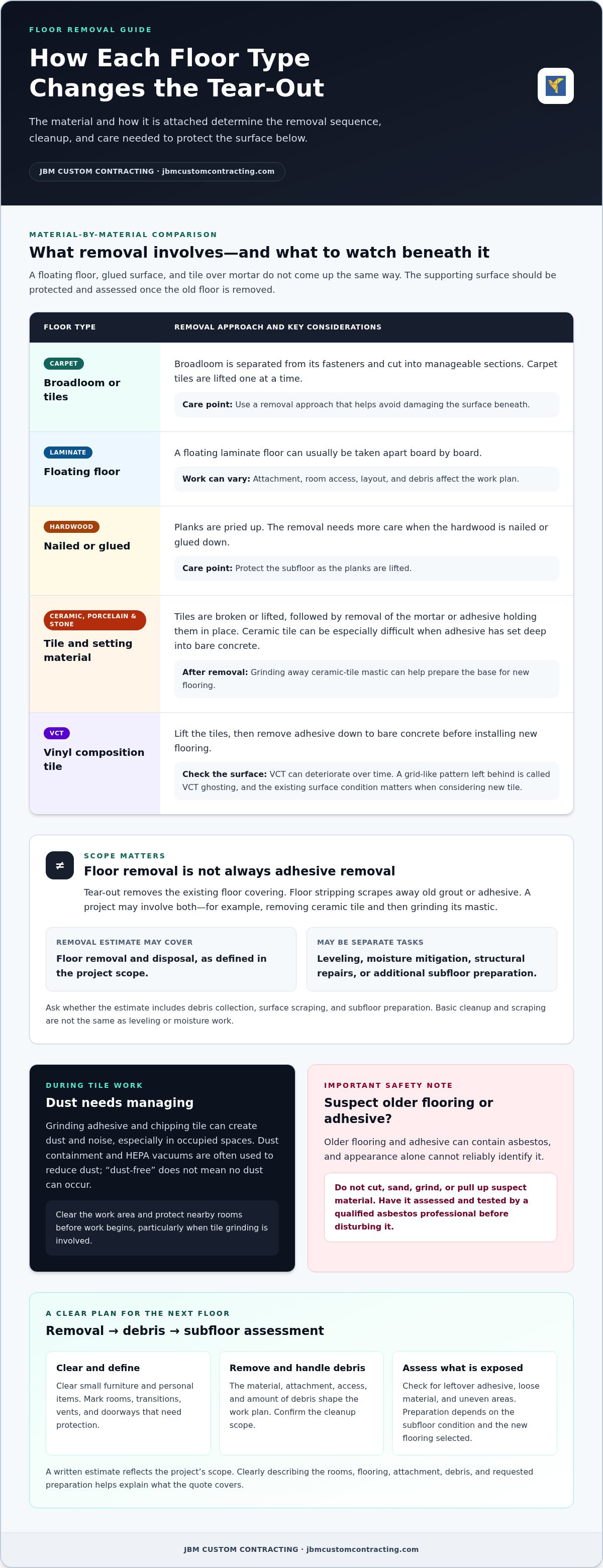
Each flooring material needs a different removal approach. The method depends on how the floor is attached and how carefully the supporting surface must be protected.
Carpet, Laminate, and Hardwood Tear-Out
Carpet removal starts by detaching the material, often with tools that help avoid damaging the surface beneath it. Carpet tiles are lifted individually, while broadloom carpet is separated from its fasteners and cut into manageable sections. A floating laminate floor can usually be taken apart board by board. Hardwood removal takes more care because planks may be nailed or glued down, so they’re pried up while protecting the subfloor.
Ceramic, Porcelain, and Stone Tile Removal
Tile removal involves breaking or lifting each tile, then dealing with the mortar or adhesive holding it to the subfloor. Ceramic tile can be especially difficult when adhesive has set deep into bare concrete. Porcelain and stone also need controlled removal to limit damage to the supporting surface. Before new flooring goes in, grinding away ceramic-tile mastic can help prepare the base.
Vinyl Composition Tile Removal
Vinyl composition tile, or VCT, can deteriorate over time, so inspect its condition before planning a renovation. After lifting the tiles, remove the adhesive down to the bare concrete before installing new flooring. A grid-like pattern left behind is called VCT ghosting. New tile over deteriorated VCT is possible, but it isn’t always recommended; the condition of the existing surface matters.
Dust-Controlled Flooring Removal
Grinding adhesive and chipping tile can create dust and noise, especially in occupied spaces. Dust containment and HEPA vacuums are often used to reduce dust during removal. These controls help manage particles, but “dust-free” shouldn’t mean no dust can occur. Clear the work area and protect nearby rooms before work begins, particularly when tile grinding is involved.
One useful distinction: floor removal takes out the existing covering, while floor stripping scrapes away old grout or adhesive. A project may involve both, such as removing ceramic tile and then grinding its mastic. Confirm whether the planned scope includes only tear-out or adhesive cleanup too. That difference affects the surface left behind for the next installation.
For VCT, carpet, laminate, hardwood, and tile, the material and its attachment guide the removal sequence. The aim is to separate the floor, manage the debris, and leave the subfloor ready for assessment. A clear description of each layer helps explain the tear-out and any preparation that may follow.
Factors affecting flooring removal costs
Removal estimates are project-specific, not a fixed charge for every room. In Nanaimo and surrounding Vancouver Island communities, key factors include flooring type, area, removal complexity, debris handling, and subfloor preparation. A kitchen with ceramic tile and bonded mortar needs a different work plan from a similarly sized room with floating laminate. Pricing is provided in a written estimate based on the project’s scope and site conditions.
Area size affects how much material must be lifted, carried, and cleared. Accurate measurements help describe the scope, but room shape and access also matter. A wide, open room gives the crew a different route than a narrow hallway with several doorways. Measure each area separately and note where one flooring material changes to another.
Material and attachment method can change the work involved. Carpet and floating floors come apart differently from glued hardwood or ceramic tile. Ceramic tile may take longer because its adhesive can be difficult to remove, particularly when set deep into concrete. Multiple layers also add steps: each covering may need to come up before the underlying floor is reached.
- Removal scope: Identify each room and material, including transitions between surfaces.
- Attachment: Note whether flooring is floating, nailed, or glued down.
- Debris: Clarify whether clearing and disposal are part of the planned work.
- Next steps: Separate basic scraping from leveling or repairs.
Debris handling can affect the estimate because removed flooring must be gathered and cleared. Carpet, tile, and hardwood differ in bulk and handling. Ask whether the stated scope includes debris collection and disposal, and describe access limits such as stairs or a long route to the exit. Those details help define the work and avoid unclear cleanup assumptions.
Subfloor condition matters when preparation is part of the project. Basic scraping and debris clearing differ from leveling, moisture mitigation, or structural repairs. These additional tasks are quoted separately after inspection. If new flooring is planned, clarify whether the goal is simply to expose the subfloor or prepare it for the next material.
Room use can help clarify the scope. For example, fixed cabinets and appliances in a kitchen may limit access to flooring edges. List obstacles and mark areas that should remain untouched. A completely clear work area isn’t always possible, but noting what stays in place helps define the removal boundaries. Record material changes and access details before requesting an estimate.
Compare estimates by checking that they describe the same rooms, flooring layers, debris handling, and preparation work. A quote covering tile removal alone isn’t directly comparable with one that also includes adhesive grinding. Clear scope details make the cost factors easier to understand and align removal with the renovation that follows.
On-site assessment and upfront quotes
An on-site assessment connects the visible floor, room layout, and requested removal scope. A written estimate can then show how flooring demolition and related work are defined.
On-Site Flooring Assessment
During an assessment, map each room and identify its flooring material, edges, and transitions. Point out areas that must stay untouched, such as cabinets or flooring beneath fixed fixtures. The area and access route help define the job. A review of the visible surface can highlight preparation needs, though the subfloor remains hidden until the covering comes up.
Walk through the space in a consistent order. Start at the entry, then cover each room and doorway. Mention stairs, narrow halls, or a long path to the exit because they affect how removed material is carried out. If carpet sits beside ceramic tile, identify the boundary and say whether the project includes both surfaces.
Photos can help document details between the visit and the written estimate. Capture room edges, transitions, visible flooring layers, and obstacles. Label each image by room, such as “kitchen doorway” or “hallway transition.” Definitely include the intended next step, such as exposing the subfloor or preparing it for new flooring.
Upfront Estimate Details
A free estimate means there’s no charge for the pricing document or visit; it doesn’t mean the removal work is free. The estimate should describe the rooms, materials, and removal scope in plain language. Look for separate details on debris clearing, adhesive scraping, and subfloor preparation, rather than one broad line that leaves the work unclear.
Use the written scope to compare like with like. For example, one estimate may cover tile removal only, while another includes grinding adhesive. Those are different tasks. Check that the listed area matches the rooms you described and that retained areas or fixed features are clearly excluded from the removal plan.
- Rooms and surfaces: Name each room and flooring material.
- Removal work: State whether the scope includes one layer or several.
- Cleanup: Describe debris clearing and disposal.
- Preparation: Separate scraping from leveling or repairs.
Read the estimate before scheduling the work. If it says “surface preparation,” identify the task it refers to, such as scraping leftover adhesive. A precise description supports a smoother handoff from removal to renovation and helps prevent different expectations about what the crew will leave behind.
Keep room notes, photos, and the estimate together. If the project changes, such as by adding another room, compare the revised scope with the original. Clear written details make it easier to understand what the quote covers and how each step fits the planned flooring work.
DIY versus professional floor removal
DIY removal can suit a small, straightforward project, but the material and its attachment matter. Lifting floating laminate differs from breaking ceramic tile bonded to concrete. Before choosing, consider tools, debris handling, surface protection, and preparation before installation. Compare the full amount of work, not just the first step of pulling up the flooring.
For a manageable DIY project, start by clearing the room and exposing an edge of the flooring. Check how the material is attached before removing a larger area. A floating floor may separate in boards, while glued flooring can resist lifting and leave adhesive behind. Work in small sections, keep removed material organized, and stop if the underlying surface begins to break or splinter.
Material changes can bring surprises. Carpet may come away from its fasteners, but carpet tiles need to be lifted individually. Hardwood boards can be nailed or glued, so prying too aggressively can damage the subfloor. Tile removal involves breaking or lifting hard pieces and addressing the mortar beneath them. Each method creates different debris, cleanup needs, and preparation work.
Consider professional removal when flooring is firmly bonded, several layers are present, or access is difficult. The right tools and a methodical approach can help manage removal across the surface. Grinding adhesive or chipping tile can create dust and noise, so occupied rooms need practical dust-control planning. The written scope should clarify whether cleanup and surface scraping are included.
DIY can reduce labour charges, but it also takes your time and leaves you responsible for tools, protection, cleanup, and disposal. Professional work has a service cost, while reducing the hands-on work you manage. Compare the complete scope: lifting, adhesive removal, debris collection and disposal, and any preparation required before the new flooring goes down.
- DIY may fit: A small room with floating laminate and clear access.
- Professional removal may fit: Glued hardwood, ceramic tile, or multiple flooring layers.
- Before deciding: Identify how the flooring is attached and what lies beneath it.
- For either approach: Plan debris handling and the subfloor’s next preparation step.
A practical middle ground is to handle simple preparation yourself, such as clearing movable items, then arrange professional removal for difficult materials. Keep the boundary clear: moving loose furnishings is different from pulling up flooring or scraping adhesive. That division can match the work to your comfort level while keeping the installation plan in view.
If the job involves more than flooring removal, such as a broader tear-out, explore demolition service options from JBM Custom Contracting.
JBM Custom Contracting: Renovations
JBM Custom Contracting is a practical next step when old flooring is part of a broader renovation or selected small demolition and removal project. Its renovation services can support wider property improvements, while junk removal can help clear unwanted materials.
Consider reaching out when flooring removal connects to other planned renovation work or debris needs to be cleared as part of the project. For a simple flooring change with no related renovation or property work, a flooring specialist may be a more direct fit. Sharing which rooms are involved and what work follows helps explain your project clearly.
Contact JBM Custom Contracting about your renovation project.
Set your renovation up for a smooth start
Before arranging flooring removal services near me, decide what you need from the finished space. Is the goal to expose the subfloor, prepare for new flooring, or coordinate removal with a broader renovation? A clear next step helps you describe the project and keep the work aligned with your plans.
For projects that extend beyond flooring, JBM Custom Contracting offers renovation services and selected small demolition and removal. Moss and gutter cleaning are available for separate exterior maintenance needs. These services may suit property plans that include more than an interior floor change.
If your project includes related renovation or selected small demolition and removal, contact JBM Custom Contracting with the scope and rooms involved.
A well-planned floor removal can make room for the next stage of your home improvement. Take the next step at a pace that works for your project.
Frequently Asked Questions
What flooring removal services are available near me?
Options include removal-only work or flooring tear-out coordinated with a wider renovation. Before requesting an estimate, identify whether you need the finished floor removed, underlay taken up, or the room cleared for another trade. JBM Custom Contracting reviews selected small demolition and removal projects, including what stays, what is removed, and how waste will be handled.
How much does professional flooring removal cost per square foot in Canada?
There’s no single per-square-foot price that applies across Canada. The quote reflects the specific project, so a rate from one estimate may not compare directly with another. If an estimate uses a square-foot figure, ask how the measured area was calculated and whether the figure covers the complete work or only removal. A written project estimate gives you a clearer basis for planning your budget.
What affects the cost of removing hardwood, tile, laminate, carpet, or vinyl flooring?
Material affects the work plan, but the floor’s layers can matter just as much. A visible vinyl surface, for example, may sit over another covering or adhesive that changes the removal steps. Share what you know about previous renovations, including whether flooring was installed over an older surface. If the layers aren’t visible, mention that in your project description so the estimate can account for inspection.
Do flooring removal companies include disposal and cleanup in their quotes?
Disposal and cleanup should be clearly described in the estimate. “Cleanup” could mean sweeping the work area, while hauling removed materials is a separate task. Ask the estimate to distinguish debris collection, transport, and disposal, and state whether materials will be sorted for recycling. This helps you understand what will remain at the property when removal is finished.
How do I compare flooring removal contractors and get accurate estimates?
Compare the written assumptions as well as the stated work. Look for what happens if the crew finds another layer, concealed adhesive, or a surface condition that changes the scope. The estimate should explain how changes are handled before extra work proceeds. For projects with several stages, confirm each stage’s scope and price before it begins. This makes the planned work easier to track.
What should I do to prepare my home for flooring removal?
Prepare the route from the work area to the exit, not just the room itself. Move fragile items from nearby shelves, clear hallway corners, and take photos of adjacent trim or doorways before work starts. Keep the agreed work area accessible, move vehicles or belongings, secure pets, and disclose access restrictions, irrigation lines, or known site concerns. If coordinating flooring removal with another renovation task, agree on which room will be available first.
What are the risks of DIY flooring removal compared with hiring professionals?
DIY work gives you control over the pace and may let you separate reusable material, such as intact hardwood boards. It also means you handle sorting, storage, and the transition to the next trade yourself. Before starting, decide whether you can keep recovered pieces organized and protected. If preserving material matters, plan how it will be lifted and stored before removal begins.
How can I find reputable flooring removal services near me in Canada?
If you’re comparing flooring removal services near me in Canada, begin with the property address and the precise work needed. For homes in Nanaimo and surrounding Vancouver Island communities, JBM Custom Contracting’s service-area coverage is assessed by address. Describe whether the project is part of a renovation or a selected small demolition and removal job, then review the written scope before confirming a project stage.


