


A move-out or cleanout doesn’t have to send every unwanted item to landfill. Environmentally friendly junk disposal means sorting what can be reused, recycled, or composted, then choosing an appropriate option for the rest. This can help reduce landfill waste and conserve materials.
It’s understandable to want a straightforward way to clear a home without treating useful furniture, electronics, appliances, and other materials as trash. The right option depends on what each item is made of and the recycling and disposal rules in your municipality, which can vary across Canada.
This guide explains how to sort common items, keep hazardous household materials out of improper disposal, and make practical choices during a move or cleanout. You’ll also learn how responsible junk removal can help when there’s too much to handle on your own.
Key Takeaways
- Sort items by material and condition so reusable, recyclable, hazardous and landfill-bound waste can be handled separately.
- Build cleanouts into your moving or downsizing plan to make decisions about unwanted belongings before moving day.
- Prepare furniture, electronics and appliances thoughtfully, including checking for personal items and clearing data from devices.
- Consider whether usable furniture can be donated to give it another life and support the community.
- Match each item to a suitable reuse, recycling, composting or disposal option, keeping local sorting rules in mind.
1. Why Choose Eco-Friendly Junk Removal Services?
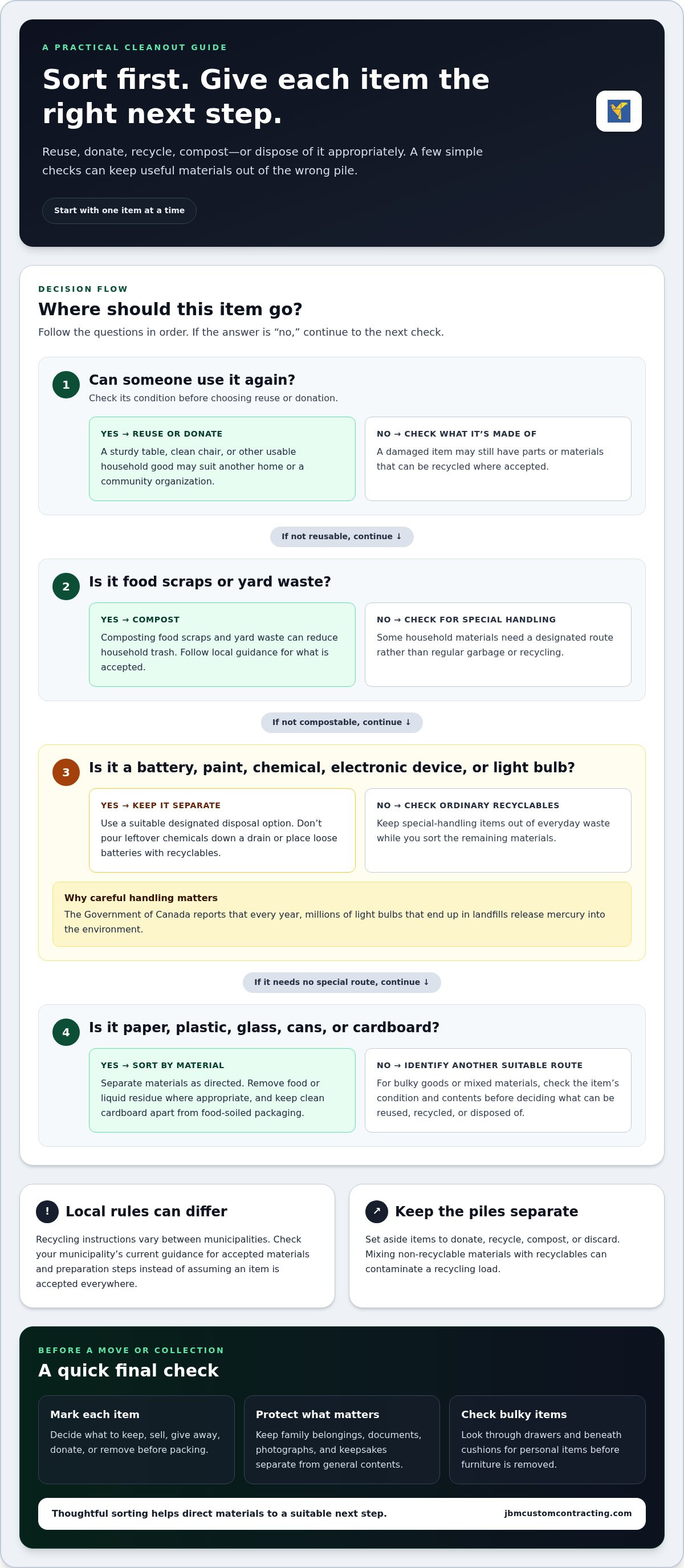
Sorting unwanted items before collection helps keep reusable goods and recyclable materials out of landfills. Environmentally friendly junk disposal starts with a practical choice for each item: reuse, donate, recycle, compost, or dispose of it appropriately. A home cleanout might include a usable chair, cardboard boxes, food scraps, broken glass, and leftover paint. These items need different next steps, so don’t combine them in one pile or container.
Set aside separate areas for items to donate, recycle, compost, or discard. Check furniture and household goods for damage before considering donation or reuse. Keep paper, plastic, glass, and cans separate, and remove food or liquid residue where appropriate. Mixing non-recyclable materials with recyclables can contaminate a recycling load. For example, keep clean cardboard apart from food-soiled packaging and broken household items.
Some household items need special handling rather than regular garbage collection. Batteries, paint, chemicals, and electronic devices are examples of materials that need suitable disposal options. Keep them separate from everyday waste, and don’t pour leftover chemicals down a drain or place loose batteries with recyclables. The Government of Canada reports that every year, millions of light bulbs that end up in landfills release mercury into the environment. Identify items that need a designated disposal route.
In Nanaimo and nearby Vancouver Island communities, use local waste management guidance to sort materials for collection. Recycling instructions can vary between municipalities, so don’t assume an item accepted in one community belongs in another’s recycling. Check your municipality’s current guidance for accepted materials and preparation steps. For example, separate paper, plastic, glass, and cans as directed, and set aside items that need a different destination.
After sorting, look for practical ways to extend an item’s useful life. A sturdy table might be donated, while a damaged wooden piece could be repurposed. Metal components may be separated for recycling where accepted. Composting food scraps and yard waste can also reduce household trash. Responsible sorting helps collection systems direct materials to suitable destinations instead of treating everything as landfill waste.
What are the environmental risks of illegal dumping and improper junk disposal in Canada? Dumped waste can pollute land and water, while hazardous items may expose nearby communities and wildlife to harmful materials. Sorting waste and using appropriate collection or disposal options helps reduce these risks.
2. Junk removal during moves, downsizing, and estate management
A move creates a useful deadline for deciding what should travel to your next home. Start with a room-by-room inventory, then mark each item to keep, sell, give away, donate, or remove. For example, a dining table may suit the new home, while an unused bookcase could be offered to someone else. Making these decisions before packing prevents unwanted belongings from being moved twice.
Downsizing often means comparing an item’s size, condition, and usefulness with the space available. Measure a favourite sofa against the new living room before deciding to keep it. For an estate cleanout, identify belongings the family wants to retain before arranging removal. Put those items in a clearly marked area, and keep important documents, photographs, and keepsakes separate from general household contents.
Junk removal services can help manage bulky items and mixed loads during a tight moving schedule. Share an accurate list, including furniture, shelving, renovation debris, or outdoor items, so the work can be planned around the property. Separate belongings intended for family or donation before collection begins. Clear access to hallways and doors, and keep fragile or valuable items out of the removal area.
Which junk removal companies in Canada donate or recycle collected items? Look for companies that explain how they sort usable goods, donations, recyclable materials, and residual waste. A clear description of these processes helps homeowners understand whether collected items are considered for reuse before disposal.
To assess sustainability, look for specific practices rather than broad environmental claims. For example, does the company explain how it handles reusable furniture or separates scrap metal? Does its service information describe donation or recycling options? A franchise network may use shared procedures, but local collection routes and accepted materials can vary. The useful detail is how the team serving your area handles items from your cleanout.
Plan the appointment around access and the move itself. Note the property address, the rooms or outdoor areas involved, parking or entry instructions, and any large items for removal. If a moving truck arrives on a set day, schedule the cleanout before it blocks access. For estate work, coordinate with family members so everyone has reviewed the items before collection.
For a planned cleanout involving bulky unwanted belongings, junk removal support can help clear the property as you prepare for its next use.
3. Furniture, electronics, appliances and scrap metal disposal
Before removing bulky items, check their condition and identify what each contains. A solid dresser, working microwave, broken television, and bent metal shelf all need different next steps. Clean, usable pieces may suit donation or reuse, while damaged items may need material-specific recycling or disposal. Separating them helps distinguish useful goods from items that need another route.
For furniture, inspect the frame, upholstery, drawers, and hardware. A sturdy table or clean chair may be useful to another household or community organization. Before donating or recycling a piece, check drawers, beneath cushions, and hidden compartments for keys, documents, or personal belongings. If it’s damaged, separate detachable metal components when practical, and avoid handling broken parts that could cause injury.
Working appliances may be reused or donated, depending on their condition and the receiving organization’s needs. Note the appliance type and whether it works before arranging collection. A broken refrigerator, toaster, or washing machine contains different materials, so don’t assume every part belongs in one recycling stream. In Nanaimo and nearby Vancouver Island communities, use local waste guidance to find suitable options for each appliance.
Electronics need careful preparation. Before disposing of a phone, computer, or tablet, transfer anything you want to keep and wipe personal data from the device. Use designated disposal centres or collection programs that accept electronics and chemicals. Some retailers offer take-back programs for batteries and electronics. Keep devices and loose batteries separate from household recycling until they reach an appropriate collection option.
Scrap metal, such as steel shelving, copper wire, or an aluminium frame, may be recyclable through suitable collection channels. Separate metal from wood, fabric, and plastic when practical. This makes the material easier to identify and keeps reusable components from being buried in a mixed load. Local acceptance rules determine which items a recycling facility can process.
Paint, batteries, chemicals, and electronic devices need special handling rather than ordinary disposal. Keep containers closed and items clearly separated. Don’t combine leftover products or place them in a donation pile. Use community collection programs or facilities that accept the material. For a light bulb, follow local disposal guidance instead of assuming it belongs in a blue bin or regular garbage.
A simple sorting routine can protect people, reduce clutter, and give usable belongings another chance. Label separate areas for donations, electronics, appliances, and scrap metal. Then check local destination rules for each category before collection. This practical step helps keep furniture in use and directs hazardous materials away from unsuitable disposal routes.
4. Furniture donation and charity partnerships
A usable sofa, dining table, or bookcase can serve another household instead of becoming waste. Donating suitable furniture gives it a second life and can support people in the community. Before arranging pickup or drop-off, assess each piece honestly. Check for stability, cleanliness, missing parts, and damage that could make it difficult to use. A clear description helps a charity decide whether the item suits its needs.
Prepare a donation list with each item’s type, condition, and important details. For example, note whether a table has all its legs or a chair needs repair. Take clear photos in good light, including close-ups of marks or wear. Keep furniture accessible for inspection or collection, and don’t add broken items to a donation pile. This makes the handoff simpler and helps prevent unusable goods from being passed along.
- Separate clean, usable furniture from damaged pieces before a cleanout.
- Check drawers and compartments for personal belongings before donation.
- Record the item’s condition and share accurate photos or descriptions.
- Keep donation items protected from rain, dirt, and further damage.
Charity partnerships can connect donated furniture with a local need. A junk removal service that works with community organizations may sort usable goods separately from recycling and disposal. Ask about the process in plain terms: which items are considered for donation, how they are kept separate, and what happens to items that cannot be accepted. Clear answers make it easier to understand how the cleanout is handled.
Furniture isn’t the only item worth considering. Clean household goods, working small appliances, and usable electronics may also suit donation, depending on the organization’s needs. Keep these categories separate, and describe each item accurately. A working lamp, for example, shouldn’t be grouped with a broken appliance. Batteries, chemicals, and other hazardous materials don’t belong in donation loads.
For a move or estate cleanout, set aside donation items before junk removal begins. Mark the area clearly, and make sure family members know which belongings are being given away. If a charity has arranged collection, keep those items separate from anything scheduled for removal. This simple step prevents mix-ups and helps usable furniture reach its intended destination.
Donating suitable belongings can reduce clutter while keeping useful goods in circulation. It also helps avoid sending serviceable furniture directly to landfill, where it can no longer benefit another household. A thoughtful donation process starts with an honest condition check, continues with clear communication, and ends with a suitable handoff. This practical approach supports the community and reduces waste without treating every unwanted item as disposable.
5. Eco-friendly junk disposal
Eco-friendly disposal works best as a sequence of choices, not a single trip to a drop-off site. First, prevent waste by repairing an item or finding a new use for it. A chipped wooden stool might become a plant stand, while clean jars can store pantry staples. If an item still works, offer it for reuse before treating it as waste.
Next, reduce what enters the waste stream by composting suitable food scraps and yard waste. A backyard compost bin can turn vegetable peels and leaves into material for garden soil. Check local instructions for accepted items, since compost collection rules vary by municipality. Keeping plastic packaging out of compost helps prevent contamination and preserves the finished material’s usefulness.
Recycling also depends on preparation. Flatten cardboard, empty accepted containers, and separate materials according to local collection directions. A greasy pizza box, for example, may not belong with clean paper. Don’t assume an item is recyclable because it carries a familiar material label. Local programs determine what they accept and how residents should prepare it.
Make purchasing choices part of your waste-reduction routine. Choose products with less packaging, reusable containers, or packaging that local programs accept. Planning meals and shopping with a list can help prevent food from being forgotten and discarded. Reusing bags, containers, and clothing also extends their useful life and reduces the need to replace them.
Responsible disposal includes materials that need special handling. Keep batteries, paint, chemicals, and electronics apart from regular household waste. Use community collection programs or facilities that accept them. Never leave unwanted materials beside a road or in a natural area. Illegal dumping can pollute the environment and put nearby communities’ health and safety at risk.
Households and neighbourhood groups can contribute through practical initiatives. A community cleanup can collect litter from a shared green space, while a clothing swap gives usable garments another owner. For a household cleanout, identify items suitable for repair, donation, recycling, composting, or disposal before collection. This makes it easier to repurpose useful materials and send the rest through appropriate channels.
Keep a simple record of what leaves the home during a larger cleanout. Note whether furniture went to donation, metal went for recycling, or yard waste went to compost. This helps reveal what could be repaired, reused, or avoided next time. The main takeaway is straightforward: prevent waste first, reuse what remains useful, and dispose of the rest properly according to local guidance.
JBM Custom Contracting: Renovations
JBM Custom Contracting can help when a cleanout is part of preparing a property for renovation or demolition. Its junk removal service clears unwanted items, while Renovations and Demolition Services address the next stage of the property work. This can be a practical option when leftover belongings or debris make it harder to prepare a space.
For example, clear unwanted contents before renovation work begins, or arrange junk removal as part of a broader property cleanout. Sorting items for donation or recycling beforehand can also help keep reusable materials out of the disposal pile.
If you’re planning a cleanout or property project, contact JBM Custom Contracting to discuss your needs.
Make your next property project easier to plan
A cleanout can be the starting point for a broader change to your property. Once unwanted items are cleared, you can focus on what the space needs next, whether that means preparing rooms for renovation or planning selected small demolition and removal. Thoughtful environmentally friendly junk disposal can make that transition more manageable by giving reusable items and materials a chance to serve another purpose.
JBM Custom Contracting offers Renovations and Demolition Services for property projects, along with Moss & Gutter Cleaning for exterior upkeep. If your cleanout is part of getting a property ready for its next stage, these services may fit naturally into your plans.
Take the next step at your own pace, with a clearer space and a practical plan for what comes next.
Frequently Asked Questions
Why Choose Eco-Friendly Junk Removal Services?
Junk removal can make a complicated cleanout easier to organize by helping match items with suitable next steps. For example, a property manager clearing a rental unit may need to separate tenant belongings, building materials, and furniture left for the next occupant. A clear plan helps avoid treating every item as waste and gives the property owner a practical way to manage the cleanout from start to finish.
What Junk Can Be Recycled?
Common candidates include clean cardboard, metal containers, glass jars, and accepted plastic packaging. Some programs also accept textiles, wood, or scrap metal through separate channels. Before putting an item out for collection, remove attached food, liquid, or non-recyclable parts where practical. For instance, separate a metal frame from a fabric seat if you can remove the components safely.
What is the best recycling alternative for reducing waste?
Buying less disposable packaging is a useful way to prevent waste before it starts. Choose a refillable soap container, bring reusable bags for groceries, or select products with packaging your local program accepts. For household food waste, planning meals around ingredients already on hand can help prevent spoilage. These small choices reduce the number of items needing a disposal decision later.
Where can I find disposal Vancouver BC services?
Disposal options are organized by municipality, so start with the waste collection information for the address where the items are located. For a Vancouver Island property, consult local guidance for communities such as Nanaimo, Ladysmith, Duncan, Lantzville, Cedar, Parksville, Qualicum Beach, Cowichan, or Gabriola Island. Look for details on bulky-item collection, drop-off locations, and accepted materials. The item itself matters too, since an appliance may follow a different route than household garbage.
Why is ethical recycling important?
Responsible recycling means keeping materials correctly identified and avoiding claims that an item was recovered when it was discarded. If you’re arranging a property cleanout, make a brief inventory of what leaves the site and its intended destination. This record can help answer questions from household members, tenants, or property managers and make future cleanouts easier to organize.
What are environmentally friendly junk disposal options in Canada?
Options vary by item and community, but can include repair, resale, donation, recycling, composting, and appropriate disposal. A reusable item might be offered directly to someone who needs it, while a material accepted by a local program can enter that collection stream. For a mixed cleanout, decide the destination before moving items so usable belongings don’t get bundled with items meant for disposal.
Where can Canadians donate, recycle, or drop off furniture and household goods?
Look for local charities, community reuse groups, and municipal waste information serving the property’s area. An organization may have its own requirements for condition, item types, or delivery arrangements. Before loading a vehicle, write down the items and note any missing parts or wear. This makes it easier to describe what you have and avoid transporting goods that aren’t suitable for that destination.
What items can be recycled or donated instead of sent to landfill in Canada?
Furniture in usable condition, clean household goods, and working small appliances may be candidates for donation or reuse. Recyclable materials can include cardboard, glass, metals, and some plastics, depending on local programs. A damaged item may still contain a recoverable component, such as a metal leg or frame. Consider the item’s condition and construction before deciding its destination.


