


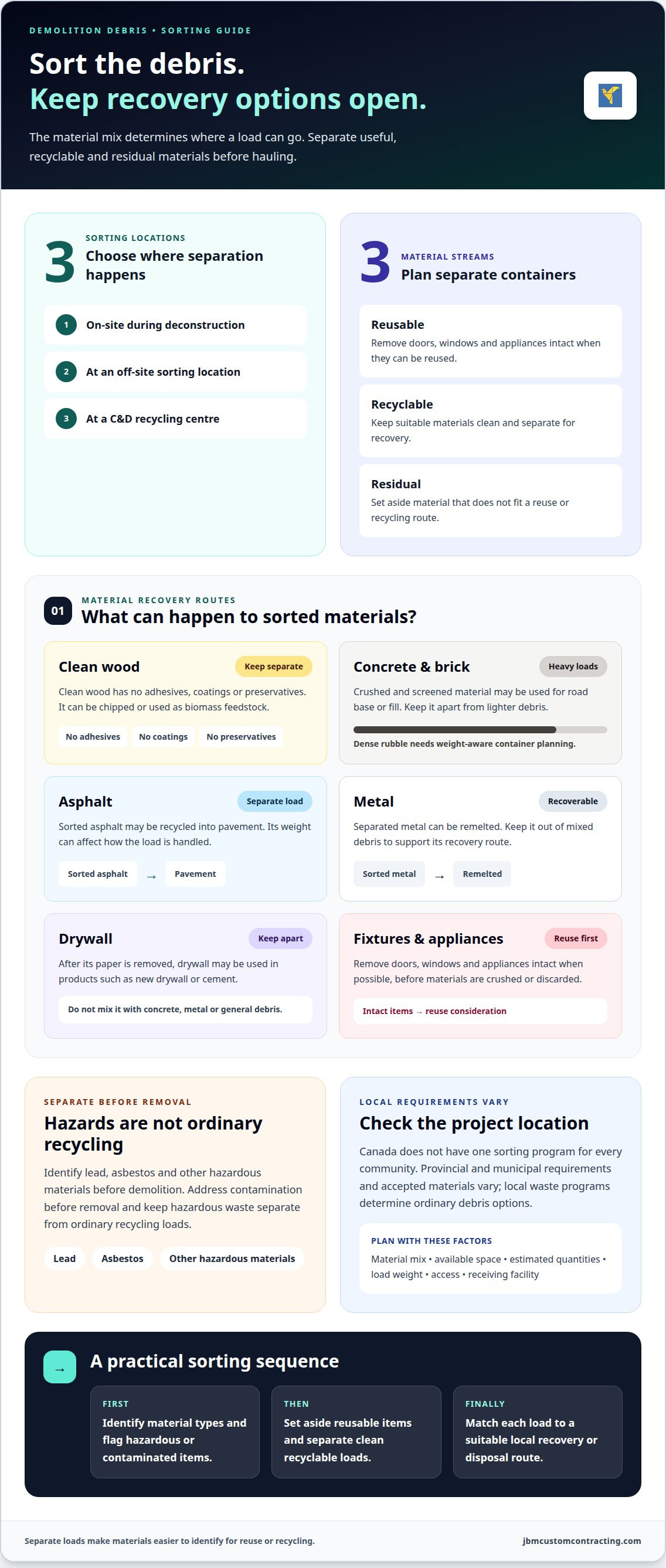
The material in a demolition pile helps determine where it can go. For demolition debris recycling, construction and demolition materials can be sorted on-site, at an off-site sorting location, or at a construction and demolition recycling centre. Separate loads make it easier to identify materials that may be reused or recycled.
It’s understandable to want a clear answer about where to take debris before hauling it away. The right destination depends on the materials: wood, concrete, metals, drywall and other items may have different recovery options. Clean wood, for example, has no adhesives, coatings or preservatives. When sorted and kept separate, it can be chipped or used as biomass feedstock.
This guide explains where construction debris may be dropped off, how to sort common materials, and which options can keep usable resources out of landfill. You’ll also learn why the mix of materials matters and when professional demolition or junk removal can help manage the job safely and efficiently.
Key Takeaways
- Plan separate containers for reusable, recyclable and residual materials to keep mixed debris from limiting recovery options.
- In Vancouver, demolishing a 1- or 2-family home built in whole or in part before 1950 requires reusing or recycling at least 75% of its building materials by weight, according to the City of Vancouver.
- Keep concrete and ceramic tile apart from lighter debris so they can be prepared for potential uses such as road base, fill or aggregate.
- Sort asphalt, steel, porcelain, carpet and insulation by material, then direct each load to an appropriate recovery or disposal option.
- Look at what makes up the debris pile before choosing a drop-off route; the material mix affects what can be diverted from landfill.
How do I recycle construction material?
Identify materials before demolition debris goes into a container. Separate reusable items, recyclable loads and residual waste, then direct each stream to a suitable drop-off or sorting option.
Accepted Recyclable Materials
Common non-hazardous construction materials include wood, concrete, asphalt, brick, drywall, metals, tile, rigid plastics, carpet and insulation. Acceptance depends on the material and its condition. Keep clean materials apart from mixed debris, and set aside doors, windows and appliances that can be removed intact for reuse rather than crushed or discarded.
Concrete and brick can be crushed and screened for uses such as road base or fill. Asphalt may be recycled into pavement, and metal can be remelted. Clean wood has no adhesives, coatings or preservatives; kept separate, it can be chipped or used as biomass feedstock. Drywall can also be used in products such as new drywall or cement after its paper is removed.
Sorting Challenges
Mixed construction waste is harder to recover because materials can contaminate one another. Keep wood with adhesives, coatings or preservatives separate from clean wood, and keep drywall apart from concrete, metal and general debris. Remove reusable fixtures before breaking materials apart. Identify lead, asbestos and other hazardous materials before demolition, address contamination before removal, and keep hazardous waste separate from ordinary recycling loads.
Demolition debris can be sorted on-site during deconstruction, at an off-site sorting location or at a construction and demolition recycling centre. The right approach depends on the material mix, available space and whether materials can be separated as work proceeds. Estimating likely volumes helps plan container placement and avoid combining loads unnecessarily.
Sorting Rules and Local Requirements
Canada does not have one sorting program that applies to every community. Provincial and municipal requirements and accepted materials vary by location, so local waste programs determine how different loads are handled. Hazardous materials from demolition must be disposed of separately under federal regulation, while local programs set the available drop-off and recycling options for ordinary construction debris.
For projects around Nanaimo, Lantzville, Duncan, Ladysmith, Cedar, Parksville, Qualicum Beach, Cowichan or Gabriola Island, identify the project location and material types when reviewing local procedures. Keep heavy concrete or brick separate before choosing containers, since weight affects how a load is handled. Planning material streams early can make drop-off and removal more organized.
Concrete, brick and soil-like debris are heavy, so use a dedicated container rather than mixing them with lighter debris. Estimate the amount and weight of rubble, and keep it separate from wood, drywall and packaging. Container suitability depends on the load’s weight as well as its volume. For organized demolition project planning, sorting can be built into the removal sequence.
Construction waste recycling and landfill diversion
Plan landfill diversion before removal begins. Estimate the material types and amounts, then match each separated load to a suitable recovery or disposal route.
Waste Generation and Diversion
Construction and demolition waste comes from building, renovation and removal projects. The mix depends on the work: removing a deck may generate treated and clean wood, while a concrete patio project produces dense mineral rubble. Recording these streams separately helps identify what can be reused, recycled or disposed of.
Start a diversion plan with a site inventory, estimated quantities and intended destinations. In Nanaimo and surrounding Vancouver Island communities, local waste programs and project requirements determine which materials can be dropped off and how loads should be prepared. Remove reusable fixtures intact and keep clean materials separate for recovery. Track each load’s destination to record where the debris went.
Recycling Costs and Landfill Fees
Demolition debris recycling costs in Canada depend on the material mix, sorting needs, hauling distance, access and receiving facility. Pricing varies by project and is provided through a written estimate based on scope, dimensions, materials, access, preparation, equipment, disposal and site conditions. Landfill tipping fees also vary by facility and location, while a load’s type and weight affect handling. Separated concrete, metal and wood may follow different routes from mixed debris.
Choose containers based on both material volume and weight. Concrete, brick and asphalt can become heavy before a container is full, so they may need a separate load from lighter debris. Include container placement, site access and the number of material streams in the project estimate. These details help plan removal without relying on volume alone.
Environmental Benefits and Risks
Reusing building components and recovering suitable materials can reduce landfill waste and preserve resources. Reclaimed wood can serve as a smaller building component, while recycled asphalt and concrete can support road and pavement construction. The benefit depends on keeping each material suitable for its recovery route.
Recycling does not remove the risks associated with hazardous debris. Lead, asbestos and other hazardous materials must be addressed before demolition debris is removed, and hazardous materials require separate handling. Gypsum in landfill conditions can release toxic hydrogen sulfide gas, so responsible drywall handling matters. A removal plan should identify hazardous and residual waste separately from materials intended for recovery.
Before arranging debris removal, map containers to the materials and site access points. Keep heavy rubble apart from lighter loads, and estimate each stream for the chosen destination. For demolition work that includes material removal, professional demolition services can help organize the work around the property and its debris.
Concrete and ceramic tile disposal
Concrete, brick and ceramic tile need a separate handling plan because they are heavy and break into dense fragments. Before demolition, identify surfaces containing concrete or tile, then keep their debris apart from wood, drywall and packaging. This makes loads easier to assess for recycling or disposal and prevents lighter materials from being buried in rubble.
Concrete and brick recovery can involve crushing, sorting, screening and cleaning. The processed material can become concrete aggregate, fill, road base or riprap. A mobile concrete crusher may allow on-site processing when the project and equipment setup permit. The resulting material still needs a suitable construction use or receiving destination.
Separate ceramic tile from concrete during removal rather than treating them as interchangeable rubble. Set aside intact, undamaged tiles if they can be reused in the project, and place broken tile in a distinct load. Mortar, adhesive and attached backing can affect whether tile fits a recycling stream, so identify these materials during sorting. Loads containing mixed tile, concrete and renovation debris may need further separation.
Use a clear sequence for handling a concrete or tile load:
- Separate tile, brick and concrete from lighter construction waste as demolition progresses.
- Keep intact pieces apart from broken fragments when reuse is practical.
- Remove visible wood, metal, plastic and packaging from mineral rubble.
- Direct each separated material to an outlet that accepts that material and condition.
Container choice matters because concrete and tile can become heavy before taking up much space. Estimate the amount of rubble and keep it separate from lighter debris, rather than judging capacity by volume alone. A dedicated container can simplify handling, while a mobile crusher may suit a site with enough room for processing equipment. Site access, pile location and the intended use of crushed material all shape the practical approach.
Good separation supports environmental goals by preparing concrete and brick for another use instead of sending every fragment to disposal. It also makes material tracking clearer: record whether a load contains concrete, brick, ceramic tile or a mixture. For example, clean concrete routed for aggregate has a different recovery path from broken tile mixed with mortar. The destination and condition of each load determine which option makes sense.
Recycling asphalt, steel, porcelain, carpet and insulation
Asphalt, steel, porcelain, carpet and insulation need separate handling because they follow different recovery routes. Before hauling, identify each material and keep it apart from mixed demolition debris. A labelled container or clearly marked pile helps prevent asphalt fragments from mixing with carpet, while separate steel is easier to identify and recover.
Asphalt from shingles or asphalt concrete is typically recycled for pavement. Separate shingle material from other roofing debris, and keep asphalt concrete distinct from soil, wood and general rubbish. Clean separation helps a receiving facility identify the load and prepare it for its intended use. Asphalt can also be heavy, so consider both volume and weight when choosing a container.
Steel can be melted and reformed without degrading, so it can be recycled repeatedly. Set aside steel beams, pipes, fasteners and other metal pieces instead of burying them in a mixed load. Remove attached non-metal material when practical, then keep the metal stream separate during transport. This helps prevent steel from being lost among insulation scraps or broken building materials.
Porcelain can be crushed and resold to tile manufacturers. Those manufacturers can produce tiles made with up to 40% recycled materials. Keep porcelain fixtures and tile separate from ceramic tile, concrete and general rubble when possible. Broken pieces may still have a recovery route, but clean, sorted material is easier to identify than porcelain mixed with mortar, plastic or wood.
Carpet and insulation may be recyclable, but they should not be combined automatically. Pull carpet away from flooring rubble and keep insulation dry and separate from other materials. Different products may require different handling, so material type and condition help determine a suitable destination. Fibreglass insulation, carpet padding and carpet face fibre are distinct components, not one uniform load.
A practical sorting sequence keeps these streams manageable:
- Identify asphalt, steel, porcelain, carpet and insulation before removal.
- Set aside steel and porcelain fixtures that remain intact and usable.
- Keep asphalt separate from lighter materials and record its estimated weight.
- Bag or contain loose insulation to limit scattering during handling.
- Keep carpet separate from padding when the material can be removed cleanly.
Direct each separated load to a facility or program that accepts its material type. For example, asphalt may go to pavement recovery, steel to metal recycling and porcelain to a tile recovery stream. Where practical, sort mixed materials before disposal; otherwise, recoverable items may end up in residual waste.
Demolition debris composition
A demolition pile contains different materials depending on the structure and the work. Removing a deck may produce boards, fasteners and railings, while taking out a concrete walkway creates dense rubble. On Vancouver Island, use the project’s actual material mix to plan a demolition project, rather than assuming every site will generate the same debris.
Start with a walk-through of the areas to be removed. Note the main materials, their condition and whether components can be reused intact. A house project might include framing lumber, drywall, metal pipes, flooring, insulation, windows and appliances. A yard project could involve concrete, fence boards, soil and metal posts. This inventory gives the removal plan a practical starting point.
Material composition affects what can be recovered and how loads should be handled. Clean, usable wood may be suitable for reuse or chipping, while metal can be separated for recycling. Concrete and asphalt follow mineral-material recovery routes. Carpet, insulation and drywall need distinct streams, and fixtures such as doors or windows may be salvaged before demolition. Mixing materials can hide reusable pieces and complicate sorting.
Build a material inventory before work begins. For example, a property project may include:
- Wood from framing, trim, flooring, decks or fences.
- Concrete, brick, asphalt and tile from paths, patios or foundations.
- Metals from pipes, fasteners, fixtures and structural components.
- Drywall, carpet, insulation, plastics and packaging from interior work.
- Doors, windows and appliances that can be removed intact.
Record the condition and expected amount of each stream. Intact doors differ from broken mixed wood, just as clean concrete differs from rubble containing plastic or drywall. These distinctions help estimate container needs and choose practical staging areas. On a Vancouver Island property with limited access, container placement near the work area can also affect the removal sequence.
Update the inventory if demolition reveals materials that were not visible during the initial walk-through. Removing flooring may expose another layer of tile or underlay; opening a wall may reveal wiring or insulation. Keep newly identified materials apart until their handling route is clear. Plan around what the project actually generates, then adjust the sorting plan as conditions change.
JBM Custom Contracting: Demolition Services
JBM Custom Contracting provides Demolition Services for property owners planning a teardown or removal project. If a structure, deck or other feature needs to come down, professional demolition can help manage the work and the resulting debris. Junk Removal can also help clear unwanted materials from a property, while Renovations may suit projects that involve updating rather than removing a space.
Consider professional help when demolition involves several material types, bulky debris or a larger cleanup. A clear plan for the work and material removal helps keep the site organized as the project progresses. The right approach depends on what is being removed and the scope of the property work.
Contact JBM Custom Contracting to discuss your demolition project.
Choose the Next Step for Your Property
Before work begins, decide what matters most: clearing a structure, changing a space or maintaining the exterior. That choice helps shape a practical plan for demolition debris recycling and the work that follows. Keep the intended use of the property in view so removal and renovation decisions support the same goal.
JBM Custom Contracting offers Demolition Services and Renovations for projects involving removal or updates. Moss & Gutter Cleaning can also address exterior maintenance needs. Consider which service fits the work ahead, then take the next step with a clear idea of the property changes you want.
A focused conversation can help you move from planning to action without making the project more complicated than it needs to be.
Your next property project can start with a clear plan.
Frequently Asked Questions
Where can I drop off construction debris?
Take separated materials to a construction and demolition recycling centre, a sorting location or a local waste facility that accepts them. The right option depends on the load: a facility may accept clean wood but not mixed renovation debris, for example. For projects in Nanaimo or elsewhere on Vancouver Island, use the local municipality’s waste program to find accepted materials and drop-off procedures.
How do I dispose of concrete?
Keep concrete separate from wood, drywall, soil and general rubbish, then take it to a facility that accepts concrete for processing. Crushed and screened concrete can become aggregate, fill, road base or riprap. For a large pile, on-site crushing may be an option if the site can accommodate the equipment. Concrete is heavy, so plan its container and transport around weight as well as volume.
What are the Problems with C&D Recycling?
The main challenges are mixed loads, contamination, limited space for separate containers and materials that need special handling. Even a small amount of drywall, plastic or wood mixed into a clean load can complicate sorting and reduce recovery options. Hidden hazardous materials, including asbestos or lead, also need attention before removal. Inaccurate material estimates can lead to unsuitable containers or extra sorting during the project.
What materials from demolition projects can be recycled in Canada?
Common candidates include clean wood, concrete, asphalt, brick, metals, drywall, tile, rigid plastics, carpet and insulation. Doors, windows and appliances may be reusable if removed intact. Condition matters: clean wood differs from coated or treated wood, and separated concrete differs from rubble mixed with other waste. Local facilities set acceptance rules, so material type and condition guide the appropriate drop-off route.
What percentage of construction and demolition waste is recycled in Canada?
There is no single percentage that applies to every Canadian construction and demolition project. The share depends on the materials generated, what gets reused, which streams local facilities accept and how recovered material is measured. For an individual project, calculate the diversion rate by comparing the weight reused or recycled with the total debris weight, using the project’s records.
Where can contractors take demolition debris for recycling in Canada?
Contractors can use construction and demolition recycling centres, off-site sorting locations or municipal drop-off facilities that accept the specific materials in their loads. Some projects sort debris at the work site before hauling; others use a sorting location afterward. In either case, separating streams such as metal, clean wood and concrete helps direct loads to suitable recovery options and simplifies material tracking.
How do demolition debris recycling facilities compare with landfill disposal?
Recycling facilities sort or process accepted materials so they can be reused or made into new products. Landfills receive material for disposal rather than recovery. Separated asphalt, steel or concrete may have a recovery route, while contaminated or mixed debris can be harder to process. The practical choice depends on the load’s condition, the facility’s accepted materials and local project requirements.
What steps are involved in sorting and recycling demolition debris?
Begin with a material inventory and identify items suitable for reuse before demolition. Next, separate debris into distinct streams, such as wood, metals, mineral rubble and drywall. Keep hazardous materials apart and address them before ordinary removal. Estimate each load, arrange suitable containers, then take materials to facilities that accept them. Record weights and destinations to track what was reused, recycled or disposed of.


