

A cracked or worn slab doesn’t automatically need to be torn out. The right choice in the concrete resurfacing vs replacement decision depends on more than appearance: the existing concrete must be suitable for the finish and the way you plan to use it.
Before choosing a fix, consider whether the damage appears limited to the surface or whether the slab itself may have a deeper problem. Resurfacing leaves the existing concrete in place, while replacement removes it and prepares the area for new concrete. Knowing that difference can help you compare the scope, site preparation and disruption involved.
This guide explains what to look for, which questions to ask and how intended use, access and project goals affect the decision. If you’re planning concrete work in Nanaimo, Lantzville, Parksville, Ladysmith, Duncan, Cedar, Qualicum Beach, Cowichan or Gabriola Island, a site-specific assessment can help turn visible concerns into a practical plan.
Concrete Resurfacing vs. Replacement: What Each Option Actually Changes
The visible surface doesn’t always reveal how much work a concrete slab needs. In the concrete resurfacing vs replacement decision, the main difference is whether the existing concrete stays in place or is removed. Assessing the slab and the project’s purpose helps determine which scope is appropriate.
Resurfacing refreshes the surface; replacement removes the slab and creates a new concrete surface. A fresh finish doesn’t show whether the concrete beneath it is suitable to remain, so appearance alone is not enough to make the call.
What concrete resurfacing changes, and what it leaves in place
Resurfacing applies a new surface layer over existing concrete when the slab is suitable. It changes the exposed finish but leaves the concrete beneath it in place. This may be worth assessing when wear is limited to the surface and the slab can support the new layer and its intended use.
Discolouration, worn areas, small chips or cracks can be reasons to assess a surface, but they don’t automatically mean resurfacing is the right fix. Consider where the damage appears, how much of the area it affects and whether there are signs of a deeper problem. A new layer changes the surface, not the concrete underneath, so it won’t address issues with the existing slab.
Concrete repair can involve different approaches depending on the area and the damage. The broader Concrete Pavement Restoration overview describes methods used on roadways, including partial- and full-depth repairs. Residential projects differ, but the general point applies: “repair” can mean more than adding a new finish.
What concrete replacement changes
Replacement involves removing the existing concrete before installing new concrete. Clearing the old surface also allows the project to include site preparation such as excavation, grading and base preparation. The work required depends on the site and the intended result. Replacement may be considered when the existing slab isn’t suitable to retain or when you want a new layout or concrete feature.
JBM Custom Contracting handles concrete work such as slabs, driveways, patios, steps and flatwork, along with demolition and removal of existing surfaces. Its concrete project services include supply-and-install and installation-only projects. JBM is Certified, Licensed & Insured, and WorkSafeBC compliant. A free consultation and clear written quote are provided before work begins.
JBM also provides exterior cleaning, including house washing in Nanaimo, using eco-friendly products and methods. For the concrete decision itself, start by assessing the slab and the preparation the project requires.
How Resurfacing and Replacement Differ in Process and Project Impact
The work involved depends on what can stay in place and what needs to be prepared for the intended result. Resurfacing relies on the condition of the existing surface. Replacement includes removing the old concrete and preparing the area for new work. Access, cleanup and site conditions can shape either project’s scope.
Project detail
Resurfacing
Replacement
What stays
Existing concrete beneath the new surface layer
The prepared site, but not the old concrete
What is removed
Usually, no full slab removal
The existing concrete
Preparation focus
Cleaning and preparing a suitable surface
Removal, then site preparation for new concrete
Project outcome
A changed surface over the retained slab
New concrete over a prepared area
Resurfacing preparation and limits
Resurfacing depends on a suitable existing slab. Preparation includes cleaning the surface and getting it ready for the new layer. Loose material, crumbling spots or a surface that isn’t level call for closer evaluation before this approach is considered. Resurfacing works with what’s already there rather than starting with a cleared area.
A coating or surface layer shouldn’t be assumed to conceal or resolve structural damage. If concrete appears unstable, crumbles or has significant uneven areas, have its condition assessed before choosing a finish. The visible surface can guide that review, but it doesn’t establish the cause of the damage.
Replacement preparation and site work
Replacement begins by removing the existing concrete and clearing the area for new installation. Depending on the project, the work may also involve excavation, grading and base preparation. These tasks prepare the site for new concrete instead of relying on the old surface. Access for workers and equipment, along with space to handle removed material, can affect how the work is planned.
JBM Custom Contracting provides concrete demolition and removal, along with excavation, grading and base preparation for concrete projects. If removal is part of your plan, its demolition services are part of the project scope to consider. Neither approach is automatically faster, longer-lasting or less disruptive. Those factors depend on the slab, site access and work required.
For concrete work in Nanaimo and surrounding Vancouver Island communities, a site-specific plan can clarify preparation and access needs. You can also learn about JBM Custom Contracting and its project services.
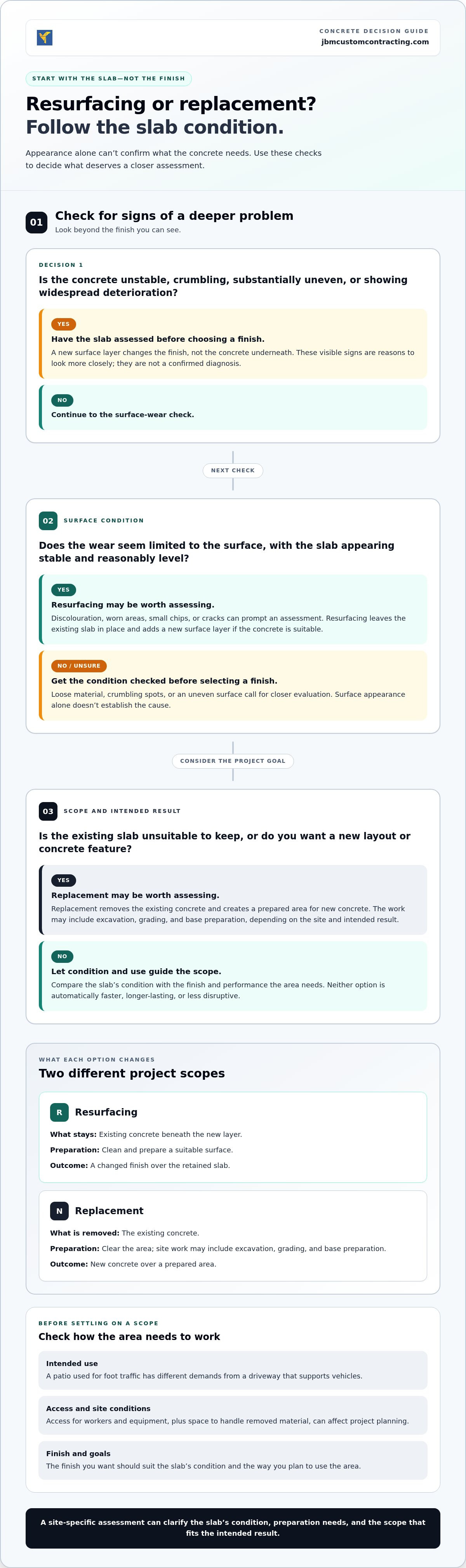
Which Option Fits? Compare Slab Condition, Use, and Project Goals
A slab can look rough without its full depth being unsuitable, while a smooth-looking area can still have problems that need attention. The choice should account for visible wear, signs of movement and how the space needs to perform after the work.
Choose by slab condition and intended use, not appearance alone. A patio used for foot traffic has different demands from a driveway that needs to support vehicles. The finish you want matters, too, but it should suit the concrete’s condition and the way you use the area.
When resurfacing may be worth assessing
Minor surface wear or appearance concerns may make resurfacing worth assessing if the existing concrete remains suitable. Consider whether the slab seems stable and reasonably level, and whether the wear appears limited to the exposed surface. A professional assessment can help determine whether the surface is appropriate for a new finish. Resurfacing shouldn’t be treated as a guaranteed fix or as a promise of a specific lifespan.
When replacement may be worth assessing
Widespread deterioration, substantial unevenness or problems that interfere with how the area functions are reasons to look more closely at replacement. These are observable symptoms, not a confirmed diagnosis. A crack, raised edge or low spot may have different causes, and a photograph alone can’t establish what’s happening beneath the surface. Replacement planning can include removing the existing concrete and preparing the area for new installation.
Use these questions to organize what you’ve noticed before planning the work:
- Where is the damage? Note whether wear is limited to a small patch or appears across a broad area.
- Has the surface changed? Look for cracks, uneven sections or edges that seem to have shifted. Record what you observe without assuming the cause.
- What will the area need to do? Consider foot or vehicle use, drainage needs around the space and whether the current layout still works for you.
- What result are you aiming for? A refreshed appearance may call for a different scope than a change to the layout or function of the area.
Access is part of the decision, too. A narrow side yard, limited entry to a backyard, nearby structures or a driveway that must remain usable can affect how the work is planned. These conditions don’t determine the right option on their own, but they help clarify the project’s practical needs.
If cracks, movement or unevenness make the choice unclear, arrange a site assessment rather than relying on appearance alone. An in-person review can consider the concrete’s condition alongside its intended use, finish goals and site constraints. That gives you a clearer basis for deciding whether to retain the slab with a suitable surface treatment or plan removal and replacement.
A Practical Checklist for Deciding Between Concrete Resurfacing and Replacement
Before choosing a repair, gather details that help explain what the slab is doing and what you need it to do. This checklist is a useful starting point for an assessment. Your notes can document visible conditions, but they won’t replace a professional review.
- Define the problem. Is your main concern appearance, surface damage, usability or a combination? Describe the change you want, such as a more presentable patio or a driveway that works better for your household.
- Inspect and record the surface. Note crack locations, uneven areas, surface loss and sections that seem to have changed. Take photos from several angles and record where each issue appears. These observations provide context, not a diagnosis of the cause.
- Assess how you use the area. Record whether it serves foot or vehicle traffic, what finish you have in mind and whether the current layout meets your needs. The concrete resurfacing vs replacement decision should account for how the finished area needs to function.
- Compare the full scope. Consider preparation, removal, installation, finish choices and site cleanup. If removal may be needed, this concrete demolition contractor guide provides more context for planning that part of the project.
- Plan for the site. Think about access for workers and equipment, where removed material will be handled and whether grading or base preparation may be needed. These practical details can shape the scope even if the visible surface appears simple.
Record what the concrete is doing
Make your notes specific. Instead of writing “the slab is damaged,” describe a crack near a step or a low spot where water collects after rain. Note whether the issue affects daily use, and include how the area is accessed. For example, a narrow route to a backyard may affect how work is organized. Photos help show what you’ve noticed, but don’t treat them as proof of the underlying cause.
Compare the full scope, not only the finish
Look beyond how the completed surface might appear. A written project scope should clarify the preparation, removal, installation, finish choices and cleanup included in the plan. For resurfacing, understand how the existing surface will be assessed and prepared. For replacement, identify whether removing the old concrete and preparing the site are part of the proposed work. The right choice should reflect the actual tasks needed at your property.
Concrete decisions depend on both slab condition and preparation needs. If your notes point to cracks, uneven areas or access limits, a site-specific review can help turn those observations into a clear plan for your Nanaimo-area project.
Review your concrete project needs with JBM Custom Contracting.
Plan Concrete Work in Nanaimo and Vancouver Island with a Clear Scope
Once you’ve compared resurfacing with replacement, the next step is turning your observations into a practical project scope. JBM Custom Contracting handles concrete work for foundations, pads, slabs, flatwork, steps, patios and driveways. Projects can be supply-and-install or installation-only, with site preparation included where needed. The right plan depends on the existing surface, the work area and the result you’re aiming for.
What to expect from a concrete project assessment
An assessment looks beyond the finish you want. It considers the existing concrete, how workers and materials can reach the area, what preparation may be needed and how the finished space is meant to function. For example, planning a new driveway involves considering its vehicle use, while a patio may have different access and layout needs. If replacement is part of the plan, removal and preparation can also shape the work involved.
JBM provides concrete services in Nanaimo, Parksville, Ladysmith, Duncan and surrounding Vancouver Island communities. The company is Certified, Licensed & Insured, and WorkSafeBC compliant. A free consultation and clear written quote are provided before work begins, so the planned scope is set out in advance. Explore JBM’s concrete project services to see how this work can support your plans.
The comparison between resurfacing and replacement can help frame the discussion, but it doesn’t mean every slab suits either method. JBM’s concrete work includes installing new concrete, along with demolition and removal of existing surfaces when a project requires it. An assessment connects the site’s condition to a clear scope for the new work.
Plan around the work and curing period
Allow time for both the on-site work and the concrete to cure. Most residential concrete projects take 1-3 days, depending on size, access, weather and preparation. This is a typical project duration, not a fixed schedule for every job. Site conditions and the work required can affect the plan.
After installation, light foot traffic is typically allowed after 24-48 hours, while vehicle traffic is usually recommended after ~7 days. Full curing is reached around 28 days. These milestones are different: reaching a point where an area can take some traffic doesn’t mean curing is complete. Plan access and use around the project guidance, especially for driveways or entrances you rely on regularly.
A clear scope helps you understand what work is planned, how the site will be prepared and when the area may return to use. That gives you a practical basis for planning concrete work in Nanaimo and across Vancouver Island.
Take the Next Step Toward the Right Concrete Plan
Before committing to a fix, decide what you need the space to do once the work is complete. A driveway, patio or set of steps should suit your daily routines, not just look better from the curb. Write down your priorities, including the finish you want, how the area will be used and any access limits that could shape the work.
That gives you a practical starting point for discussing concrete resurfacing vs replacement in the context of your property. If the best approach still isn’t clear, a project assessment can connect the condition of the concrete with the preparation and scope required. JBM Custom Contracting plans concrete projects around the site and intended result, helping you move toward a clear next step.
A well-planned concrete project starts with the right questions. With a clear goal and a site-specific plan, you can move ahead with confidence.
Frequently Asked Questions
Can concrete be resurfaced if it has cracks?
Sometimes, but a crack needs assessment before resurfacing is considered. A narrow crack in one area and cracks across a slab may call for different project scopes. Note where cracks appear and whether you’ve noticed changes over time, then share those observations during an on-site review. Photos can help show the locations, but they can’t establish the cause or confirm that the concrete is suitable to retain.
Is concrete resurfacing usually less expensive than replacement?
Resurfacing can cost less in some cases because it may avoid removing and replacing the whole slab. It isn’t automatically the less expensive choice, though. The existing surface may need substantial preparation, and the slab still needs to be suitable for the planned work. Compare the full proposed scope, including preparation, removal if required, new concrete installation and cleanup, rather than judging by the finish alone.
What happens if concrete is resurfaced over an unstable slab?
A new surface layer may not perform as intended if the concrete beneath it is unstable. Existing movement or deterioration can affect the layer above, and the finished surface may not address the underlying issue. The specific result depends on the slab and site, so it shouldn’t be diagnosed from appearance alone. Have the concrete assessed before choosing a surface treatment, especially if it shifts or feels uneven underfoot.
Can resurfacing change the slope or drainage of a concrete area?
It may affect surface elevations, but don’t assume resurfacing will correct a drainage problem. The slope, nearby thresholds and the direction water needs to move all matter. For example, if water collects beside a doorway, the surrounding levels should be considered as part of the project scope. A site assessment can help establish whether the planned work can meet the intended drainage needs or whether a different scope is appropriate.
How long does a residential concrete replacement project take?
Most residential concrete projects are completed within 1-3 days depending on size, site access, weather conditions, and preparation requirements. A replacement project may involve removal of the old concrete and preparation of the area, so the time needed can vary with the actual scope and site conditions. For work in Nanaimo, Lantzville, Parksville, Ladysmith, Duncan, Cedar, Qualicum Beach, Cowichan or Gabriola Island, plan around the project details in the written scope.
When can I walk or drive on new concrete?
Light foot traffic is typically allowed after 24-48 hours. Vehicle traffic is usually recommended after 7 days, with full curing reached around 28 days. Keep those stages separate when planning access: the time suitable for walking isn’t the same as the usual wait before driving on the surface, and full curing takes longer. Arrange alternate access or parking as needed, and follow the project-specific guidance for the new concrete.


