

What should you do first when an estate needs clearing: start removing belongings, or pause to protect what matters? For executors in Nanaimo and nearby Vancouver Island communities, an estate cleanout checklist for executors starts with the second choice. Rushing can put important papers, valuables, or family keepsakes at risk, so begin by securing them and documenting what you find.
A clear order makes the work more manageable and helps reduce avoidable disagreements. First, set aside documents and personal items. Then record belongings, give relatives time to identify items they want to collect, and document decisions before sorting anything for removal. You’ll also learn how to plan for bulky items, debris, and outdoor areas while keeping your responsibilities as executor in view.
Use the checklist at your own pace. Once family claims and priorities have been addressed, JBM Custom Contracting’s junk removal service can help with unwanted items, including full property cleanouts, and bring the physical clearing to a close.
Estate Cleanout Checklist for Executors: What to Handle Before Sorting
As executor, you may be balancing property tasks with family responsibilities and the emotional weight of a loss. You don’t need to make every decision during the first visit. A practical estate cleanout checklist for executors follows a careful order: preserve important items, document the property, involve the people who need to review belongings, and only then arrange sorting and removal.
Before clearing anything, record the home’s current condition and make a simple working plan. Photograph each room, storage area, and outdoor space, and note any maintenance concerns separately from decisions about personal belongings. Keep legal or probate questions for the estate’s British Columbia legal adviser rather than relying on a cleanout checklist to answer them.
This video offers another perspective on organizing an estate cleanout:
How should an executor set priorities before an estate cleanout?
Start by noting urgent property concerns and access needs, without assuming a particular legal deadline. Record issues such as a leak, a door that won’t secure, or a blocked path that makes it difficult to enter a room. Separate practical maintenance from decisions about who receives personal belongings.
Choose a secure, consistent place for important papers, keys, and personal items. Use a clearly labelled folder or container and keep it somewhere access is controlled. During the walkthrough, don’t leave documents or small valuables mixed in with items being considered for removal. The overview of an Executor (law) provides general background on the role, but questions about this estate belong with its appropriate British Columbia adviser.
Make a contact list of relatives and others who need to participate in decisions. Agree on how you’ll share updates, such as by group email or shared inventory, and record who has been contacted and what they need time to review. A consistent process helps everyone follow the same information and reduces the chance that someone misses an opportunity to raise a concern.
What should be paused until the first review is complete?
During the initial walkthrough, avoid discarding unsorted boxes, papers, photographs, or personal belongings. A plain envelope or storage box may contain something important. Mark uncertain items for review instead of making a quick keep-or-remove decision. If family members need time to identify keepsakes, record the item and who wants to review it.
Write down questions about ownership, the will, probate, or financial records for the estate’s legal or financial adviser. Don’t guess. Keep practical property tasks on a separate list. If exterior upkeep becomes part of the plan, house washing in Nanaimo uses environmentally safe products. JBM offers a free consultation and clear, written quotes before work begins.
Documents, Valuables, and Keepsakes: Build an Estate Inventory First
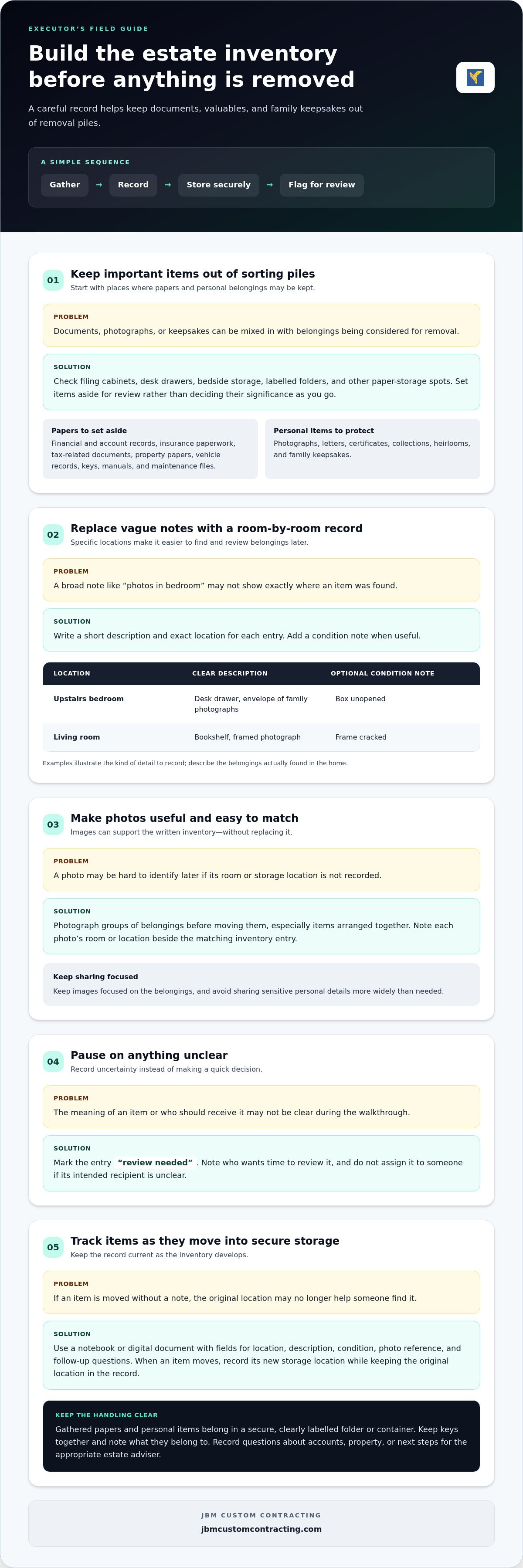
Before belongings are sorted or removed, create a clear record of what’s in the home and where it was found. A dependable estate cleanout checklist for executors follows a simple sequence: gather important items, photograph or record them, store them securely, and flag anything that needs review. This gives you a consistent reference for family discussions and helps keep valuable or personal items out of removal piles.
Which documents and personal items should be set aside first?
Check filing cabinets, desk drawers, bedside storage, labelled folders, and other places where papers may be kept. Set documents aside for review rather than deciding their legal or financial significance as you go. Keep photographs, letters, heirlooms, and personal keepsakes apart from items being considered for removal.
Examples to look for include:
- Financial and account records, insurance paperwork, and tax-related documents
- Property papers, vehicle records, keys, and manuals or maintenance files
- Personal photographs, letters, certificates, collections, and family keepsakes
Place gathered items in a secure, clearly labelled folder or container. Keep keys together and make a note of what they belong to. If you find papers that raise questions about an account, property, or the estate’s next steps, record the question for the appropriate estate adviser. Don’t discard a document simply because its purpose isn’t obvious.
How can an executor document an estate inventory clearly?
Use a room-by-room list with short descriptions and exact locations. A practical entry might read: “Upstairs bedroom, desk drawer, envelope of family photographs.” Add a brief note about condition when useful, such as “frame cracked” or “box unopened.” Specific descriptions help relatives review the same information without relying on memory or vague labels.
Photograph groups of belongings before moving them, especially items arranged together on shelves or inside storage areas. Keep images focused on the belongings and avoid sharing sensitive personal details more widely than needed. Record each photo’s room or location beside the inventory entry so it’s easy to match later. If an item’s meaning or intended recipient is unclear, mark it “review needed” rather than assigning it to someone.
Keep the inventory easy to update. A notebook or digital document can include columns for location, description, condition, photo reference, and follow-up questions. When an item moves into secure storage, note the new location but keep its original location in the record. This simple trail can prevent confusion when family members review belongings at different times.
Once records and keepsakes are accounted for and family decisions are documented, plan the next stage. If remaining belongings require a full property cleanout, JBM Custom Contracting’s junk removal service can help with the physical removal after your review is complete.
Family Decisions: Compare Keeping, Selling, Donating, and Removing Items
Once belongings are identified, give each item a clear next step before anything leaves the property. The right choice can depend on the estate’s instructions, family discussions, and the item’s condition. If you’re unsure whether an item can be sold, given away, or removed, pause and refer the question to the estate’s appropriate adviser.
A shared list helps everyone follow the same process. Include the item, its location, the proposed next step, who will coordinate it, and any unresolved question. Use categories as a starting point, not as automatic decisions:
| Category | Practical next step |
|---|---|
| Keep | Record who is retaining the item and where it will be stored. |
| Family claim | Note who wants to collect it and agree on a collection arrangement. |
| Sale | Set items aside and name who will coordinate any sale. Don’t assume a particular resale value. |
| Donation | Group possible donations for follow-up. Acceptance depends on the recipient, so don’t treat it as guaranteed. |
| Recycling | Keep suitable materials separate for review and planned recycling. |
| Removal | List unwanted items for removal planning once review is complete. |
How can family members review belongings fairly?
Give relatives a clear review window and explain how to share their requests. Family members who live outside Nanaimo or elsewhere on Vancouver Island can review the information without visiting the home. Room photographs and an item list can help, but keep images focused on belongings and share them only with people involved in the decisions.
Record agreed claims in the shared list, along with the person responsible for arranging collection and any agreed timing. If more than one person is interested in an item, mark it for discussion rather than moving it into a sale or removal group. Clear notes help prevent different recollections from turning into misunderstandings.
How should an executor choose an item’s next step?
Keep items that need family or adviser review out of removal piles. Group possible sale and donation items separately, and write down who will follow up. This makes outstanding decisions visible without suggesting that a buyer or donation recipient is guaranteed.
Once decisions are recorded, set aside unwanted furniture, appliances, yard waste, and debris for removal planning. JBM Custom Contracting provides junk removal for full property cleanouts in Nanaimo and nearby Vancouver Island communities. For a practical overview of property cleanout support, learn about JBM Custom Contracting.
A fair, documented review gives the executor a reliable basis for the next step in an estate cleanout checklist for executors: arranging removal only after family claims and unresolved questions have been addressed.
Room-by-Room Estate Cleanout Checklist for a Vancouver Island Property
With family decisions recorded and the inventory in hand, work through the property one defined area at a time. Use the same categories in each room: keep, family claim, sale, donation, recycling, removal, or review needed. This approach works for homes in Nanaimo, Lantzville, Parksville, Qualicum Beach, Ladysmith, Duncan, Cedar, Cowichan, Gabriola Island, and surrounding Vancouver Island communities.
Begin with visible, lower-sentiment areas, such as a storage room or garage. Leave personal spaces and keepsakes until you’re ready to review them carefully. Avoid combining items from different rooms, and keep anything uncertain in a separate, clearly marked area. That way, a completed space won’t become mixed with belongings still awaiting a decision.
What order makes room-by-room sorting easier?
Choose one manageable area and finish its first review before moving on. Keep walkways clear as you go, especially near entrances and stairs. Note bulky furniture, appliances, or other items that will need planned removal, rather than moving them around repeatedly. The aim is steady, traceable progress, not rushing through every room in a single visit.
A working checklist can include each room, its status, unresolved decisions, and removal needs. For example, mark a garage as “reviewed,” note a shelving unit as “family decision pending,” and list an unwanted appliance for removal planning. Update the record when an item moves or a decision is made. This gives relatives a clear progress snapshot and helps prevent a pile of items marked for review from being treated as cleared.
Use a simple room sequence, adjusting it to the property and family’s needs:
- Storage areas and garage: Review visible boxes, tools, and bulky items. Keep mixed or unlabelled containers separate until checked.
- Kitchen and shared living areas: Sort household items, furniture, and appliances by the agreed categories.
- Bedrooms and personal spaces: Take extra care with clothing, photographs, letters, and items that may need another family review.
- Sheds and outdoor areas: Record yard waste, debris, and large items separately so they can be included in the property plan.
What should executors consider after belongings are removed?
Once item decisions are complete, walk through the interior and exterior again. Note what remains to be cleaned, maintained, or removed, including yard waste or debris. If a shed, deck, or fence needs removal, the demolition contractor guide can help you understand the project considerations.
For a Nanaimo property that needs exterior washing, house washing services in Nanaimo use environmentally safe products. JBM provides a free consultation and clear, written quotes before work begins. The company also provides junk removal, including full property cleanouts, once belongings have been reviewed and removal needs are ready to plan.
Keep the final room checklist with the estate inventory. It gives you one clear record of completed areas, items still awaiting decisions, and work that remains, making this stage of an estate cleanout checklist for executors easier to manage.
When to Arrange Estate Cleanout Help in Nanaimo and Nearby Communities
Removal support is most useful once important documents and keepsakes are set aside, family members have had a fair chance to review belongings, and outstanding decisions are recorded. You don’t need to sort every item into a final category before planning the work. You do need to identify what is ready to go and what must stay untouched.
JBM Custom Contracting provides junk removal for single-item pickups and full property cleanouts. The service covers Nanaimo, Parksville, Ladysmith, Duncan, and surrounding Vancouver Island communities. The company is Certified, Licensed & Insured, and WorkSafeBC compliant.
What can a professional estate cleanout help with?
After sorting, an organized removal plan can help clear unwanted furniture, appliances, yard waste, and construction debris. Separate items ready for removal from anything still awaiting a family or adviser decision. A room list noting the type and location of items helps define the scope. JBM’s Junk Removal service supports jobs ranging from a single item to a full property cleanout.
For practical background on planning removal, see the estate cleanout and junk removal guide. It can help you think through what remains to be cleared while keeping the executor’s decisions at the centre of the plan.
How can executors take the next step with JBM Custom Contracting?
When you’re ready to discuss the remaining work, describe the property, the items that need removal, and its location. Mention whether the job involves a few bulky items, household contents, or a full property cleanout. These details help make the request clear. JBM responds to inquiry forms within 12 hours.
A free consultation and clear, written quote are provided before work begins, so you can review the proposed work before deciding how to proceed. Plan the cleanout around completed family decisions and the property’s specific needs.
Move Forward With a Clear, Manageable Plan
The next step doesn’t have to be a major one. Confirm which belongings are ready to leave or note what still needs a family decision. A written plan helps you keep moving without treating every item as urgent, and gives relatives a clear view of what happens next.
Use your estate cleanout checklist for executors as a working document, not a demand to finish everything at once. Update it as decisions are made, and keep unresolved questions visible so they don’t get lost in the work. When removal is ready to arrange, a clear picture of the property and remaining items can make the conversation more focused.
Protect what matters, give decisions the attention they deserve, and take the work one step at a time. A steady plan can help bring the property toward its next chapter while making the process easier to manage.
Start with the next clear decision, then build from there.
Frequently Asked Questions
What should an executor do first when clearing an estate?
First, pause general disposal and secure items that could be hard to replace. Look for papers and keys in likely storage spots, and separate photographs, letters, and keepsakes from anything being cleared. Then make a simple room list and note urgent property concerns, such as a door that won’t lock. This estate cleanout checklist for executors is practical guidance, not legal advice. Take situation-specific legal or financial questions to the appropriate estate adviser.
How do executors handle an estate cleanout when family members live far away?
Share a current room inventory and photographs so relatives can review belongings without travelling to the property. Agree on a review period that considers people’s circumstances, and choose a clear way to record requests, such as a shared document or email thread. Keep disputed or uncertain items separate while waiting for responses. Remote review can help family members take part, though some choices may still need discussion or an in-person look.
What should an executor do with valuables found during a cleanout?
Set suspected valuables aside, note the room and exact place where each was found, and keep them secure while following the estate’s instructions. For example, record whether an item came from a desk drawer or a storage box, rather than simply writing “jewellery” on a list. Don’t assign a value or decide to sell it based on appearance. Refer questions about ownership, valuation, or distribution to the appropriate estate adviser.
Can an estate cleanout include furniture, appliances, and yard waste?
Yes. JBM Custom Contracting’s Junk Removal includes furniture, appliances, yard waste, and construction debris, with service ranging from single-item pickups to full property cleanouts. Before arranging removal, finish the document and keepsake review and record family decisions about belongings. This helps distinguish items that are ready to go from those that must remain. Service is available in Nanaimo and nearby Vancouver Island communities, including Parksville, Ladysmith, and Duncan.
How can an executor keep track of what has been removed from each room?
Use a room-by-room inventory and give each item a simple status, such as review, family claim, sale or donation consideration, or removal. Add the person responsible for the next decision or action, then update the entry once the item has left the room. Keep questions that need an adviser’s input on a separate list. This record makes it easier to see what remains and helps avoid moving undecided items by mistake.
Does JBM Custom Contracting serve estate cleanouts around Nanaimo?
Yes. JBM Custom Contracting serves Nanaimo, Parksville, Ladysmith, Duncan, and surrounding Vancouver Island communities. Its Junk Removal service covers single-item pickups through full property cleanouts, so executors can describe the size and needs of the job. The company is Certified, Licensed & Insured, and WorkSafeBC compliant. We respond to inquiry forms within 12 hours. Include the property location and a brief description of the items in your inquiry.
How should an executor prepare before arranging junk removal?
Secure important papers and keepsakes, complete the family review, and mark which belongings are ready for removal. Note practical details that may affect access, such as items in a basement, an upper floor, or an outdoor area. A clear inventory helps explain the work during a free consultation. JBM Custom Contracting provides clear, written quotes before work begins, so you can review the proposed work without relying on an assumed schedule or price.


