


The best moss killer for roofs in Canada is one that suits your roofing and gutter materials while balancing visible results, regrowth control and runoff risk. Treatments vary: some show results in hours, while “spray and leave” options can take weeks or months. Choose a product designed for roofs, and check that its label covers your shingle and gutter materials.
It’s understandable to want moss gone quickly, especially when it’s thick or growing in a shaded, north-facing area. But speed isn’t the only measure of a good choice: the treatment must also suit the roof and be used carefully around plants and runoff. In Canada, a product sold to kill moss must carry a Pest Control Products Act registration number on its label.
This guide compares common roof moss-control options by speed, regrowth control, compatibility with roofing and gutters, and runoff concerns. You’ll also find practical advice for shaded roofs and a decision guide to help match a treatment to your roof.
Key Takeaways
- Match the treatment to your roof and gutter materials, and use products made for roofs rather than lawn moss killers.
- Compare treatments by how quickly they show results, how they help manage regrowth, and what they may mean for runoff.
- On shaded or north-facing areas, thick moss can affect treatment; removal and product choice both matter.
- Reduce conditions that favour moss by keeping leaves and other debris from accumulating on the roof and in gutters.
- When roof moss or debris needs professional attention, Moss & Gutter Cleaning can help address the buildup.
What makes a roof moss killer “best” (kill speed, regrowth control, shingle safety, runoff risk)?
The best choice balances visible results, roof-material compatibility and runoff concerns. Start with the product label, then consider the roof’s condition, slope and nearby surfaces.
Moss Killer Products and Methods
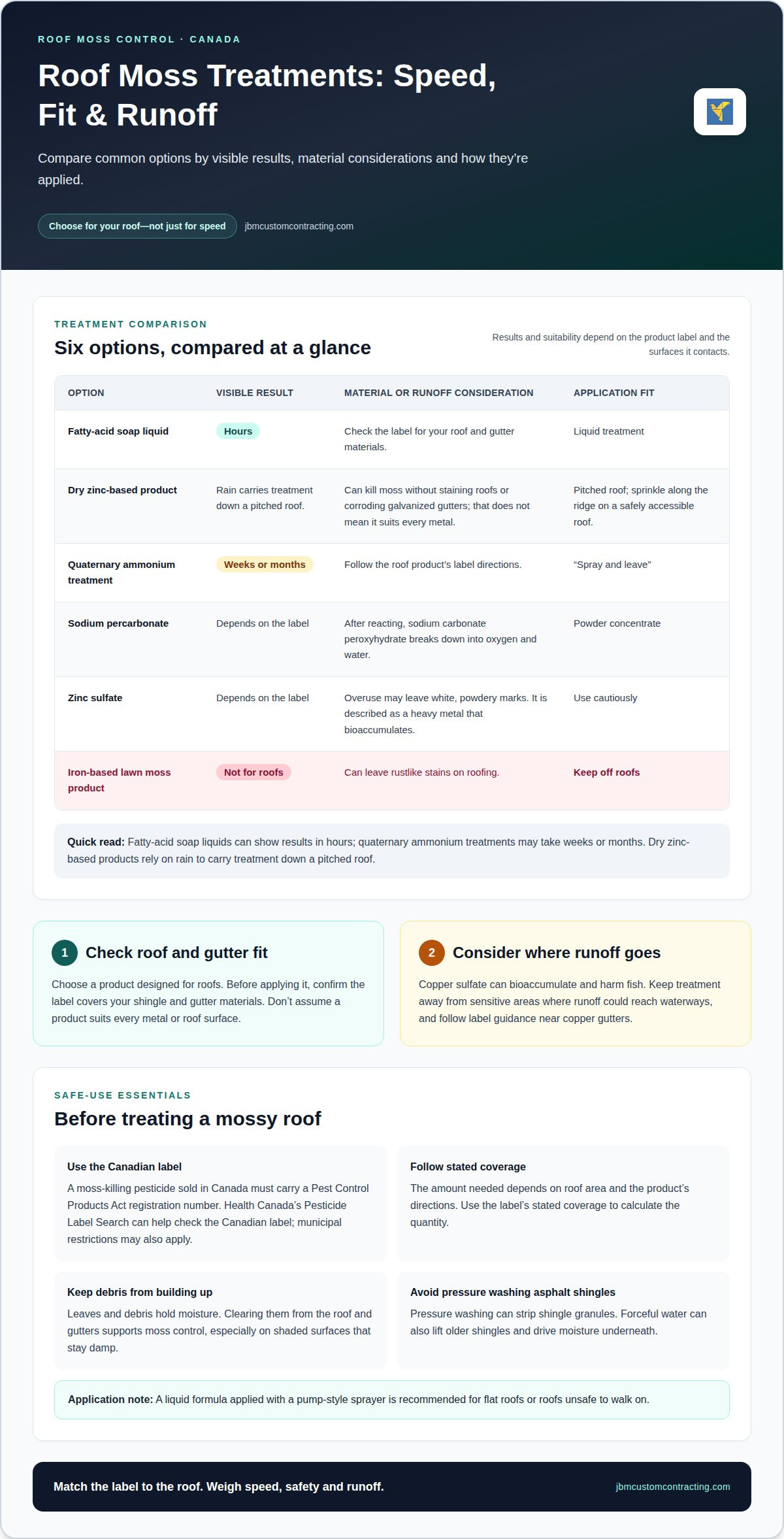
Liquid treatments based on ammoniated soap of fatty acids can show visible results in hours. Dry zinc-based products work differently, relying on rain to carry treatment down a pitched roof. Quaternary ammonium “spray and leave” treatments can take weeks or months to show results. Sodium percarbonate is another option; reacted sodium carbonate peroxyhydrate breaks down into oxygen and water.
These methods differ in speed and application, not just ingredients. Avoid lawn moss products on roofs because iron-based formulas can leave rustlike stains. Zinc sulfate may leave white, powdery marks when overused, and it is described as a heavy metal that bioaccumulates. Consider runoff and nearby surfaces before choosing a treatment.
Roof Material Safety
Roof-material safety depends on the exact formula and the surfaces it contacts. Before application, check that the label lists your shingle and gutter materials. A product made for roofs is a better fit than a lawn treatment, which can stain roofing. Zinc-based dry products can kill moss without staining roofs or corroding galvanized gutters, but that does not mean they suit every metal.
Copper sulfate raises a separate runoff concern because it can bioaccumulate and harm fish. Keep treatment away from sensitive areas where runoff could reach waterways. For copper gutters or nearby roof surfaces, follow the label’s material guidance rather than assuming a product is safe for every metal.
Are there Canadian regulations or municipal restrictions on roof moss-killer products? A moss-killing pesticide sold in Canada must carry a Pest Control Products Act registration number on its label. Health Canada’s Pesticide Label Search can help you check the Canadian label; also assess municipal restrictions for the specific location.
How much do roof moss killers cost in Canada, and how much product is needed per roof area? The amount needed depends on the roof area and the product’s label directions, so use its stated coverage to calculate the quantity.
Maintenance helps limit conditions that encourage roof moss. Clear leaves and debris from the roof and gutters, since trapped material holds moisture. This supports moss control between treatments, especially where shaded surfaces stay damp. On a safely accessible pitched roof, dry formulas can be sprinkled along the ridge so rain carries them downward.
Roof safety matters as much as product choice. Pressure washing asphalt shingles can strip their granules, while forceful water can lift older shingles and drive moisture underneath. Avoid pressure washing asphalt roofing; use a roof-appropriate method instead. A liquid formula applied with a pump-style sprayer is recommended for flat roofs or roofs unsafe to walk on.
| Option | Visible result | Material or runoff consideration | Application fit |
|---|---|---|---|
| Fatty-acid soap liquid | Hours | Check label for roof and gutter materials | Liquid treatment |
| Dry zinc-based product | Rain carries treatment | Can avoid roof staining and galvanized-gutter corrosion | Pitched roof |
| Quaternary ammonium treatment | Weeks or months | Follow roof label directions | Spray and leave |
| Sodium percarbonate | Label-dependent | Breaks down into oxygen and water after reacting | Powder concentrate |
| Zinc sulfate | Label-dependent | Overuse may leave white marks; bioaccumulates | Use cautiously |
| Iron-based lawn moss product | Not a roof treatment | Can leave rustlike roof stains | Keep off roofs |
Choose a treatment by matching its label to the roof materials, then weigh application safety, speed and runoff exposure.
Bleach risks to shingles, metals, and plants
Chlorine bleach can be used in some roof-cleaning methods, but application and runoff need care. ARMA recommends a 50:50 mix of laundry-strength liquid chlorine bleach and water for a roof soft wash, with a 15 to 20 minute dwell. That guidance is not a reason to apply bleach without considering the roof’s material, nearby metal, and landscaping.
Bleach solution can run over shingles and onto gutters, flashing or other roof surfaces. Before treatment, read the product label and follow its directions for the specific roofing and gutter materials. Pay close attention where copper gutters sit below the treated area. Don’t assume a mixture suitable for one roof is appropriate for every metal or shingle type.
Plants below the roofline also need protection. Cover them before treatment, especially beneath eaves where solution or rinse water may drip. If product lands on foliage, rinse the plants well with water. For example, protect shrubs directly below a roof edge, then watch for runoff as the treated area is rinsed. Keep treatment from flowing into drains or waterways whenever possible.
Waterway protection matters because roof runoff can carry treatment away from the surface. Copper sulfate is a moss-control chemical with a known environmental concern: it is a heavy metal that can bioaccumulate and harm fish. Don’t treat it as interchangeable with bleach. Consider where rainwater drains, and avoid letting treatment enter a stream, pond or fish-bearing waterway.
For safer application, follow these steps:
- Read the label for the roof surface and application directions before preparing any solution.
- Cover plants below the roofline, including shrubs and garden beds near the eaves.
- Use the stated mix and dwell time; ARMA’s soft-wash recommendation specifies 15 to 20 minutes.
- Watch where runoff travels, and rinse plants well if product drips onto them.
- Keep bleach and copper sulfate distinct; copper sulfate carries its own fish and bioaccumulation concern.
Bleach treatment is not the right choice for every roof or site. A roof with sensitive nearby planting, copper features, or drainage toward a waterway needs careful planning before treatment. If roof moss removal calls for professional handling, professional moss removal can be a practical next step.
What’s the best pick for heavy shade and north-facing roof areas?
Shade keeps roof surfaces damp, giving moss room to spread, especially on north-facing slopes. Match the treatment to the roofing material, moss thickness and runoff path.
Treatments for Shaded Roof Areas
For shaded areas, a “spray and leave” treatment containing quaternary ammonium compounds offers a slower approach. Results may take weeks or months, so it won’t suit anyone expecting quick visible change. Compare that timing with treatments that show results sooner, and consider whether the roof stays damp beneath overhanging branches or nearby trees.
Cedar and asphalt shingles need different material checks, not a one-product-fits-all assumption. Before application, read the product label for the exact roof type. On asphalt, avoid pressure washing because it can strip shingle granules. For cedar, use only a treatment whose label includes that roofing material, and avoid forceful cleaning that could disturb the roof surface.
Zinc Sulfate and Runoff Precautions
Zinc sulfate is not regulated for roof moss removal, but it is a heavy metal that bioaccumulates. That makes runoff an important consideration, particularly where roof drainage reaches a garden, pond or waterway. Excessive zinc sulfate can also leave white, powdery marks on roofing, so avoid overapplication and follow product directions.
Before treating a shaded roof, trace where rainwater leaves the eaves and downspouts. This helps identify nearby plants and waterways that could receive runoff. If you’re considering zinc sulfate, weigh those pathways alongside the roof’s moss coverage and material.
When is the best time of year to treat roof moss in Canada? Treat moss while it’s actively growing, particularly during fall rains, moderate winters and early spring. For fall treatment, aim for before peak rains, when moss is damp and no rain is forecast for a few days.
Thick moss needs attention before treatment. Its upper layer can shield the moss below, so remove excess growth first where the roof can be accessed safely. After treatment, rain can wash dead moss away; a broom or rake can speed removal. Avoid scraping or pulling in ways that could lift shingles or damage cedar.
Use this sequence for a shaded, moss-covered roof:
- Identify whether the surface is cedar or asphalt shingles.
- Check the label for that roofing material and review the runoff path.
- Remove excess moss before applying treatment, without damaging the roof.
- Allow slower “spray and leave” products time to work.
- Let rain carry away dead moss, or use a broom or rake carefully.
Annual treatment before the rainy season can help control recurring growth. On a shaded, north-facing slope, also clear leaves and debris that hold moisture against the roof. Recheck the area after treatment, since dense shade can continue to favour moss growth.
How to compare moss killers by speed, regrowth control, shingle safety, and runoff risk
Compare roof moss treatments using four practical criteria: visible results, ongoing control, roof compatibility and runoff. A product’s label and application method matter as much as its active ingredient.
Kill Speed
For a faster visible change, compare products based on ammoniated soap of fatty acids, which can show results in hours. Quaternary ammonium “spray and leave” treatments can take weeks or months. Dry products rely on rain to carry treatment down a pitched roof, so their action depends on rainfall reaching the treated areas.
Separate visible results from moss removal. Dead moss may remain attached after treatment; rain can wash it away, while careful use of a broom or rake can speed removal.
Regrowth Control
Regrowth control depends on more than the treatment itself. A shaded roof that holds moisture and leaves can continue to favour moss, even after treatment. Clear roof and gutter debris, then plan treatment before the rainy season each year to help manage recurring growth.
Compare the product’s intended use and timing with your roof conditions. For example, a slow “spray and leave” treatment may suit a roof where gradual results are acceptable, while active growth and a clear treatment window can influence when to apply it.
Shingle Safety
Shingle safety starts with matching the product label to the roof and gutter materials. Roof treatments are designed for roofing; lawn moss products with iron can leave rustlike stains. Avoid pressure washing asphalt shingles, since the force can strip their protective granules. Older shingles can also lift, allowing water beneath the roofing.
For any method, compare the application requirements with roof access and slope. A liquid formula applied with a pump-style sprayer is recommended for flat roofs or roofs unsafe to walk on.
Runoff Risk
Runoff risk depends on the ingredient and where roof drainage flows. Zinc sulfate is a heavy metal that bioaccumulates, and excess use can leave white, powdery marks. Copper sulfate can bioaccumulate and harm fish. Trace downspouts before treatment, especially when drainage reaches gardens or waterways.
Other products also need careful application around plants. Cover plants below the roofline and rinse them well if product drips onto foliage.
| Option | Speed | Regrowth and roof considerations | Runoff consideration |
|---|---|---|---|
| Fatty-acid soap liquid | Visible results in hours | Check roof-material label | Protect plants below eaves |
| Quaternary ammonium | Weeks or months | Spray-and-leave approach | Follow label directions |
| Dry zinc-based formula | Rain carries it down | For pitched roofs | Consider drainage route |
| Zinc sulfate | Label-dependent | Excess can mark roofing | Bioaccumulates |
First compare label-approved materials, then weigh result timing, safe application and where runoff travels.
Which roof moss killers are safest for asphalt shingles, metal, tile, and cedar?
No single moss killer suits every roof material. Start by matching the product label to the roof and gutter materials, then compare the application method and runoff path.
Asphalt shingles: Choose a roof treatment whose label includes asphalt shingles. Avoid pressure washing, which can strip shingle granules; forceful water can also lift older shingles and drive water underneath. A liquid product applied with a pump-style sprayer suits flat roofs or roofs unsafe to walk on.
Metal roofing: Metal types differ, so follow the label’s material guidance rather than assuming every formula suits every metal. Zinc-based dry products can kill moss without staining roofs or corroding galvanized gutters. That specific benefit does not establish compatibility with other metals, including copper.
Tile: Before applying a treatment, check that its label names the roof’s tile material. Avoid using lawn moss products on tile roofs, since iron-based products can leave rustlike stains. Consider how the product will be applied and where rain will carry it from the roof.
Cedar: Select a roof moss treatment only when its label covers the cedar surface. Avoid forceful cleaning that could disturb roofing materials. Thick moss can shield growth below, so remove excess moss carefully before treatment where access is safe.
These material checks help narrow the choices, but the treatment still needs to suit the roof’s condition. Compare the main options this way:
- Fatty-acid soap liquid: Can show visible results in hours; check its label for the roof material.
- Quaternary ammonium treatment: A “spray and leave” option that may take weeks or months.
- Dry zinc-based product: Rain carries it down pitched roofs; its stated benefit includes galvanized gutters.
- Sodium percarbonate: Reacted sodium carbonate peroxyhydrate breaks down into oxygen and water.
For any roofing type, don’t treat a product’s performance on one surface as proof of safety on another. Read the label for both shingles and gutters, then account for nearby plants and waterways. Copper sulfate, for example, can bioaccumulate and harm fish, making runoff direction a relevant factor.
Use this quick check before choosing:
- Identify the roof material and gutter metal.
- Confirm both appear on the product label.
- Choose a roof-designed treatment, not a lawn moss killer.
- Match the application method to the roof’s slope and safe access.
- Consider where runoff will flow after rain.
Arrange professional roof moss removal
JBM Custom Contracting: Renovations
JBM Custom Contracting provides Moss & Gutter Cleaning for property owners dealing with roof moss and debris-filled gutters. It’s a practical option when roof access feels unsafe, moss has built up, or routine clearing is difficult to manage. Keeping gutters clear also helps prevent leaves and other debris from collecting and holding moisture near the roofline.
For wider property needs, JBM Custom Contracting also provides Renovations, Demolition Services and Junk Removal. Choose the service that fits the work you need, whether it’s exterior upkeep or another property project.
Contact JBM Custom Contracting to discuss your property needs
Make your next roof-care step a practical one
Choosing the best moss killer for roofs in Canada is a starting point, not the whole maintenance plan. A roof’s condition, drainage and surrounding shade can influence what needs attention next. Note where moss returns and whether leaves or debris collect nearby. That record can help you plan future upkeep around the roof’s trouble spots.
If the work involves more than choosing a treatment, JBM Custom Contracting provides Moss & Gutter Cleaning, Renovations and Demolition Services. These services can support property maintenance when roof and gutter cleanup is part of a larger project.
A clear, careful approach helps protect the roof while planning ongoing care. Choose the next step that fits your property and move forward with confidence.
Frequently Asked Questions
Cedar vs asphalt shingles: do you treat them the same?
No. Choose a treatment whose label names the roof’s specific material, since cedar and asphalt shingles shouldn’t be assumed to have identical compatibility. Consider the roof’s condition before removing moss, too. On asphalt, forceful washing can strip granules, while aggressive scraping can disturb either roofing surface. If you can’t identify the roofing material or access the affected area safely, don’t apply a product until those details are clear.
What about lichen?
Lichen is different from moss, so don’t assume a moss treatment will remove it. Check the product label for lichen as a target and for compatibility with your roof material. Lichen may remain attached after treatment, so avoid forceful scraping that could damage shingles or cedar. If the roof surface is fragile or the growth is widespread, careful assessment and a suitable removal method matter more than applying extra product.
What’s one simple thing that reduces moss growth fast?
Clear leaves and other debris from the roof and gutters. Debris can hold moisture against roofing, creating conditions that favour moss. Start by clearing material from gutters and roof valleys where it collects, but don’t climb onto a roof that feels unsafe. Keeping nearby branches from continually dropping leaves may also reduce repeat buildup. This maintenance won’t remove established moss, but it helps address a condition that encourages regrowth.
What are the best moss killers for roofs available in Canada?
The right choice depends on your roof material, preferred application and runoff route. Compare roof-labelled liquid treatments, dry formulas carried by rain, and slower “spray and leave” products. A product that suits a pitched asphalt roof may not suit cedar, tile or metal. In Canada, a pesticide sold to kill moss must carry a Pest Control Products Act registration number on its label. Choose by fit, not speed alone.
What active ingredients are used in Canadian roof moss-removal products, and how well do they work?
Roof treatments include ammoniated soap of fatty acids, quaternary ammonium compounds, zinc-based formulas and sodium percarbonate. Fatty-acid soap treatments can show visible results in hours, while quaternary ammonium “spray and leave” products may take weeks or months. Sodium percarbonate products act differently after reacting. Zinc sulfate and copper sulfate can build up in living things, so consider runoff and follow the product label rather than applying extra treatment.
What are the best non-chemical methods for removing moss from a roof?
Careful physical removal with a broom or rake can help clear dead or excess moss, but the tool and pressure matter. Work with the roofing surface, not against it, and avoid pulling up shingles or damaging cedar. Don’t pressure wash asphalt shingles because it can strip granules. For a flat roof or one unsafe to walk on, a pump-style sprayer is recommended for liquid treatment instead of walking across the roof.
How do you apply roof moss killer safely and effectively?
First identify the roofing and gutter materials, then read the label for approved surfaces, coverage and application directions. Check where downspouts carry runoff, clear loose leaves, and protect plants below the roofline. Apply only as the product specifies. A dry formula may suit a safely accessible pitched roof, while a liquid formula with a pump-style sprayer is recommended for flat or unsafe-to-walk-on roofs. Don’t pressure wash asphalt shingles.
Can roof moss-killer runoff harm plants, pets, waterways, or roofing materials?
Yes, runoff can affect nearby plants, waterways and roof surfaces, depending on the product. Cover plants below the roofline and rinse them well if treatment drips onto foliage. Copper sulfate can build up in living things and harm fish; zinc sulfate can also build up in living things. Products may stain or affect some materials, so follow the label for shingles and gutters. Keep pets away from treated areas as directed on the product label, and prevent runoff from reaching ponds or streams.


