


Fence material matters, but it isn’t the only factor in the cost to remove a fence in Canada. Length, concrete-set posts, site access, and debris disposal all affect the work, so similar-sized fences may need different removal plans. A useful estimate starts with the fence type and a clear description of what needs to be removed.
It’s reasonable to want a clear figure before deciding whether to tackle the job yourself or hire help. Removal costs depend on the fence and project scope. This guide explains what can add work, how to plan disposal, and when DIY may be a practical option.
You’ll also learn what happens to the old materials, how concrete posts affect removal, and when DIY makes sense. The result is a practical way to assess the job and choose an approach that suits your property.
Key Takeaways
- Fence material, length, access, and concrete-set posts all affect the removal plan and the final estimate.
- Before removing a fence on a shared property line, understand how boundary ownership and local permit requirements may affect the work.
- Plan the removal and debris handling together to avoid extra hauling and dispose of treated lumber safely.
- DIY may suit a straightforward fence, while heavy materials, difficult access, or concrete footings can make professional help more practical.
- Removing posts from concrete takes more than pulling them out; footing removal, backfilling, and grading shape the finish.
1. How Much Does Fence Removal Cost by Type?
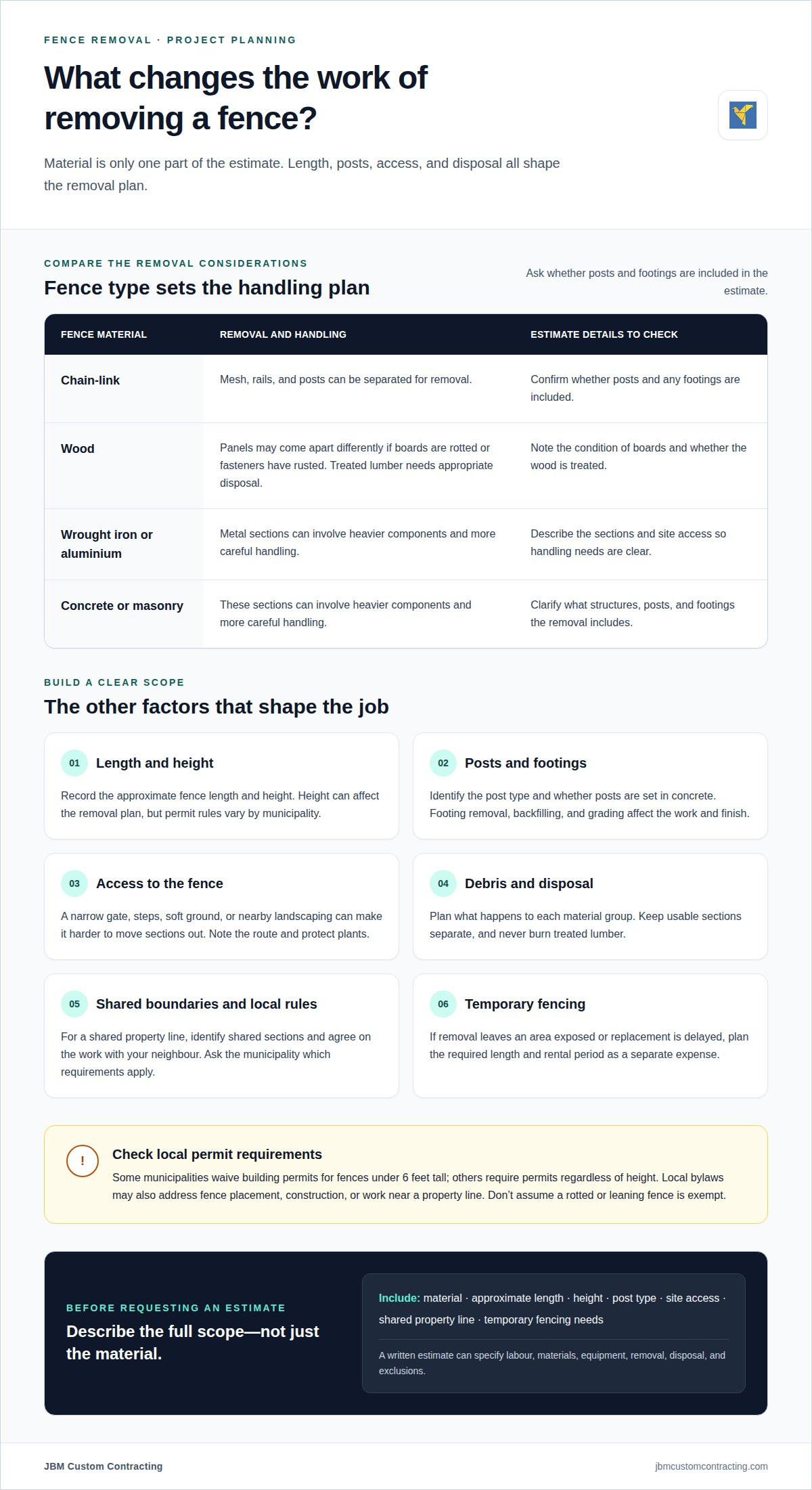
The cost to remove a fence depends on its material, length, posts, access, and disposal needs. A light chain-link fence is different from a masonry barrier or a fence with heavy concrete footings. JBM Custom Contracting prepares a written estimate based on the project scope, including labour, materials, equipment, removal, disposal, and any exclusions.
Material affects how a fence is dismantled and how debris is handled. Chain-link fencing can be separated into mesh, rails, and posts. Wood panels may come apart differently if boards are rotted or fasteners have rusted. Treated lumber needs appropriate disposal. Wrought iron, aluminium, and concrete or masonry sections can involve heavier components and more careful handling. An estimate should specify whether posts and footings are included.
Height can affect the removal plan, but it doesn’t create one Canada-wide permit rule. Some municipalities waive building permits for fences under 6 feet tall, while others require permits regardless of height. Local bylaws may address fence placement, construction, or work near a property line. Before removal, identify the municipality and ask its building department which requirements apply to the property. Don’t assume a rotted or leaning fence is exempt.
For a fence on a shared property line, identify which sections are shared and agree with your neighbour on the planned work. Clarifying the boundary and removal scope can prevent disputes over posts, panels, or replacement plans. If the boundary is uncertain, resolve that before dismantling anything that may belong to both properties.
Temporary fencing may be useful if removal leaves an area exposed or work pauses before replacement. Include the required length and rental period in your plans as a separate expense. A brief gap between removal and replacement has different needs from a longer pause.
For a practical estimate, document the fence material, approximate length, height, post type, and site access. Note whether it borders a neighbour’s property and whether temporary fencing is needed. These details help distinguish straightforward panel removal from work involving local permit requirements, shared boundaries, or substantial footings.
2. Ways to reduce removal costs
Separate necessary work from optional work. If only one leaning panel needs attention, removing the entire fence may be unnecessary. A focused repair can preserve sound sections and avoid disturbing stable posts. Identify whether the damage is limited to boards, rails, or one post before deciding on full removal. Several failing sections may call for broader work, but the scope should match the fence’s actual condition.
Material and construction affect the work involved. Chain-link can be unfastened and rolled, while privacy fencing has solid panels and more boards to handle. Metal sections may be heavier, and masonry requires a different removal approach. Plan for treated-wood disposal from the start. Separate materials where practical, and never burn treated lumber. Keeping the work area orderly also makes it easier to sort debris rather than handling mixed waste together.
Consider access before arranging equipment or removal. A narrow gate, steps, soft ground, or nearby landscaping can make it harder to move fence sections out of the yard. Clear a practical route to reduce handling and protect plants. Keep retained fencing separate from material for disposal. If the fence borders a garden, mark the sections to remove so useful panels aren’t taken down by mistake.
For a DIY project, rent tools only for the time you need them. Group the posts that need pulling and work through them efficiently. If concrete footings make the job harder, account for the extra digging and hauling rather than assuming a rental tool will solve every issue.
Replacement decisions also affect the total project budget. Replacing only damaged sections avoids disturbing sound fencing, while a full rebuild may make sense when decay is widespread. Assess posts, rails, and panels separately. Decorative fencing and tall privacy fencing serve different purposes, so replacing one with the other changes the amount of material and labour involved. Decide on the function first, then match the replacement scope to it.
Ask for an estimate that separates dismantling, post or footing work, hauling, and disposal. These details show what the work includes and make it easier to adjust the scope. If the plan includes new fencing, keep removal and construction tasks distinct. This helps avoid removing sections that can remain in place.
3. Removal process and debris disposal
How much do fence removal contractors charge for labour and disposal?
An orderly removal starts with a clear sequence. The crew separates the fence into manageable sections, then removes rails, panels, mesh, or boards. Posts and concrete footings may need separate handling. Sorting the materials helps distinguish reusable or recyclable items from debris for disposal. For a long fence line, a defined work area also helps keep loose pieces from spreading across the yard.
Material affects cleanup. Wooden boards can be stacked separately from metal fasteners, while wrought iron sections need careful handling because of their weight. Clean, untreated lumber may be suitable for recycling; metal hardware and railings can go to scrap. Concrete footings may be directed to aggregate recycling. Pressure-treated wood needs proper disposal and should never be burned, because burning releases toxic chemical fumes.
Before work begins, decide what happens to each material group. A contractor may haul debris away, or you may arrange a local collection or disposal option. Accepted materials and handling can depend on local services and the material itself. Keep usable sections separate from waste, and don’t mix treated lumber with clean, untreated wood intended for recycling.
Disposal costs can rise when a fence includes heavy posts, concrete, or mixed materials. The amount of debris, access, and hauling required all affect the work. Confirm whether an estimate includes transport and disposal or only dismantling. That distinction matters: a low removal figure may not cover taking the debris away.
If you handle disposal yourself, you’ll be responsible for sorting, transport, and arranging appropriate disposal. JBM Custom Contracting offers selected small demolition and removal projects, with removal needs and waste handling reviewed as part of the scope. Plan cleanup before dismantling begins, especially if the fence is treated wood or has concrete footings.
After the last section is removed, clear small fragments and check for protruding fasteners or leftover debris. Keep recyclables separate, contain waste safely, and leave access paths clear. These final steps reduce the chance of scattered material remaining in the yard and make the site easier to use.
4. DIY removal versus hiring professionals
DIY removal may suit a short, accessible fence with straightforward connections. You can cut rails, remove panels, and sort debris at your own pace. The work changes when posts are set in concrete or the fence is close to landscaping. Pulling a post can disturb the surrounding ground, so plan for footing removal and site cleanup, not just dismantling panels.
Tools add to a DIY budget. Those purchases may make sense for other projects, but a one-time removal can also involve rental costs and disposal arrangements. Tool expenses are only part of the comparison.
Time matters, too. Even removing a simple fence can take more than 40 hours. A two-person crew can complete a 50–75-linear-foot fence project, including old fence removal, in 1–2 days. That difference may matter if the yard needs to be cleared promptly or homeowners have limited time for sustained physical work.
Consider professional help for long fence lines, awkward access, heavy materials, or concrete-set posts. JBM Custom Contracting can manage selected small demolition and removal projects, including debris handling as part of the agreed scope. Ask for the estimate to distinguish fence sections, posts, footings, and disposal.
Removal and installation are different jobs. Taking down a fence means dismantling existing materials and addressing the posts or footings. Installing a replacement requires planning the new layout, setting posts, and assembling the fence. DIY removal may be manageable even when replacement needs more precise alignment, especially on uneven ground. Municipal requirements can also affect replacement plans, so consider removal and new construction separately.
Choose DIY when the fence is small, access is clear, and you can handle the tools and debris. Choose professional removal when the posts are difficult to extract, the material is heavy, or the work needs to be completed as one coordinated job. For a project that also leaves bulky material behind, junk removal services can address the disposal portion.
Before deciding, map the fence length, count the posts, and note concrete footings or tight access. Then compare the tools you need, available time, hauling plan, and work required after the posts are removed. This practical list helps you judge whether DIY saves effort overall, not just labour costs.
5. How do you remove old fence posts from concrete?
The cost to remove and dispose of fence posts and concrete footings depends on their number and size, site access, and how the concrete is handled. Digging out each footing adds work beyond removing fence panels, and hauling concrete adds to the project scope.
Separate the fence panels from the posts first. For chain-link, detach the mesh and rails before tackling each post. This clears working space and prevents panels from catching as they come down. Plan concrete removal separately from dismantling, since digging or breaking footings creates heavy debris that needs its own handling plan.
Next, dig around the footing to expose its edges. Depending on its size and condition, the concrete may be lifted with the post or broken apart for removal. The right approach depends on the footing, ground conditions, and nearby landscaping. In a tight backyard, work carefully around roots, paving, and buried services rather than pulling forcefully and disturbing a larger area.
Concrete-set posts can be difficult to lift because their footings anchor them below ground. A post puller may help with suitable posts, but larger footings may require more digging or concrete-breaking work. Keep the area clear while removing each footing, and move the concrete away from the hole before continuing. This makes it easier to spot remaining pieces and avoid leaving debris near the surface.
After removal, inspect each hole for loose concrete and damaged soil. Clear debris that could interfere with later work, then backfill with suitable soil in layers. Compact each layer to limit settling, and grade the surface to match the surrounding yard. A low spot can collect water, while excess soil can leave a raised mound that needs levelling.
If you plan to replace the fence, coordinate the filled holes with the new layout. Replacement posts may need different positions, so filling old holes completely helps keep the work area clear. If the backyard will remain open, grade the surface to blend with the surrounding ground and avoid obstructing lawn care or foot traffic. Check for loose soil or visible dips after grading.
Include panels, posts, footings, hauling, and backfilling in the work scope. An estimate that covers only panel removal may leave concrete disposal and site restoration outside the agreed work. For concrete-heavy removals, demolition services for fence removal can address dismantling and footing work together.
JBM Custom Contracting: FENCE CONSTRUCTION AND REPAIRS
JBM Custom Contracting provides fence construction and repairs, helping property owners move from removal to the next stage of a project. The team can help when a damaged fence needs repair, when you’re planning replacement fencing, or when a selected small demolition and removal project includes debris to clear. The company also provides junk removal for residential and commercial properties.
For a repair, replacement, or removal project, the next step is to describe the fence, its condition, and the work you have in mind. That gives the team a clear starting point for understanding your property needs.
Contact JBM Custom Contracting to discuss your fence project.
Plan the Next Step for Your Property
Before work begins, decide what you want the cleared space to do next. An open yard, a repaired boundary, and a replacement fence each call for a different plan. That decision keeps the cost to remove a fence connected to the work you need, rather than removing more than necessary or leaving unfinished tasks behind.
Think through access, the fence’s condition, and what should happen to the site afterwards. If the project involves more than dismantling, describe the full scope, including any follow-on work. Clear information about your property and intended outcome makes it easier to discuss practical next steps.
JBM Custom Contracting can help with fence construction and repairs, as well as related property work. Contact the team to discuss what your project needs.
A well-planned project leaves you ready to make good use of the space again.
Frequently Asked Questions
How Much Does Fence Removal Cost by Type?
Fence removal costs vary by material and scope. Post removal may add work.
How do you remove old fence posts from concrete?
Separate nearby panels, then dig around each footing to expose its edges. Depending on the footing’s size and condition, remove it with the post or break the concrete into manageable pieces. Clear fragments from the hole before backfilling. For replacement fencing, position new post holes according to the new layout rather than assuming the old positions will work.
Do I need a permit to remove a deck or fence?
Permit requirements depend on the municipality and project. Fence rules can vary by height, location, and local bylaws. For properties in Nanaimo, Lantzville, Duncan, Ladysmith, Cedar, Parksville, Qualicum Beach, Cowichan, or Gabriola Island, check the municipality responsible for the property before scheduling work. Removing an existing fence or deck may have different requirements from building a replacement, so assess each part separately.
Fence Removal Materials: Which Tools Fit Your Budget?
Common DIY tools include a shovel, saw, wire cutters, gloves, and eye protection. Concrete-set posts may need additional equipment, so the tool budget depends on the fence’s construction and footing type.
How much does fence removal cost per linear foot in Canada?
These ranges help with early planning, but they aren’t interchangeable: posts, concrete, access, and included disposal work all affect the project scope.
What is the average total cost to remove a fence in Canada?
A specific project may fall above or below that figure because fence length, material, posts, site access, and disposal all affect the work. Compare estimates using the same scope, including whether footings, hauling, and cleanup are included.
How much does it cost to remove a wood, vinyl, chain-link, or metal fence?
Fence construction and footing details affect the final scope, so material alone doesn’t determine the total.
What factors affect fence removal costs, such as fence length, height, and condition?
Length determines how much fencing must be dismantled, while height and condition can affect handling and access. Rotted boards may come apart differently from intact panels. Concrete-set posts, narrow routes through a yard, and hauling requirements add work. Disposal also depends on the materials. A clear estimate should distinguish the fence itself from posts, footings, transport, and cleanup.


