


Could your backyard be doing more than just looking good; could it actually be a structural asset that stands up to the relentless Pacific Northwest rain? Many homeowners in Nanaimo and Duncan worry about the freeze-thaw cycles that can ruin a new concrete patio installation or the complex drainage issues that threaten a home's foundation. You want an outdoor space that adds value and beauty without becoming a source of constant repair or a failed DIY experiment that leaves you exhausted and overwhelmed.
Professional concrete work is about more than just pouring a slab. It's a structural renovation that requires precise engineering to handle Vancouver Island's moisture and soil conditions. This guide will walk you through everything you need to know to get the job done right the first time. We'll cover modern design options like stamped patterns and wood-plank textures, essential permit requirements for our region, and the specific site preparation steps that ensure your patio remains level and crack-free for years to come. You'll discover how the right combination of professional excavation and high-quality finishing creates a low-maintenance sanctuary that thrives in our coastal climate.
Key Takeaways
- Learn why poured concrete is the most durable choice for our coastal environment, offering a permanent surface that won't rot like wood or shift like pavers.
- Understand why a professional concrete patio installation depends on what's underneath, focusing on proper excavation and a compacted sub-base for superior drainage.
- Compare popular finishes like stamped and exposed aggregate to find the perfect balance between a high-end aesthetic and reliable slip resistance.
- Discover the essential maintenance routine, including professional sealing, that protects your outdoor space from the Island's heavy rain and high humidity.
- Get tips on navigating local building permits and why choosing a contractor with specific knowledge of Nanaimo and Duncan soil types is critical.
Why Concrete is the Ideal Choice for Vancouver Island Patios
Living on the West Coast means dealing with constant moisture, high humidity, and the occasional winter frost. Concrete thrives in this environment because it's naturally rot-proof and pest-proof. You won't have to worry about carpenter ants or termites damaging the structure, nor will you deal with the structural decay that eventually claims every wooden deck in the region. In local real estate markets like Parksville and Ladysmith, a well-maintained concrete patio is a major selling point. It signals to buyers that the property is low-maintenance and built to last, which directly increases resale value.
Concrete vs. Other Patio Materials
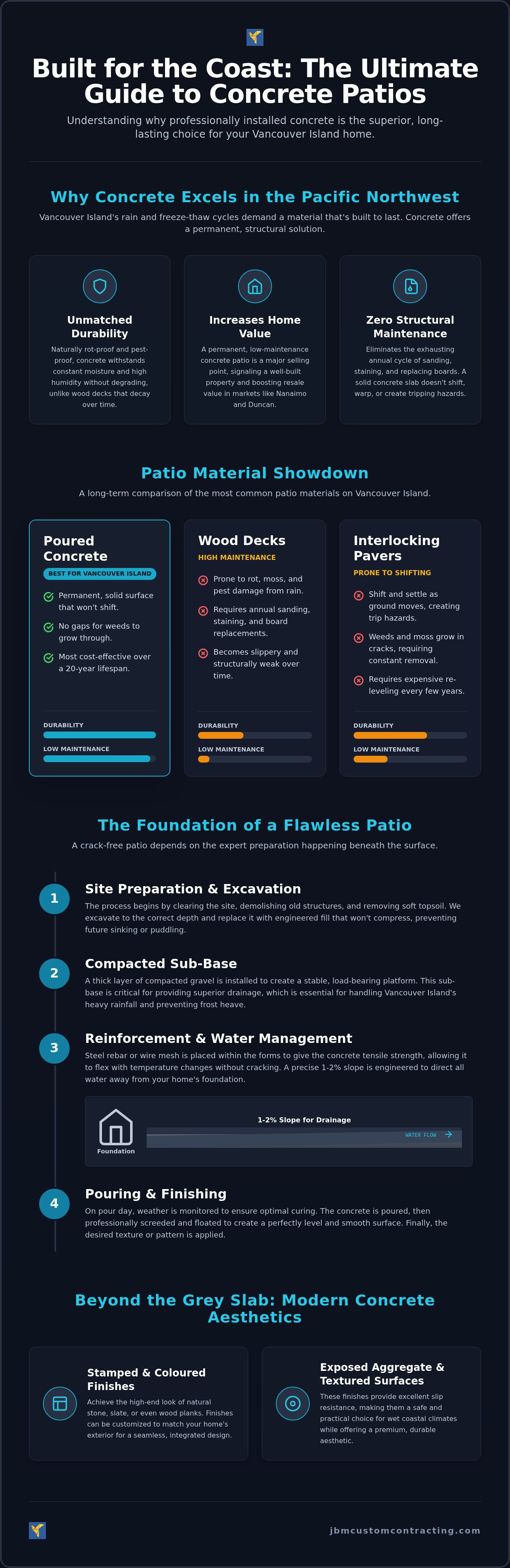
Choosing the right material is a long-term financial decision. Wood decks require annual sanding, staining, and board replacements to fight off the inevitable moss and rot caused by Island rain. Concrete eliminates this exhausting maintenance cycle. When compared to interlocking pavers, concrete offers a superior surface because it doesn't allow weeds to grow through cracks. Pavers often shift as the ground settles, creating tripping hazards that require expensive lifting and re-leveling. A single, solid pour is more cost-effective over a 20-year lifespan because it maintains its integrity without the need for constant repairs. If you currently have an old, failing structure, our demolition services can clear the way for a permanent concrete upgrade.
The Aesthetic Versatility of Modern Concrete
Modern engineering has moved far beyond the basic "grey slab" myth. Homeowners now have access to a wide range of decorative concrete options that can mimic the look of natural stone, slate, or even rustic wood planks. Stamped and coloured finishes allow you to customize the texture and shade to match your home's siding or existing stonework. These surfaces are designed to integrate seamlessly with your overall yard care plan, providing a clean border that makes lawn maintenance easier. By choosing a textured finish, you also improve safety by creating a slip-resistant surface that stays grippy even when wet. It's a practical solution that offers the high-end look of premium materials with the unmatched durability of stone.
The Professional Concrete Patio Installation Process
The secret to a crack-free patio isn't actually the concrete itself; it's the foundation hidden beneath the surface. A successful concrete patio installation begins with a deep dive into the soil conditions of your specific yard. On Vancouver Island, where soil can range from heavy clay to loose rock, the sub-base must be engineered to prevent shifting. We use a thick, compacted gravel sub-base to provide essential drainage and a stable platform. Without this preparation, the heavy weight of the concrete would cause the ground to settle unevenly, leading to structural cracks within the first few seasons.
Structural integrity also depends on internal reinforcement. We place rebar or wire mesh throughout the slab to give the concrete tensile strength, allowing it to expand and contract during temperature changes without breaking apart. Water management is the final piece of the foundation puzzle. Every patio we install features a precise 1-2% slope. This subtle grade is invisible to the eye but critical for directing heavy Island rainfall away from your home's foundation. If you're concerned about how your yard handles water, a professional assessment can help identify the best drainage strategy before the first yard of concrete arrives.
Site Preparation and Demolition
Before the new slab can be poured, the site must be cleared of all organic material. This often involves removing old, rotting wooden decks or uneven sod that can trap moisture. Our professional demolition services ensure that old structures are removed safely and the ground is excavated to the correct depth. Professional excavation is the only way to prevent future "puddling" or sinking. We remove the soft topsoil and replace it with engineered fill that won't compress over time, ensuring your outdoor space stays level for decades.
Forming, Pouring, and Finishing
Once the site is prepped, we set the forms to create crisp, clean lines that define your new living space. Timing is everything on the "pour" day, especially with our unpredictable coastal weather. We monitor temperature and humidity closely to ensure the concrete cures at the right speed. After the pour, we use professional concrete installation techniques like screeding and floating to level the wet surface. These steps pull the cream to the top and push the aggregate down, creating a smooth, durable finish that is ready for texturing or stamping. This meticulous process ensures the finished product is both beautiful and structurally sound.
Customizing Your Finish: Stamped, Exposed, and Smooth
A concrete patio installation offers a level of customization that other materials can't match. Once the structural work is complete, the finishing stage defines the personality and safety of your outdoor space. On Central Vancouver Island, homeowners typically choose between three distinct finishes based on their aesthetic goals and the specific needs of our wet climate. Your choice affects more than just the look; it determines how the surface feels underfoot and how it performs during a typical November downpour.
| Finish Type | Best For | Slip Resistance | Maintenance Level |
|---|---|---|---|
| Stamped | Formal Entertaining | Moderate | Medium (Requires Sealing) |
| Exposed Aggregate | High-Traffic & Slopes | High | Low (Very Durable) |
| Broom (Smooth) | Utility Areas & Walkways | Good | Low (Easy to Clean) |
Choosing the right style involves balancing your home's exterior architecture with practical safety. For example, a modern home in Lantzville might benefit from the clean lines of a broom finish, while a rustic property in Duncan might look best with the natural texture of exposed stone. We always recommend considering how the surface will be used. If you have children running around or a sloped yard, prioritizing texture is a smart, safety-first decision.
Stamped Concrete for a High-End Look
Exposed Aggregate: The Island Favourite
Exposed aggregate is the go-to choice for many residents in Nanaimo and Qualicum Beach. This finish involves stripping away the top layer of concrete paste to reveal the natural pebbles and stones embedded within. The result is a rugged, "pebbled" look that blends perfectly with our coastal landscape. Aside from its beauty, the primary benefit of our concrete services featuring exposed aggregate is superior slip resistance. The raised stones provide excellent grip, making it the safest option for our rainy winters. It's a hardworking, dependable finish that handles heavy use and weather with ease.
Longevity and Maintenance in a Coastal Climate
Vancouver Island's environment is beautiful, but our heavy rainfall and high humidity present unique challenges for outdoor surfaces. Concrete is a porous material, meaning it can absorb moisture if it isn't properly protected. In our coastal climate, this trapped water can lead to internal pressure during winter freezes or provide a damp home for organic growth. Even though your new concrete patio installation might look solid enough to use within a few days, it actually requires a full 28-day cure cycle to reach its maximum design strength through a chemical process called hydration. Rushing heavy loads onto the surface before this window closes can lead to premature wear or structural weakness.
Protecting your investment involves a proactive approach to moisture management. Sealing the surface is the most effective way to prevent water penetration and staining from fallen leaves or spilled liquids. A professional-grade sealer acts as a transparent shield, keeping the water on the surface where it can drain away according to the slope we engineered during the pour. Without this barrier, the constant dampness of a typical Island winter can eventually cause the surface to pit or discolour, especially in areas with high salt spray or heavy tree cover.
Cleaning and Moss Prevention
Shady backyards in Nanaimo and Duncan are prime territory for moss and algae. When organic matter like pine needles or maple leaves sit on the concrete, they trap moisture and begin to rot, creating a nutrient-rich base for moss to take hold. This growth isn't just an eyesore; it becomes incredibly slippery and dangerous when wet. Regular pressure washing is essential for removing these deposits before they can stain the finish. For decorative surfaces like stamped or coloured concrete, we often recommend "soft washing." This technique uses specialized cleaning solutions to kill moss at the root without the risk of pitting the surface with high-pressure water streams.
Sealing and Repairs
You should plan to re-apply a professional sealer every two to three years depending on the amount of sun and foot traffic the area receives. This maintenance window ensures the protective layer remains thick enough to repel water. During your annual cleaning, it's also a good idea to inspect the slab for any changes. Small hairline cracks, often no wider than a piece of thread, are usually just cosmetic results of the concrete shrinking as it cures. However, if you notice cracks that are widening or shifting vertically, it could indicate a structural issue with the sub-base or drainage. If your patio is already showing signs of heavy green growth, our moss removal service can restore the surface to its original condition before you apply a fresh coat of sealer.
Get a professional quote for patio cleaning and sealing
Hiring a Professional Contractor on Vancouver Island
Selecting the right professional for your concrete patio installation is the most critical decision in the entire renovation process. On Vancouver Island, this choice requires more than just a look at a portfolio. Our region's geological variety means that a strategy used for a project in the sandy soils of Qualicum might fail completely in the heavy clay of Cedar. A local expert understands how to adjust excavation depths and sub-base compaction based on whether they are working on Lantzville rock or the softer ground of the Cowichan Valley. This specific knowledge ensures your patio remains stable and level despite the shifting moisture levels in our soil.
Reliability isn't just about the finish; it's about professional accountability. You must verify that any contractor you hire is fully insured and carries active WCB coverage. These credentials offer peace of mind and protect you from liability during the heavy excavation and pouring phases. Working with a company that offers integrated services is another major advantage. When a single team handles everything from the initial demolition to the final pressure washing, you eliminate the communication gaps that often lead to project delays. This full-circle approach ensures the site is prepared correctly and maintained for years to come.
What to Ask Your Concrete Contractor
Before signing a contract, ask specific questions about the technical side of the build. Inquire about the drainage plan and how they intend to achieve the necessary slope to protect your home's foundation. You should also ask about the specific concrete mix they plan to use. For our climate, an air-entrained mix is often preferred to handle the occasional freeze-thaw cycle. Finally, request a clear, written timeline that tracks the project from the first day of site clearing to the 28-day mark when the final sealer can be applied. Knowing these details upfront prevents surprises and ensures the project stays on schedule.
The JBM Difference: Reliable Property Solutions
JBM Custom Contracting provides a no-nonsense, hardworking approach to every project we undertake. We prioritize safety and precision, ensuring that every job site is managed professionally from start to finish. Our team serves homeowners across Central Vancouver Island, including Nanaimo, Duncan, Ladysmith, and the Cowichan Valley. We don't just pour concrete; we provide a comprehensive property solution that includes long-term maintenance and yard care. This integrated approach means we stay invested in the longevity of your outdoor space long after the concrete has cured. We handle the difficult work so you can enjoy a beautiful, durable patio without the hassle.
Contact JBM for a professional assessment
Start Your Backyard Transformation Today
Building a durable outdoor living space requires more than just pouring a slab; it demands a deep understanding of Vancouver Island's unique environmental challenges. You've learned that a successful concrete patio installation depends on professional site excavation, engineered drainage, and a compacted sub-base that stands up to our heavy seasonal rainfall. By choosing the right finish and committing to a simple maintenance routine of regular cleaning and sealing, you ensure your investment remains a beautiful, safe, and rot-proof asset for decades.
JBM Custom Contracting is here to handle every detail of the process with precision and reliability. We are fully insured and certified, bringing years of local expertise to homeowners across Central Vancouver Island. From the initial demolition of old structures to the final decorative seal, our team provides comprehensive construction and maintenance solutions that take the stress out of property upgrades. We focus on delivering results that protect your home's foundation while increasing your property's overall value.
Get a Professional Concrete Assessment from JBM Custom Contracting
Your ideal outdoor retreat is within reach. We look forward to helping you build a low-maintenance space where you can relax and entertain with complete confidence in the quality and craftsmanship of your new patio.
Frequently Asked Questions
How long does it take to install a concrete patio?
A standard project typically takes 3 to 5 days from the initial excavation to the final finish. This timeline includes preparing the sub-base, setting the forms, and the actual pour day. We monitor local weather forecasts closely since we need specific dry windows to ensure the concrete cures correctly in our coastal environment.
Will my concrete patio crack during the winter?
Strategic engineering prevents major structural cracking during our winter freeze-thaw cycles. We install control joints that act as planned "cracks," allowing the slab to expand and contract safely as temperatures shift. Combined with a compacted gravel sub-base for drainage, these features ensure your concrete patio installation remains durable and intact for years.
Do I need a permit for a concrete patio on Vancouver Island?
Ground-level patios under 2 feet (60cm) in height often don't require a permit in Nanaimo or Duncan. However, rules vary by district; for example, the Comox Valley requires permits for structures over 10 square meters or those with a roof. It's best to check with your regional district to ensure compliance with local bylaws.
How soon can I walk on or put furniture on my new patio?
You can usually walk on the new surface 24 hours after the pour is finished. You should wait at least 7 to 10 days before moving heavy furniture, large planters, or BBQ islands back onto the space. While the surface feels hard, the concrete requires a full 28 days to reach its maximum structural design strength.
Is stamped concrete slippery when it rains?
Stamped concrete can be slick when wet, but we solve this by mixing a specialized anti-slip grit into the final sealer. This transparent additive provides essential traction during our rainy winters without dulling the decorative finish. It's a reliable safety measure that makes high-end textures practical for everyday use in the Pacific Northwest.
Can you pour a new concrete patio over an old one?
We don't recommend pouring new concrete over an existing slab. Any cracks or settling issues in the old concrete will quickly transfer to the new layer, leading to premature failure. Starting fresh with a new concrete patio installation after proper demolition ensures a stable foundation and prevents the height of the patio from interfering with door thresholds.
How much maintenance does a concrete patio really need?
A concrete patio is very low-maintenance, requiring only an annual cleaning and a fresh coat of sealer every 2 to 3 years. Regular soft washing prevents moss from taking hold in shady areas and keeps the surface looking new. This simple routine protects the material from moisture penetration and prevents staining from fallen leaves or organic debris.