

Imagine standing in your backyard, sledgehammer in hand, ready to finally tear down that old shed, only to realize you aren't sure if there's a gas line underneath or if your neighbors have already called the city about a permit. It's a stressful way to start a renovation. Most homeowners feel a bit of anxiety when it comes to the legal and safety requirements of tearing things down. Using a reliable demolition project planning guide ensures you avoid surprise visits from municipal inspectors or hefty repair bills for severed utility lines.
Follow this step-by-step guide to plan your small demolition project safely, legally, and efficiently without the stress of unexpected hurdles. By following these steps, you can move forward with total confidence that you're protected from fines and injuries. We'll walk through the essential requirements for Vancouver Island projects, from securing permits in Nanaimo or Lantzville to managing debris disposal and deciding when it's time to call in a professional team for the heavy lifting.
Understanding the Scope: What Qualifies as a Small Demolition?
Small demolition isn't about wrecking balls and explosives. For homeowners on Vancouver Island, it usually means clearing away structures that have outlived their usefulness. A small project typically involves removing non-load-bearing elements or standalone structures like sheds, decks, fences, and interior gutting for renovations. Using a comprehensive demolition project planning guide helps you distinguish between a simple weekend task and a complex job requiring professional help. By defining the work early, you ensure the project stays on track and within budget. Understanding different demolition methods and project types is the first step toward a successful site clearing.
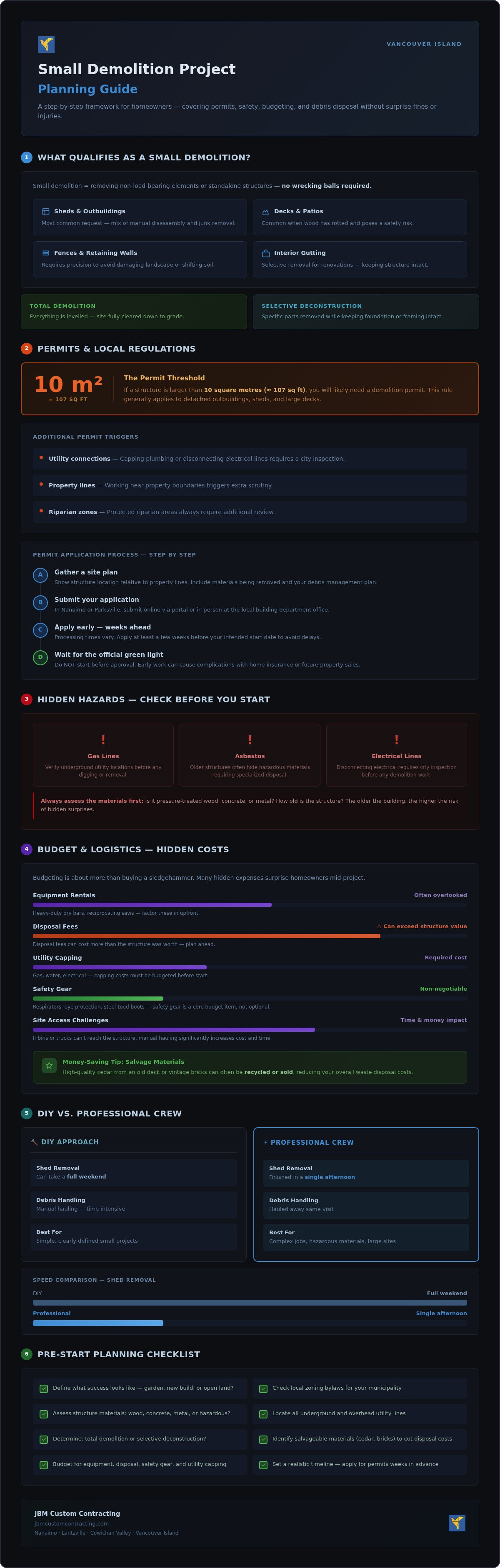
Adopting a planning-first mindset prevents common headaches. You don't want to accidentally clip a gas line or find out your old shed was actually built with hazardous materials like asbestos. This demolition project planning guide provides the framework to assess the structure before you pick up a tool. Look at the materials: is it pressure-treated wood, concrete, or metal? How old is the structure? Older buildings often hide surprises that require specialized disposal. You also need to decide if you want a total demolition, where everything is levelled, or selective deconstruction, where you carefully remove specific parts while keeping the main foundation or framing intact.
Common Residential Demolition Projects
Most residential needs in Nanaimo and the Cowichan Valley fall into a few specific categories. Old sheds and outbuildings are the most common, often requiring a mix of manual disassembly and junk removal. Deck and patio deconstruction is another frequent request, especially when the wood has started to rot and poses a safety risk. We also see many homeowners needing help with retaining wall construction and removal. Tearing down an old fence or a failing stone wall requires precision to avoid damaging the surrounding landscape or shifting the soil in your yard.
Setting Your Project Goals
Before starting, define what success looks like. Are you clearing space for a garden, or are you preparing the ground for a brand-new build? This goal changes how you handle the site. You should also determine if any materials can be salvaged. High-quality cedar from an old deck or vintage bricks can often be recycled or sold, reducing your overall waste. Finally, establish a realistic timeline. A DIY shed removal might take a full weekend, while a professional crew can often finish the job and haul away the debris in a single afternoon.
Navigating Permits and Local Regulations on Vancouver Island
Skipping the paperwork is a gamble that rarely pays off. Many homeowners assume a small shed or a rotting deck doesn't require municipal oversight. However, local governments on Vancouver Island take these regulations seriously to ensure community safety and environmental protection. A thorough demolition project planning guide must prioritize compliance to avoid stop-work orders or fines that can derail your renovation before it truly starts. Whether you live in Nanaimo, Lantzville, or the Cowichan Valley, checking your local zoning bylaws is the first step toward a hassle-free project. Don't rely on guesswork; every municipality has specific rules that change depending on your property's location and the structure's size.
When is a Permit Mandatory?
Each municipality has its own threshold for when a permit becomes necessary. Generally, if a structure is larger than 10 square metres, which is roughly 107 square feet, you'll likely need a permit. This rule often applies to detached outbuildings, sheds, and large decks. You also need to consider utility connections. If your project involves capping off plumbing or disconnecting electrical lines, the city requires an inspection. Working near property lines or protected riparian zones also triggers extra scrutiny. Following established OSHA demolition safety standards helps ensure that even small residential jobs meet high safety benchmarks. If you're unsure about the specifics for your property, reaching out for a professional demolition assessment can save you hours of research and potential legal trouble.
Step-by-Step Permit Application Process
The application process doesn't have to be a headache if you're prepared. Start by gathering a clear site plan that shows the structure's location relative to your property lines. You'll also need details about the materials being removed and your plan for debris management. In Nanaimo or Parksville, you can often submit these applications through an online portal or at the local building department office. Once submitted, wait for the official green light before you pick up a tool. Starting early without approval can lead to complications with your home insurance or future property sales. A little patience now ensures your project remains legal and stress-free. Remember that permit processing times can vary, so it's best to apply at least a few weeks before your intended start date.
Creating a Realistic Budget and Logistics Plan
Budgeting for a project involves more than just buying a new sledgehammer. Many people start swinging only to realize that the disposal fees cost more than the original structure was worth. A reliable demolition project planning guide helps you account for these hidden expenses before they surprise you. You'll need to factor in equipment rentals, such as heavy-duty pry bars or reciprocating saws, along with the cost of capping off utilities. Site access is another logistical hurdle. If a disposal bin or a large truck can't get close to the structure, you'll spend significantly more time and money manually hauling debris to the street. Demolition isn't just destruction. It's careful management.
Safety gear isn't optional; it's a core part of your budget. High-quality respirators, eye protection, and steel-toed boots are essential. Referencing OSHA demolition safety standards provides a clear framework for the types of hazards you need to protect yourself against on-site. Don't cut corners here. Your health is worth the investment.
The True Cost of Debris Removal
Waste volume is almost always underestimated. Once you break down a structure, the loose materials take up three to four times the space they did when standing. Waste piles grow fast. On Vancouver Island, landfills have strict sorting requirements. Mixing wood, metal, and drywall can lead to extra surcharges at the dump. You have to decide between managing this yourself with bin rentals or hiring professional junk removal services. While a bin might seem cheaper, a professional service handles the heavy lifting and the sorting. This often saves you money in the long run by avoiding contaminated load fees.
Timeline and Resource Allocation
Planning your time is just as vital as planning your cash. A typical 8x10 garden shed might take a single person 12 to 16 hours to dismantle and load. This doesn't include the time needed for utility disconnects. Always plan for delays. You must coordinate with BC Hydro or FortisBC well in advance to ensure power and gas lines are safely handled. Don't forget your neighbors. A quick conversation about your schedule helps minimize complaints about noise and dust. Proper planning keeps the neighborhood happy and your project moving forward without interruptions.
Safety Protocols: Protecting Your Property and People
Safety isn't just about wearing a hard hat. It's about identifying the "Big Three" hazards: utilities, asbestos, and structural collapse. Before you start swinging a hammer, using a demolition project planning guide ensures you've checked the most dangerous boxes. One of the first steps for any Vancouver Island project is contacting BC 1 Call. This service helps locate underground gas, water, and electrical lines. Striking a line isn't just expensive. It can be fatal. Beyond utilities, you must establish a clear "Safety Zone" around the work area. Use bright tape or temporary fencing to keep children and pets at a safe distance from falling debris and sharp materials. You also need the right Personal Protective Equipment (PPE). This includes a high-quality respirator, puncture-resistant gloves, and eye protection that seals against your face.
Identifying and Handling Hazardous Materials
If your home or outbuilding was built before 1990, you must assume hazardous materials are present. Asbestos was commonly used in insulation, drywall mud, and flooring until it was phased out in the late 1980s. Lead paint and older treated lumber also pose significant health risks if they become airborne during destruction. A professional survey is the only way to be sure. If toxic materials are found, professional abatement is mandatory. Attempting to remove these yourself can contaminate your entire property and lead to severe long-term health issues. Treated lumber from old decks often contains chemicals like chromated copper arsenate. These materials require special handling and cannot be burned or disposed of in standard trash bins.
Safe Deconstruction Techniques
Proper technique prevents gravity from becoming your enemy. Always use the "Top-Down" method. Start with the roof and work your way down to the foundation. This ensures the structure remains as stable as possible while you remove weight. Managing structural weight is critical. Removing a support beam too early can cause an unexpected collapse that traps the operator. For those tackling a DIY project, watching a video on small shed demolition safety tips provides a visual walkthrough of these methods. Always keep your work area tidy. Trip hazards are a leading cause of injury on demolition sites. Clear away debris as you go rather than waiting until the end of the day.
Get a professional demolition assessment for your project
Executing the Project: DIY vs. Hiring a Professional
Deciding whether to swing the hammer yourself or call in a professional team is a pivotal moment in your renovation. A solid demolition project planning guide helps you weigh the physical labor against the potential risks. Small, low-stakes tasks like removing a simple garden fence or a ground-level deck are often great DIY candidates. However, once you deal with structures that have roofs, electricity, or significant height, the stakes rise. The "Weekend Warrior" approach can lead to more than just sore muscles. Without professional experience, you risk accidental property damage, personal injury, or even liability issues if a mistake affects a neighbor’s property.
When looking for help on Vancouver Island, don't just hire the first person with a truck. Look for a contractor with full WCB coverage and comprehensive insurance. This protects you if an accident happens on your property. A local reputation in Nanaimo or Lantzville is equally important. Choosing a professional team like JBM Custom Contracting ensures the job is done right. We handle the permit navigation and the heavy lifting, but more importantly, we eliminate the disposal headaches that often stall DIY projects.
Comparing the Options
The choice usually comes down to a trade-off between time and money. DIY projects have lower upfront costs but require high physical labor and result in high disposal stress. You'll spend your weekends hauling heavy materials to the landfill and meticulously sorting waste to avoid fines. On the other hand, hiring professional demolition services provides guaranteed safety and peace of mind. We manage the entire lifecycle of the project, including the permits we discussed earlier. If your time is valuable, the investment in a professional crew often pays for itself by keeping your renovation on a tight schedule.
Final Site Restoration
A successful demolition doesn't end when the structure hits the ground. The final phase involves restoring the site so it's ready for what comes next. This includes grading the soil to prevent drainage issues and performing a thorough magnetic sweep to ensure no nails or sharp debris remain. If you're preparing the ground for new concrete work or fresh landscaping, the site needs to be perfectly level and clear. We focus on leaving your property in better shape than we found it. A final walkthrough ensures every piece of junk is removed, giving you a clean slate for your next building project.
Start Your Next Project on a Clean Slate
Planning a demolition involves more than just physical labor. It requires a clear understanding of local bylaws and a strict commitment to safety. By following this demolition project planning guide, you can avoid the legal fines and safety risks that often derail DIY attempts. You now have the tools to assess your structure, manage your budget, and decide when to call in the experts for the heavy lifting.
JBM Custom Contracting is proud to be the trusted choice for homeowners from Nanaimo to Cowichan. We are fully insured and WCB certified, maintaining a 5-star property maintenance reputation across the island. As local Vancouver Island experts, our team handles the permits, the hazardous materials, and the final site cleanup so you don't have to worry about the details.
Get a professional assessment and quote from JBM Custom Contracting today
Your property is a significant investment. Taking the time to plan your demolition correctly protects that value and sets the stage for your next renovation. We look forward to helping you clear the way for something new and exciting on your property. Let's get to work on making your vision a reality.
Frequently Asked Questions
Do I really need a permit for a small garden shed demolition?
You generally need a permit if the structure is larger than 10 square metres in most Vancouver Island municipalities like Nanaimo or Lantzville. Even if it's smaller, you might need one if it's connected to plumbing or electrical systems. It's best to check with your local building department first to avoid fines. Our demolition project planning guide recommends verifying these local rules before you start any physical work.
How much does it cost to have a small structure professionally demolished?
The cost depends on several factors like the size of the structure, the materials used, and how easily a truck can access the site. Since every project is unique, we don't provide flat rates. Factors such as disposal fees and labor requirements will influence the final total. We recommend requesting a professional assessment from JBM Custom Contracting to get an accurate quote tailored to your specific property and needs.
What should I do if I find asbestos during my demolition project?
Stop all work immediately and keep everyone away from the area to prevent breathing in dangerous fibers. Asbestos is common in homes built before 1990 and requires specialized handling. You must hire a certified abatement professional to test the material and remove it safely. Attempting to handle asbestos yourself can lead to serious health risks and property contamination that is very expensive to fix.
Can I bury demolition debris on my own property?
No, burying demolition debris is illegal in Nanaimo and across British Columbia due to environmental regulations. Materials like treated lumber, metal, and concrete can leach chemicals into the soil and groundwater. All waste must be sorted and transported to a licensed disposal facility. Hiring a professional service ensures your project follows all environmental laws and keeps your property soil healthy for future use.
How do I disconnect my utilities before starting a demolition?
You must contact your service providers directly to schedule a safe disconnection. For electricity, reach out to BC Hydro, and for gas lines, contact FortisBC. Additionally, you should contact BC 1 Call at least three business days before you start. They will help locate any underground lines on your property to prevent accidental strikes that could cause injuries or expensive service interruptions.
What kind of insurance should a demolition contractor have?
A reliable contractor must carry comprehensive general liability insurance and active WCB coverage. This protects you from being held responsible if a worker is injured or if your property is accidentally damaged during the process. JBM Custom Contracting is fully insured and WCB certified, providing peace of mind for every client. Always ask to see proof of these credentials before signing any service agreement.
How long does a typical residential demolition project take?
A small residential project, such as a garden shed or a medium deck, typically takes between one and three days to complete. This timeline includes the actual tear-down and the final debris removal. However, the total duration can change based on weather conditions and site access. Using a professional demolition project planning guide helps you stay organized, but hiring a professional crew is usually much faster than tackling the job alone.
Is it cheaper to rent a bin or hire a junk removal company?
Renting a bin might seem cheaper upfront, but it requires you to do all the heavy lifting and sorting yourself. If you mix materials incorrectly, the landfill may charge you extra surcharges. Hiring a junk removal company often provides better value because the labor and sorting are included. This approach saves you physical strain and ensures all materials are disposed of according to local Vancouver Island regulations.