

What if a contractor’s confident promise leaves the most important questions unanswered? A reliable contractor guarantee should spell out the work, exclusions, and who handles rework, not just offer reassurance. If those details are unclear, it can be hard to know what you’re agreeing to or what happens if plans change.
Before trusting someone with your property, ask for clear written commitments, relevant credentials and insurance information, and an explanation of how the contractor will communicate about appointments, progress, and next steps. This guide covers what to ask for, what to verify, and how to compare contractors using consistent evidence.
You’ll learn how to review project scope, payment and change terms, any written warranty or guarantee, and past work. JBM Custom Contracting describes itself as certified and fully insured. If you’re considering the company for a project in Nanaimo, Lantzville, Duncan, Ladysmith, Cedar, Parksville, Qualicum Beach, Cowichan, or Gabriola Island, confirm service availability and ask about the written terms for your specific project.
What a Reliable Contractor Guarantee Should Actually Mean
A reliable contractor guarantee is a specific, documented commitment, not a general claim that a contractor is dependable. It should help you understand what work is covered, what happens if a problem arises, and what steps you’re expected to take. Without those details, you may not know who is responsible for addressing an issue.
For example, if you’re comparing contractors for Nanaimo house washing services, ask for the agreed scope and any applicable written terms before work begins. Guarantees and warranties vary by contractor and project, so confirm what applies to your specific job rather than assuming coverage.
This video offers a cautionary example of why clear documentation matters:
Guarantee, warranty, and insurance: how they differ
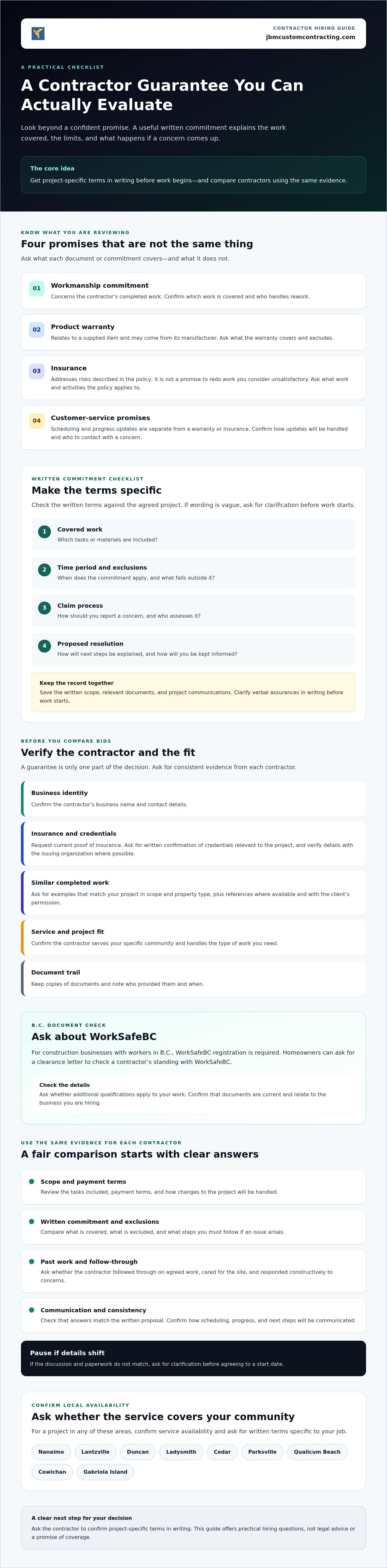
A workmanship commitment concerns the contractor’s completed work. A product warranty relates to a supplied item and may come from its manufacturer. Insurance is different from both: it addresses risks described in the policy, not a promise to redo work you consider unsatisfactory. Ask what each document covers, what it excludes, and whether you need to follow specific steps if an issue comes up.
Customer-service promises, such as updates about scheduling or progress, are separate as well. Ask how the contractor will communicate and who to contact with a concern. Clear expectations make offers easier to compare.
What a useful written commitment spells out
Check the written terms against the agreed project. Look for details such as:
- Covered work: Which tasks or materials are included?
- Time period and exclusions: When does the commitment apply, and what falls outside it?
- Claim process: How should you report a concern, and who assesses it?
- Proposed resolution: How will the contractor explain next steps and keep you informed?
Clarify vague wording and verbal assurances before work starts. Keep the written scope, relevant documents, and project communications together. For general background on consumer protection, you can consult this overview, but it doesn’t determine what a particular contractor’s terms cover. This guide offers practical hiring questions, not legal advice or a promise of coverage. Ask the contractor to confirm project-specific terms in writing.
How to Verify a Contractor’s Credentials and Reliability
Before comparing bids or agreeing on a start date, check that the contractor can document who they are, what work they’re equipped to do, and whether they serve your location. A reliable contractor guarantee is only one part of the decision. Credentials, insurance, relevant experience, and clear communication also help you assess whether a contractor is a good fit.
Use this checklist as a starting point:
- Confirm the contractor’s business name and contact details.
- Request current proof of insurance and ask what work and activities the policy applies to.
- Ask for written confirmation of any certifications or credentials relevant to the project, then verify details with the issuing organization where possible.
- Ask for examples of similar completed work and references, with the client’s permission.
- Confirm the contractor serves your specific community and handles the type of work you need.
- Keep copies of documents and note who provided them and when.
Which documents and credentials should you ask to see?
Credential requirements can vary by project. Ask whether additional qualifications apply to your work, and have the contractor explain what each document demonstrates. For construction businesses with workers in B.C., WorkSafeBC registration is required. Homeowners can ask for a clearance letter to check a contractor’s standing with WorkSafeBC. Confirm the document is current and relates to the business you’re hiring.
JBM Custom Contracting describes itself as certified and fully insured. As with any contractor, confirm the details relevant to your project directly. Cornell Law School’s overview of consumer protection laws discusses U.S. law, so it shouldn’t be treated as guidance on B.C. requirements.
How to assess past work and communication
Ask to see examples that match your project in scope and property type. A completed job can show the result, while a reference may offer insight into the working relationship. Where references are available, ask whether the contractor followed through on agreed work, cared for the site, and responded constructively to concerns.
Pay attention to the conversation before hiring, too. Are answers clear and consistent with the written proposal? Does the contractor explain what’s included, ask useful questions about the property, and tell you how updates will be handled? If details shift between a discussion and the paperwork, pause and ask for clarification.
JBM Custom Contracting offers property maintenance and improvement services in Vancouver Island communities. Review JBM Custom Contracting’s services, then confirm whether the specific service is available in your community and request project-specific terms before booking.
Compare Contractor Guarantees by Scope, Exclusions, and Follow-Through
A broad verbal assurance is difficult to compare. Written proposals give you something specific to review: the tasks included, the limits of any commitment, and what happens if a concern comes up. Compare each contractor against the same questions, and ask for unclear details in writing before agreeing to the work.
Use this table to assess the documents, not to assume every project comes with the same coverage:
| What to compare | What to look for |
|---|---|
| Scope | Are the agreed tasks, materials, and areas of the property identified? |
| Exclusions | Are limits, access conditions, and customer responsibilities explained? |
| Time period | Is any coverage period stated, and when does it begin or end? |
| Contact process | Who should you contact about a concern, and how will it be assessed? |
| Evidence | Does the written proposal or commitment document the terms being offered? |
A reliable contractor guarantee should make the commitment understandable, but details depend on the contractor and the job. The Federal Trade Commission’s consumer advice on hiring contractors offers a general checklist for reviewing estimates and contracts. It’s U.S. guidance, so use it for practical questions rather than as a statement of B.C. requirements.
Questions that expose vague or incomplete promises
Ask direct questions before accepting a proposal: Which tasks and materials are covered? What happens if the work is delayed, left incomplete, or needs correction? Which exclusions or site-access conditions apply, and what do you need to do? If an answer changes what you expect to receive, request written clarification. Clear answers now can prevent different assumptions later.
How project type changes the questions to ask
The right comparison depends on the work. For demolition, ask how the written scope defines what will be removed and what site expectations are included. For exterior cleaning, confirm which surfaces and tasks are covered before scheduling. If you’re considering house washing in Nanaimo, review house washing in Nanaimo for service-specific context, then confirm the scope and applicable terms for your property directly.
Comparing demolition proposals? A property-owner demolition hiring guide can help you prepare questions about project fit and written scope. You can also review JBM Custom Contracting’s property services and confirm availability for your community and project. Ask directly about any project-specific written guarantee or warranty; don’t assume one is included.
A Practical Checklist Before You Hire a Vancouver Island Contractor
Preparation makes quotes easier to compare and helps you spot gaps before work begins. Give each contractor the same job details and questions so you can compare the proposed work and written terms, not just a confident conversation or a broad promise of a reliable contractor guarantee.
Before requesting a quote
Describe the issue and the result you want. Note property access, areas involved, and known constraints, such as limited space around the work area. Photos or measurements can help explain the job, but they don’t replace a contractor’s assessment. Decide what you need to know about communication and scheduling, including how updates will be shared and who your main contact will be.
- 1. Define the job. List the work you want done and the outcome you expect.
- 2. Share useful details. Provide relevant photos, measurements, access notes, and known restrictions.
- 3. Confirm project fit. Ask whether the contractor handles this type of work and serves your specific Vancouver Island community.
- 4. Use consistent questions. Give each contractor the same description and ask about scope, exclusions, documentation, and communication.
Before approving the work
Read the proposal against your original job description. Check that it explains the agreed tasks, exclusions, access needs, each party’s responsibilities, and how to raise questions. Ask for any applicable written commitment to be included or clearly identified. If a verbal discussion changes the plan, have the update added to the written agreement before proceeding.
- 5. Check the details. Make sure the written scope matches your understanding, and clarify anything missing or unclear.
- 6. Confirm the next steps. Ask who to contact with questions and how proposed changes or concerns will be handled.
For exterior washing comparisons, a power-washing project guide can help you think through the work and questions to raise. The surfaces and tasks included can differ by property, so confirm the scope with the contractor you’re considering.
Keep your notes, proposal, and related documents together. If you’re uncertain about how a contract applies or whether a rule covers your situation, seek advice from a qualified local professional. A contractor can clarify their proposed terms, but shouldn’t be treated as your legal adviser.
Choosing JBM Custom Contracting: Confirm the Details for Your Project
JBM Custom Contracting provides renovation and property-maintenance services for homes and businesses. Its listed work includes demolition and exterior cleaning. The company describes itself as certified and fully insured, but confirm which credentials and insurance apply to the work you’re considering.
A reliable contractor guarantee isn’t something to assume from a company’s general description. Ask JBM what written commitments, if any, apply to your specific project. Terms may depend on the work involved, so get the details directly before deciding whether to proceed.
Match JBM’s services to the job you need done
Start by describing the work. Is the project demolition, exterior cleaning, renovation, or another property-maintenance task? Then confirm that JBM currently serves your community and takes on that type of project. Service availability can vary by location and scope, so check those details directly.
Explain what you want done, which areas of the property are involved, and any access details or known constraints. If the scope changes after an initial conversation, ask for the updated work to be documented before moving ahead.
Ask for project-specific details before moving forward
Before approving any work, request a written scope that identifies the agreed tasks and exclusions. Ask what responsibilities fall to you, what insurance documentation applies, and whether a written workmanship commitment or warranty is offered for this job. If one is offered, ask about its time period, claim process, and conditions. If it isn’t, make sure that’s clear too.
Ask who will respond to project questions and how proposed changes will be recorded. Keep the proposal and related documents so you can refer back to what was agreed. These steps help you assess whether the arrangement meets your needs without relying on a broad verbal assurance.
To discuss the work you have in mind, use the JBM contact page to share your project details and ask about scope, applicable commitments, exclusions, and current availability for your location.
A reliable contractor guarantee is meaningful when you understand what it covers and have the terms in writing. Pair that review with current evidence of credentials and insurance, relevant past work, and communication that matches the proposal. Compare contractors using the same questions, then confirm that JBM serves your community and handles your project before moving forward.
With clear written expectations and the right questions, you can take the next step with greater confidence.
Frequently Asked Questions
What should a contractor guarantee in writing?
A contractor’s written commitment should state which work it covers, any time period, exclusions, and how to report a concern. A reliable contractor guarantee should also explain who reviews a reported issue and what follow-up to expect. Terms vary by contractor and project, so don’t rely on a broad verbal assurance. Read the written terms before approving the work, and ask for unclear points to be explained and documented.
Does a contractor guarantee mean the work is insured?
No. A guarantee or workmanship commitment and insurance are separate documents with different purposes. Insurance relates to risks and coverage described in the policy. A written contractor commitment may explain how certain work issues will be handled, but it doesn’t replace insurance. Ask for current insurance information and confirm what work it applies to. Separately, review the written project terms so you understand what, if anything, the contractor has agreed to address.
How can I check if a contractor is reliable before hiring?
Ask for relevant credentials and current insurance information, then verify the details with the issuer or insurer where possible. Request examples of similar completed work and references, if available. Compare written proposals using the same project description and questions, and note whether the contractor communicates clearly and follows up. For work in Nanaimo, Lantzville, Duncan, Ladysmith, Cedar, Parksville, Qualicum Beach, Cowichan, or Gabriola Island, confirm the contractor serves your specific location and accepts your project type.
What should I do if a contractor’s guarantee is vague?
Ask the contractor to clarify which work is covered, what exclusions apply, whether a time period is stated, and how to raise a concern. Request the explanation in writing before approving the project. Keep copies of the proposal, agreement, and related messages together. If important terms remain unclear, pause before proceeding. If a disagreement raises legal questions, consider speaking with a qualified local professional rather than relying on a contractor to interpret your rights.
Is a contractor’s verbal promise enough?
A verbal conversation can help clarify expectations, but it may be hard to rely on later if the written scope says something different. Ask for any commitment that matters to your decision, along with changes to the work, to be added to the project documents before work starts. Read the final version carefully and keep a copy. If a promise isn’t included in the written terms, ask the contractor to explain why.
How do I compare contractor guarantees for different projects?
Compare each contractor using the same project scope, then record what the written terms cover, exclude, and document. Check how each proposal explains changes, concerns, and follow-up. The details for demolition may differ from those for exterior cleaning or renovations, so broad promises alone don’t make a fair comparison. A simple table can reveal missing information. Ask each contractor to clarify gaps in writing before you choose.
Does JBM Custom Contracting offer a workmanship guarantee?
The available business information doesn’t specify a particular workmanship guarantee from JBM Custom Contracting. The company describes itself as certified and fully insured, but those statements don’t confirm a project-specific guarantee. Ask JBM directly whether a written commitment applies to your work. If one does, request its scope, exclusions, time period, and process in writing. Also confirm that JBM currently handles your project type and serves your location.
Does JBM serve Nanaimo and other Vancouver Island communities?
JBM’s stated service area includes Nanaimo, Lantzville, Duncan, Ladysmith, Cedar, Parksville, Qualicum Beach, Cowichan, and Gabriola Island. Availability may depend on the service and project, so confirm coverage for your address and the work you need. For exterior cleaning details in Nanaimo, see the Nanaimo house-washing service page, then ask JBM to confirm current availability for your project.