

Could the old paint in your garage be recyclable, hazardous, or still usable? Before booking a garage cleanout service Nanaimo residents should identify what’s in each can and check where it can go. Paint type and container condition can affect which local drop-off options will accept it, so don’t guess or pour leftovers down a drain.
It’s understandable to feel unsure, especially when cans are unlabeled or mixed in with other garage clutter. This guide will help you identify leftover paint and its container, understand which Nanaimo-area locations may accept it, and confirm current requirements before you make the trip.
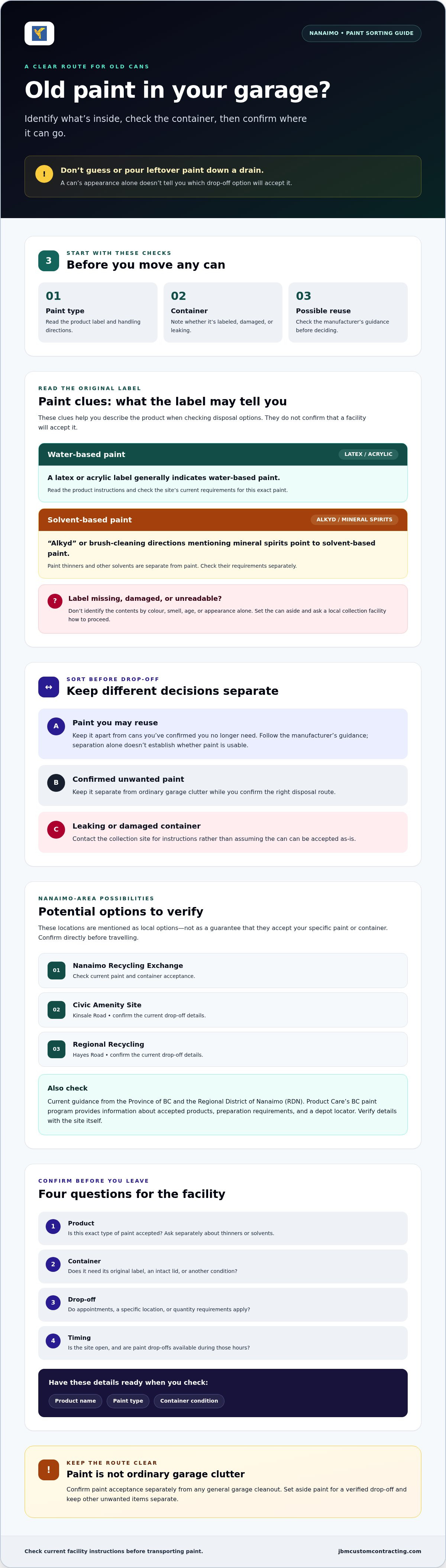
We’ll cover common household paint types, the information to check on the label, and local options such as the Nanaimo Recycling Exchange, the Civic Amenity Site on Kinsale Road, and Regional Recycling on Hayes Road. Acceptance rules and drop-off procedures can change, so contact a facility before you go, particularly if a can is leaking or unlabeled. You’ll also learn how to keep paint that needs special handling separate from ordinary unwanted items. Once paint disposal is sorted, a local junk removal service may help with other garage clutter, but paint acceptance should be confirmed separately.
How to dispose of old paint in BC: identify what you have first
Leftover paint can accumulate in a garage until it’s hard to remember what’s in each can or where it should go. Before arranging a garage cleanout service Nanaimo residents can start by checking three things: the paint type, the label on the original container, and whether the paint may still be usable. The right disposal option can depend on those details, so avoid guessing based on a can’s appearance.
Water-based latex paint and solvent-based paint aren’t interchangeable. Their labels may give different handling instructions, and local collection guidance may treat them differently. Check the product information first, then confirm current requirements with the collection site before transporting paint.
Here’s a general garage-cleanout example. It isn’t specific to Nanaimo or paint disposal.
How can you tell what kind of paint is in the can?
Look for the original label and read the product type and handling directions. A latex or acrylic label generally indicates water-based paint; terms such as alkyd or instructions to clean brushes with mineral spirits point to solvent-based paint. These clues help you describe the product when checking disposal options, but they don’t confirm which facility will accept it.
If the label is missing, damaged, or unreadable, don’t identify the contents by colour, smell, age, or appearance alone. Set the can aside and ask a local collection facility how to proceed with an unidentified product. Paint thinners and other solvents are separate from paint, so check their requirements as well. For general background on how paint is recycled, see the overview of paint recycling and stewardship programs.
Is the old paint still usable?
Check the manufacturer’s guidance and the label before deciding to reuse paint. If it has separated, review the instructions before trying to mix it; separation alone doesn’t establish whether it’s usable or how it must be handled. A damaged or leaking container also needs careful attention. Contact a collection site for instructions rather than assuming it can be accepted as-is.
Keep paint you may reuse separate from cans you’ve confirmed you no longer need. This makes it easier to check each product and prevents usable paint from being mixed into a disposal batch. Once you’ve sorted it, follow current local guidance for the confirmed unwanted paint. JBM’s house washing service in Nanaimo is a separate property-maintenance option, not a paint disposal service.
Where to take old paint in Nanaimo and across BC
Once you’ve identified the paint, verify where that specific product can go before loading it into your vehicle. Start with current guidance from the Province of BC and the Regional District of Nanaimo (RDN). A collection site may accept some household paints but not related products such as solvents, so don’t assume one location takes everything stored in your garage.
The Product Care Recycling program provides information about paint products accepted through its BC program, preparation requirements, and a depot locator. Use it to find a potential option, then check the site’s own current instructions. A listing is a starting point, not a substitute for confirming that your particular paint and container are accepted.
How to verify a Nanaimo-area paint collection option
Search official provincial or RDN waste guidance using the exact product type shown on the label. If the information is unclear, contact the listed facility or program directly. Before you call, note the product name, paint type, and container condition so staff can give you a clear answer. Record any instructions they provide, including how to prepare the can and where to go on site.
What should you confirm before you leave?
Policies and operating details can change. Check them close to your visit, especially if you’re travelling from outside central Nanaimo. Ask whether the specific paint and its container are accepted, whether drop-off arrangements or quantity limits apply, and what preparation is required. Confirm opening times on the day you plan to go.
- Product: Is this exact type of paint accepted? Ask separately about related items such as thinners or solvents.
- Container: Does the can need its original label, an intact lid, or another condition?
- Drop-off: Are there appointment, location, or quantity requirements?
- Timing: Is the site open, and are paint drop-offs available during those hours?
Keep paint separate from ordinary garage clutter while you confirm the disposal route. That makes it easier to transport only what the site has agreed to accept and helps prevent paint from being mixed with items intended for regular junk removal. If you’re planning a garage cleanout service Nanaimo homeowners can set aside paint for verified drop-off and ask JBM about removal of other unwanted items. Learn more about JBM’s junk removal services, and confirm which items are accepted before arranging removal.
Can old paint go in the garbage, recycling, or down the drain?
Don’t assume leftover paint belongs in the household garbage or recycling just because the can looks empty or its material is accepted in another recycling program. Paint contents and packaging can have different handling instructions. For the right route in Nanaimo, follow current local guidance for the specific product rather than a general rule of thumb.
Never pour leftover paint into a sink, toilet, storm drain, or onto soil. It can spread beyond your property and create a cleanup problem. If you’re unsure about garbage or recycling, pause and check before putting paint out with regular household waste. The Product Care Recycling BC page is a useful place to check program information and paint-specific instructions, but confirm any details that apply to your container with the local collection option.
Why ordinary recycling instructions may not apply
Accepted materials vary by program. A facility may have instructions for leftover paint that differ from those for an empty container, and a metal can accepted elsewhere isn’t automatically suitable for your curbside recycling bin. Check the rules for both the contents and the packaging. If you have a can with paint residue, ask how that exact condition should be handled instead of treating it as ordinary scrap metal or packaging.
What if the paint is dried out or the product is unknown?
Don’t add absorbent material, mix paint types, or put dried paint in household garbage unless current local guidance specifically tells you to do so. Dryness alone doesn’t confirm the correct disposal route. If the product is unknown, keep it in its original container when safe, and don’t combine it with other materials. An unreadable label is a reason to contact the relevant program or facility for instructions.
If a can is damaged or leaking, don’t load it for drop-off without checking what to do first. Describe the container and product as clearly as you can when contacting the local program. Confirm whether it can be accepted and how it should be prepared or transported. That simple check can prevent a rejected load or a spill in your vehicle.
During a garage cleanout service Nanaimo residents can keep paint separate from ordinary unwanted items until its disposal route is confirmed. JBM Custom Contracting offers junk removal for other garage clutter, but does not accept or dispose of leftover paint. Check with the paint program for paint, and with the removal provider about other items.
A simple preparation checklist before taking paint for disposal
A little sorting before you leave can make a paint drop-off trip clearer and safer. Start by identifying each product, then check the current instructions from the local program or facility. Don’t rely on a general checklist to override site-specific directions, especially if a can is damaged or the contents are uncertain.
How should you sort and secure paint cans?
Group cans by label or known paint type so each container is easy to identify. Keep products in their original containers where practical, and don’t combine leftovers or transfer paint into another can. Check the lid and container for damage. If you see a leak or suspect one, pause and ask the relevant program how to handle it before moving the can.
For containers that appear intact, keep them upright and secure them for transport so they won’t tip over. Follow the collection program’s instructions for packaging and loading. Keep paint apart from ordinary garage clutter, too. That way, labels remain visible and the paint won’t be mistaken for items intended for regular junk removal.
What should you do with an unknown or leaking container?
Don’t open, mix, or pour out a can to work out what’s inside. If the container is leaking, keep people and pets away from it and contact the collection program or appropriate local authority for specific guidance. Avoid putting a questionable can in your vehicle until you’ve been told how to proceed.
Before setting out, confirm the facility’s current acceptance and arrival instructions. Ask whether the exact product and container are accepted, whether you need to prepare or package them in a particular way, and whether drop-off hours or quantity limits apply. A quick check can help you avoid arriving with a load the site can’t take.
Save this checklist:
- Identify the paint from its label, if possible.
- Check current local instructions for the paint and container.
- Keep products separate in their original containers; don’t mix contents.
- Inspect cans for damage and ask for guidance about leaks or unknown products.
- Keep containers upright and secure them as directed for transport.
- Confirm acceptance, preparation, drop-off arrangements, and hours before leaving.
Once paint is set aside for its verified route, you can deal with other garage clutter separately. For help with ordinary unwanted items, explore JBM junk removal services.
Clearing the rest of your Nanaimo garage after paint is sorted
Once you’ve set paint aside for a verified disposal option, the rest of the garage is easier to tackle. Keep paint and any other products with special handling instructions separate from ordinary unwanted items. Don’t assume a junk removal service will take paint, even if it removes other garage contents. Confirm paint acceptance directly with the collection program or facility you plan to use.
Which garage items should be handled separately?
Make clear groups before you start moving things: paint and other products that need special instructions, furniture or bulky household items, general junk, and items you may want to keep or give away. Keep labels visible on products that still need checking. If you’re unsure how to handle items such as automotive products, chemicals, or batteries, check local guidance rather than placing them in a general junk pile.
This simple sorting step helps prevent a paint can from being loaded with ordinary clutter by mistake. It also makes it easier to explain what you want removed and what must stay behind. Keep reusable items in a separate area so they don’t get mixed in with waste.
When can a junk removal service help?
After you’ve separated paint for its confirmed disposal route, a junk removal service may be useful for other unwanted garage items. JBM Custom Contracting offers junk removal for residential and commercial properties in Nanaimo and nearby Vancouver Island communities. Its service is for eligible non-paint items, not a confirmed option for paint disposal. Check the JBM junk removal services page for service information, then ask about specific items before arranging removal.
For example, you might identify a broken shelf, an old chair, and empty boxes as items to ask about, while keeping paint and any uncertain products out of that group. Acceptance can depend on the item, so provide a clear description when you inquire. This helps keep the removal plan practical and avoids confusion about what is included.
If you’re planning a garage cleanout service Nanaimo residents can take a steady, straightforward approach: verify paint handling first, then contact JBM about other garage items and confirm whether they can be accepted. No need to sort everything in one go. Start with the paint, keep special-handling products apart, and make a separate list of ordinary clutter.
To get started, you can easily contact JBM about other garage items and schedule your pickup.
Finish your garage cleanout with a clear plan
Start with the paint: identify the product and container, then confirm current acceptance and drop-off instructions directly with a local program or facility. Don’t put paint in household garbage or recycling, or pour it down a drain, based on guesswork. Keep paint and other items with special handling requirements separate from ordinary garage clutter.
Once the paint has a verified route, sort the remaining items into groups such as furniture, general junk, and things you plan to keep. If you’re considering a garage cleanout service Nanaimo residents can ask JBM about removing other unwanted items and confirm acceptance before arranging service. JBM offers residential and commercial junk removal in Nanaimo and nearby Vancouver Island communities, and describes itself as certified and fully insured. Paint disposal remains a separate step.
With the paint handled responsibly and the rest of the load clearly sorted, you can make steady progress toward a cleaner, more useful garage.
Frequently Asked Questions
How do I dispose of old paint in BC?
Start by identifying the paint from its label, then check current provincial and local guidance for a suitable collection option. In Nanaimo, confirm that the program or facility accepts your specific product and container. Ask about drop-off arrangements, preparation instructions, and hours before travelling. Paint types may have different requirements. If the label is missing or unreadable, keep the can separate and ask the relevant program for guidance instead of guessing.
Can I put old paint in the garbage in Nanaimo?
Don’t assume leftover paint belongs in regular household garbage. The right instructions may depend on the product and current local guidance. Check the label, then confirm the disposal route with an official BC or Nanaimo-area resource before putting the paint out or taking it to a facility. If you can’t identify the product, keep it separate and contact an appropriate local program for direction.
Can you pour old paint down the drain?
No. Don’t pour paint into a sink, toilet, storm drain, or onto the ground. These aren’t appropriate ways to dispose of an unknown product and can create avoidable contamination concerns. Keep the paint in its container, check the label, and contact a local program or facility for current instructions. If the can is leaking or damaged, ask for guidance before transporting it.
Where can I take leftover paint near Nanaimo?
Check current information from the Regional District of Nanaimo and relevant BC programs, then contact a listed collection site before making the trip. Ask whether it accepts your exact paint type and container. Confirm operating hours, preparation steps, drop-off arrangements, and any quantity limits. Don’t rely on an old directory listing or assume a site accepts every paint product. Confirm details close to the day you plan to go.
Can dried-out paint go in the garbage?
Don’t rely on a general rule without checking current local instructions. Guidance may depend on the paint type, its condition, and the collection program. Read the label if it’s available and contact an appropriate local resource before disposal. Don’t add absorbent material, mix paint, or change the container unless official instructions specifically tell you to. If you’re unsure, keep the can separate until you get direction.
What should I do with paint in an unlabelled can?
Treat an unlabelled can as an unknown product. Don’t try to identify it by colour or smell, mix it with other paint, or pour it away. Keep the container closed and separate if it’s safe to do so. Contact a local collection program or appropriate authority and describe the can’s condition. Ask how it should be handled before taking it anywhere.
Will a junk removal service take old paint?
Ask the provider before booking, since acceptance can vary. JBM Custom Contracting offers residential and commercial junk removal, but its service information doesn’t confirm that it accepts paint. If you’re searching for “garage cleanout service Nanaimo,” keep paint separate and verify its disposal route through local guidance first. Then ask JBM about other items. Its stated service area includes Nanaimo and nearby communities such as Lantzville, Cedar, Ladysmith, Duncan, Parksville, Qualicum Beach, Cowichan, and Gabriola Island.