


What if the hardest part of clearing an office isn’t deciding what to remove, but planning how it will leave the building? Professional office cleanout services can help organize the removal of bulky furniture, equipment, and accumulated items around your workspace and access needs.
Businesses planning an office transition may need to coordinate around building access, loading areas, and work schedules. The right approach depends on the space and the items involved. This guide explains what a cleanout can include, how pricing and timing are determined, and what to consider when planning a project with JBM Custom Contracting.
You’ll also learn how reuse, recycling, and disposal fit into the process, plus which details help define a clear project scope. Costs depend on the work involved and are provided after a quote request, with material volume, access, and handling needs shaping the estimate.
Key Takeaways
- Plan a cleanout around the space, access points, and items to be cleared to keep the work organized.
- Sort furniture, equipment, and other materials with responsible disposal, recycling, and donation options in mind.
- Understand how material volume, access, and the work involved shape the quote and schedule.
- For a Vancouver Island project, include the property address and building access details when planning cleanout logistics.
- For junk removal or demolition needs, JBM Custom Contracting can help with work involved in clearing a commercial space.
Why Choose Professionals To Remove Office Junk?
Office cleanout services can help sort unwanted items, organize their removal, and distinguish reusable materials from waste. A clear plan can also reduce disruption and ensure bulky items are handled carefully.
Start by grouping items into furniture, electronics, paper records, general waste, and anything marked hazardous. That simple separation helps direct each item toward reuse, recycling, secure handling, or disposal. A basement cleanout in Streetsville covered 1,200 sq ft and included items stored for 15 years, illustrating how accumulated contents can complicate sorting. For an office, clear categories make decisions easier before removal begins.
Professional handling also matters when work creates dust or unsanitary conditions. According to the Department of Justice Canada, Canadian workplace regulations require janitorial work that may create dusty or unsanitary conditions to be done in a way that prevents harmful air contamination. Organizing the work area and handling materials carefully supports a safer, more controlled cleanout.
Reuse, Resale, and Donations
Separate usable desks, chairs, shelving, and filing cabinets before disposal. Furniture in good condition may be suitable for donation, resale, or reuse, while damaged pieces may need a different disposal or recycling route. For example, a sturdy meeting table might serve another workplace, while loose shelves could be reused for storage. Check each item’s condition and completeness, and consider whether it is practical to move and reuse.
Provider Comparisons and Disposal Practices
Compare providers by their written scope, sorting process, disposal approach, and handling of electronics and confidential records. Licensing and insurance depend on the province and work involved, so consider applicable licensing requirements and review proof of coverage separately. For paper files, separate confidential records for secure handling under your organization’s procedures. The Office of the Privacy Commissioner of Canada says to delete personal information from electronic media devices before discarding, recycling, or selling them.
Keep computers, printers, phones, and other office electronics separate from general waste. Identify devices that may contain personal or business information and arrange for data to be deleted before removal or recycling. This matters even when equipment appears outdated or unusable. A clear inventory also helps distinguish electronics from furniture, packaging, and ordinary waste.
Responsible junk removal services consider the destination of each category, not just how quickly it leaves the building. Label donation candidates, recyclable materials, confidential files, and hazardous items separately. A two-bedroom apartment tenant eviction cleanup in Cooksville shows how varied contents can be; an office can likewise contain furniture, equipment, records, and waste requiring different handling. Sorting first supports more deliberate reuse, recycling, and disposal.
Full-floor and commercial building cleanouts
A commercial cleanout needs a clear scope, coordinated handling, and an organized route for removal. The layout, building access, and amount of material all shape the plan.
Commercial Building Cleanouts
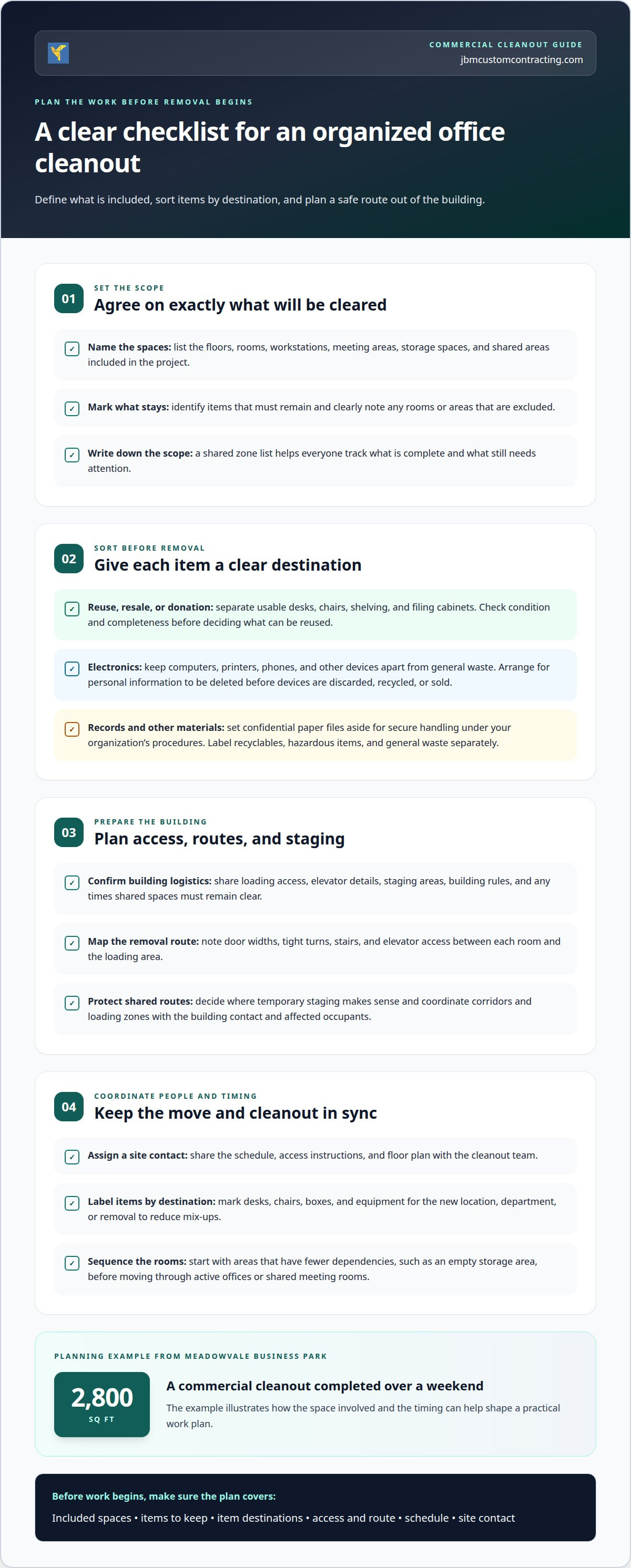
A full-floor cleanout can involve workstations, meeting rooms, storage areas, and shared spaces. Commercial and industrial sites may also contain shelving, packing materials, or equipment tied to daily operations. A cleanout in Meadowvale Business Park covered 2,800 sq ft and was completed over a weekend. That example shows how space size and timing can inform the work plan.
For a whole building, divide the space into zones before removal begins. This helps track what must stay, what is unwanted, and which areas are ready to clear. Confirm loading access, elevators, and staging areas in the plan. These details guide careful handling and help keep items from blocking shared routes.
Office Moves and Cleanout Preparation
For an office move, separate items going to the new location from those being removed. Label desks, chairs, boxes, and equipment by destination or department. Share the schedule, access instructions, and floor plan with the cleanout team. Clear labels reduce mix-ups when removal and moving happen in the same building.
How should a business prepare for an office cleanout? Name a site contact, identify items that must remain, and mark the spaces included in the work. Then share access details and any building rules that affect loading or moving items.
Commercial cleanouts benefit from a practical sequence. Start with rooms that have the fewest dependencies, such as an empty storage area, before moving through active offices or shared meeting rooms. This approach gives staff a defined work area and helps keep remaining operations organized.
Before work begins, map the route from each room to the loading area. Note door widths, tight turns, stairs, and elevator access. A large boardroom table may need a different route than boxed supplies. These examples help the team plan handling, protect building surfaces, and decide where temporary staging makes sense.
In a multi-tenant property, coordinate access with the building contact and affected occupants. Identify shared corridors, loading zones, and any times when those areas must remain clear. A written scope should name the floors, rooms, and item categories included, as well as excluded spaces, so removal stays within the agreed areas.
For larger jobs, ask how the crew will organize removal and communicate progress. A simple zone list can show which areas are complete and which still need attention. Include insurance details and the agreed work scope in the planning documents. For a commercial cleanout that also involves unwanted structures, junk removal planning can help clarify which items need clearing.
Office furniture, equipment, merchandise and garbage removal
Office clear-outs can include workstations, electronics, stored supplies, merchandise, and ordinary garbage. A room-by-room inventory helps separate each category before removal starts.
Furniture, Cubicles, and Workstations
Start with large furniture such as desks, boardroom tables, filing cabinets, and reception counters. Mark each item for removal, storage, relocation, or possible reuse. For cubicles, identify panels, work surfaces, and attached storage separately. This list helps prevent pieces from being left behind or mistakenly removed.
Workstations often include more than furniture. A desk may have monitor arms, cable trays, drawers, and connected electronics. Note these parts before dismantling, and keep reusable components together. For example, bundle each workstation’s screws and fittings with its labelled panels. Clear routes around desks and cabinets before moving them through narrow doorways.
Separate furniture from smaller items before loading begins. Group chairs, lamps, desk organizers, and boxes by destination, and move bulky pieces individually. Empty cabinets before removal and place their contents in labelled boxes. This makes the plan easier to follow and reduces confusion about what is staying or being discarded.
Equipment, Merchandise, and Garbage Removal
List office equipment by type, such as printers, monitors, phones, and small appliances. Keep cords and accessories with their matching devices where practical. Merchandise may need a separate count and destination, especially during a store or office move. For example, box display items apart from unsold stock, then label both groups clearly.
Sort garbage, equipment, and reusable supplies instead of combining everything in one pile. Cardboard packaging, broken office items, and unwanted stock may need different handling. Keep electronics separate from general waste, and identify devices that may hold business information. An item list helps the removal crew follow your instructions for each category.
Before removal, note which items need temporary storage and which must leave the premises. A labelled floor plan can show where boxes, furniture, and equipment will be staged. Keep walkways clear as items move out. Sorting materials first also makes it easier to direct suitable items toward reuse or recycling rather than sending everything to landfill.
When requesting an estimate, include an item list, the office layout, and access details. For example, mention a locked storage room or oversized boardroom table. These details help define the scope and clarify what the crew will handle. Keep a copy of the inventory for the final walkthrough.
Pricing and timeline set before work begins
A clear written estimate connects the office’s contents, access conditions, and requested work to a defined scope. Review what is included and how the work will be scheduled before removal begins.
On-Site Estimates and Volume-Based Pricing
A site visit can help assess the rooms, items, and removal route directly. The estimate can account for office furniture, boxed supplies, equipment, stairs, elevators, and loading access. These details help describe the volume and work involved more accurately than a short item list alone.
The estimate should reflect the project’s scope, dimensions, materials, access, preparation, equipment, removal, disposal, and site conditions. If the job involves bulky furniture or separated materials, include them in the item list so the written scope can describe the work accurately.
The cost depends on the individual project and is set out in a written estimate. The amount and type of material, building access, and required preparation, equipment, removal, and disposal can affect the scope. A site visit, if needed, can clarify which rooms, storage areas, and items are included.
Quotes, Timelines, and Hiring Questions
Before hiring, ask what the estimate includes, how the company measures volume, and which items fall outside the agreed scope. Also ask how the team will handle access delays, added items, and changes to the planned removal. These answers help you understand the quote before approving the work.
Review the written scope and proposed schedule, including the work areas and removal tasks. The time required depends on the volume, access, and work involved, so the plan should reflect the specific site conditions.
Compare estimates by matching their contents, not just their totals. One scope may include several storage rooms, while another covers only open office areas. Check whether the same furniture, equipment, and waste are included in each. This makes differences easier to spot without assuming similarly worded estimates cover identical work.
Discuss how changes to the work will be handled before it begins. An unexpected locked room or additional desk, for example, may affect the scope. Confirm any changes to the work and estimate before proceeding, so both sides have a clear record of what is included.
Use a room list to support the estimate: mark each area, note its contents, and identify items staying onsite. For example, label a storage room as included and a leased printer as excluded. Share access details, such as elevator booking requirements or a loading entrance. These practical details help align the written scope with the actual site.
Before approving the estimate, read the scope and proposed schedule together. Confirm that removal categories, work areas, access arrangements, and the process for changes are clear. This review gives the business a practical basis for planning the cleanout and helps the crew follow the agreed scope.
Office cleanout service areas in Mississauga
Local cleanout planning starts with the property address, access details, and rooms included. Site conditions and building arrangements can help shape an office cleanout plan.
Meadowvale Business Park provides a concrete commercial example: an office cleanout there covered 2,800 sq ft and was completed over a weekend. That project involved a defined building location and floor area, useful details for planning access, staging, and removal routes. For another Mississauga address, the building layout and amount of material will shape the work plan.
For a cleanout in Mississauga, record the exact address and suite or unit. Note the loading entrance, elevator access, parking instructions, and building contact. These details help plan how unwanted items will leave the property while minimizing disruption to occupants and neighbouring businesses.
A cleanout may also be part of a move, lease end, sale, or estate transition. For example, an office closing after a property sale may have items assigned to a new location, donation, or disposal. Identify who can approve removal and what the written scope includes. Reviewing lease obligations and estate representative instructions can clarify which items must remain.
Plan around both the address and the site itself. Floor access, loading arrangements, and material volume all affect how a cleanout is organized. For a multi-tenant building, record the correct business name, floor, suite, and contact person. These details help prevent confusion between neighbouring offices.
Ask how the cleanout team handles the building’s access process and site requirements. If the scope involves work assigned to a licensed trade, clarify which task requires that qualification and who is responsible for it. Also ask what insurance applies to the planned removal. These questions help define responsibilities without assuming every cleanout has identical needs.
Before setting a date, share any delivery restrictions, loading-zone instructions, or elevator booking process provided by building management. A shared loading area, for instance, may require coordination with other tenants. Name a contact person who can help resolve access issues on the scheduled day. Clear instructions make the plan easier to follow from the first room through final removal.
When arranging office cleanout services in Mississauga, include the site address, areas in scope, and access notes in the request. A precise location and room list help establish a practical plan for the property. The main takeaway is simple: local coordination depends on the address, building access, and clear responsibility for items being removed.
JBM Custom Contracting: Demolition Services
JBM Custom Contracting can help when an office clear-out is part of a broader property project. Junk Removal addresses unwanted contents, while selected small demolition and removal projects may suit work involving items beyond furniture or equipment. Renovations can support the next phase if the cleared space is being updated.
Consider demolition when the project scope includes removing existing structures, rather than only clearing furniture, equipment, or garbage. For a straightforward contents cleanout, focus on the removal work needed; for a broader property project, demolition or renovations may be relevant. Keeping those needs distinct helps clarify the work involved and plan the sequence.
If you’re planning an office cleanout or related property work, contact JBM Custom Contracting to discuss your project.
Make the Next Move With Confidence
A clear office cleanout plan can do more than empty a workspace. It can help prepare the property for its next use, whether that means handing it back, reopening it, or starting improvements. Choose the next step based on what the space needs after removal, not just what needs to leave today.
For a broader property project, JBM Custom Contracting offers Renovations and Demolition Services. Moss & Gutter Cleaning can also support exterior upkeep as part of a separate property maintenance plan. Keeping those needs distinct makes it easier to define the work and decide what should happen after the office is cleared.
When you’re ready to discuss office cleanout services and the next phase for your property, share the space’s needs and intended outcome. A practical plan starts with a clear conversation about the work ahead.
A clear scope and confirmed next step make it easier to move forward with confidence.
Frequently Asked Questions
What do office cleanout services include in Canada?
Office cleanout services can include removing unwanted furniture, workstations, equipment, merchandise, and general waste. The agreed scope determines which tasks are included. For example, a business might clear desks and boxed supplies while keeping its printer and filing cabinets. A room-by-room inventory separates items being removed from those staying onsite and gives the team a clear plan for each space.
How much do office cleanout services cost in Canada?
The cost depends on the project and is set out in a written estimate. Factors include the scope, dimensions, materials, access, preparation, equipment, removal, disposal, and site conditions. For a useful estimate, describe the rooms and items involved, including bulky furniture and stored contents. Review the written scope, including any exclusions, before the cleanout begins.
How are office cleanout costs calculated by volume, square footage, or labour?
The estimate reflects the project’s scope, dimensions, materials, access, preparation, equipment, removal, disposal, and site conditions. Square footage alone may not reflect a crowded storage room or the handling involved. Describe the contents and any oversized items so the written estimate can set out the work and its scope.
How are office furniture and equipment donated, recycled, or disposed of?
Sort furniture and equipment by condition and material. Usable desks or chairs may be suitable for donation or resale, while metal shelving and cardboard packaging may be recyclable. Keep electronics separate from general waste, and arrange for personal information to be deleted from devices before disposal or recycling. A clear inventory helps direct each item to its intended destination and keeps reusable materials separate from garbage.
Do office cleanout services handle hazardous materials and construction debris?
Handling depends on the material and agreed scope. Identify suspected hazardous items separately from ordinary office waste, and describe them when requesting an estimate. Construction debris also differs from routine contents such as chairs or boxes. Include it in the project details so the written scope can state which materials are covered and how removal and disposal will be addressed.
How long does an office cleanout take, and what affects the schedule?
The schedule depends on the amount and type of material, building access, and work involved. A furnished office with clear loading access differs from one with full storage rooms, dismantling needs, or restricted elevators. Share any move-out deadline, access windows, and loading arrangements when requesting office cleanout services. Outdoor work, if part of a wider project, may need adjustment for weather and site conditions, and scheduling changes will be communicated.
Does JBM Custom Contracting offer office cleanout services in Mississauga?
No. JBM Custom Contracting is based in Nanaimo, British Columbia, and serves surrounding Vancouver Island communities, including Nanaimo, Parksville, Ladysmith, and Duncan. Its stated service area does not include Mississauga, Ontario. For a cleanout in Mississauga, check with a local provider that serves the area.


