


Getting an old appliance out of your home takes more than finding a way to move it. On Vancouver Island, removal costs depend on the appliance, pickup access, and handling required, with a price provided after a quote request. Fast appliance removal can make the job easier, especially when a refrigerator or other bulky item needs careful handling.
It’s reasonable to want clear answers before arranging a pickup. This article explains what affects fast appliance removal, what to know about same-day pickup, and which appliances may be accepted.
You’ll also learn why refrigerators need special handling and how to prepare appliances for collection safely. With practical details about access, connections, and removal, you can understand what pickup involves and choose a suitable next step.
Key Takeaways
- Learn which details can shape an appliance removal quote, including the item and the work involved in getting it out.
- Find out what to consider when arranging a time-sensitive pickup in Vancouver.
- See which household appliances are commonly accepted for removal, from refrigerators and freezers to washers and dryers.
- Understand why refrigerators need special handling and shouldn’t go in regular trash.
- Review key preparation steps for appliances with electrical, water, or gas connections.
How much does appliance removal cost in Vancouver?
While Vancouver residents often look for fast appliance removal, pricing actually depends on the specific appliance, pickup location, access, and handling required. Stairs, long carries, extra items, and the distance to the vehicle can all affect the estimate. Share these details when requesting a quote for a pickup in Nanaimo, Duncan, or another Vancouver Island community served by JBM Custom Contracting.
Combining an appliance with other unwanted items may make one junk removal pickup more practical than separate collections. For example, a household clearing a stove, a broken microwave, and metal shelving can describe the full load together. That gives the removal team a clearer picture of the volume, lifting, and vehicle space involved. A junk removal pickup can be considered for mixed loads.
The vehicle and equipment needed depend on the load and access. A pickup truck may suit a single accessible item, while a cargo van can protect a load from weather. Large appliances may need a dolly, straps, and careful team handling. Tight hallways, elevators, stairs, and long carries can add work, even when the appliance fits inside the vehicle. The pickup location and route to the vehicle matter too.
For pickups in Vancouver Island communities such as Ladysmith or Parksville, the collection address and access route can affect the quote. Share the neighbourhood, appliance type, and access details when requesting an estimate. The same details matter for time-sensitive pickup, where timing depends on the collection schedule and job requirements. A photo can help show the appliance, its condition, and the space around it.
Appliance removal may include collection and transport, while the disposal or recycling route depends on the appliance and applicable handling requirements. When requesting an estimate, describe the items and the removal needed so the written scope can set out what is included.
Payment for scrap metal or working appliances isn’t automatic. Whether an item has resale or scrap value depends on its condition, metal content, and available reuse or recycling options.
Before arranging appliance removal, ask for a written estimate that explains the work included, how additional items affect the load, and whether stairs or difficult access change the scope. Share accurate pickup details and photos to help define the job.
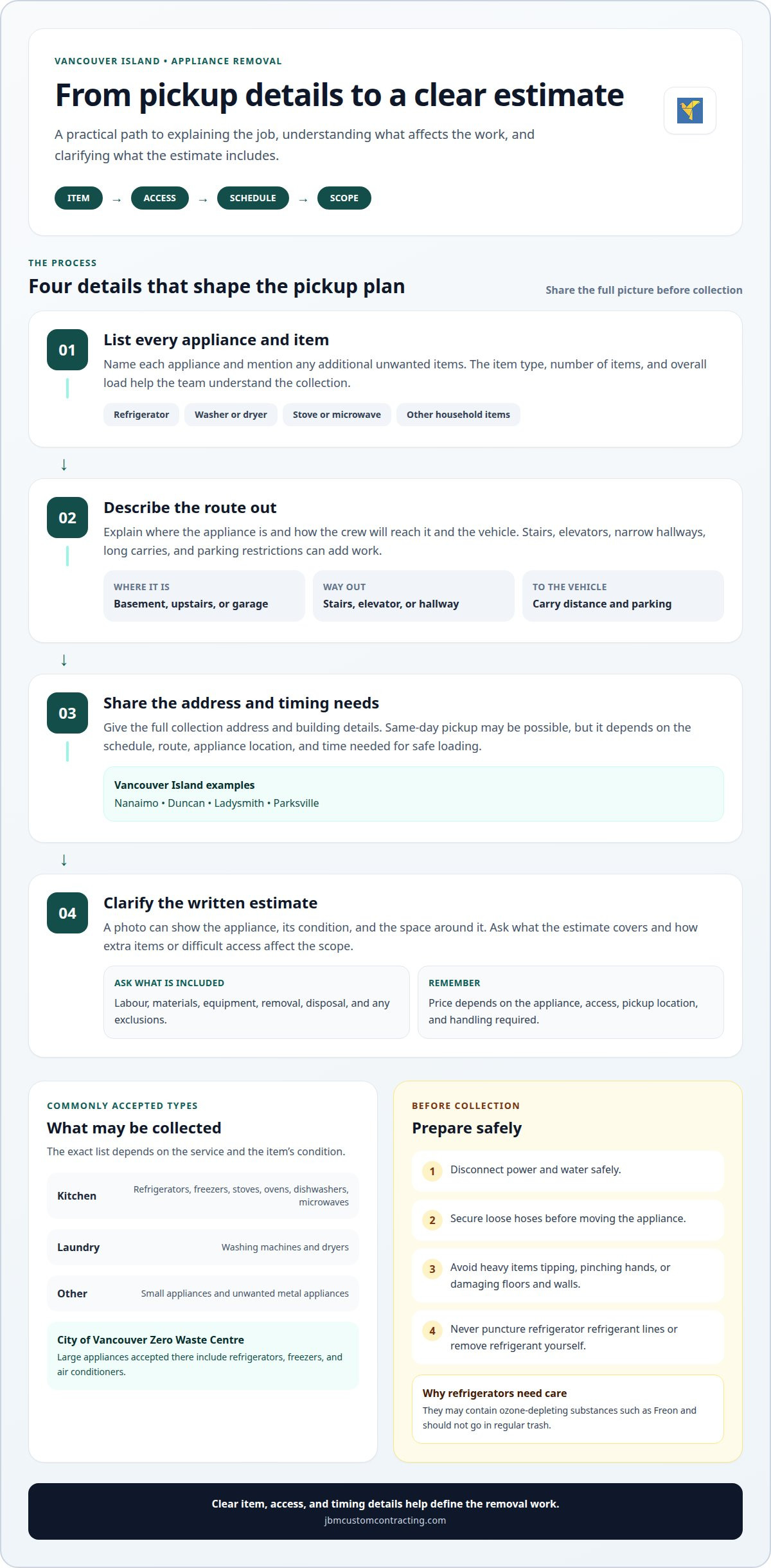
What safety risks should I consider when moving or removing large appliances? Heavy items can tip, pinch hands, or damage floors and walls. Disconnect power and water safely, secure loose hoses, and don’t puncture refrigerator refrigerant lines or remove refrigerant yourself. Refrigerators require careful handling because they can contain ozone-depleting substances such as Freon.
Same-day appliance removal in Vancouver
Same-day appliance pickup can be possible on Vancouver Island, depending on scheduling and the job. An open appointment, the appliance’s location, and the time needed for loading all affect the plan. A household replacing a washer in Nanaimo before evening, for example, should explain its timing needs when arranging pickup. That helps the removal service assess whether collection fits its route.
Pickup addresses across Vancouver Island can mean different travel and access needs. A collection in Duncan may involve a different route from one in Ladysmith or Parksville. Share the full address, building type, and access details when arranging removal. A condo elevator, a long hallway, or stairs can affect how a crew schedules transport. The address helps determine whether a same-day appointment fits the route.
Appliance removal prices vary with the work involved. Factors include the appliance type, number of items, access, and whether the load includes other household junk. Same-day timing also depends on the route and available scheduling space. A clear description helps the service understand the job before setting a price. Sending a photo can show the appliance’s size, condition, and surroundings.
Fast appliance removal is easier to plan when you have the pickup details ready. Identify each item, such as a washer, dryer, or refrigerator, and note whether it is upstairs or in a garage. Explain narrow doorways, elevator access, and parking restrictions. Mention additional unwanted items too, since they can affect the load and removal plan.
Before arranging removal, clarify what the written estimate covers. It can itemize labour, materials, equipment, removal, disposal, and any exclusions. Share details about extra items or difficult access so the estimate reflects the job. For example, a washer in a basement may need a different removal approach from one beside a ground-floor exit.
Same-day pickup requires more than travel to the address. The team needs to fit the collection into its route and allow time for safe handling. A photo, a precise location, and a concise item list help explain the job. If your plans include other property work in Nanaimo or nearby communities, review local property service information as you consider the next step.
Appliances accepted for removal
Appliance removal services may accept large household machines, smaller countertop devices, and other unwanted metal appliances. The exact list depends on the service and the item’s condition. Before arranging pickup, note each appliance by type, for example, a refrigerator and a microwave, even if both are leaving during one kitchen upgrade.
- Kitchen appliances: refrigerators, freezers, stoves, ovens, dishwashers, and microwaves.
- Laundry appliances: washing machines and dryers.
- Smaller household items: small appliances and other unwanted metal appliances.
- Cooling equipment: refrigerators, freezers, and air conditioners are among the large appliances accepted at the City of Vancouver’s Zero Waste Centre.
Different projects may involve different combinations of items. A kitchen upgrade might involve an old oven and dishwasher, while a laundry-room refresh could include a washer and dryer. If you’re clearing storage, mention countertop appliances alongside larger items so the removal plan reflects what needs to go.
Not every bulky item is an appliance. Furniture, a mattress, and general clutter may need a broader junk removal arrangement. If you’re replacing a refrigerator while clearing a home, mention both the appliance and any furniture in your request. JBM Custom Contracting offers junk removal for unwanted items from residential and commercial properties. Clear details help the estimate reflect the work involved.
For appliance removal, describe whether each item works, is damaged, or is incomplete, as its condition can affect handling. Include its location, such as a dryer in a basement or a stove beside a kitchen entrance. If you’re unsure of the model, a clear photo can help identify it. Mention small appliances too, since several countertop items can change the size of the load.
Vancouver residents can consider the City of Vancouver’s Zero Waste Centre for certain large appliances, including refrigerators, freezers, and air conditioners. This is separate from a pickup service: accepted items must be taken to the centre. For a home with multiple appliances, consider practical steps such as transport and access before choosing a disposal route.
Grouping appliances by room can make the collection details easier to follow. For example, a kitchen list could include a stove, microwave, and dishwasher, while a laundry list could include a washer and dryer. Clear details help define what the collection includes and how the items will be handled.
Professional appliance removal
Professional removal involves preparation, lifting, loading, and responsible handling. A refrigerator, dishwasher, or dryer can be awkward to manoeuvre through a narrow doorway. Before collection, arrange safe disconnection of power and water. Gas-connected appliances need disconnection by an appropriately qualified professional. Clear access helps plan the route from the room to the vehicle.
Heavy lifting is only one part of the job. A washer can retain water, while loose hoses can snag during movement. Before removing a washing machine or dryer, disconnect electrical power and arrange safe disconnection of water connections. Drain remaining water where appropriate, then secure loose hoses. These steps help reduce spills and make it easier to move the appliance through hallways or shared building areas.
Refrigerators need particular care because their cooling systems contain refrigerant. Don’t puncture refrigerant lines or try to remove refrigerant yourself. According to the Canadian Appliance Manufacturers Association, eleven Canadian jurisdictions require refrigerant removal before appliance disposal and have labelling requirements. That information highlights why the disposal route matters, especially for refrigerators and freezers. Professional handling should account for the appliance’s cooling components.
Moving equipment matters too. A dolly, straps, and a clear path can help control a heavy appliance during lifting and transport. A dishwasher removed from a tight kitchen, for example, may need careful manoeuvring around cabinets and door frames. A dryer in a basement presents different access challenges. The route, not just the appliance’s size, affects the handling plan.
Before requesting an estimate, describe each item and its condition. Mention whether a refrigerator still cools, whether a washer contains water, and whether a stove connects to gas. These details help define the work and clarify what the estimate covers. A photo can show the appliance, nearby obstacles, and doorway access. For a mixed load, list each appliance separately, including dryers and dishwashers.
Appliance removal also involves planning what happens after loading. Refrigerators shouldn’t go in Vancouver’s regular trash because they can contain ozone-depleting substances such as Freon. The disposal or recycling route should account for regulated components. Leave refrigerant systems intact, arrange qualified gas disconnection, and give the removal team accurate details before pickup.
Which companies offer same-day appliance removal in Canada?
Across Canada, local junk removal companies and appliance removal specialists may offer same-day pickup. They collect items such as refrigerators, washers, and stoves for disposal or recycling. Availability depends on the provider’s schedule, pickup address, and access route. An apartment pickup in Vancouver may need different planning than a detached home outside the city.
Appliance removal services focus on large household machines, such as refrigerators, freezers, and dryers. General junk removal may be a better fit for a mixed load, such as a dishwasher and unwanted furniture. When requesting a pickup, list every item and where it’s located. A photo can show the appliance’s size, condition, and nearby obstacles.
Retailers may offer old-appliance haul-away for an additional charge when delivering a replacement. This is different from a standalone junk removal pickup. If you’re replacing a stove, ask about haul-away during the purchase process. If you’re clearing a basement without buying a replacement, a separate collection may be more suitable.
Municipal recycling sites offer another option. In Vancouver, the City of Vancouver’s Zero Waste Centre accepts certain large appliances, including refrigerators, freezers, and air conditioners. Residents must arrange their own transport and unloading. If you don’t have a suitable vehicle, a pickup service may be more practical for a heavy refrigerator.
For a time-sensitive pickup, provide the address, an item list, and details about the floor, stairs, elevator access, and any building booking requirements. A photo and your preferred collection time can also help the provider assess the job and plan the schedule. A ground-floor washer beside the exit may be easier to collect than an appliance with difficult access.
Choose a provider that serves the pickup address and confirm whether the written estimate covers lifting, transport, removal, and disposal. This also helps clarify whether haul-away is linked to a new appliance delivery or offered as a separate collection.
For a mixed household clear-out, explore junk removal support
Same-day appliance removal depends on the local schedule, service area, and job requirements. Some appliance retailers offer old-appliance haul-away for an additional charge when delivering a replacement.
JBM Custom Contracting
JBM Custom Contracting can help clear unwanted items from homes and businesses, including appliances as part of a larger clean-out. It may be a good fit during renovations or after small demolition and removal projects. Let them know what needs to go and what other work is involved so they can provide an estimate for the job. Leave refrigerator refrigerant lines intact and arrange for a specialist to disconnect them if needed. Get in touch with JBM Custom Contracting to talk about your clean-out or property project.
Plan your next property step
Fast appliance removal can be part of a bigger project, like getting ready for renovations or making space after small demolition and removal. JBM Custom Contracting also offers moss and gutter cleaning for exterior maintenance. When you ask for an estimate, describe each task so it’s clear what work is involved and whether it can be handled in one pickup.
If your appliance removal is part of a larger clean-out or property project, contact JBM Custom Contracting to talk through what you need. A short description of the items and any related work is a good place to start.
A clear plan makes it easier to move forward with confidence.
Frequently Asked Questions
Can you remove appliances from basements or upper floors?
Appliances can be collected from basements and upper floors when the access route allows safe handling. A narrow stairwell, low ceiling, or tight landing can change the equipment and lifting plan. When arranging a pickup, mention a basement freezer and the number of stair flights. In an apartment building, include elevator access and any booking rules so the crew can plan around shared spaces.
Do I have to move the appliance to the curb?
No, many removal arrangements include collecting the appliance from inside the home. The pickup location affects the labour involved, so describe whether the item is in a kitchen, garage, or basement. A refrigerator beside a garage entrance has a different route from a washer behind a narrow laundry-room door. Keep the path clear and let the crew know about steps, tight corners, or building access limits.
Do you offer same day appliance pickup?
Some Vancouver removal services offer same-day pickup when their schedule and route allow it. Timing depends on the pickup address, appliance, and access conditions. A ground-floor dishwasher near an exterior door may be easier to fit into a route than a large appliance requiring stair carries. Send a photo and state your preferred timing when requesting service, so the job can be assessed efficiently.
What appliances do fast appliance removal services in Canada accept?
Commonly accepted items include refrigerators, freezers, washers, dryers, stoves, ovens, dishwashers, microwaves, and small household appliances. Some services also collect other unwanted metal appliances. Acceptance can depend on the item and its condition. For example, list a damaged freezer separately from a working microwave, and include air conditioners in your item description rather than assuming every service handles them.
How quickly can an appliance removal company pick up appliances?
Pickup timing depends on the schedule, available appointments, and the job’s access needs. Same-day collection may fit when a crew has room nearby and the appliance is ready to move. A large refrigerator in an upper-floor suite can take more planning than a small appliance beside the entrance. Share the address, item list, access details, and preferred pickup window to help determine a practical schedule.
How much does appliance removal cost in Canada?
There isn’t one fixed price across Canada. The estimate depends on the appliance, pickup access, distance, load size, and handling involved. A single microwave beside the entrance is a different job from several appliances on upper floors. Ask for a quote that spells out pickup, hauling, and disposal or recycling. For an appliance with refrigerant, include its type and condition in the price request.
How should I prepare an appliance for removal?
Clear a path from the appliance to the exit, and move nearby boxes or furniture. For washers and dryers, disconnect power and arrange safe disconnection of water connections; drain remaining water where appropriate and secure loose hoses. Gas-connected appliances need disconnection by an appropriately qualified professional. Keep refrigerator refrigerant lines intact, and tell the crew about tight turns or access restrictions before pickup.
Are there fees for removing refrigerators or other appliances with refrigerants?
Charges depend on the removal service and the handling or disposal route. In Vancouver, residents taking a refrigerator to the Vancouver South Transfer Station are responsible for an ODS surcharge and the heavy lifting. A pickup service may have different charges. Refrigerators shouldn’t go in regular trash because they can contain ozone-depleting substances such as Freon. Don’t puncture refrigerant lines or remove refrigerant yourself.


