
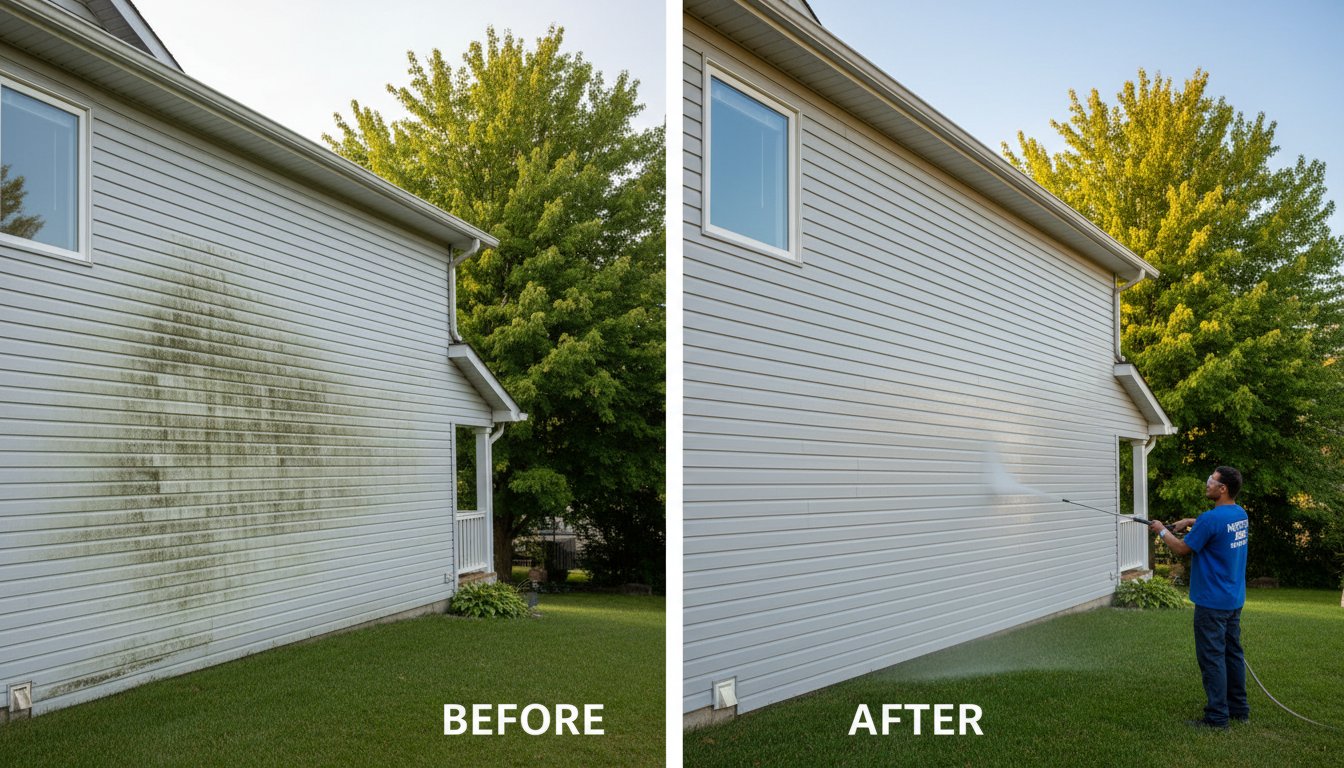

That power washer you're thinking of renting could be a C$5,000 mistake waiting to happen. For many Canadian homeowners, the sight of green algae and dirt on their exterior walls triggers an immediate response: blast it away with high-pressure water. It’s an understandable instinct; you just want your home to look clean and well-maintained. But before you pull the trigger, you have to ask the critical question: is power washing bad for vinyl siding? The answer, more often than not, is a resounding yes.
In the same way that professional maintenance ensures quality results, the manufacturing of the materials themselves requires precision engineering and high-performance components. To see how industrial-grade parts are crafted to protect and assemble products across various sectors, you can discover more about Die-Cut Adhesives.
If your inspection around the windows reveals deeper problems like drafty frames, condensation between panes, or difficulty opening and closing them, the issue may be with the window unit itself. Addressing failing windows is just as important as maintaining your siding for protecting your home. While based in the US, Window Galaxy USA serves as a great example of the comprehensive window replacement services that can solve these problems, improving energy efficiency and preventing costly water damage. Beyond the glass and frames, ensuring your window screens are in good repair is also essential; for instance, a professional Screen Panel Replacement can restore the integrity of your home's ventilation points and porch enclosures.
This guide delivers the professional truth about achieving a spotless home exterior without causing expensive, irreversible damage. We'll show you exactly why brute force can lead to cracked panels, water trapped inside your walls, and a voided manufacturer's warranty. You’ll discover the proven method for getting dramatic, long-lasting results safely and efficiently. We will break down the crucial differences between risky power washing and the reliable soft washing technique that protects your property's value.
Key Takeaways
- The answer to "is power washing bad for vinyl siding" is often yes; high-pressure jets can force water behind panels, leading to hidden rot and costly repairs.
- Discover how professional soft washing uses specialized, eco-friendly detergents-not brute force-to safely eliminate grime and achieve a dramatic clean.
- Identify key factors like shade, humidity, and foliage that accelerate dirt buildup so you can determine a proactive cleaning schedule for your home.
- Understand why hiring a certified and insured professional is a smart investment that protects your property and eliminates the risks of DIY exterior cleaning.
Is Power Washing Bad for Vinyl Siding? Separating Fact from Fiction
Homeowners often ask, "is power washing bad for vinyl siding?" The direct answer is that high-pressure washing is almost always a damaging choice. There's a critical difference between professionally cleaning a surface and simply blasting it with extreme force. While the immediate result might look clean, the hidden damage can lead to costly, long-term problems.
To better understand the safe and effective way to clean your home's exterior, watch this helpful video from the experts at This Old House:
Vinyl siding is engineered to protect your home by shedding water downwards. The panels interlock and feature small weep holes at the bottom to allow moisture that gets behind them to escape. This design lets your home "breathe." However, it was never built to withstand a high-pressure stream of water being forced upwards. This action can drive gallons of water behind the siding, trapping it against your home's sheathing and structural supports. The result? A perfect environment for mold, mildew, and wood rot.
Understanding what vinyl siding is made of, primarily polyvinyl chloride (PVC), helps clarify its limits. It's a durable plastic, but it's not invincible. Aggressive pressure can cause it to crack, chip, or become dislodged entirely.
The Myth of the "High-Pressure Cure"
The belief that more pressure equals a better clean is one of the most common and destructive myths in exterior cleaning. Dirt, algae, and mildew don't require brute force; they require the right cleaning solutions and proper technique. High pressure often just blasts away the top layer of grime while leaving the root of the problem, like mold spores, behind. Worse, the intense stream can spread these spores across other parts of your home, causing the problem to reappear even faster. Power washing is a mechanical force that often exceeds the tensile strength of PVC panels, leading to irreversible etching and damage.
What Siding Manufacturers Actually Recommend
You don't have to take our word for it. Leading Canadian siding manufacturers like CertainTeed and Mastic provide clear maintenance guidelines. Their official recommendations almost universally advise against using high-pressure washers. Instead, they suggest cleaning with a soft cloth or a long-handled, soft-bristle brush. For rinsing, they specify using a standard garden hose, which provides more than enough pressure to wash away loosened dirt and cleaning agents safely. Using a power washer in a way that contradicts these guidelines can be considered improper maintenance, which could void your product warranty and leave you responsible for the full cost of any repairs.
The Anatomy of Damage: How High Pressure Ruins Your Home
Using a high-pressure washer on vinyl siding is like using a sledgehammer for a task that requires a finishing nailer. It's the wrong tool, and the results can be catastrophic. While the immediate visual might seem clean, the unseen damage can cost you thousands of dollars in repairs. The core issue is that vinyl siding isn't a waterproof seal; it’s a water-shedding system designed to protect the weather-resistant barrier underneath. High-pressure streams completely bypass this system.
Here’s how the damage unfolds:
- Water Intrusion: Vinyl panels have small openings called "weep holes" at the bottom to allow condensation to escape. A pressure washer jet, often exceeding 2,500 PSI, easily forces gallons of water upwards and behind these panels, trapping it against your home's sheathing.
- Structural Rot: Once water is trapped behind the siding, it soaks into the OSB or plywood sheathing and insulation. Damp insulation can lose over 40% of its thermal resistance (R-value), and persistently wet wood is a guaranteed recipe for structural rot.
- Mechanical Failure: Vinyl becomes more brittle with age. A direct blast of high-pressure water can easily crack, chip, or puncture the panels. It can also get under the lip of a panel and rip it clean off the wall, an issue known as "panel blow-off."
- The "Tiger Stripe" Effect: Inconsistent pressure or wand distance strips away the vinyl's protective top layer unevenly. This creates ugly, permanent dark streaks or "tiger stripes" that cannot be washed off later.
The Hidden Danger of Mold and Mildew Migration
Forcing water into your wall cavities creates the perfect dark, damp, and unventilated environment for toxic mold and mildew to thrive. This isn't just a surface-level problem. The mold grows on your home's structural wood and insulation, where you can't see it until the damage is severe. Often, homeowners won't notice the musty smell or signs of interior wall damage for 6 to 12 months after the improper wash, long after the "clean" look has faded.
When moisture gets trapped, it can compromise the cavity wall insulation and lead to serious damp issues. While based in the UK, specialist firms like CavClear focus on resolving these exact problems through services like cavity wall maintenance and damp proofing; for example, homeowners can explore Wall Tie Surveys to learn more about the professional investigation process for internal wall health.
Oxidation and the Chalky Residue Trap
Over time, vinyl siding develops a fine, chalky powder on its surface. This is oxidation, a natural part of the material's aging process that protects the vinyl underneath. So, is power washing bad for vinyl siding with this layer? Absolutely. High-pressure water doesn't clean this chalky film; it blasts it away unevenly, etching permanent "wand marks" and lap lines into the surface. The only professional, safe way to treat oxidation is to use the correct cleaning agents, or surfactants. These cleaners, recommended by the Vinyl Siding Institute cleaning guidelines, break down dirt and organic growth chemically, allowing them to be rinsed away with low pressure. Brute force simply scars the material. A proper professional soft washing service understands this science, ensuring your home is cleaned safely and effectively without causing irreversible damage.
Soft Washing vs. Power Washing: The Professional Standard
Many homeowners believe that cleaning siding requires intense, high-pressure water blasting. This is a common and costly misconception. The professional standard for cleaning delicate surfaces like vinyl is a technique called soft washing, and you can find out more about how it relies on a combination of specialized, eco-friendly cleaning solutions and low-pressure water to deliver a safe, deep, and lasting clean.
Soft washing uses pressure under 500 PSI, which is often less forceful than a standard garden hose. This is a world away from a typical power washer that can exceed 3,000 PSI. The key difference is the approach: soft washing uses chemistry to do the hard work, while power washing relies on dangerous, high-pressure force. This distinction is critical when answering the question, is power washing bad for vinyl siding? Under the wrong conditions, absolutely. That’s why our trained technicians exclusively use the soft wash method for all siding projects.
The Role of Biodegradable Cleansers
The real magic of soft washing lies in the science of its cleaning agents. A professional soft wash solution typically contains two key ingredients: sodium hypochlorite and specialized surfactants. Sodium hypochlorite is a powerful disinfectant that safely eliminates organic growth like mold, mildew, and algae at the root level, preventing it from quickly returning. The surfactants act as a detergent, breaking the bond between dirt, grime, and your vinyl siding. This allows contaminants to be gently rinsed away instead of being blasted off. Using high pressure alone just shears off the top layer of grime, leaving the root spores behind to regrow within months.
A professional company also takes meticulous steps to protect your property. Before any cleaning solution is applied, we thoroughly pre-wet all surrounding plants, shrubs, and landscaping with fresh water. This ensures the plant life absorbs the clean water first, preventing any intake of the cleaning solution. After the job is done, a final post-rinse provides another layer of protection, leaving your landscaping vibrant and unharmed.
Companies such as Poseidon Power Washing LLC put these professional standards into practice, specializing in safe and effective exterior cleaning for luxury properties.
Pressure vs. Volume (GPM)
When it comes to cleaning vinyl siding safely, water volume is far more important than water pressure. A typical pressure washer rented from a Canadian hardware store might output around 2 gallons per minute (GPM) at a dangerously high pressure. In contrast, a professional soft wash system is designed for high volume, often delivering 8 GPM or more at a safe, low pressure. Think of it as the difference between a water jet and a gentle river.
This high volume creates a crucial "rinse factor." Instead of using a concentrated, high-pressure stream that can easily be forced behind siding panels, the high GPM flow creates a sheet of water that efficiently lifts and carries away the loosened contaminants. A detailed look at how power washing can damage vinyl siding shows that high pressure can cause cracking, chipping, and severe water intrusion leading to rot and mold inside your walls. Professional systems prioritize water volume to safely float away dirt, ensuring a thorough clean without risking the integrity of your home's exterior. This method also allows our technicians to clean a two-story home safely and efficiently from the ground, avoiding the risks associated with ladders on wet surfaces.
Determining the Best Cleaning Schedule for Your Vinyl
There is no one-size-fits-all answer for how often to clean your vinyl siding. A home in a dry, open area may only need attention every two years, while another might show grime in just six months. Understanding the factors at play is key to protecting your investment and maintaining your home’s curb appeal.
Your home's specific environment is the biggest factor. Areas with consistent shade, high humidity, and dense, overhanging foliage create the perfect breeding ground for algae and mildew. You've likely noticed this on the north side of your house, which receives the least sunlight. This "North Side" problem is why one part of your home can look years older than the rest; the constant dampness allows organic growth to thrive unchecked.
For most Canadian homeowners, spring and fall are the optimal windows for exterior cleaning. A spring cleaning removes the winter's accumulation of salt, dirt, and grime. A fall cleaning clears away summer pollen, dust, and leaf stains before they can set in during the wet winter months.
While the timing may differ based on climate—for example, homeowners in Florida face year-round humidity and sun exposure—the principle of proactive scheduling remains the same. To see how professionals in a different climate determine the right frequency, you can discover Warrens Power Washing.
Environmental Factors in Your Region
Local conditions play a massive role in your cleaning schedule. Southern Ontario's high ragweed pollen counts from August to October can leave a yellow film, while industrial zones near Hamilton or Edmonton can deposit airborne pollutants on siding. It’s also crucial to identify specific organic threats:
- Artillery Fungus: These are tiny, black, tar-like dots that are incredibly difficult to remove. They are spores shot from a fungus living in decaying mulch. Never try to power wash them; high pressure can permanently embed the spores into the vinyl. This requires professional, specialized treatment.
- Algae vs. Lichen: Green or black film is typically algae, which can be safely removed with a professional soft wash. Lichen, on the other hand, appears as crusty, leafy, or branching growths. It has a root-like structure that attaches firmly to the siding and requires a different cleaning agent to kill and dislodge it without damaging the vinyl.
The 12-to-24 Month Rule
We recommend a professional inspection and cleaning every 12 to 24 months. This schedule is frequent enough to prevent organic growth like mold and algae from releasing acids that can permanently "etch" or stain the vinyl's surface. The question shouldn't just be is power washing bad for vinyl siding, but what happens if you don't clean it at all? The costs tell the story.
A proactive, annual soft wash for an average-sized home typically costs between C$450 and C$750. In contrast, waiting until you have a severe mold problem could lead to remediation costs exceeding C$3,000, not including the potential replacement of compromised siding panels. Regular maintenance is always more cost-effective.
Before any cleaning, perform a quick inspection:
- Look for any cracked, chipped, or loose panels.
- Check the integrity of the caulking around windows and doors.
- Note any areas with heavy, dark staining, which could indicate a deeper issue.
If your inspection around the windows reveals deeper problems like drafty frames, condensation between panes, or difficulty opening and closing them, the issue may be with the window unit itself. Addressing failing windows is just as important as maintaining your siding for protecting your home. While based in the US, Window Galaxy USA serves as a great example of the comprehensive window replacement services that can solve these problems, improving energy efficiency and preventing costly water damage.
Red Flags: When to Stop and Call a Professional
If your inspection reveals significant cracks, siding panels that are pulling away from the house, or extensive black mold growth, stop immediately. Forcing water behind compromised siding can lead to catastrophic water damage and mold growth inside your walls. These issues are precisely when the answer to "is power washing bad for vinyl siding?" becomes a definite yes.
If you see any of these warning signs, it’s time to call in the experts. Contact JBM Custom Contracting for a professional assessment to ensure your home is cleaned safely and effectively, without risking costly damage.
Why Professional Exterior Cleaning is a Smart Investment
Throughout this guide, we've detailed the risks of improper pressure washing. The potential for cracked siding, water intrusion, and voided warranties is real. This brings us to the final, crucial question: is hiring a professional worth the cost? The answer is a definitive yes. Investing in a professional service like JBM Custom Contracting isn't just about getting a clean house; it's about protecting your property, saving your time, and boosting your home's value.
This principle of protecting your investment extends beyond just cleaning to overall exterior health. For example, a professional siding contractor Portland OR demonstrates the high standards of work required to protect and enhance a home's value through proper exterior maintenance and renovation.
The same logic applies to other valuable assets; for example, in the commercial transport industry, specialized mobile services like Washify are trusted to professionally clean large fleets without damaging sensitive equipment, showcasing the importance of industry-specific expertise.
This principle of specialized care applies just as much to personal vehicles, which are also significant investments. For a great example of the level of detail and professionalism involved in high-end automotive care, you can check out Jordy's Custom Car Care.
This same principle extends to the interior of your home, where specialized knowledge is key for tackling difficult jobs. For instance, while they are based in New Zealand, the expert guides offered by The Cleaning Crew demonstrate the professional techniques required for stubborn issues like deep carpet stain removal.
This focus on professional standards is equally important for capturing the beauty of your home during major life events. For homeowners planning a special celebration, Delgado Studios provides an excellent example of how professional event photography relies on a meticulously maintained setting to produce stunning, high-quality results.
Our promise is simple: we provide certified, fully insured, and professional property maintenance. We take the anxiety out of the question, is power washing bad for vinyl siding, by replacing DIY risks with guaranteed professional results. No teetering on ladders, no accidental window shatters, and absolutely no water forced into your attic. The dramatic results we deliver can increase your property's value by an estimated 7% in the Canadian market, making it a sound financial decision as you plan for 2026 and beyond.
A holistic approach to property maintenance includes caring for systems both inside and out. Just as the exterior needs professional cleaning, the internal climate systems require expert attention to maintain efficiency and home value. For an example of a company that embodies this professional standard in the HVAC space, you can check out E.R.S. Heating & Cooling.
The Value of Peace of Mind
The phrase "Certified & Fully Insured" is more than a slogan; it’s your shield against liability. When you hire JBM, you're protected. If an accident happens, our comprehensive insurance covers it, not your homeowner's policy. This accountability is the core difference that truly settles the debate over whether power washing is safe. With an uninsured amateur, the answer to "is power washing bad for vinyl siding?" can unfortunately be yes. With a professional, it's a safe and managed process.
This professional standard is upheld by reputable companies across North America. For example, you can learn more about L&M Services LLP, a team in the Philadelphia area that demonstrates this same commitment to safe, insured, and effective exterior cleaning.
Similarly, companies like AlphaLux Cleaning serve as a great example of the professional standards property owners should look for, providing comprehensive residential and commercial cleaning services across New York State.
Consider the time investment. A typical DIY house wash can consume an entire weekend, about 12 to 16 hours of your valuable time between setup, cleaning, and takedown. Our efficient, trained crews often complete the same job in just 3 to 4 hours. We use professional-grade equipment from trusted suppliers like J Racenstein that delivers a superior, longer-lasting clean. This service fits seamlessly into a comprehensive property maintenance checklist, often revealing other areas that need attention, such as clogged gutters or developing moss issues, which we are also equipped to handle.
Get Your Professional Estimate Today
At JBM Custom Contracting, we don't believe in a one-size-fits-all approach. Our process begins with a thorough evaluation of your property. We assess your siding's age, material, and current condition, identifying areas with stubborn algae, mildew, or environmental staining. This allows us to select the precise pressure settings and eco-friendly cleaning solutions that will restore your vinyl siding without causing harm. It's this meticulous planning that transforms a potentially risky task into safe, efficient property care.
Don't let dirt and grime diminish your home's beauty or value. Step away from the rental machine and the risks that come with it. Let our team provide the reliable, professional results your property deserves. Your home is your most significant investment; we're here to help you protect it.
Ready to see the difference? Contact JBM for a free exterior cleaning consultation and let us show you how we can safely and effectively restore your home's curb appeal.
Secure Your Home's Value with a Professional Clean
The answer to the question, is power washing bad for vinyl siding, is a clear yes when done incorrectly. Pressures exceeding 1,500 PSI can crack siding, break window seals, and force water behind panels, leading to costly mold and rot issues. The professional standard for 2026 is soft washing, which uses specialized cleaning solutions and low-pressure rinsing-often under 500 PSI-to safely eliminate grime, algae, and mildew without risking damage.
Protect your biggest investment. The team at JBM Custom Contracting provides a reliable, efficient clean using professional soft-wash technology. We are Certified & Fully Insured for your peace of mind, guaranteeing a damage-free process and dramatic "Before & After" results for every home. Ready to see the difference a professional touch can make?
Get Your Free Professional Power Washing Estimate and restore your home's curb appeal with confidence.
Frequently Asked Questions About Siding Cleaning
Is it okay to use a pressure washer on the lowest setting for vinyl siding?
No, we strongly advise against using a pressure washer on vinyl siding, even at its lowest pressure setting. The force can still be strong enough to drive water behind the siding panels. This trapped moisture can lead to mold, mildew, and potential rot within your home's wall structure. Our professional soft washing technique uses the same pressure as a garden hose, relying on specialized, eco-friendly cleaners to do the work safely and effectively.
Will soft washing kill my plants and flowers?
No, our professional soft washing process is designed to be completely safe for your landscaping. Before we begin, our certified technicians take careful steps to protect your property. This includes pre-rinsing all plants and vegetation with water, covering delicate flowers if necessary, and performing a final rinse after the cleaning is complete. We ensure your home gets a reliable clean without harming your beautiful garden.
How much does professional soft washing cost compared to DIY power washing?
In Canada, professional soft washing for an average 2,000-square-foot home typically costs between C$450 and C$750. A DIY power washer rental costs around C$100 per day, plus the cost of cleaning solutions. While DIY seems cheaper upfront, it carries the significant risk of causing thousands of dollars in damage from cracked siding or water intrusion. Hiring a professional is a cost-effective investment in your home's integrity and value.
Can power washing cause my vinyl siding to melt or warp?
Yes, using a power washer can absolutely melt or warp your vinyl siding. The high-velocity stream of water generates friction and heat, which can easily damage the vinyl material. This is one of the most common reasons people ask if power washing is bad for vinyl siding. Our soft washing method uses no high pressure or heat, eliminating this risk entirely and ensuring your siding is cleaned safely.
What is the white chalky stuff on my siding, and can it be washed off?
That white chalky film is oxidation, which occurs as the vinyl's factory finish breaks down over years of exposure to UV rays. Yes, it can be safely and effectively removed with a professional soft wash. Our cleaning solutions are specifically formulated to gently break down and rinse away this oxidized layer, along with dirt and algae, restoring much of your siding's original color and vibrancy. If cleaning reveals that the color is permanently faded, a professional paint job is the ultimate solution for a full restoration; services like Roll On Painting specialize in this for both residential and commercial properties.
How long does a professional soft wash last on vinyl siding?
A professional soft wash will typically keep your vinyl siding clean for 2 to 4 years. The exact duration depends on factors specific to your Canadian property, such as tree coverage, humidity levels, and sun exposure. Because our process eliminates mold and algae at the root instead of just blasting the surface, the results last significantly longer than a traditional power wash, offering you a better long-term value.
Do I need to be home when a professional cleaning crew arrives?
No, you don't need to be present for us to complete the service. We just ask that you ensure all windows and doors are securely closed, all exterior water spigots are accessible and turned on, and any fragile items like decorations or potted plants are moved away from the walls. Our reliable and fully insured team can handle the job efficiently, letting you come home to a sparkling clean exterior.
Can soft washing remove old paint or stains from vinyl?
Soft washing is exceptionally effective at removing organic stains like dirt, algae, mold, and mildew. However, it is not designed to remove non-organic stains like paint splatter, rust marks, or deep-set oil stains. These types of blemishes often require specialized spot treatments. During our initial consultation, we can identify any such areas and discuss the most effective and safe options for restoring your siding's appearance.