

Did you know that a thin layer of moss on your walkway can be as slippery as a patch of black ice after a light rain? It's a common problem here on Vancouver Island, where our damp climate turns beautiful driveways into hazardous, green-stained eyesores. If you're looking for how to remove moss from concrete safely, you've likely worried that a high-powered pressure washer might strip the finish right off your surface. It's a valid concern because improper cleaning often causes permanent damage that's far more expensive to fix than the moss itself.
This guide shows you the most effective ways to clear your driveway while ensuring the greenery stays gone for good. We'll walk you through the essential two-stage process of mechanical clearing and chemical neutralization. You'll also learn to distinguish between a simple weekend DIY task and situations that require professional soft washing equipment. By the end of this article, you'll have the knowledge to restore your curb appeal and keep your walkways safe for your family throughout the year.
Understanding Why Moss Invades Your Concrete Surfaces
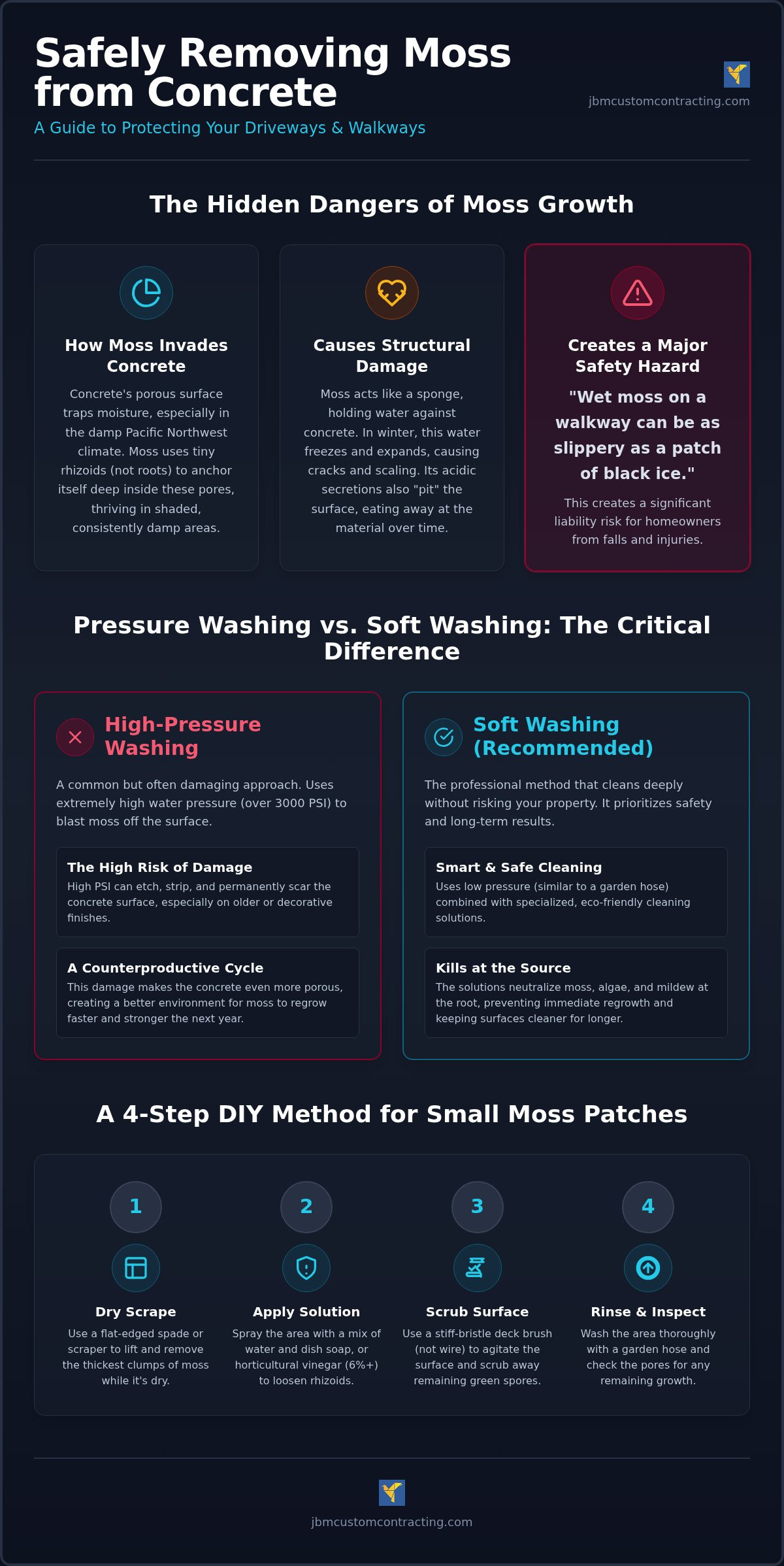
Living in the Pacific Northwest means dealing with a lot of moisture. If you've looked at your driveway lately, you might see a thick, green carpet spreading across the surface. To figure out how to remove moss from concrete effectively, you first need to understand what you're fighting. What are mosses? Biologically, they are simple plants that don't have traditional roots. Instead, they use tiny hair-like structures called rhizoids to anchor themselves to surfaces.
Concrete might look solid, but it's actually full of microscopic pores. These tiny holes act like perfect anchors for moss. When moisture gets trapped in these pores, moss finds a stable home to grow. When you're researching how to remove moss from concrete, it's vital to realize these plants aren't just sitting on top; they're digging into the surface. Moss thrives in areas with heavy shade, consistent dampness, and very little direct sunlight. Since UV rays naturally kill most moss species, north-facing driveways or paths under large trees are prime targets for an invasion.
The Structural Impact of Moss Growth
Moss acts like a living sponge. It holds water directly against your concrete for weeks at a time. This constant saturation is a major problem during our Vancouver Island winters. When that trapped water freezes, it expands, putting immense pressure on the concrete's internal structure. This cycle eventually leads to visible cracks and surface scaling. Additionally, moss secretes organic acids as it grows. Concrete pitting occurs when these acidic secretions eat away at the calcium and binder in the concrete, leaving behind a rough, weakened surface.
Safety Hazards of Untreated Moss
Beyond the damage to your property, there's a serious safety risk to consider. Wet moss creates a surface that's often compared to black ice. It's incredibly deceptive; a walkway can look perfectly fine until you step on it and lose your footing. For homeowners, this creates a significant liability risk, especially on public-facing sidewalks or entry paths where guests and delivery drivers walk.
Dealing with the issue early is always the better choice. A professional moss removal service can clear the growth before it causes deep structural damage. Early intervention is much cheaper than having to resurface or replace an entire driveway later on. By keeping the surface clean and dry, you're protecting both your home's value and the people who walk on your property.
Safe and Effective Methods for Immediate Moss Removal
Selecting the right tools is the first step in learning how to remove moss from concrete without causing permanent damage. Before you begin any physical labor, you must prioritize your safety. Moss removal often involves moisture, debris, and cleaning agents that can irritate your body. Always wear eye protection, waterproof gloves, and a mask if you're applying any liquid treatments. It's also wise to wear non-slip boots, as the combination of water and moss creates an incredibly slick surface. Having the right gear ensures you can focus on the job without worrying about accidents.
Step-by-Step DIY Manual Removal
Manual removal is the most targeted way to handle small patches or areas near sensitive garden beds. It's labor-intensive but keeps you in full control of the process. Follow these steps for the best results:
- Step 1: Dry Scraping. Use a flat-edged spade or a specialized moss scraper to lift the thickest clumps. Doing this while the moss is slightly dry makes it easier to peel away from the concrete pores.
- Step 2: Apply a Solution. Once the bulk is gone, use a comprehensive moss removal guide to select a cleaning agent. A simple mixture of water and a small amount of dish soap or vinegar can help loosen the remaining rhizoids.
- Step 3: Scrubbing. Use a heavy-duty, stiff-bristle deck brush to agitate the surface. Don't use wire brushes on decorative or stamped concrete, as they'll scratch and ruin the aesthetic finish.
- Step 4: Rinse and Inspect. Wash the area with a garden hose to clear away debris. Inspect the pores for any remaining green spores that could spark a new colony.
Pressure Washing vs. Soft Washing
Many homeowners assume a high-pressure blast is the only way to get results. This isn't always true. In fact, using a machine set over 3000 PSI can etch the surface of residential concrete. This damage makes the surface more porous, which actually helps moss return faster the following year. It's a counterproductive cycle that many people fall into.
Soft washing is the professional alternative that protects your property. This method uses low pressure, similar to a standard garden hose, combined with specialized cleaning solutions that kill moss at the root. It's particularly effective for older driveways or stamped concrete where the finish is delicate. If you're concerned about preserving your home's exterior, a professional pressure wash and soft wash service can deliver a deep clean without the risks of high-pressure blasting. Choosing the right method today prevents expensive concrete repairs tomorrow.
Natural vs. Chemical Moss Killers: Which Is Better?
Choosing the right product is a balance between speed, safety, and long-term results. Many homeowners start with household staples because they feel safer, but these don't always provide the deep kill needed for heavy infestations. When you're deciding how to remove moss from concrete, you need to weigh the immediate "burn" of a natural acid against the residual prevention of a professional-grade treatment. Both have their place, but the right choice depends on the size of the job and your proximity to sensitive gardens.
Eco-Friendly and Natural Solutions
For localized spots, a high-acidity vinegar spray is a popular choice. Standard white vinegar found in kitchens is only about 5% acetic acid, which often isn't strong enough to reach the roots. Instead, look for horticultural vinegar containing 6% to 20% acetic acid. Mix it with a small amount of water and a drop of dish soap to help the solution stick to the vertical or porous surfaces of your concrete.
Boiling water is another chemical-free method that works well for moss growing in small expansion joints or cracks. It effectively cooks the plant, making it easy to scrape away once it turns brown. However, natural products have limitations. They lack the residual power of commercial cleaners, meaning you'll likely need to reapply them every few weeks during the rainy season to keep growth at bay. Baking soda can also be used to raise the pH level of the surface, making it less hospitable for moss, though it requires dry weather to be effective.
Professional-Grade Chemical Treatments
Commercial moss killers often rely on active ingredients like Zinc Sulfate or Sodium Hypochlorite. While iron-based products (FeHEDTA) are common and legal for residential use in British Columbia, you must use them with caution; these products can leave permanent rust-like stains on your concrete driveways and walkways. Sodium Hypochlorite is the primary agent used in professional soft washing because it neutralizes moss spores instantly on contact, ensuring the colony doesn't just die back but actually stops reproducing.
There's a common "bleach debate" among DIYers. Pouring straight laundry bleach from a bottle onto your driveway is risky; it's often too concentrated and can cause uneven white splotches. Professionals use carefully calibrated mixtures that include surfactants. These professional surfactants allow the solution to cling to the concrete longer, providing a deep clean that household mixtures can't match.
Safety for your surrounding landscape is paramount during this process. Before applying any chemical treatment, always "pre-wet" your lawn and garden beds with fresh water. This creates a protective barrier on the leaves of your grass and flowers, preventing chemical burns from any accidental runoff. If you're dealing with a large-scale infestation, hiring a professional moss removal service ensures these treatments are handled safely without damaging your property.
Long-Term Prevention: Keeping Concrete Clear in the Pacific Northwest
In the Pacific Northwest, moss isn't just a seasonal visitor; it's a permanent resident if you don't change the environment. Learning how to remove moss from concrete is only half the battle. To keep your driveway clear for years, you need to address the three main drivers of growth: moisture, shade, and surface porosity. By managing these factors, you create a hostile environment for moss while preserving the integrity of your concrete. Regular attention to these details ensures your property remains safe and visually appealing regardless of the season.
Landscape and Drainage Adjustments
Standing water is an invitation for spores to settle. If your downspouts empty directly onto your driveway, you're constantly feeding any moss that tries to take root. Redirecting these downspouts away from walkways is a simple but effective fix. Similarly, clogged gutters can overflow, sending a sheet of water over the side of your house and onto your concrete paths. Regular gutter cleaning ensures water moves away from your home's foundation and hardscapes. In cases where the ground remains soggy, installing French drains can help channel subterranean moisture away from your driveway, keeping the surface dry even during Nanaimo's rainiest months.
Shade management is another powerful tool. Moss thrives in low-light conditions where moisture doesn't evaporate quickly. Pruning overhanging tree branches allows more sunlight to reach your concrete, which naturally inhibits moss growth. While you don't need to remove every tree, selective thinning can significantly reduce the damp, dark conditions that moss loves.
Sealing Your Concrete for Protection
Sealing is your best defense against the microscopic anchors moss uses to cling to concrete. When you understand how to remove moss from concrete, you realize that it's much easier to clean a sealed surface. There are two main types of sealers to consider. Penetrating sealers soak into the concrete and chemically bond with the material, blocking moisture from the inside without changing the look. Film-forming sealers create a protective layer on top, which can offer a "wet look" or high-gloss finish. For most residential driveways on Vancouver Island, a high-quality penetrating sealer is the most reliable choice.
In our local climate, we recommend re-sealing every two to three years. This schedule compensates for the heavy rainfall and occasional salt exposure we see in coastal areas. A well-sealed surface makes future pressure washing much more efficient, as the dirt and spores stay on top of the sealer rather than sinking into the concrete's pores. Regular spring maintenance prevents a major winter cleanup and extends the life of your investment.
Schedule your professional moss prevention assessment today
Professional Moss Removal Services on Vancouver Island
While knowing how to remove moss from concrete is helpful for minor maintenance, large-scale infestations often require a more robust approach. You'll know it's time to stop DIY-ing when the growth covers more than 25% of your driveway or if the surface remains slippery even after a basic scrub. Handling heavy moss is physically exhausting and carries a high risk of slips and falls. If you're worried about damaging your concrete finish with a rented pressure washer, or if you simply don't have the time to spend a full weekend on your hands and knees, calling a professional is the smartest move.
When you're looking for a local contractor, prioritize companies that understand the unique climate of Vancouver Island. A reliable team should be fully insured and equipped with more than just a standard garden hose. They need professional-grade equipment that can switch between high-pressure cleaning for tough stains and soft washing for delicate surfaces. Checking reviews and asking about their process for protecting your lawn from chemical runoff are essential steps to ensure you're hiring a trustworthy business that cares about your property as much as you do.
Why Hire JBM Custom Contracting?
Our team at JBM Custom Contracting brings years of local expertise to every job. We provide a specialized moss removal service that focuses on complete eradication rather than just a quick surface rinse. By using professional-grade soft washers, we can kill the moss at its roots without the risk of etching or pitting your concrete. This precision ensures your driveway stays cleaner for much longer than a standard DIY wash.
We pride ourselves on being a fully insured and certified team, giving you total peace of mind while we work on your property. Our approach is thorough and results-oriented. Many of our clients find great value in combining moss removal with house washing. This bundle serves as a total exterior refresh, removing dirt, algae, and grime from your entire home in one efficient visit. It's a high-value maintenance step that protects your investment and instantly boosts your curb appeal.
Getting a Professional Assessment
We provide expert services across the central island, covering Nanaimo, Lantzville, Duncan, and Ladysmith. Our local roots mean we're familiar with the specific drainage issues and shade patterns that cause moss to thrive in these neighborhoods. We don't believe in flashy sales pitches; instead, we offer a no-nonsense service built on reliability and hard work. When we give you a timeline, we stick to it, ensuring your job is handled correctly and without any unnecessary hassle.
Every property is different, and a one-size-fits-all approach doesn't work for concrete care. We'll look at the age of your surfaces and the severity of the growth to determine the safest cleaning method. Contact JBM Custom Contracting for a free moss removal assessment today. Let us handle the difficult work so you can enjoy a clean, safe, and moss-free home all year round.
Restore and Protect Your Concrete Surfaces Today
You now have a clear roadmap for how to remove moss from concrete without damaging your property. Remember that keeping your walkways clear is about more than just curb appeal; it's a vital safety measure for your family and visitors. By combining thorough cleaning with proactive steps like sealing and moisture management, you can break the cycle of seasonal moss growth for good.
JBM Custom Contracting has been serving Nanaimo, Duncan, and Lantzville since 2018. As certified and fully insured professionals with a 5-star reputation for local reliability, we take the guesswork out of property maintenance. We use specialized equipment to ensure a deep clean that protects your concrete's finish while delivering long-lasting results that DIY methods often miss.
Get Your Free Moss Removal Quote from JBM Custom Contracting
Take the first step toward a safer, cleaner home exterior. We're ready to handle the hard work so you can enjoy a beautiful, moss-free property all year round.
Frequently Asked Questions
Will bleach damage my concrete if I use it to kill moss?
Bleach won't structurally weaken your concrete, but it can cause significant cosmetic damage if applied incorrectly. Using undiluted household bleach often leads to unsightly white splotches or uneven fading on the surface. Professionals prefer soft washing solutions that combine low-concentration sodium hypochlorite with specialized surfactants. These mixtures allow the cleaner to cling to the moss and kill spores evenly without leaving the permanent streaks that homeowners often see with DIY bleach applications.
How often should I remove moss from my driveway in Nanaimo?
Most homeowners in Nanaimo and Lantzville find that an annual cleaning is necessary to maintain a safe driveway. Our specific weather patterns on Vancouver Island involve high moisture levels and long periods of shade, which create the perfect environment for rapid growth. Scheduling a professional assessment once every twelve months ensures you catch small patches before they turn into a slippery hazard. Regular maintenance is always more cost-effective than waiting for a heavy infestation to take over.
Can I use a pressure washer on stamped or colored concrete?
You should avoid using high-pressure washers on stamped or colored concrete whenever possible. Intense water pressure can easily strip away the protective sealer and the surface-level pigments that give these driveways their unique look. Instead, we recommend using a soft wash method when you're looking for how to remove moss from concrete with a decorative finish. This approach uses specialized cleaning solutions to neutralize the growth at a low pressure, preserving your surface's aesthetic and structural integrity.
Is moss growth a sign that my concrete is failing structurally?
Moss growth itself isn't a sign that your concrete has already failed, but it's a warning that the surface is becoming too porous. As moss anchors into microscopic holes, it begins a process of surface degradation. If left untreated, the moisture trapped by the moss will accelerate the freeze-thaw cycle during our winters in Duncan and Ladysmith. This eventually leads to visible pitting and deep cracks, which are much more expensive to repair than a simple cleaning.
What is the best time of year to treat moss on concrete?
The best time to treat moss on your concrete is during the late spring or early fall when the weather is mild and dry. Most cleaning solutions and sealers need a window of at least 24 to 48 hours without rain to be fully effective. Treating the surface in the spring removes the winter's accumulation before the summer heat bakes the spores into the pores. Conversely, a fall treatment prepares your walkways for the upcoming damp season on the island.
Are moss-killing chemicals safe for my pets and local wildlife?
Many professional-grade moss killers can be harmful to pets and local wildlife if they aren't handled with care. However, when applied correctly by a certified team, these treatments are safe. We prioritize safety by pre-wetting all surrounding gardens and lawns to create a protective barrier against runoff. Once the treatment has been properly rinsed and dried, the area is safe for your pets to enjoy. Always ask your contractor about their specific safety protocols for local ecosystems.
How much does professional moss removal typically cost on Vancouver Island?
When you're researching how to remove moss from concrete, you'll find that professional costs vary based on the size of your driveway and the severity of the growth. A heavily infested walkway that requires manual scraping and chemical treatment will naturally take more time than a routine maintenance wash. Most local companies provide custom quotes after a site visit to Nanaimo or Qualicum Beach. Factors like the type of concrete finish and the proximity to sensitive garden beds also play a role.
Does vinegar permanently kill moss roots in concrete cracks?
Vinegar is an effective way to kill the visible green moss on contact, but it rarely provides a permanent solution for roots in deep cracks. While the high acidity of horticultural vinegar can burn the plant, it doesn't leave a residual barrier to stop new spores from settling. To truly stop the cycle, you must follow up the cleaning with a high-quality concrete sealer. Sealing the cracks prevents moisture and organic material from collecting, which is the only way to keep growth away for good.