
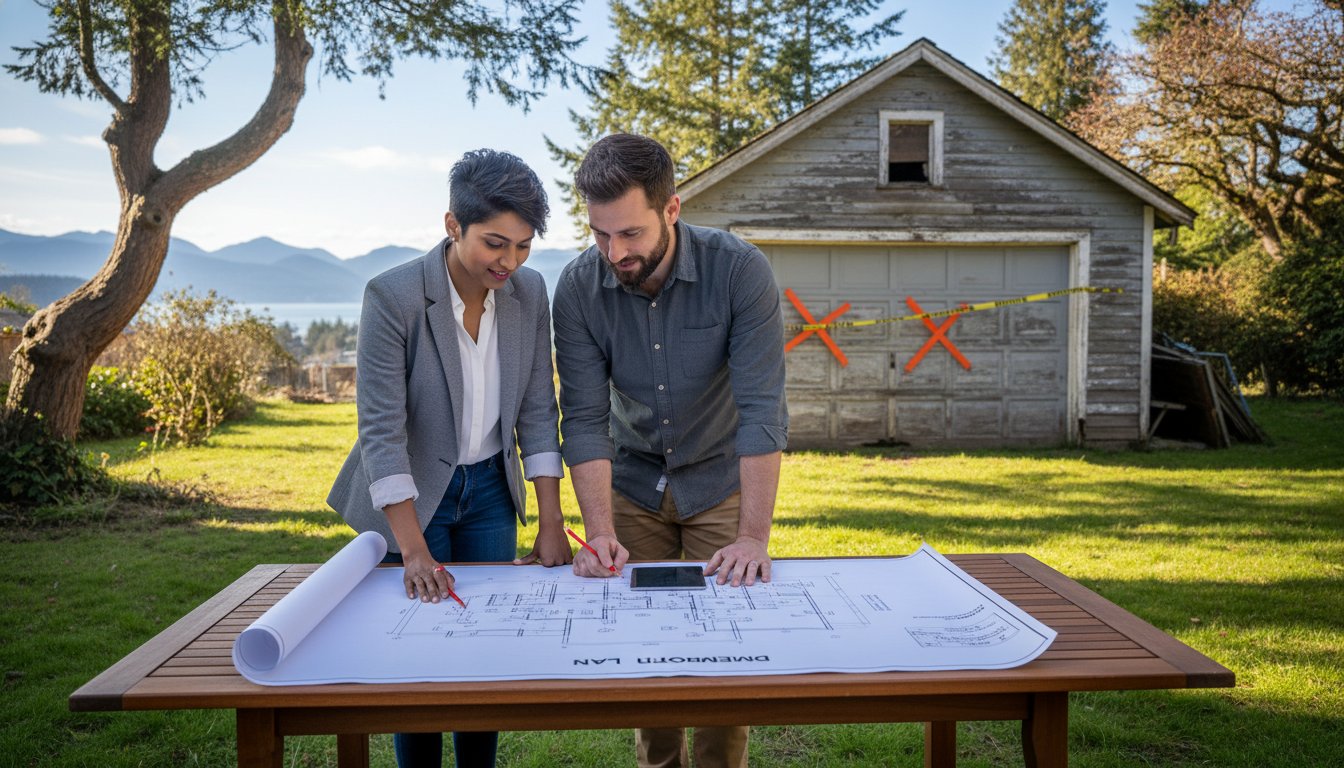

Last spring, a homeowner in the Harewood area faced a C$2,000 fine because they didn't realize their old workshop exceeded the local size limits for permit-free removal. It's a common story that highlights the confusion between City of Nanaimo and RDN bylaws. Before you swing a sledgehammer, you must answer one critical question: Do I Need a Permit for Demolition in Nanaimo BC? Miscalculating the rules can lead to expensive project delays or unexpected asbestos abatement costs that stall your progress for weeks.
We understand how frustrating it is to feel stuck behind a wall of municipal red tape when you're ready to start your project. You deserve a clear path forward that prioritizes safety and legal compliance. This professional guide provides the roadmap you need to handle your demolition efficiently. We'll explain the 107 square foot exemption, clarify safety regulations, and show you exactly how to secure the right paperwork for a successful 2026 project.
Key Takeaways
- Understand the specific size thresholds and jurisdictional differences between the City of Nanaimo and the RDN to ensure your project remains compliant.
- Determine if your project qualifies for an exemption under the 107-square-foot rule for small accessory buildings to answer the question: Do I Need a Permit for Demolition in Nanaimo BC?
- Prepare for mandatory WorkSafeBC hazardous material surveys and asbestos testing required for all Nanaimo structures built prior to 1990.
- Navigate the digital application process via the Nanaimo E-Apply portal by gathering essential site plans and professional hazardous material reports.
- Learn how partnering with a certified and fully insured contractor provides the expertise needed to manage safety risks and protect your property during the demolition process.
Understanding Demolition Permit Requirements in Nanaimo (2026)
If you're planning to clear space on your property this year, the first question you'll likely ask is, "Do I Need a Permit for Demolition in Nanaimo BC?" For nearly every project involving a permanent structure, the answer is a firm yes. As of January 2026, Nanaimo building bylaws require a permit for the removal of any building or structure that exceeds 10 square metres (107 square feet) in floor area. This regulation ensures that Demolition activities don't compromise the safety of your neighbors or the integrity of municipal infrastructure.
Permits aren't just bureaucratic hurdles; they're essential safety protocols. They confirm you've safely capped utility lines like natural gas and electricity. This prevents accidental explosions or fires that could devastate a block. Professional contractors focus on these details to protect your investment and the community. Without a permit, the city has no record that hazardous materials like asbestos or lead were handled according to BC provincial health standards. Proper disposal at the Regional District of Nanaimo (RDN) landfill is a legal requirement that starts with this paperwork.
To better understand how the local government views these requirements, watch this helpful video from the city's planning department:
City vs. Regional District Jurisdiction
Determining which office handles your paperwork depends on your exact address. Properties within the City of Nanaimo boundaries deal with the Building Inspection Department at 455 Wallace Street. If your land sits in surrounding areas like Cedar, Extension, or Nanoose Bay, you likely fall under the RDN jurisdiction. In 2026, application fees for a standard residential demolition in the city start at a C$150 base rate plus additional costs based on the structure's value. RDN processing times currently average 14 business days, while city approvals can take 21 days depending on the current volume of development applications. Always check your tax assessment to confirm your jurisdiction before submitting forms.
The Legal Risks of Skipping the Permit
Skipping the permit process creates massive financial liabilities. Under the current British Columbia Building Code and local bylaws, "demolition without a permit" can trigger immediate stop-work orders. Fines for these infractions in 2026 range from C$500 to over C$10,000 for repeat offenders or commercial properties. Beyond the immediate cash penalty, unpermitted work creates a "cloud" on your property title. When you try to sell your home, a title search will reveal the lack of final inspection. This often leads to buyers backing out or demanding a price reduction that far exceeds the original permit cost. If a neighbor's fence or a city water main is damaged during an unpermitted tear-down, your insurance provider will likely deny the claim, leaving you personally responsible for all repair costs. Asking "Do I Need a Permit for Demolition in Nanaimo BC" early helps you avoid these expensive pitfalls.
These types of municipal fines and title issues are serious, but they are just one example of the complex financial entanglements property owners and businesses can face with government bodies. For those dealing with significant tax disputes, which can also cloud assets and lead to severe penalties, understanding the resolution process is key. For a resource on navigating such challenges, click here.
When You DON’T Need a Permit: The 107 Square Foot Rule
Not every project on your property requires a formal application at the City of Nanaimo building department. If you're asking, "Do I Need a Permit for Demolition in Nanaimo BC," the first thing you should do is grab a tape measure. According to Nanaimo Building Bylaw No. 7224, small detached accessory buildings are exempt from permit requirements if they're 10 square metres or less. This measurement translates to approximately 107.6 square feet. If your old garden shed or backyard playhouse fits within these dimensions, you can typically proceed with the teardown without a permit.
You must meet four specific conditions for this exemption to remain valid. First, the structure must be completely detached from the main house. Second, it cannot contain any plumbing fixtures. Third, it must be free of any electrical wiring or equipment. Finally, the building must be located on a property used for a single-family dwelling. If your shed has a single light bulb or a utility sink, the city requires a permit to ensure those services are disconnected safely and professionally before the structure is leveled.
Even when a permit isn't required, you're still bound by the Nanaimo Zoning Bylaw. These rules govern setbacks, which are the minimum distances required between a structure and your property lines. You can't ignore these boundaries just because the building is small. Before you start swinging a sledgehammer, check your property title for any registered easements or right-of-ways. Ensuring the work area is clear of underground utilities is a critical step in any reliable demolition process.
Detached Accessory Building Exemptions
An accessory building is defined as a structure that's secondary to the main residence, such as a gazebo or a tool shed. In Nanaimo, we determine the 107 square foot limit by measuring the exterior walls of the building. It's a common mistake to measure only the interior floor space. If the structure sits on a permanent concrete foundation or a thickened edge slab, the city might require a permit regardless of the square footage. Removing concrete footings can impact soil stability and local drainage patterns. Booking a professional demolition service helps you identify these technical hurdles before they become costly site issues.
What Still Requires a Permit (Even if Small)
Size isn't the only factor the city considers. You'll always need a permit if the structure is physically attached to your home, even if it's a tiny 50 square foot porch or entryway. Any project involving the removal of load-bearing walls or structural supports requires a permit to prevent a collapse. When it comes to outdoor spaces, decks over 0.6 metres (about 2 feet) in height require a permit for both construction and removal. If you're wondering, "Do I Need a Permit for Demolition in Nanaimo BC" for a structure with complex drainage or hazardous materials like older drywall, the answer is almost always yes. The city wants to ensure that debris is handled safely and that no environmental damage occurs during the process.
Once you've navigated the permit process and safely removed an old, unstable deck, you have a blank slate to create a new outdoor living area. If you're looking for professional help with what comes next, The Deck Guys specialize in custom designs.
Critical Pre-Demolition Requirements: Asbestos and Utilities
Before any heavy machinery arrives on your property, you must satisfy several safety and environmental benchmarks. The City of Nanaimo doesn't just look at the structural plan; they prioritize the health of the community and the integrity of local infrastructure. If you're wondering, "Do I Need a Permit for Demolition in Nanaimo BC," the answer is tied directly to these mandatory inspections. Skipping these steps leads to immediate stop-work orders and significant fines from WorkSafeBC. We focus on a professional and reliable approach to ensure every site meets these strict standards before the first wall comes down.
Hazardous Materials Survey (Asbestos)
WorkSafeBC Occupational Health and Safety Regulation Section 20.112 mandates a professional hazardous materials survey for any structure built before 1990. In Nanaimo, permit offices require this report before they'll even process your application. Asbestos is a silent risk found in approximately 3,000 different building products used in older Vancouver Island homes. Common materials containing these fibers include:
- Drywall Taping Compound: Often contains 1% to 5% chrysotile asbestos in homes built between 1960 and 1990.
- Vinyl Floor Tiles: Frequently found in basements and kitchens of mid-century residences.
- Attic Insulation: Specifically vermiculite, which can pose severe respiratory risks if disturbed during a teardown.
The prevalence of asbestos in these products underscores the shift towards safer manufacturing in the construction industry. While local regulations focus on safe removal, the global supply chain for construction chemicals and adhesives has evolved significantly, with manufacturers like Thika Wax Works Ltd pioneering asbestos-free formulations for modern building needs.
If the survey identifies hazardous materials, you're legally required to hire a professional abatement team. They'll use sealed containment zones and HEPA filtration to clear the site safely. Once the materials are gone, a third party provides a clearance letter, which serves as your proof of safety for the permit office.
The stringent regulations surrounding asbestos removal highlight the legal importance of protecting the public from hazardous materials. This principle extends beyond construction to other industries where product safety is critical. For example, in cases where adverse drug reactions cause severe conditions, victims may have legal recourse, such as filing a Stevens-Johnson Syndrome Lawsuit to seek accountability.
The standards for professional demolition and abatement are high across the industry. While you will need a certified contractor in Nanaimo for the physical work, it can be insightful to see how established companies in other markets operate. For example, you can learn more about TSIAC International, a firm with over 15 years of experience, to understand the scope of professional services.
Utility Capping and Disconnections
Safe demolition requires a completely "dead" building. You can't risk a backhoe hitting a live 200-amp service or a pressurized gas line. Coordinating these disconnections is a critical part of your project timeline. FortisBC typically requires 15 to 30 days of lead time to safely decommission a gas meter and cap the line at the property boundary. Similarly, BC Hydro must disconnect the electrical service at the mast or pole to ensure a safe work environment for the crew. Understanding the technicalities of "Do I Need a Permit for Demolition in Nanaimo BC" means recognizing that a permit is your proof that these utilities are safely handled.
This process also includes the safe decommissioning of old heating and cooling units. When planning the next phase of your project, installing a modern, efficient climate control system is a crucial step for any new structure. For homeowners looking ahead to the rebuilding stage, professional HVAC contractors like BulletProof Air can ensure your new space is comfortable and energy-efficient from day one.
Water and sewer lines fall under the jurisdiction of the City of Nanaimo Public Works. You'll need to apply for a capping permit specifically for these services. A city inspector must visit the site to verify the sewer line is capped at the property line with a watertight seal. This prevents dirt, rocks, and demolition rubble from entering the municipal sewer system, which could cause blockages for your neighbors.
Environmental protection is the final pillar of pre-demolition prep. Nanaimo's hilly terrain means rainwater runoff travels quickly toward the ocean. You must install silt fencing and protect nearby storm drains with filter cloth. Failing to prevent sediment from entering the drainage system can result in penalties starting at C$500 per day under the city's Engineering Standards. Our team ensures every site is clean and compliant, protecting both your investment and the local Nanaimo ecosystem.
Maintaining technical standards and safety is a priority in any complex environment, whether it's a local demolition site or a major international waterway. For those interested in how technical services support global infrastructure, Panama Ship Service offers comprehensive mechanical and operational support for the shipping industry at the Panama Canal.
How to Apply for a Demolition Permit in Nanaimo
Starting a demolition project requires more than just heavy machinery and a crew. It's a structured legal process designed to keep the community safe and ensure environmental hazards like asbestos are handled correctly. If you're wondering, Do I Need a Permit for Demolition in Nanaimo BC, the answer is almost always yes for any structure larger than 10 square metres. Following the City of Nanaimo's guidelines prevents costly fines and keeps your project on schedule.
The Document Checklist
You'll need a comprehensive package before the City reviews your file. First, provide a detailed site plan. This document must show the exact location of the building to be removed and its distance from all property lines. Second, include a professional hazardous materials report. For any building constructed before 1990, a professional assessment for asbestos, lead, and other toxins is mandatory. Finally, if you aren't the registered owner of the property, you must submit a signed Owner Authorization Form. Without this, the City won't process your request.
- Detailed site plan with setbacks and utility locations clearly marked.
- Confirmation letters from FortisBC and BC Hydro proving utility disconnections.
- A WorkSafeBC Notice of Project (NOP) for residential demos involving high-risk materials or projects exceeding C$100,000 in value.
- A completed Waste Management Plan outlining where debris will be hauled.
The Application Process (E-Apply)
Nanaimo uses the digital E-Apply portal for all permit submissions. It's an efficient way to upload documents and pay fees without visiting City Hall at 411 Dunsmuir Street. Once you create an account, you'll upload your PDF documents and pay the initial application fee. As of early 2026, average wait times for permit approval range from four to six weeks depending on the complexity of the site. You can track your status through the portal 24/7. If the building department needs more info, they'll flag your application there. Prompt responses to these "more info" requests are the best way to keep your timeline on track.
Costs are a major factor in your project budget. You'll pay a non-refundable application fee, which typically starts around C$250 for standard residential structures. Many projects also require a security deposit. This deposit often ranges between C$1,500 and C$5,000. The City holds these funds to cover potential damage to city sidewalks, boulevards, or underground infrastructure during the teardown process. You'll get this money back once the project is finalized and the site is inspected.
For property investors, these initial costs are part of a larger financial strategy for the demolition and rebuild. Securing fast, reliable funding is often the next step. Private money brokers specializing in real estate can be a key resource; for instance, JGL Capital LLC provides asset-backed loans specifically for property investment projects.
These initial costs are just one piece of the financial puzzle, especially if you plan to rebuild. Accurately budgeting for the entire construction project is crucial to avoid delays and overspending. While services may vary by region, professional estimators like Page Building Consultants can provide the detailed cost analysis needed to keep a complex project on track from the very beginning.
Before you swing the first hammer, you must schedule a pre-demolition inspection. An officer will visit the site to verify that all utilities are capped and the site is properly fenced for public safety. Once the building is gone and the site is clear, a final inspection is required. The inspector will check that the land is graded correctly and no debris remains. This final step is vital because it officially closes the permit, which you'll need before applying for any new building permits on that same lot. Homeowners often ask, Do I Need a Permit for Demolition in Nanaimo BC just to clear a small shed, but checking with the building department first saves you from legal headaches later.
Professional Demolition Services: Why Expertise Matters
Deciding to clear space for a new garden suite or a detached garage involves more than just a sledgehammer and some muscle. While you might still be asking, "Do I Need a Permit for Demolition in Nanaimo BC," the technical execution of the job is just as vital as the paperwork. Hiring a certified and fully insured contractor like JBM Custom Contracting protects your property from the risks of DIY errors. We provide a professional and reliable approach that ensures your project stays on track, follows local bylaws, and remains safe for everyone involved.
Our team focuses on safety and precision to protect your home and your neighbors. A reckless demolition can lead to accidental damage to shared fence lines or underground utility pipes, which often results in repair bills exceeding C$2,500. We use a controlled dismantling process rather than a "smash and grab" technique. This careful method minimizes the impact on the surrounding landscape and ensures that only the intended structures are removed. By choosing expertise over a weekend DIY attempt, you're choosing peace of mind and a site that's ready for its next life.
Thinking about that "next life" for your property is key. Whether you're clearing space for a small addition or a major remodel, the demolition is just the first step. For homeowners looking for inspiration on what's possible, it can be helpful to see examples from high-quality general contractors. While located in Massachusetts, Aureli Construction showcases the type of seamless home addition projects that can transform a property after a professional demolition.
Safe and Efficient Execution
Managing a demolition in a tight residential Nanaimo neighborhood requires specific strategies for dust, noise, and vibration. JBM uses professional grade equipment, such as compact excavators and specialized sorting tools, which can speed up a project by 35% compared to manual dismantling. This efficiency directly reduces your total labor costs. Because we're "Certified & Fully Insured," you won't have to worry about liability if an unexpected complication occurs. We use high quality dust suppression techniques to keep your yard and your neighbor's property clean throughout the entire process.
Responsible Disposal and Site Cleanup
Once the structure is down, the debris needs to go somewhere. In our region, the Nanaimo Regional Landfill (NRL) has specific rules for construction and demolition waste. As of 2024, tipping fees and sorting requirements have become stricter to encourage environmental responsibility. JBM is committed to sustainable disposal. We don't just dump everything in a bin; we sort materials like wood, metal, and concrete to ensure they reach local recycling centers. Our goal is to divert at least 70% of project waste away from the landfill, helping Nanaimo stay green.
These recycling facilities often use robust material handling systems to manage the volume of debris. A specialized industrial conveyor belting distributor supplies the very equipment that sorts tons of reclaimed wood, metal, and concrete, playing a key role in the region's circular economy.
Site cleanup is about more than just removing junk. We provide full site prep, leaving the ground level and clear of hidden debris like nails or glass. This professional finish means your next contractor can start building immediately without extra clearing costs. If you're planning a project and wondering, "Do I Need a Permit for Demolition in Nanaimo BC," we can help you evaluate your specific structure during a walkthrough. Ready to clear the way for your next project? Book your JBM Demolition Project Consultation to get started with a team that values reliability and high quality results.
Start Your Nanaimo Demolition Project Safely Today
Navigating local bylaws ensures your project stays on track and avoids city stop-work orders. Remember that any structure larger than 10 square metres, which is roughly 107 square feet, requires official city approval under the 2026 guidelines. You must also complete a hazardous materials assessment to identify asbestos before any work begins. If you find yourself asking, "Do I Need a Permit for Demolition in Nanaimo BC" for a backyard shed or a larger outbuilding, the answer depends on the structure's footprint and utility connections.
Handling these regulations alone can be difficult. JBM Custom Contracting offers professional and reliable property maintenance with specific expertise in safe and efficient small demolitions. We're certified and fully insured, which gives you peace of mind throughout the entire process. Our team manages the heavy lifting and technical requirements so you don't have to worry about the paperwork or safety risks. We'll ensure your site is clean and ready for its next phase.
Once your property is cleared, you have a valuable asset: a vacant lot ready for development or sale. Before you decide whether to build or sell, understanding the property's market value is a critical first step. For a detailed guide on how to estimate what your land is worth, you can learn more.
We're ready to help you clear the way for your next renovation with confidence.
Frequently Asked Questions
How much does a demolition permit cost in Nanaimo?
A demolition permit in Nanaimo typically costs a minimum fee of C$100 for small residential structures. For larger projects, the city calculates fees based on the total value of the work, often adding C$10 for every C$1,000 of project value. You must also provide a C$500 security deposit to ensure the site is left clean and safe once the work is finished.
How long does it take to get a permit approved?
You can expect the City of Nanaimo to process your demolition permit within 10 to 15 business days. This timeline depends on the current volume of applications at the permit center and the completeness of your documentation. Providing a clear site plan and a hazardous materials report immediately helps prevent delays in the professional approval process.
Can I demolish my own garage without a contractor?
You can legally demolish your own garage in Nanaimo without a licensed contractor, but you still need an approved permit for any structure over 10 square meters. While DIY is an option, you're responsible for all safety protocols and utility disconnects. Many homeowners hire professional demolition services to handle the heavy machinery and ensure the project meets all WorkSafeBC requirements safely.
What happens if I find asbestos during the demolition?
If you find asbestos during demolition, you must stop work immediately and secure the area to prevent fiber release. WorkSafeBC regulations require a certified professional to conduct a risk assessment and perform the removal. Handling asbestos without proper training is illegal and dangerous, so we recommend getting a hazardous materials survey before you start any project to keep the site clean.
Do I need a permit for interior wall removal in Nanaimo?
You need a permit for interior wall removal if the wall is load-bearing or contains electrical and plumbing lines. Many residents ask, "Do I Need a Permit for Demolition in Nanaimo BC" for simple renovations, and the answer depends on structural impact. Removing a non-structural partition wall usually doesn't require a permit, but you should verify with a building official to ensure the work is reliable.
After removing interior walls, the next phase is often a full remodel. For homeowners planning a new kitchen or bathroom, it's helpful to see what's possible with modern materials. A specialist like Countertops and Cabinetry By Design can provide ideas and options for custom work.
Is a permit required for removing a concrete patio or driveway?
A permit isn't required for removing a standard concrete patio or driveway on your private property. However, you must ensure the removal doesn't interfere with city boulevards or alter the natural drainage patterns of the land. If your project involves more than 50 square meters of new impermeable surface, you should consult the engineering department about runoff regulations to ensure efficient drainage.
What is the difference between a building permit and a demolition permit?
A demolition permit grants legal permission to tear down an existing structure, while a building permit allows you to construct something new. In Nanaimo, you often apply for both simultaneously if you're replacing a house or shop. The demolition permit focuses on safety and utility capping, whereas the building permit ensures the new structure meets the current BC Building Code standards.
How do I cap my sewer line for a demolition?
You must cap your sewer line at the property line and have it inspected by a city official before backfilling the area. This process prevents debris from entering the municipal system and protects the environment. Our team provides professional sewer capping services that meet all Nanaimo engineering standards, ensuring your site remains safe and ready for the next phase of construction.