

The deck that looks best in an inspiration photo may not be the one that works best for your home. The right decks begin with your property, how you’ll use the space, and how much upkeep you’re comfortable with, not just a trend or material sample.
It’s easy to feel unsure when comparing wood and composite, planning around doors and yard access, or considering how the site may affect construction. A practical plan helps you make those decisions with confidence and avoid a design that doesn’t suit everyday life.
This guide compares common decking materials and layouts, along with site conditions and project details that can shape your plans. You’ll also learn what to consider when planning professional deck construction or repair, from fitting the design to your property to deciding on a sensible project scope. Whether you’re updating an existing deck or planning a new outdoor space in Nanaimo, Lantzville, Duncan, Ladysmith, Cedar, Parksville, Qualicum Beach, Cowichan, or Gabriola Island, you’ll have a clear starting point.
Planning a Deck: Start With How You Use Your Outdoor Space
Planning a deck takes more than picking an attractive design. A layout that suits your household should make everyday activities easier, fit the property, and feel comfortable to use. Before saving inspiration photos, decide what the space needs to do. A quick overview of what a deck is can also help if you’re just starting to explore the basics.
What should you decide before choosing a deck design?
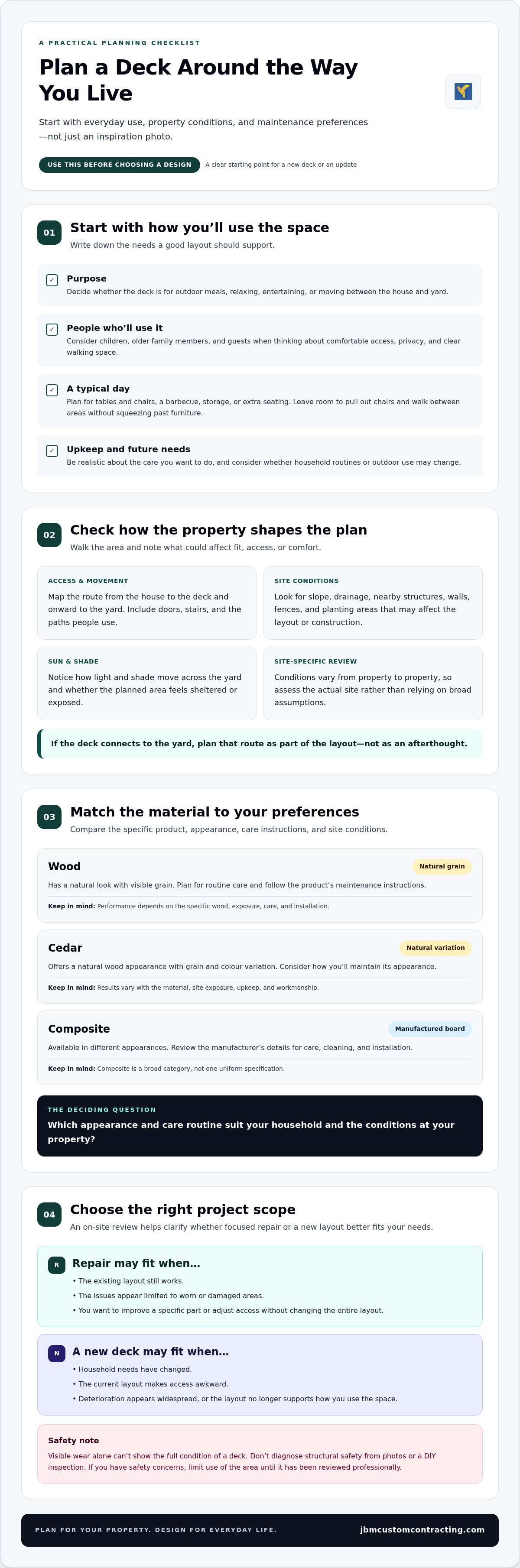
Start with the activities you want to make room for. Will you eat outdoors, relax with a book, entertain guests, or use the deck as a path between the house and different parts of the yard? Consider who’ll use it, too. Children, older family members, and frequent guests may have different needs for access, privacy, and clear walking space.
Then picture a typical day. Where will the table and chairs go? Will you need room for a barbecue, storage, or extra seating? Allow space to pull out chairs and walk between the house, seating areas, and stairs without squeezing past furniture. If the deck connects to the yard, plan that route as part of the layout rather than adding it as an afterthought.
How do the property and site shape your deck plan?
Look at the house entrance, yard access, slope, drainage, and nearby structures. A sloped area or an awkwardly placed doorway can affect where the deck fits and how people reach it. Walk the space and note anything that could affect construction or movement, including paths, walls, fences, and planting areas.
Sun and shade matter for comfort and can affect material exposure and upkeep. Conditions vary from one property to another, even across Vancouver Island. Notice how light and shade move across your yard, and consider how sheltered or exposed the planned area feels. A site-specific review is more useful than assuming every home in Nanaimo has the same conditions.
Use this short checklist before settling on a design:
- Purpose: What activities should the deck support?
- Users: Who will use it, and what will make access comfortable?
- Access: How will people move between the house, deck, and yard?
- Upkeep: How much time do you want to spend maintaining the space?
- Future needs: Could your household’s routines or outdoor use change?
These answers turn inspiration into a practical starting point for custom decks and help focus construction discussions. If you’re also planning exterior upkeep, explore house washing in Nanaimo as part of your wider property plans.
Deck Materials Compared: Wood, Cedar, and Composite
Material choice affects a deck’s appearance and the care it may need over time. There isn’t one best option for every home. Compare the look you prefer, the maintenance you’re prepared to do, and the needs of your project before deciding. For decks in Nanaimo and nearby communities, product guidance and the conditions at the property are more useful than broad assumptions.
| Material | Appearance | Upkeep and selection considerations | Project-fit caveat |
|---|---|---|---|
| Wood | A natural look with visible grain. | Plan for routine care and review the product’s maintenance instructions. | Performance depends on the specific wood, exposure, care, and installation. |
| Cedar | A natural wood appearance with grain and colour variation. | Consider how you’ll maintain its appearance and follow product guidance. | Results vary with the material, site exposure, upkeep, and workmanship. |
| Composite | A manufactured board available in different appearances. | Compare the manufacturer’s care instructions and product details. | Composite is a broad category, not one uniform specification. |
How do wood and cedar compare for a deck?
Wood and cedar can suit homeowners who value a natural finish. Both need care, but the routine depends on the product and the conditions around the deck. Sun, shade, moisture exposure, and installation can affect how a material looks and performs. Compare the specific product’s care instructions rather than assuming every wood option has the same maintenance needs.
Is composite decking the right fit for your priorities?
Composite may suit homeowners comparing manufactured materials with wood options. The category name alone doesn’t tell you how a product will look or what upkeep it requires. Review manufacturer information on appearance, cleaning, and installation, then consider whether those details fit your design, property, and project requirements.
For general wood-deck construction background, the American Wood Council’s Deck Construction Guide may be a useful reference. It doesn’t replace current requirements that apply to a project in Nanaimo or another local community.
Let your maintenance preferences guide material selection: choose an appearance and care routine that suit your household and site conditions. JBM Custom Contracting provides deck construction and repair. Learn more about JBM Custom Contracting’s deck services.
New Deck or Repair? Compare the Right Project Path
An older deck doesn’t automatically need to be replaced. If its layout still works and the issues appear limited, a repair may be a practical option. Visible wear alone, however, can’t show the full condition of the structure. The right choice depends on an on-site review, how you use the space, and whether the current layout still meets your needs.
When might deck repair make sense?
Repair may be worth considering if you’ve noticed worn or damaged areas, or if a specific part of the deck no longer works as intended. You may want to improve access or adjust how you use the space without changing the entire layout. An on-site review helps determine whether the work can stay focused or whether broader issues need attention. JBM Custom Contracting provides deck repair for local property owners, including homeowners in Nanaimo.
When should you plan a new deck instead?
A new build may make more sense if household needs have changed, the current layout makes access awkward, or deterioration appears widespread. For example, a deck designed mainly for a small seating area may no longer suit a household that wants room for dining and a clear route into the yard. Don’t try to diagnose structural safety from photos or through a DIY inspection. If you have safety concerns, limit use of the area until it has been reviewed professionally.
A site assessment helps define an appropriate project scope by considering the deck’s condition, the property, and how you need the space to function. That review can help distinguish a focused repair from a new construction plan, without assuming that every worn deck requires a full rebuild.
For a project in Nanaimo or another nearby community, check current permit and building-code requirements with the relevant local authority. Requirements can depend on the project and location, so use guidance that applies to your property.
Once the project path is clear, deck construction or repair can be planned around access, intended use, and site conditions. Explore JBM Custom Contracting’s services for property improvement work in Nanaimo and surrounding Vancouver Island communities.
Preparing for Deck Construction on Vancouver Island
Good preparation connects your ideas to the actual site. Before construction begins, gather the details that explain how you want to use the deck and what the property may require. This gives the project discussion a clear starting point, whether your home is in Nanaimo, Lantzville, Parksville, Qualicum Beach, Duncan, Ladysmith, Cedar, Cowichan, or Gabriola Island.
What information helps define a deck project?
Bring inspiration images if you have them, but treat them as examples rather than ready-made plans. Note what appeals to you, such as the seating arrangement, how the deck meets the yard, or the amount of open space. Then share your intended uses, layout goals, and any features you hope to accommodate.
Be clear about your priorities. Easy access from the kitchen may matter more than a large entertaining area, or privacy may be more important than an uninterrupted view. Mention known constraints, such as a narrow route to the yard, nearby structures, or areas you want to keep clear. These details help shape practical design and construction discussions without assuming an inspiration image will suit your property as-is.
What local requirements and site conditions should be considered?
Walk the planned area and note how people reach it from the house and yard. Look for slope, drainage patterns, sun and shade, weather exposure, existing structures, and property boundaries or other constraints that could affect placement or access. Weather and moisture can influence material and upkeep decisions, but conditions differ across Vancouver Island. Use reliable, locally relevant information rather than assuming every property has the same exposure.
Before work moves ahead, check current permit and building-code requirements with the appropriate local authority. Requirements can depend on the project and location, so avoid relying on general advice or information written for another jurisdiction. Reviewing the site and local requirements supports a safer, more orderly construction plan.
Use this preparation sequence to keep the conversation focused:
- Gather: Collect inspiration images and note the details you like.
- Prioritize: List intended activities, access needs, and layout goals.
- Observe: Record slope, drainage, exposure, existing structures, and access limits.
- Verify: Review applicable requirements with the relevant local authority.
- Discuss: Share your notes so the project can be considered in light of the property and how you’ll use it.
As part of broader exterior property upkeep, Nanaimo homeowners can also explore house washing in Nanaimo.
Choosing Professional Deck Construction and Repair
Once you’ve considered how you’ll use the space and what the property allows, a clear project discussion can turn those priorities into a practical plan. Deck work involves more than choosing a look. The conversation should cover intended use, existing conditions, design direction, and the scope of construction or repair that fits the property.
What should you expect when planning deck work?
Be ready to describe what you want the deck to do, what currently works or needs attention, and what you hope to change. A review of the site brings access, slope, drainage, nearby structures, and other visible conditions into the discussion. Planning can then focus on whether construction or repair best suits the home and your needs.
How can JBM Custom Contracting help with decks?
JBM Custom Contracting provides deck construction and repair for local property owners. The company is certified and fully insured, and serves Nanaimo and nearby Vancouver Island communities, including Lantzville, Parksville, Qualicum Beach, Duncan, Ladysmith, Cedar, Cowichan, and Gabriola Island. Share your goals and the details you already know to start the project discussion with your priorities.
It can also help to consider the deck as part of your home’s wider exterior upkeep. The power-washing project guide offers related information about caring for exterior surfaces. While it covers a separate maintenance topic, keeping the whole property in view can help you plan outdoor improvements thoughtfully.
A new build or repair should respond to the property, not force it into a one-size-fits-all plan. A clear understanding of your intended use, existing conditions, and preferred direction helps define a project scope grounded in practical needs.
Plan Your Deck Project With Confidence
The right deck starts with how you’ll use your outdoor space and what suits your property. Clarify your priorities, compare materials by appearance and upkeep, and consider whether your existing structure needs a focused repair or a new plan. A site-specific discussion helps bring those choices together into a practical project scope.
JBM Custom Contracting provides deck construction and repair in Nanaimo and surrounding Vancouver Island communities, including Lantzville, Parksville, Qualicum Beach, Duncan, Ladysmith, Cedar, Cowichan, and Gabriola Island. The company is certified and fully insured, and can help local property owners move ahead with deck improvements suited to their needs.
Share your goals and take the next step toward an outdoor space that works for your home.
With a clear plan and professional support, your new or improved deck can become a more useful part of everyday life at home.
Frequently Asked Questions
How do I choose the right material for a deck?
For decks, choose a material by balancing the look you want with the care you’re prepared to provide and the needs of your site. Compare wood, cedar, and composite using product information, including care instructions and installation requirements. Think about how you’ll use the space and how exposed it is to sun, shade, and moisture. Performance and upkeep vary by product, site conditions, and installation.
Is a wood or composite deck better?
Neither is automatically better; the right fit depends on your preferences and project. Wood offers a natural look and needs routine care, while composite is a broad category with product details and care instructions that vary. Compare the appearance, maintenance guidance, and installation requirements for the specific options you’re considering. Choose what suits your property and upkeep preferences rather than relying on a general claim that one material always wins.
Can an existing deck be repaired instead of replaced?
Yes, an existing deck may be repairable, but an on-site assessment is needed to determine the appropriate scope. Visible wear or damage doesn’t reveal the full condition of the structure. A professional review can help establish whether targeted work is suitable or whether broader replacement planning is appropriate. Avoid diagnosing structural safety from photos alone, and arrange an assessment if you have concerns about using the deck.
How do I plan a deck that fits my yard?
Start by mapping how people will move between the house, deck, and yard, then consider the activities the space should support. Note the entrance, access routes, slope, drainage, sun and shade, existing structures, and property constraints. Allow room for furniture, stairs, and clear walking paths. Use inspiration images to show what you like, then adapt those ideas to the size and conditions of your actual yard.
Do I need a permit to build a deck in British Columbia?
Permit requirements depend on the project and local rules, so check with the authority responsible for your property before construction. Review the current permit process and applicable building-code requirements for your deck’s location, design, and connection to the home. Requirements can differ by municipality and project details, so rely on guidance that applies to your property. Checking early helps you plan the work responsibly.
What should I discuss before hiring a deck contractor?
Discuss how you intend to use the deck, what you want to change, the existing site conditions, and whether you’re considering repair or new construction. Share inspiration images, access needs, and known constraints, then clarify the project scope. JBM Custom Contracting provides deck construction and repair and is certified and fully insured. A clear discussion connects your priorities with the property’s needs.
What should I consider when building a deck on Vancouver Island?
For decks on Vancouver Island, assess the conditions of your specific property rather than assuming every site is alike. Consider access, slope, drainage, sun and shade, exposure, nearby structures, and boundaries. Weather and moisture may affect material and upkeep decisions, so use locally relevant information and product guidance. JBM Custom Contracting serves Nanaimo, Lantzville, Duncan, Ladysmith, Cedar, Parksville, Qualicum Beach, Cowichan, and Gabriola Island.