

Removing concrete steps may not be the right first move. If the steps are damaged but still stable, repair could be worth considering; if removal is needed, careful planning can help protect nearby paths, landscaping, and structures.
It’s reasonable to want clear answers before heavy work begins. How will the contractor reach the steps? What happens to the broken concrete? What parts of the property need protection? A good conversation should cover these details before you commit.
This guide explains what concrete steps removal can involve and how to compare contractors based on their experience, proposed approach, site protection, and debris plan. You’ll also learn what to discuss during an assessment and how to prepare the property for the work. The goal is to help you understand your options, set expectations, and choose a contractor with confidence. JBM Custom Contracting provides demolition and concrete work in Nanaimo and other Vancouver Island communities, giving local property owners an option to discuss their project and confirm whether it’s a fit.
Concrete Steps Removal: When Is Removal the Right Choice?
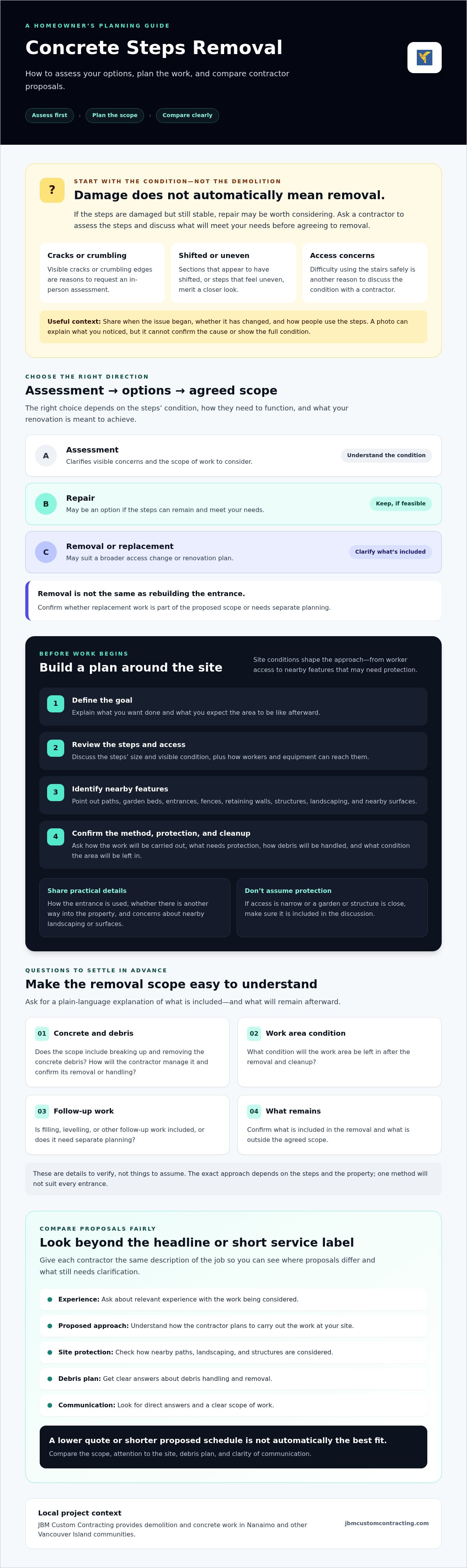
Cracked, uneven, or outdated steps can make an entrance harder to use. You may also be considering removal because you’re changing access or planning a renovation. Before deciding, ask a contractor to assess the steps. Damage doesn’t automatically mean they need to come out.
Concrete step removal means taking out the concrete stair structure, with the work planned around the site and the owner’s next steps for the area. The scope may be limited to the stairs, or form part of broader concrete demolition or replacement work. Clarify what is included, including how nearby features will be protected and what happens to the debris. For general context on preparation, methods, and safety, read about the professional demolition process.
This video shows one stair renovation from removal through to a new finish. It’s an example of a project, not a substitute for an assessment of your property.
What signs suggest concrete steps need professional assessment?
Visible cracks, crumbling edges, sections that appear to have shifted, or steps that feel uneven are good reasons to request an in-person assessment. So are access concerns, such as difficulty using the stairs safely. A photo can help explain what you’ve noticed, but it can’t confirm the cause or show the full condition. Tell the contractor when the issue began, whether it has changed, and how people use the steps.
Should you remove, repair, or replace the steps?
The right choice depends on the steps’ condition, how they need to function, and what your renovation is meant to achieve. Ask which options are feasible before agreeing to removal:
- Assessment: Clarifies the visible concerns and the scope of work to consider.
- Repair: May be an option if the steps can remain and meet your needs.
- Removal or replacement: May suit a broader access change or renovation plan.
Concrete steps removal is distinct from rebuilding the entrance, so confirm whether any replacement work is part of the proposed scope or needs separate planning. You can review JBM Custom Contracting’s concrete services for related work, then confirm whether your specific project is a fit. The company also lists house washing in Nanaimo among its local services.
How Professional Concrete Steps Removal Is Assessed and Planned
A clear plan starts before any concrete is disturbed. For concrete steps removal, the contractor should understand your goal, assess the site, define the work, explain how it will be carried out, and confirm what cleanup includes. The exact approach depends on the steps and the property, so one method shouldn’t be assumed to suit every entrance.
Site conditions shape the removal plan, from how workers can reach the steps to what needs protection nearby. During an assessment, point out adjacent paths, garden beds, entrances, fences, retaining walls, and structures. Ask what the contractor has observed and what still needs to be confirmed before work begins. The U.S. Occupational Safety and Health Administration’s demolition safety standards explain hazards associated with demolition; because they are U.S. guidance, ask your contractor which safety practices and requirements apply to your Nanaimo project.
What should a site assessment cover?
The contractor should review the steps’ size and visible condition, access for workers and equipment, and the surrounding features. Share practical details too: how the entrance is used, whether there’s another way into the property, and any concerns about landscaping or surfaces close to the work area. These details help the contractor discuss a suitable plan, but they don’t establish a particular tool or method in advance.
Ask whether access limits or nearby features could affect the work. If a narrow walkway, garden, or structure is close to the steps, make sure it’s included in the discussion rather than assuming it will be protected automatically.
What should the removal scope clarify?
Before approving the work, get a plain-language explanation of what’s included and what will remain afterward. In particular, ask:
- Does the scope include breaking up and removing the concrete debris?
- How will the contractor manage debris and confirm its removal or handling?
- What condition will the work area be left in?
- Is filling, levelling, or other follow-up work included, or would that need separate planning?
These are questions to verify, not details to assume. JBM Custom Contracting lists demolition services among its offerings; confirm directly whether your specific steps and project scope are a fit. For a local starting point, you can also review JBM Custom Contracting’s services and discuss the work you have in mind.
How to Compare Concrete Steps Removal Contractors
Compare proposals against the same description of the job, not just the headline or a short service label. Give each contractor the same information about the steps, site access, nearby features, and what you want done afterward. That makes it easier to see where proposals differ and what needs clarification.
A lower quote or shorter proposed schedule isn’t automatically the best fit. Look for a clear scope, thoughtful attention to the site, and direct answers about debris and communication. For added context, OSHA’s demolition manual discusses engineering surveys before demolition begins. It’s U.S. guidance, not a statement of requirements in Nanaimo; ask contractors about the practices and requirements relevant to your project in British Columbia.
| What to compare | What to look for |
|---|---|
| Scope | What work is included, excluded, and expected to remain afterward? |
| Site assessment | Does the proposal address access and nearby paths, landscaping, entrances, or structures? |
| Debris handling | Does it say whether concrete debris will be removed and how handling will be arranged? |
| Communication | Is there a clear contact for questions or changes if conditions differ from expectations? |
| Credentials | Can the contractor confirm relevant certification and insurance? |
Which questions should you ask before hiring?
Ask the contractor to explain what they believe the project includes and excludes. How will they manage access and protect nearby property features? Does the proposal include breaking up and removing debris? Who will contact you if something uncovered during the work changes the expected scope? Clear answers help you compare like with like and reduce the chance of differing assumptions.
How can you review credentials and project fit?
Confirm certification and insurance directly with each contractor, and ask what their credentials cover. You can also request relevant project examples or references when available, without assuming every contractor will have them. JBM Custom Contracting states that it is certified and fully insured, and offers demolition and concrete work. These are company facts, not a substitute for checking whether a contractor’s experience and proposed scope match your job.
For broader selection advice, the concrete demolition contractor hiring guide offers another reference. If you’re considering concrete steps removal in Nanaimo, you can also review JBM Custom Contracting’s services and confirm whether your specific project is a fit.
How to Prepare Your Property for Concrete Step Removal
Good preparation starts with a clear conversation, not guesswork. Before concrete steps removal begins, ask the contractor what they need you to move, which areas should stay clear, and how people will safely access the property during the work. Follow the contractor’s instructions for your specific site rather than assuming every project needs the same preparation.
Use this checklist to organize the discussion:
- Clear belongings: Ask what should be moved from the steps and surrounding area, and confirm who is responsible for moving it.
- Plan access: Discuss vehicle access, pedestrian routes, and any shared driveways or walkways. If the usual entrance will be affected, ask what to expect and whether another route needs to be kept available.
- Flag nearby features: Point out landscaping, paths, fences, entrances, and structures that concern you. Don’t assume the contractor has noticed every detail.
- Record existing conditions: Take clear photos of the steps and nearby areas before work starts. Share existing cracks, marks, or other concerns so you and the contractor have a common reference.
What should you clear or discuss beforehand?
Walk through the work area with the contractor, if possible, and confirm what needs to be moved or protected. This could include outdoor furniture, planters, or items near the entrance. Ask how vehicle movement and pedestrian access will be coordinated, especially if neighbours or other occupants use a shared area. Keep your notes and agreed instructions together so everyone is working from the same expectations.
Tell the contractor about any access needs or concerns that could affect the plan. Don’t move items or block routes based on assumptions; first confirm what the crew needs and who will handle each task.
What should you confirm about cleanup and follow-up?
Before work begins, check whether removal of the concrete debris is included in the agreed scope, and how any remaining material will be handled. Ask what condition the area will be left in. For example, clarify whether the agreement covers only removal or also any follow-up work to prepare the space for its next use. Get any scope changes confirmed with the contractor rather than relying on a verbal assumption.
If you have other unwanted household or yard items to clear, JBM Custom Contracting also lists a junk removal service. Confirm separately what that service can take, since concrete debris isn’t automatically included.
Arrange Concrete Steps Removal with a Local Vancouver Island Contractor
You’re ready to move forward when you know whether the steps need removal, what the project includes, and how the property will be prepared. First, have the condition assessed. Then define the work and what should happen to the area afterward. Compare proposals based on the same project details, and confirm access, belongings, and cleanup arrangements before work begins.
Nanaimo is part of a wider Vancouver Island market, but a contractor’s stated service area doesn’t automatically confirm availability for a specific job. JBM Custom Contracting lists both concrete work and demolition services. These are relevant places to start a conversation, but confirm directly whether your concrete steps removal project fits the company’s services and local coverage.
What information helps a contractor assess your project?
A clear first message can help the contractor understand what you’re asking about. Include:
- Property location: Share the community and general location so the contractor can confirm whether the project is within their service area.
- Step condition: Describe what you’ve noticed, such as visible damage or changes in how the steps feel to use. Explain when you first noticed the issue.
- Approximate dimensions: A rough idea of the steps’ width, height, and number of levels can help describe the project. Don’t worry about making measurements exact unless requested.
- Access and surroundings: Mention nearby paths, landscaping, entrances, shared areas, or anything that could affect access to the work area.
- Photos and timing: Include clear photos if the contractor accepts them, and share your desired timing. Ask what schedule may be possible rather than assuming a particular lead time.
Be specific about your preferred outcome too. For example, explain whether you’re considering removal as part of a larger entrance change or simply want the steps gone. That helps the contractor respond to the project you have in mind, without assuming replacement or follow-up work is included.
What is a practical next step?
Ask the contractor to confirm that your particular steps, location, and requested scope are a fit. If they need to see the property before commenting, arrange an assessment and use it to clarify what is included, what remains afterward, and how questions or changes will be handled. You can also read JBM’s concrete removal services guide for additional context before you reach out.
Move Forward with a Clear Removal Plan
The right contractor conversation starts with an assessment, not an assumption that removal is the only option. Define the scope, compare proposals based on the same project details, and confirm how access, nearby features, debris, and cleanup will be handled. These steps can help you make a confident decision about concrete steps removal.
JBM Custom Contracting lists concrete work and demolition among its services and states that it is certified and fully insured. If you’re considering a project in Nanaimo or elsewhere on Vancouver Island, confirm directly whether your specific location and scope are a fit.
A little preparation and clear communication can make it easier to choose a suitable contractor and understand what happens next. You’re ready to take the next step with confidence.
Frequently Asked Questions
How do I know whether concrete steps need removal or repair?
An in-person assessment can help determine whether repair, replacement, or removal suits the steps’ condition and your plans. Cracks, crumbling areas, movement, or access concerns are reasons to ask a contractor to take a closer look, but they don’t confirm the cause on their own. Explain when you first noticed the issue, whether it has changed, and how people use the steps so the contractor can assess the situation.
What happens during professional concrete steps removal?
The contractor should first discuss your goal and assess the steps, site access, and nearby features. They can then explain the proposed scope and work plan, including what will happen to the concrete debris and how the area will be left. The exact approach depends on the site, so ask what the work involves for your property rather than assuming every removal project follows the same method.
How should I compare concrete steps removal contractors?
Give each contractor the same project details, then compare how clearly each proposal explains the scope, site conditions, access, debris handling, cleanup, and communication. Ask what’s excluded and who will contact you if conditions differ from expectations. A lower quote or shorter proposed schedule isn’t automatically the best fit. Confirm credentials and insurance directly, and ask for relevant examples or references if available.
Do contractors remove the concrete debris after taking out the steps?
Not always. Debris handling depends on the agreed project scope, so ask whether breaking up and removing the concrete is included or needs to be arranged separately. Confirm how leftover material will be handled and what condition the work area will be left in. Get these details clarified before work begins, rather than assuming that removal of the steps also includes hauling away all debris.
Can concrete steps be removed without damaging nearby landscaping?
A contractor can assess nearby landscaping and discuss how to reduce the chance of damage, but no one should promise that every feature can be protected without first reviewing the site. Point out garden beds, paths, entrances, fences, or structures close to the steps. Ask what precautions are planned and whether access or the proposed work could affect those areas. Photos may help document existing conditions and concerns.
What should I ask a contractor before concrete steps removal?
Ask what the proposed work includes and excludes, how access and nearby property features will be considered, and whether debris removal and cleanup are part of the scope. Clarify what condition the area will be left in and who will communicate with you if site conditions change the plan. Share the steps’ approximate dimensions, visible condition, and your desired outcome so the contractor can discuss project fit.
Does JBM Custom Contracting provide concrete removal on Vancouver Island?
JBM Custom Contracting lists concrete work and demolition services, but confirm directly whether your specific concrete removal project is a fit. The company’s stated local coverage includes Nanaimo, Lantzville, Duncan, Ladysmith, Cedar, Parksville, Qualicum Beach, Cowichan, and Gabriola Island. Share the property location, step condition, access details, and the outcome you want, then ask whether the project falls within the company’s services and coverage.