


The biggest cost difference usually comes down to scope: removing a fireplace surround or insert is a smaller project than removing a masonry fireplace and chimney. The cost to remove a fireplace depends on its type and materials, how much of the chimney is included, and whether the work affects the home’s structure or requires repairs afterward.
It makes sense to want a clear budget before deciding whether to remove the whole fireplace or only part of it. The scope can also affect the surrounding walls, floors, ceiling, or roof, so the option with the least demolition is not always the best fit for the home.
This guide explains partial and full removal, factors that change the work involved, and what to consider about structural support and resale appeal. It also covers permits as a local planning matter, so you can identify what to clarify for your property before work begins.
Key Takeaways
- Compare the scope carefully: removing an insert or surround is different from taking out a chimney breast or full chimney.
- Check how the fireplace connects to the home’s structure before choosing partial or full removal.
- Consider repairs to walls, floors, ceilings, and roofing when planning the overall project.
- Weigh the change to resale appeal against the space and layout you hope to gain.
- In Canada, permit requirements depend on the municipality, and structural changes or roof work can make them especially relevant.
How much does fireplace removal cost?
The total depends on what is removed, from a mantel to the chimney stack. The project price depends on the specific scope and is provided in a written estimate. Materials, structural work, access, debris removal, and repairs all shape that scope.
Chimney Breast and Full Chimney Demolition
A chimney breast is the section of chimney that projects into a room. Removing it affects more than the visible fireplace, especially if it runs through several floors. Full chimney demolition also removes the external stack above the roof, adding to the work involved.
Scope is the key cost factor: removing a chimney breast differs from demolishing the chimney from the roof through the house. Full removal may also require roof patching, flashing, and replacement shingles. Include these repairs when planning the work, as they address the opening left behind.
Before choosing a scope, clarify whether the plan includes the chimney breast, internal flue, and external stack. A quote that says only “fireplace removal” may not define these separate parts. Naming each one helps you compare the demolition involved and account for roof or interior repairs.
Keeping the Chimney After Removal
Keeping the chimney means removing the fireplace while leaving some or all of its flue or stack in place. This can reduce the demolition scope, but the remaining structure still needs an appropriate finish and protection from drafts or water entry.
Clarify how the opening will be finished once the firebox is removed. A chimney may need capping or sealing to prevent leaks and drafts. The approach depends on which sections remain and whether the chimney is still in use. A sealed, unused flue is not the same as an active fireplace.
Regular cleaning and inspection matter while a fireplace remains in use. Soot and creosote can collect inside a chimney, so maintenance should reflect its intended use. Removing the firebox but keeping the chimney changes the arrangement; it does not automatically eliminate the need to manage the remaining flue.
Removing the Hearth and Surround
The surround frames the fireplace opening, while the hearth forms its floor-level base. Removing only these visible components is a smaller project than demolishing the chimney. Materials matter: a stone hearth, brick surround, and attached mantel each need different handling.
Decide whether the work includes the mantel, hearth, and material behind the surround. Removing only a mantel, for example, leaves the firebox and chimney in place. Taking out the hearth may expose flooring that needs repair or replacement. Include these finish details in the project scope.
Traditional masonry components can be heavy, and demolition creates debris that needs clearing. Separating salvageable materials from waste can affect disposal planning. The finished opening also needs attention, particularly if removing stone or brick leaves uneven edges or exposed wall surfaces.
DIY Removal Versus Hiring a Contractor
DIY removal may avoid a contractor’s labour charge, but it does not necessarily cost less overall. Tools, debris disposal, repairs, and mistakes can add expense. Hiring a contractor adds labour, while bringing experience with demolition, heavy materials, and the removal sequence.
This distinction matters most when the work goes beyond a removable insert or surround. A masonry chimney may connect to walls, floors, or the roof, and removing the wrong section can damage surrounding construction. Gas or electrical connections also need safe handling, not guesswork during demolition.
For a limited task, weigh the work against the equipment and disposal needs. For a chimney breast or full stack, account for structural support and roof repairs. A contractor can define the demolition scope and identify the materials and finishing work involved before removal begins.
Full versus partial fireplace removal costs
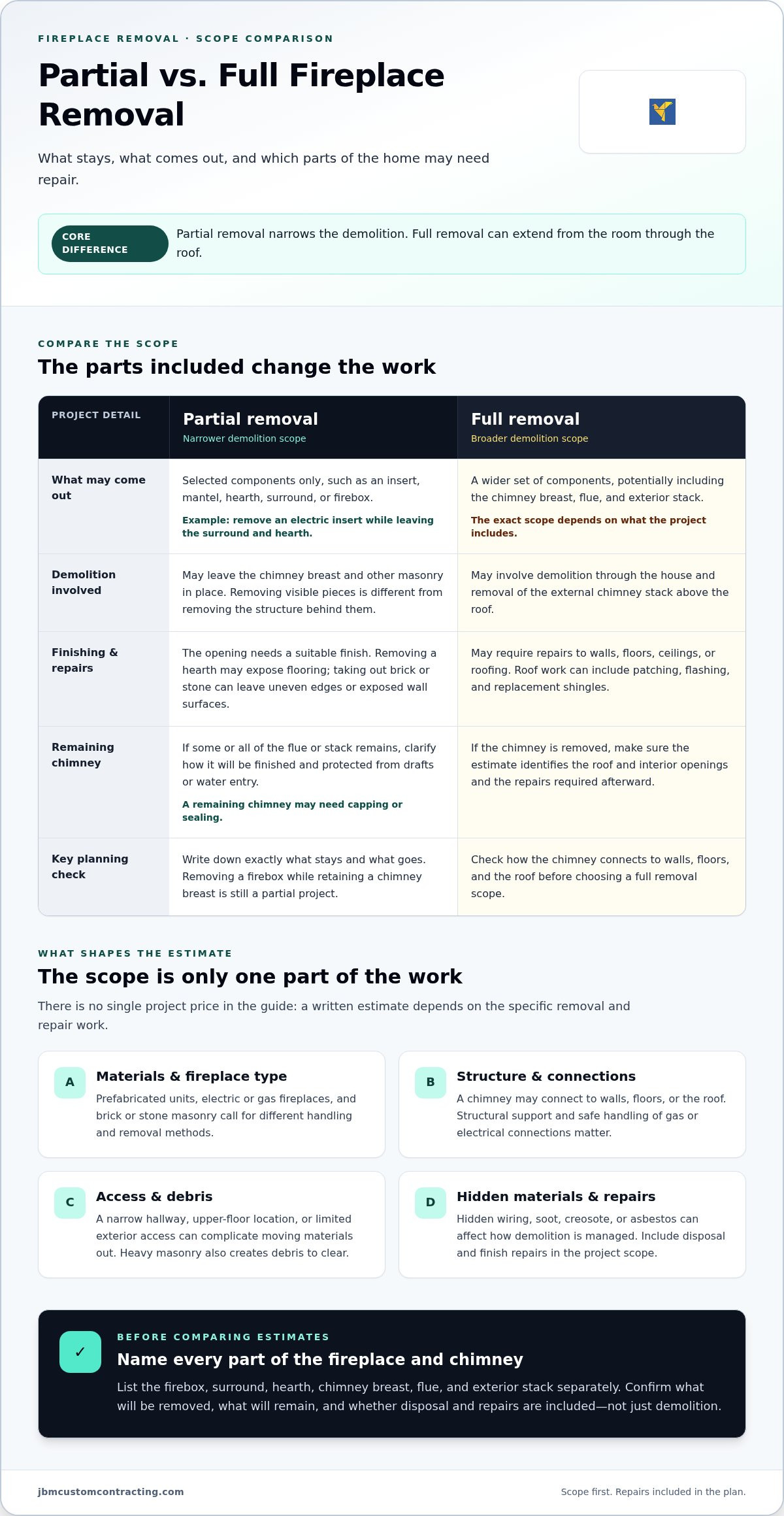
Partial removal leaves some fireplace components in place, while full removal clears a wider area. The price depends on scope, fireplace type, structural work, access, debris, and repairs. A written estimate sets out the amount for your specific project.
Full and Partial Removal Scope
Removal scope identifies which parts of the fireplace and chimney are included. This matters because taking out an insert differs from removing a chimney breast, flue, and exterior stack.
For example, removing an electric insert may leave the surround and hearth untouched. A partial masonry project could remove the firebox but retain the chimney breast. Full removal may extend through the roof, requiring demolition and repairs to the opening. Each additional component changes the labour, handling, and finishing required.
Write down what should stay and what should go before comparing project descriptions. List the firebox, surround, hearth, chimney breast, flue, and exterior stack separately. This makes it easier to see whether an estimate includes removal, disposal, and repairs, rather than demolition alone.
Cost Factors by Fireplace Type
Fireplace type describes the construction and materials being removed, from a prefabricated unit to a brick or stone fireplace. It matters because each type calls for different removal methods, labour, and debris handling.
A prefabricated fireplace may come apart in sections, while masonry requires breaking down heavy materials. An electric unit may have connections that need safe handling, and a gas fireplace may require gas-line disconnection. Hidden wiring, soot, creosote, or asbestos can also affect how demolition is managed.
Access also affects how materials move out of the home. A narrow hallway, upper-floor location, or limited exterior access can complicate debris removal. Structural connections matter too: a fireplace built into a wall may need careful removal and reconstruction around the opening.
- Materials: Brick, stone, and metal require different tools and handling.
- Scope: Removing an insert differs from removing a chimney breast and stack.
- Connections: Gas lines and electrical wiring need safe disconnection.
- Finishing: Exposed floors, walls, ceilings, or roof areas may need repair.
For a debris-heavy project, a clearly defined demolition scope helps distinguish removal work from finishing work. Compare the listed tasks, not just the project label. Two quotes can describe “full removal” while including different components, disposal, or repairs.
Structural assessments and load-bearing walls
A fireplace and chimney can be part of a wall’s structure, not just its finish. Before removal, assess how the masonry connects to the floors, walls, and roof framing.
Assessing Structural Complexity
A structural assessment looks at how the fireplace and chimney connect to the surrounding parts of the home. It matters because removing masonry can affect the support or stability of nearby construction.
For example, a chimney breast may extend through multiple storeys even though the visible firebox occupies only one room. Its weight and position can affect the demolition plan. An engineer can assess how the structure is supported and identify work needed before removal begins.
Wall reconstruction also affects the project. Removing a fireplace may leave a wide opening, exposed framing, or masonry edges that need rebuilding. The work may include restoring wall surfaces and matching the surrounding finish. An estimate for demolition alone may not include these repairs.
Consider the complete route, from the hearth and firebox to the chimney above. A fireplace against an exterior wall can have different connections from one built into an interior partition. The location, masonry, and surrounding construction all help determine the complexity of removal.
Load-Bearing Walls and Support
A load-bearing wall carries weight from parts of the home above it. Removing a fireplace built into that wall may therefore require temporary support and a permanent replacement support.
An engineer evaluates the structure and specifies how loads should be carried during and after the work. Depending on the design, reinforcement may involve a beam or header. Its size and placement depend on the wall, the weight above it, and the opening left by removal.
Plan support before demolition reaches structural masonry. For example, removing bricks from the centre of a wall without first addressing the load path could cause movement or damage. A controlled sequence helps support the remaining wall as the fireplace and chimney sections are removed.
Structural repairs can extend beyond the opening. Floors may need levelling where masonry rested, while ceilings or roof areas may need rebuilding where the chimney passed through. These tasks are separate from removing the firebox, so include them in the project scope.
Useful assessment details include the fireplace’s position, how many floors it passes through, the wall materials, and the planned removal limit. Photos of the room and visible chimney can help describe the layout, but they do not replace an on-site structural review. Clear plans help coordinate demolition, support, and repairs.
Effects on home value
Removing a fireplace can change a home’s appeal, but it does not guarantee a higher or lower sale price. Weigh the fireplace’s condition, the room’s layout, and likely buyer preferences before choosing partial or full removal.
For example, a large masonry fireplace may take up useful living-room space. Removing it could make room for furniture or improve circulation. In another home, a working fireplace may be a valued feature, particularly for buyers who want a traditional focal point. The effect depends on the property and its market.
Resale outcomes vary by property. Some buyers may prefer a cleaner wall and more usable floor area; others may see a fireplace as an important feature. Refreshing a dated surround could improve the room’s appearance, while removing an attractive fireplace could reduce appeal for buyers seeking character.
Full chimney removal changes more than the room’s appearance. It can alter the roofline and require repairs where the stack passed through the roof. Partial removal may preserve the exterior chimney while changing the interior layout. Compare these outcomes with the home’s existing style, not just the space gained.
- Buyer appeal: Consider whether the fireplace is a selling point or an obstacle in this specific room.
- Finished appearance: Account for wall, floor, ceiling, and roof repairs after removal.
- Structural work: Confirm how the fireplace relates to bearing walls and surrounding construction.
- Removal scope: Compare retaining the chimney with removing the full structure.
Before deciding, photograph the room and note what a buyer would see: the fireplace, nearby windows, furniture space, and visible wear. Compare the current layout with the room you expect after the work. A properly repaired wall can look intentional; an unfinished opening can make the change feel incomplete.
Home value also depends on how the finished space fits the rest of the property. Removing a fireplace may open up a room, but mismatched flooring or wall finishes can detract from the result. Include finish work in your decision, rather than treating it as an afterthought.
If resale is a priority, consider whether the fireplace works, is well maintained, and suits the home’s style. A damaged or unused unit may be less appealing than a properly finished room, while distinctive masonry could matter to future buyers. The best choice balances the room’s function, the home’s character, and the completed appearance.
Permits for fireplace removal in Texas
For a Canadian property, ask the local municipality about permit requirements. Rules can differ between communities, so identify the municipality responsible for your address before planning the approval process.
Prepare a clear description of the proposed work for the building department. State whether the project removes only the fireplace or includes chimney sections, and explain the intended result. This helps staff direct your question to the relevant permit process without relying on a broad project label.
Before work is scheduled, ask the municipality:
- Whether a permit applies: Describe the exact removal scope and property location.
- What documents are needed: Ask whether drawings, photographs, or other project details are required.
- Whether inspections apply: Clarify any inspection stages and how they are arranged.
- How approval is recorded: Find out what written records to keep after the work.
Keep the municipality’s response with your project documents. If the removal plan changes, such as expanding from the fireplace to additional chimney sections, revisit the permit question before proceeding. A change in scope can affect which documents or approvals the local authority requires.
For properties in Vancouver Island communities, use the municipality responsible for the specific address. A neighbouring community may follow a different process. Share the same written scope with everyone coordinating the project, so the planned work and any required approvals stay aligned.
Keep copies of permit applications, written decisions, approved documents, and inspection records that apply to the project. These records can help document the work for future renovations or a property sale. Confirm the required close-out steps with the municipality before treating the permit process as complete.
Explore fireplace demolition services
JBM Custom Contracting: Renovations
JBM Custom Contracting handles selected small demolition and removal projects, as well as renovations. For a fireplace project, the company can review what is to be removed, what stays, and how waste will be handled. If removal leaves an opening or damaged finishes, discuss the related renovation work as part of the project scope.
Before getting in touch, define what should be removed and what the finished room needs. Details about the fireplace, chimney, and affected surfaces help clarify the work. JBM Custom Contracting also offers junk removal for unwanted materials from property cleanups.
To discuss your project with JBM Custom Contracting, get in touch.
Plan the next step with confidence
Before committing to the cost to remove a fireplace, decide how you want the room to function afterward. A clearer layout, more usable floor space, or a refreshed living area can guide the removal scope and follow-up repairs. Keep these goals in mind alongside structural and permit considerations.
JBM Custom Contracting offers Renovations and Demolition Services for property improvement work, along with Moss & Gutter Cleaning. For fireplace-related work, renovations and demolition are the relevant services to discuss; the final scope should reflect the removal and finish work your home needs.
A well-planned project can help you move toward a finished space that better suits your home. Take the next step when you’re ready.
Frequently Asked Questions
Can I remove a gas fire myself?
Do not disconnect or cap an active gas line yourself. A qualified professional should handle the gas supply before demolition, and electrical connections also need safe termination. Only consider removing non-connected finishes after the utilities and structure have been addressed. Removing a unit before disconnecting its supply, for example, can create a leak or damage hidden connections.
Disposal Fees for Fireplace Materials: What Can You Expect?
Disposal charges depend on the amount and type of debris, plus local waste-handling rules. Brick, concrete, metal, and wood may need different handling, and separating reusable materials can sometimes reduce disposal costs. Ask for disposal to be itemized separately from demolition and transport. For example, a masonry hearth creates a different waste load than a small metal insert, even when both are removed from one room.
How hard is it to get rid of a gas fireplace?
Removing a gas fireplace can be straightforward or complex, depending on the unit and its surroundings. A freestanding appliance differs from a built-in model with a vent, wall finish, and connected utilities. The gas line needs safe disconnection and capping, and electrical wiring must be safely terminated. After removal, the wall or floor may need repair where the appliance and vent were installed.
How much does it cost to remove a fireplace in Canada?
The cost to remove a fireplace in Canada depends on the removal scope, construction type, access, utility connections, debris, and finishing work. Removing an insert differs from taking out masonry and repairing the opening. The amount is set out in a written estimate for the specific project, which should distinguish removal from related work such as restoring flooring or patching a wall.
What is the average cost to remove a fireplace and chimney in Canada?
There is no dependable average for every Canadian home because “fireplace and chimney removal” can describe different scopes. One project may remove an interior fireplace but retain the chimney; another may take the stack through the roof. Location, materials, access, structural work, and roof repairs all affect the total. Compare written estimates only after confirming they cover the same chimney sections and finishing tasks.
How much does it cost to remove a gas, electric, or wood-burning fireplace?
The type of fireplace affects labour and preparation, so costs vary by unit and scope. Gas models involve disconnecting and capping the supply; electric models may have wiring to terminate. Wood-burning masonry fireplaces can require more involved demolition than a removable prefabricated unit. The surround, hearth, vent, and chimney matter too. Compare the full scope, not just appliance removal.
What factors affect fireplace removal costs, such as size, location, and materials?
Size, materials, access, and the fireplace’s connection to the home affect the work involved. A heavy masonry unit in an upper-floor room may need more careful handling than a small, accessible insert. Hidden gas lines or electrical wiring, structural ties, and debris volume also shape the project. Exposed brick, uneven flooring, or a roof opening can add follow-up work.
How much does it cost to repair walls, floors, and roofing after fireplace removal?
Repair costs depend on which surfaces are exposed and the finish needed to blend them with the rest of the home. Removing a hearth may leave a gap in the floor, while taking out a chimney can leave openings in the roof and ceiling. Matching existing materials, repairing hidden damage, and restoring trim all affect the work. Identify wall, floor, ceiling, and roof repairs separately from demolition in the project scope.


