
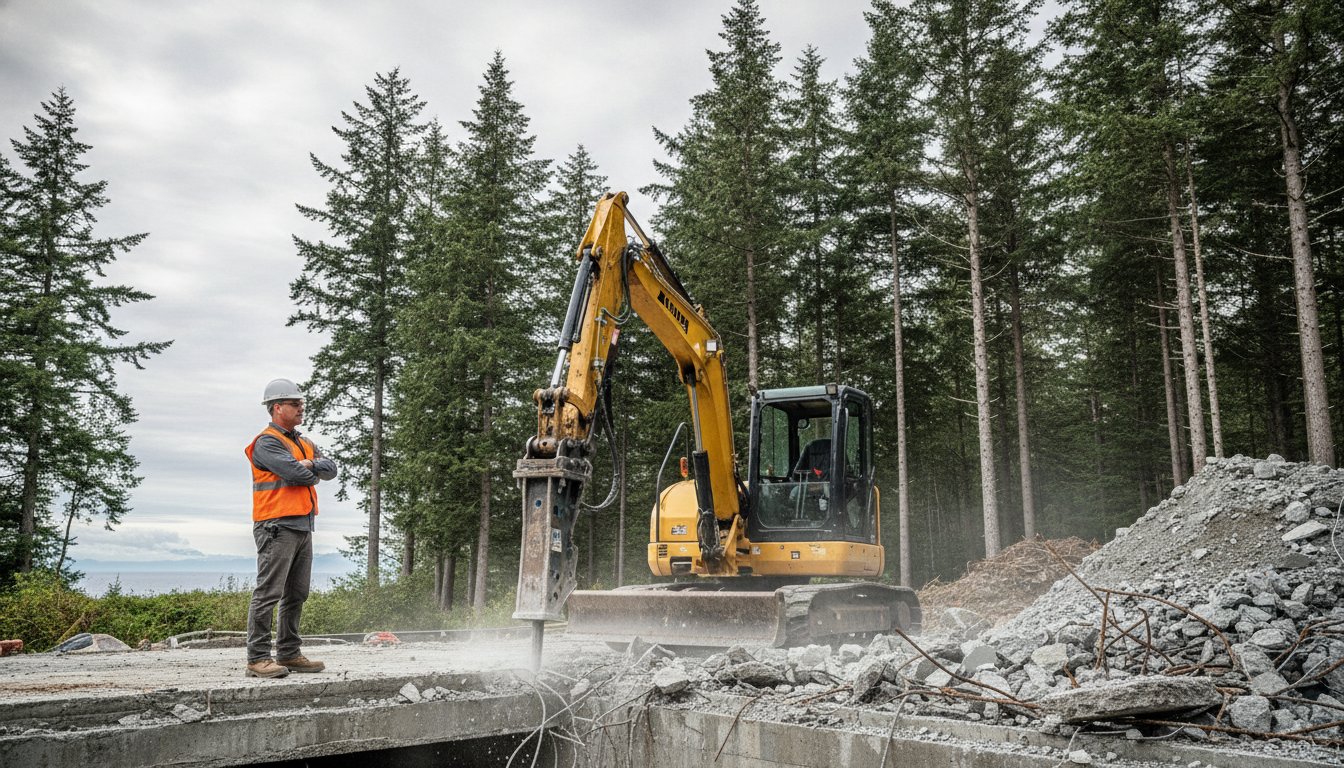

Imagine standing on your Nanaimo or Victoria property, looking at a cracked, decades-old slab and wondering if one wrong move with a jackhammer will sever your main water line. It's a common fear for many local owners, especially since over 80 percent of demolition permits in Nanaimo are for homes built before 1975. You want a fresh start for your new build, but the physical difficulty of concrete foundation removal and the risk of damaging hidden utilities often cause unnecessary delays.
We understand that you need a clean, ready-to-build site without the headache of navigating complex disposal requirements or physical exhaustion. This guide provides a clear path forward, teaching you everything you need to know about removing a foundation safely and efficiently. We will preview the professional techniques that protect your land, explain how to handle heavy debris disposal under the latest 2026 CRD and City of Victoria bylaws, and help you avoid the costly fines that come with improper waste management. By the end, you'll have the confidence to transform your property into a professional, debris-free workspace.
Key Takeaways
- Identify the specific structural components, like footings and stem walls, that must be extracted for a completely clear, ready-to-build site.
- Follow a professional five-step workflow for concrete foundation removal to ensure the safety of underground utilities and nearby structures.
- Compare the hidden costs of DIY labor against professional services, including equipment rentals, fuel, and specialized disposal fees.
- Navigate the specific permit requirements for Nanaimo and Duncan while learning how to shield your trees and landscaping from heavy machinery.
- Understand why hiring a fully insured and certified contractor is the most reliable way to achieve a clean site without the risk of property damage.
Understanding Concrete Foundation Removal: When and Why It Is Necessary
Concrete foundation removal is far more complex than simply breaking up a driveway or a patio. This service involves the total extraction of the structural "skeleton" of a building, which includes the heavy footings and stem walls buried deep in the earth. Unlike surface-level work, the process of demolition for a foundation requires surgical precision to ensure the surrounding soil remains stable and nearby structures stay protected. It isn't just about clearing a site; it's about making sure nothing is left behind that could interfere with future development.
Property owners usually trigger a full removal when they encounter structural failure or need to accommodate modern seismic upgrades. In British Columbia, older foundations often lack the reinforcement required to meet current safety codes. If you're planning a new custom home, starting with a clean slate is essential. Most modern construction warranties require a site to be completely free of old debris to prevent uneven settling or drainage issues. If you leave old footings in the ground, you risk compromising the integrity of your new build from day one.
To see how professionals manage the removal of heavy concrete structures, watch this helpful video:
Common Scenarios for Foundation Demolition
Most projects on Vancouver Island involve clearing the way for modern builds. Since 90 percent of Nanaimo's demolished homes were built before 1975, many owners find that the original foundations simply aren't compatible with today's architectural designs. Common reasons for removal include:
- Replacing Old Structures: Clearing a lot to build a larger, modern custom home with a different footprint.
- Structural Failure: Removing foundations that have severe cracking, bowing, or settling that cannot be safely repaired.
- Repurposing Land: Removing the footprints of old detached garages or commercial outbuildings to reclaim yard space or install new utilities.
The Difference Between Slab-on-Grade and Deep Foundations
It's vital to distinguish between a simple surface slab and a deep foundation. A slab-on-grade sits near the surface, while a traditional foundation has footings that sit below the frost line to prevent shifting. This means concrete foundation removal often requires significant excavation to reach the lowest points of the structure. Modern foundations are also packed with heavy rebar or wire mesh, which adds weight and complexity to the extraction. You can't just break the surface; you have to dig, detach, and sort the materials to ensure the site is truly ready for what comes next.
The Step-by-Step Process of Safely Removing a Foundation
Safely executing a concrete foundation removal requires more than just brute force. It's a structured, five-step workflow designed to protect your land and the surrounding infrastructure. Professionals follow a specific sequence: Locate, Excavate, Break, Sort, and Haul. This systematic approach ensures the project stays on schedule while minimizing risks like utility damage or soil destabilization. By following a proven method, you turn a chaotic demolition into a controlled site preparation.
Site Assessment and Utility Locating
Before any machinery touches the ground, you must identify what lies beneath it. Contacting BC 1 Call is the first mandatory step to map out gas, water, and electrical lines. Hitting a utility line isn't just expensive; it's dangerous. Once the utilities are marked, the crew establishes "safe zones" for heavy equipment. This prevents heavy excavators from crushing septic fields or damaging the roots of protected trees. Identifying potential drainage issues during this phase also helps prevent site flooding once the foundation is pulled from the earth.
Breaking and Excavation Techniques
Once the site is secure, the heavy work begins. Modern concrete removal techniques often rely on hydraulic breakers attached to excavators rather than handheld pneumatic tools. These machines provide the necessary force to crack reinforced concrete that's several inches thick. After the initial breaking, the excavator prys up the footings. This is a delicate balance of power and precision. The goal is to lift the concrete without disturbing too much of the surrounding soil. During this phase, crews often use water sprays to manage dust, keeping the air clear for neighbors and workers alike. If you're feeling overwhelmed by the technical requirements, professional demolition services can handle the heavy lifting and planning for you.
Sorting and Hauling for Efficiency
The job isn't finished when the concrete is in pieces. Sorting is a critical step that many property owners overlook. Separating the concrete from the steel rebar or wire mesh is essential for two reasons. First, clean concrete can often be recycled into road base or fill, which can lower your disposal costs. Second, metal recyclers on Vancouver Island often accept rebar separately. By sorting on-site, you reduce the volume of "mixed" waste, which is significantly more expensive to dump at regional facilities. Finally, the debris is loaded into high-capacity dump trucks for hauling to a certified facility, leaving you with a clean, level lot ready for your next project.

DIY vs. Professional Concrete Removal: Evaluating Risks and Costs
Deciding between a DIY approach and hiring a team for concrete foundation removal usually comes down to the budget. While the upfront cost of a rental jackhammer seems low, the hidden expenses often surprise Vancouver Island homeowners. When you factor in equipment delivery, fuel, and multiple trips to the landfill, the "savings" of doing it yourself quickly disappear. Professionals use specialized gear, such as high-flow hydraulic breakers and thumb-equipped excavators, which aren't typically available at your local rental shop. These tools allow a crew to finish in hours what might take a homeowner several exhausting weekends to complete.
| Factor | DIY Approach | Professional Service |
|---|---|---|
| Equipment | Rental jackhammer, sledgehammer | Excavator, hydraulic breaker |
| Time | Multiple days or weeks | Usually 1 to 2 days |
| Disposal | Self-haul to landfill | Included in the service |
| Safety | High risk of strain or injury | Fully insured and certified |
The physical toll of this work is another critical factor. Breaking up reinforced concrete sends constant vibrations through your arms and back, leading to rapid burnout or injury. If you want to see how these factors impact your specific project, checking out small demolitions pricing can give you a better sense of the value professional help provides. You don't just pay for the labor; you're paying for the peace of mind that the job is done correctly without damaging your property.
Why Foundations Are Different from Sidewalks
A foundation is much more than a thick sidewalk. While a patio might be four inches deep, a foundation often includes footings buried several feet down to reach the frost line. Prying these out without an excavator is nearly impossible. There is also the risk of "foundation shock." If you use the wrong tools or too much force near a property line, the vibrations can travel through the soil and cause cracks in a neighbor's structure.
Disposal Challenges on Vancouver Island
Disposal isn't as simple as driving to the dump. Regional landfills in Nanaimo and the CRD have strict rules for construction waste. As of 2026, tipping fees for unsorted concrete and rebar have increased to encourage recycling. Professionals manage this by sorting materials on-site, which is why integrated junk removal is so beneficial. It ensures your debris is recycled at a certified BC facility, keeping your project environmentally responsible while avoiding heavy fines for improper disposal.
Preparing Your Property for a Demolition Crew
Preparing for a professional crew involves more than just clearing the driveway. It requires a combination of legal compliance, neighborly courtesy, and physical safeguards to ensure the concrete foundation removal goes smoothly. By taking these steps early, you prevent project delays and protect the long-term health of your land. A well-prepared site allows the operators to focus on precision work rather than navigating avoidable obstacles.
Start by talking to your neighbors. Heavy machinery is loud, and most Vancouver Island municipalities have strict noise bylaws that limit demolition work to specific daytime hours. Giving your neighbors a heads-up about the schedule builds goodwill and prevents complaints to city hall. You should also verify the location of your property lines to ensure that heavy equipment has enough clearance to move without encroaching on the next lot.
Permits and Local Regulations in the Cowichan Valley
In Nanaimo and Duncan, you cannot simply start digging without the proper paperwork. For a single-family dwelling in Nanaimo, a demolition permit currently costs $40.00 as of January 2026. If your structure was built before 1990, you must also provide a Hazardous Materials Survey Report. This is a critical safety step because older foundations or surrounding insulation often contain asbestos, which requires specialized handling before any breaking begins. Failing to secure these permits can lead to significant fines and immediate stop-work orders from the building inspector.
Protecting Your Landscape and Surrounding Structures
The weight of an excavator can easily crush a healthy lawn or damage shallow irrigation lines. To prevent this, crews often use heavy plywood or specialized mats to create a temporary road for the tracks. You should also identify any "protected trees" on your property. Many Vancouver Island bylaws require a specific radius of protection around tree roots to prevent soil compaction. Other essential prep steps include:
- Silt Fencing: Installing erosion control to prevent sediment from washing into local storm drains during rain.
- Access Paths: Clearing a path at least 10 to 12 feet wide for dump trucks to reach the debris pile.
- Utility Shut-offs: Confirming that all water, gas, and electrical services are capped and signed off by the utility provider.
Once the heavy concrete is gone, your yard will likely need some professional attention to return it to its former glory. If you need help restoring your lawn or managing new plantings after the demolition is complete, consider booking our yard care services to get your property build-ready and beautiful again.
If you're ready to clear your site safely and efficiently, contact JBM Custom Contracting today for a professional assessment of your foundation project.
Professional Concrete Services with JBM Custom Contracting
Choosing JBM Custom Contracting ensures you have a premier provider for concrete services on Vancouver Island. Removing a foundation is a high-stakes job that requires more than just heavy machinery; it requires a team that prioritizes safety and precision on every project. We are fully insured and certified, which gives you peace of mind that your property is in professional hands. Our crew understands the unique soil conditions and seismic requirements of the island, allowing us to work efficiently without compromising the integrity of your land.
Our expertise extends beyond concrete foundation removal. We provide a comprehensive suite of residential and commercial services, including specialized demolition and site preparation. A "leave it better than we found it" philosophy guides our work. This means we don't just break the concrete and leave; we ensure the area is clean, level, and ready for your next phase of construction. We take pride in our reputation for reliability and operational excellence, ensuring that no job is too difficult for our experienced operators.
Our Approach to Safe, Efficient Foundation Removal
Success in demolition comes down to using the right tools for the specific environment. We use right-sized equipment tailored for residential lots, which prevents unnecessary damage to your driveway or neighboring structures. Large industrial machines often cause more harm than good in tight neighborhoods, so we utilize nimble but powerful excavators to navigate narrow side yards. Our pricing is transparent and our timelines are clear, so your project stays on track. We also strictly adhere to local environmental standards, ensuring all debris is handled responsibly at certified facilities across the island.
Get Your Free Professional Assessment
Scheduling a site visit is the best way to get an accurate estimate and a clear plan of action. We serve property owners throughout Nanaimo, Ladysmith, and Duncan, providing local expertise you can count on. During the initial consultation, we evaluate the thickness of the concrete, check for reinforcement like rebar, and identify any potential access challenges. We provide a detailed breakdown of the work involved so there are no surprises on demolition day. If you're ready to start your project with a team built on trustworthiness and competence, contact us for a quote today.
Start Your New Build with a Clean Slate
Successfully clearing a site for your next project requires more than just heavy lifting. It demands a systematic approach that prioritizes utility safety, proper sorting of materials, and strict adherence to local Vancouver Island bylaws. By following the preparation steps we've discussed, you protect your landscaping and ensure your property is ready for a modern foundation. These steps ensure your build meets current seismic standards.
Professional concrete foundation removal eliminates the physical burnout and hidden disposal costs associated with DIY attempts. Our team at JBM Custom Contracting utilizes specialized equipment for tight residential spaces. We leave your lot better than we found it. We are fully insured and certified, serving communities across Vancouver Island from Duncan to Qualicum Beach. You don't have to handle this alone.
Request a Free Quote for Your Foundation Removal Project
We look forward to helping you transform your property and prepare it for a successful new build. Your fresh start begins here.
Frequently Asked Questions
Do I need a permit for concrete foundation removal in Nanaimo?
Yes, you must obtain a demolition permit from the City of Nanaimo before starting your project. For a single-family home, this permit currently costs $40.00 as of 2026. If the structure was built before 1990, you also need to provide a Hazardous Materials Survey Report. This ensures asbestos or other dangerous materials are identified and managed before any heavy machinery arrives on your site.
How much does it cost to remove a concrete foundation?
Project costs vary based on the foundation's thickness, the presence of rebar, and how easily our machines can access the site. Local factors like Vancouver Island tipping fees for construction waste also influence the final investment. Hiring a professional team often reduces the total cost by preventing expensive utility damage and ensuring debris is sorted correctly to qualify for lower recycling rates at the landfill.
Can I bury old concrete foundation pieces on my property?
No, burying concrete debris is generally prohibited by local environmental bylaws and can cause long-term property issues. Concrete buried underground creates unstable soil conditions and "soft spots" that may lead to sinkholes or future drainage problems. It also creates a massive obstacle for any future construction or landscaping projects. Most owners choose to haul the material to a certified recycling facility to keep their land build-ready.
How long does it take to remove a standard house foundation?
A standard residential foundation typically takes one to two days to remove and clear completely. The first day is usually dedicated to the physical breaking and prying of the footings and stem walls. The second day focuses on sorting the concrete from the steel rebar and hauling the debris away. Larger footprints or foundations with exceptionally deep footings may require slightly more time for a thorough extraction.
Will removing the foundation damage my existing septic or sewer lines?
Damage is preventable if you follow a professional utility locating process before any digging begins. We use BC 1 Call to map out your infrastructure and establish safe travel paths for our machinery. By identifying exactly where your septic or sewer lines sit, we can operate our hydraulic breakers with precision. This proactive approach prevents the weight of the excavator from crushing or shifting sensitive underground pipes.
What is the best equipment for residential foundation demolition?
The most effective equipment for residential concrete foundation removal is a right-sized excavator equipped with a hydraulic breaker attachment. These machines provide the necessary force to crack reinforced concrete while remaining nimble enough to navigate tight side yards. Unlike large industrial rigs, residential-sized excavators minimize the risk of soil compaction and damage to your existing driveway, trees, or landscaping features.
Is concrete from foundations recyclable on Vancouver Island?
Yes, concrete is highly recyclable and is often crushed to create road base or structural fill for new construction projects. To ensure the material is accepted at local recycling facilities, it must be separated from steel rebar and other debris. This eco-friendly approach helps reduce the volume of waste sent to regional landfills and supports the sustainability goals of Vancouver Island municipalities like Nanaimo and the Cowichan Valley.