
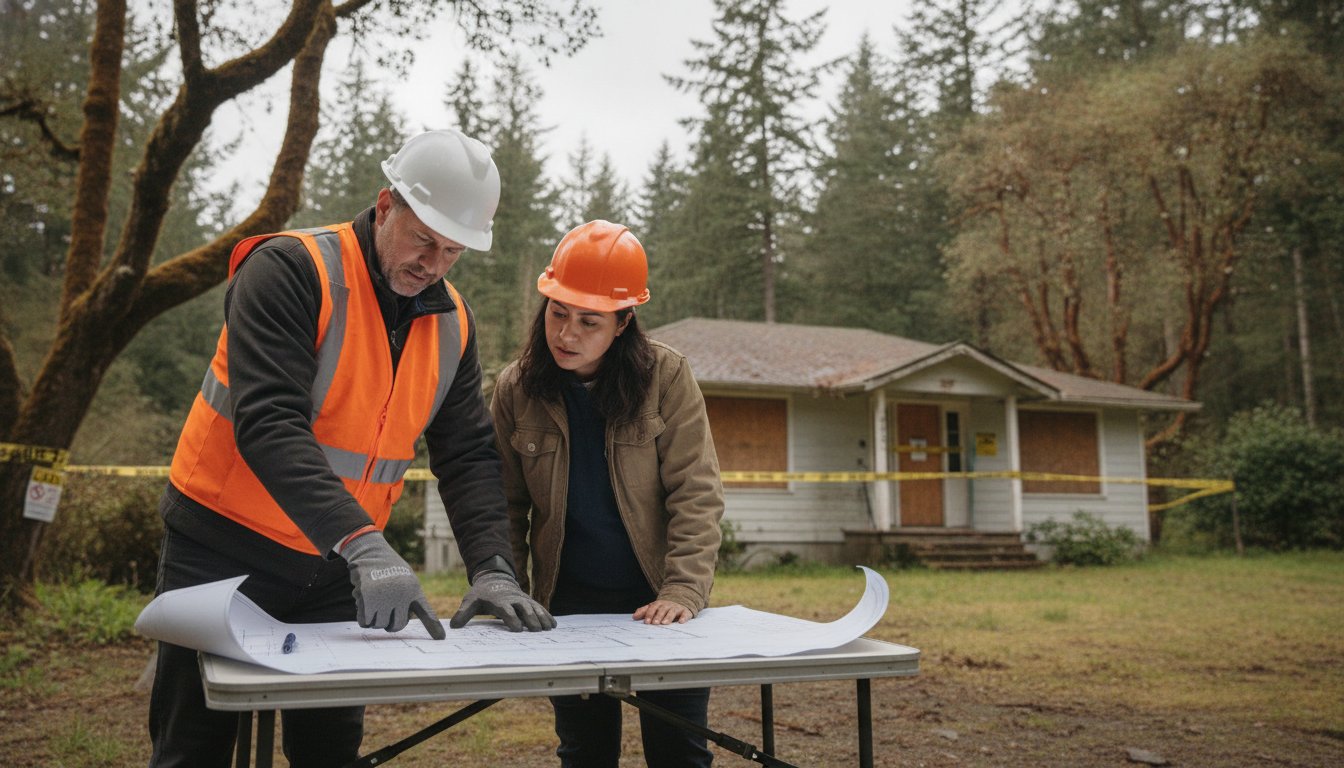

Did you know that over half of OSHA’s most frequent demolition citations are issued because a contractor failed to perform a basic engineering survey before work began? It is a sobering statistic that highlights how quickly a project can go wrong when safety isn't the top priority. When you're preparing for a tear-down, it's natural to feel the weight of potential risks like property damage to nearby structures or the hidden costs of asbestos abatement. Knowing the right questions to ask a demolition contractor is the only way to protect your investment and your peace of mind.
You deserve a clean, flat site that is ready for its next phase without any legal headaches or safety incidents. This guide will help you vet your professional thoroughly, ensuring you avoid common pitfalls like worker injury liability or sudden price hikes. We'll walk you through 15 essential areas you must cover, including insurance verification, hazardous material protocols, and local permit requirements, so your project stays on track and ends with a site that is ready for construction.
Key Takeaways
- Learn how to verify professional credentials and insurance coverage to ensure you aren't held liable for accidents or property damage.
- Discover the essential questions to ask a demolition contractor to identify hidden hazardous materials like asbestos or lead before they become a costly legal issue.
- Understand the logistics of local permit requirements and how to spot hidden disposal fees in your quote for total price transparency.
- See why site restoration details, like magnetic sweeping for stray nails, are critical for leaving your property safe and ready for future construction.
- Find out why hiring a team with local expertise ensures your project respects the specific soil and weather conditions of your region.
The Foundation: Asking About Licensing, Insurance, and Safety
A successful project begins long before the first wall comes down. You might hear many people claim they are "fully insured," but you shouldn't take that phrase at face value. In British Columbia, being properly covered means having two distinct types of protection. One covers your property; the other covers the people doing the work. If you don't verify these details, you could be on the hook for thousands of dollars in damages or legal fees. These are the essential questions to ask a demolition contractor to ensure you aren't left with a legal nightmare.
To better understand the red flags to watch out for when hiring help, watch this helpful video:
Hiring a contractor without a valid business license in your specific municipality is a major risk. Whether you are in Nanaimo, Lantzville, or elsewhere on Vancouver Island, a license proves the business is registered and accountable to local bylaws. While researching demolition methods and techniques can give you a better idea of the work involved, checking credentials is what actually protects your wallet. Professional demolition services should always lead with transparency regarding their paperwork.
Insurance and Liability: Protecting Your Property
Always ask for a Certificate of Insurance (COI) that names you as "additionally insured" for the duration of the project. This is a standard request for any reputable company. If a neighboring structure is damaged during the teardown, the contractor’s general liability insurance must cover the repair. Hiring an uninsured handyman for demo work can lead to lawsuits that your own home insurance may refuse to cover. You need a team that takes full financial responsibility for the job site from start to finish.
Safety Standards and WorkSafeBC Compliance
Safety isn't just about wearing hard hats; it's about a systematic approach to risk. You must ask if the crew has active WorkSafeBC coverage. This is non-negotiable for work performed in BC. If a worker gets hurt on your property and the contractor isn't covered, you might be liable for their medical costs and lost wages. Ask how the team secures the site to keep children or pets away from debris. A professional team like JBM Custom Contracting prioritizes site security and uses proper PPE for every task. Don't be afraid to inquire about their history of safety incidents or their current standing with WorkSafeBC. These are critical questions to ask a demolition contractor before any heavy machinery arrives at your gate.
Project Execution: Methods, Equipment, and Hazardous Materials
Once you've verified the contractor’s credentials, you need to understand the physical process of the teardown. Not every project requires a wrecking ball. Many residential jobs, such as removing an old deck, a shed, or an interior wall, require a more delicate approach. One of the most important questions to ask a demolition contractor is whether they plan to use manual labor or heavy machinery for your specific site. Manual demolition uses hand tools and is often better for tight spaces where you want to preserve nearby landscaping or structures. Mechanical demolition involves excavators or skid-steers, which are faster for large structures but require more room to maneuver.
Protecting what stays behind is just as vital as removing what goes. You should ask how the team plans to identify and protect underground utilities like gas, water, and electrical lines. A professional will always coordinate with BC 1 Call before any ground is broken. Managing the impact on your neighborhood is also a sign of a high-quality contractor. Ask about their methods for dust suppression and how they handle noise complaints. Keeping the peace with your neighbors ensures the project doesn't face unnecessary delays or fines.
Dealing with Hazardous Materials
Older homes on Vancouver Island frequently contain asbestos or lead-based paint. Federal NESHAP regulations apply to projects involving more than 160 square feet or 260 linear feet of regulated asbestos-containing material. You need to know the plan if suspicious materials are found mid-project. A reliable contractor will partner with certified testing labs to confirm the safety of the site before proceeding. They must also follow strict BC regulations for the transport and disposal of hazardous waste. Don't settle for "we'll just throw it out." Demand a clear protocol for containment and disposal to avoid massive legal liabilities.
Tools of the Trade and Site Protection
Specific equipment can be hard on your property. Ask exactly what will be parked on your driveway or lawn. Heavy bins can crack concrete if they aren't placed on protective wood blocking. You should also discuss how the crew will protect "keep" items like mature trees, existing fences, or patios that aren't part of the demo. Professional demolition services use surgical precision to avoid collateral damage. If you have a small, tricky project that requires a careful touch, it's often best to get a professional assessment to see how the site can be managed safely without ruining your curb appeal.

The Logistics: Permits, Timelines, and Transparent Costs
Moving from the physical work to the administrative side of a teardown is where many projects either succeed or stall. You can't just start swinging a sledgehammer without the proper authorization from your local government. One of the most important questions to ask a demolition contractor is who will be responsible for obtaining the necessary permits. While some homeowners choose to handle this themselves to save on administrative fees, a professional contractor usually knows the specific requirements of Vancouver Island municipalities better than anyone else. They can navigate the bureaucracy faster and ensure your project doesn't get shut down before it even starts.
Clear communication is the heartbeat of a stress-free project. You should set realistic expectations for when the work will begin and, more importantly, when the site will be fully cleared. Ask your contractor how often they will provide updates on the progress. Will you get a text at the end of every day, or a weekly summary? Knowing the schedule helps you coordinate with other trades, such as concrete layers or fence builders, who might be waiting to start the next phase of your renovation. A dependable team will always provide a clear timeline that accounts for potential weather delays or equipment maintenance.
Navigating the Permit Process
Skipping the permit process is a recipe for disaster. In many areas of British Columbia, doing work without a permit can result in massive fines or "stop work" orders that can delay your project for months. Local municipalities like Nanaimo, Lantzville, and Ladysmith have strict rules regarding structural changes and debris management. You also need to clarify who handles utility disconnects. If a gas line or water main isn't properly capped by the utility company before demo begins, the safety risks and potential repair costs are astronomical. Always confirm that these disconnects are verified and documented before the crew arrives.
Understanding the Quote and Hidden Fees
A low initial estimate can be tempting, but you must look closer at what is actually included in the price. Ask if dump fees and trucking costs are part of the quote. Tipping fees at disposal facilities can vary significantly based on the weight and material of the debris. If these aren't included, your final bill could be much higher than expected. You should also ask how the contractor handles "surprises" like buried concrete foundations or extra layers of old flooring that weren't visible during the initial walkthrough. For a clearer idea of what to expect, you can review small demolitions pricing to see how professional services structure their costs. Transparency in pricing is the hallmark of a business that handles difficult jobs correctly and without hassle.
Site Management: Cleanup, Disposal, and Restoration
The demolition process is not truly finished until the last piece of debris leaves your property. Many homeowners focus entirely on the teardown phase, but the cleanup phase determines how quickly you can move on to your next project. Among the most critical questions to ask a demolition contractor is a detailed inquiry about their site restoration standards. You need to know exactly what the "end state" of your property will be. Will the ground be raked clean, filled with fresh dirt, or covered in gravel? A truly professional result leaves you with a blank slate, not a field of buried splinters and concrete chunks.
One often overlooked detail is the volume of waste generated. Depending on the construction type, a 1,000-square-foot structure can produce between 140 tons (wood) and 250 tons (concrete) of debris. Managing this massive weight requires logistical precision. If your project involves clearing out a basement or a cluttered shed before the structural work begins, integrating professional junk removal services can streamline the entire process. This ensures that household items and construction waste are handled separately and efficiently.
The Cleanup Protocol
You must clarify if the team will leave the site "broom clean" or "construction ready." Construction-ready means the site is graded and safe for the next crew to walk onto immediately. A vital part of this is the use of magnetic sweeping. This technique uses high-powered magnets to catch stray nails, screws, and metal shards that often hide in the dirt. Without this step, you risk flat tires or injuries long after the job is done. Ask how the contractor prevents debris from blowing into the street or neighboring yards during the process. Dust control and perimeter fencing are signs of a contractor who respects your property and your neighbors.
Eco-Friendly Disposal and Salvage
Modern demolition is moving away from the "everything to the landfill" mentality. In many jurisdictions, there is an increasing emphasis on recycling, with some standards requiring the diversion of at least 65% of debris from landfills. Ask your contractor if they can salvage old timber, fixtures, or metal for donation or reuse. This not only helps the environment but can sometimes reduce your disposal costs. You should also request "tipping receipts" from the disposal facility. These documents provide proof that your waste was handled legally and responsibly. If you are ready to clear your property and start fresh, contact JBM Custom Contracting for a professional assessment of your site restoration needs.
Making the Final Choice: Why Local Expertise Matters
Choosing the right team for your project ultimately comes down to trust and local familiarity. Vancouver Island presents unique environmental challenges, from the rocky terrain in Nanaimo to the heavy seasonal rainfall in Duncan. A local contractor understands how these factors affect site stability and drainage during a teardown. This is why your list of questions to ask a demolition contractor should always include inquiries about their experience in your specific neighborhood. Local references are your best insurance policy against hiring someone who doesn't understand the local bylaws or soil conditions.
Many large-scale operations only look for massive industrial projects. This often leaves homeowners with small, tricky demos feeling like an afterthought. A "Custom Contracting" approach is essential for residential needs like removing a rotted deck, clearing a shed, or preparing for interior renovations. You need a team that treats small-scale work with the same precision and safety standards as a full structural teardown. This local focus ensures that your project receives the attention it deserves without being lost in a sea of commercial contracts.
The JBM Difference: Reliable and Trustworthy
At JBM Custom Contracting, we operate with a "no job is too difficult" attitude. We bridge the gap between initial demolition and the next phase of your property’s life, whether that involves concrete work or a complete landscape overhaul. Working with a certified and fully insured team means you don't have to worry about the legal or safety risks discussed in previous sections. Our commitment is simple: we leave your property clean, safe, and better than we found it. We take pride in being a dependable, hardworking partner for homeowners across the Island.
Next Steps: Getting Your Assessment
Preparing for your first walkthrough with a contractor doesn't have to be complicated. It helps to have any existing property surveys or permit information ready, but a clear vision of your "end state" is the most important thing. Walk the site yourself first and identify any "keep" items like specific trees or sections of fence. When you are ready to move forward with confidence, the next step is to get an expert opinion on the ground. Contact JBM Custom Contracting for a professional demolition assessment to ensure your project is handled correctly from the very first strike.
Start Your Next Project on Solid Ground
Demolition is the first step toward your new vision, but it shouldn't be the most stressful one. By using these questions to ask a demolition contractor, you've learned how to separate professional teams from risky alternatives. You now know how to verify active WorkSafeBC coverage, plan for hazardous material protocols, and ensure your site is left construction-ready. These steps protect your property and your budget from unexpected legal or safety liabilities. If your goal is to build a new custom residence on the cleared lot, you can learn more about working with experienced home builders.
JBM Custom Contracting is ready to handle the heavy lifting for you. We are a fully insured and certified team serving Nanaimo, Duncan, and the Cowichan Valley. As specialists in small demolitions and site prep, we take pride in our "no job is too difficult" approach. We focus on safety and precision to ensure your property is treated with respect from start to finish. When you're ready to clear the way for something new, we are the reliable choice to get it done right.
Get a Professional Demolition Quote from JBM Custom Contracting today. Let’s get your site ready for its next big phase.
Frequently Asked Questions
Do I need a permit for a small shed or deck demolition?
You usually need a permit if the structure is over a certain size or attached to your home. Even for a small shed or deck, local bylaws in municipalities like Nanaimo often require authorization to ensure safety and proper waste management. It's best to check with your local building department before starting. A professional can help you determine if your specific project falls under these requirements.
How long does a typical residential demolition take?
A small residential project like a shed or deck usually takes one to two days. A full house demolition generally requires one to two weeks depending on the complexity and the amount of debris. This timeline includes site preparation, the actual teardown, and the final cleanup. Weather conditions and permit delays can sometimes extend this period, so it's important to build in a little extra time.
Is asbestos testing mandatory before every demolition project?
Asbestos testing is mandatory in British Columbia for any building constructed before 1990. WorkSafeBC regulations require a hazardous materials survey to protect workers and the environment from toxic fibers. If you're preparing your list of questions to ask a demolition contractor, ensure you ask about their protocol for testing and abatement. Skipping this step can lead to significant fines and serious health risks.
Can I stay in my house while part of it is being demolished?
You can often stay in your home during exterior demolitions, such as removing a detached garage or a deck. However, interior projects create significant noise, dust, and utility interruptions that make staying uncomfortable. If the work involves structural walls or lead paint removal, it is much safer to vacate the area. Your contractor will establish a safety perimeter to keep residents away from active work zones.
What happens if the contractor finds something unexpected underground?
Work stops immediately if an unexpected utility line, buried tank, or old foundation is discovered. The contractor will assess the situation and contact the relevant authorities or utility companies to ensure the area is safe. These surprises can lead to changes in the project scope and cost. A reliable professional will document the finding and discuss the best way to proceed before any further action is taken.
How much should I expect to pay for debris disposal fees?
Disposal fees depend on the weight and type of material being hauled away. As of June 2026, tipping fees at disposal facilities generally range from $40 to $120 per ton. Hauling costs for the debris itself often range from $35 to $65 per ton. These are separate from the labor costs of the demolition. Always check your quote to see if these specific fees are included in the total price.
Will the demolition equipment ruin my lawn or driveway?
Heavy equipment can damage surfaces if the contractor doesn't take proper precautions. Professionals use plywood sheets or wood blocking to distribute the weight of bins and machinery across your driveway or lawn. This is one of the important questions to ask a demolition contractor during your initial walkthrough. Ensuring the team has a plan for surface protection will save you from expensive landscaping repairs later.
What is the difference between deconstruction and demolition?
Demolition is the quick process of tearing down a structure using heavy machinery or hand tools. Deconstruction is a more meticulous approach where a building is taken apart by hand to salvage materials for reuse or recycling. While deconstruction takes longer and often costs more in labor, it reduces environmental impact and keeps usable timber out of landfills. The choice depends on your timeline, budget, and sustainability goals.