

Starting a renovation in Lantzville or Nanaimo feels like progress until you're staring at a mountain of old decking and concrete that won't fit in a standard bin. By April 2026, the Regional District of Nanaimo landfill fees are $160 per tonne for loads over 51kg, making it more expensive than ever to simply guess your budget. You likely already know that managing a construction debris removal cost isn't just about hauling stuff away; it's about avoiding hidden landfill surcharges and protecting your driveway from damage during the process.
We've built this guide to give you total clarity on how professional cleanup is priced on Vancouver Island this year. You'll discover the critical difference between volume and weight pricing, along with why sorting your materials can save you hundreds in disposal fees. We'll also walk through the factors that drive your estimate, from the weight of heavy materials to the logistics of site access. By the end, you'll have a clear plan to achieve a clean, safe site ready for your next phase of construction without the physical strain of heavy lifting.
Understanding Construction Debris Removal Costs in 2026
Construction debris removal is the specialized hauling of materials like wood, drywall, and masonry from your job site. It's distinct from standard household junk because these materials are often heavier and subject to stricter disposal regulations. In simple terms, construction debris is non-hazardous material left over from building or demolition projects. Managing your construction debris removal cost effectively requires understanding that you aren't just paying for a truck; you're paying for the labor, transportation, and the rising tipping fees at Vancouver Island facilities.
To better understand how these projects are priced and managed, watch this helpful video:
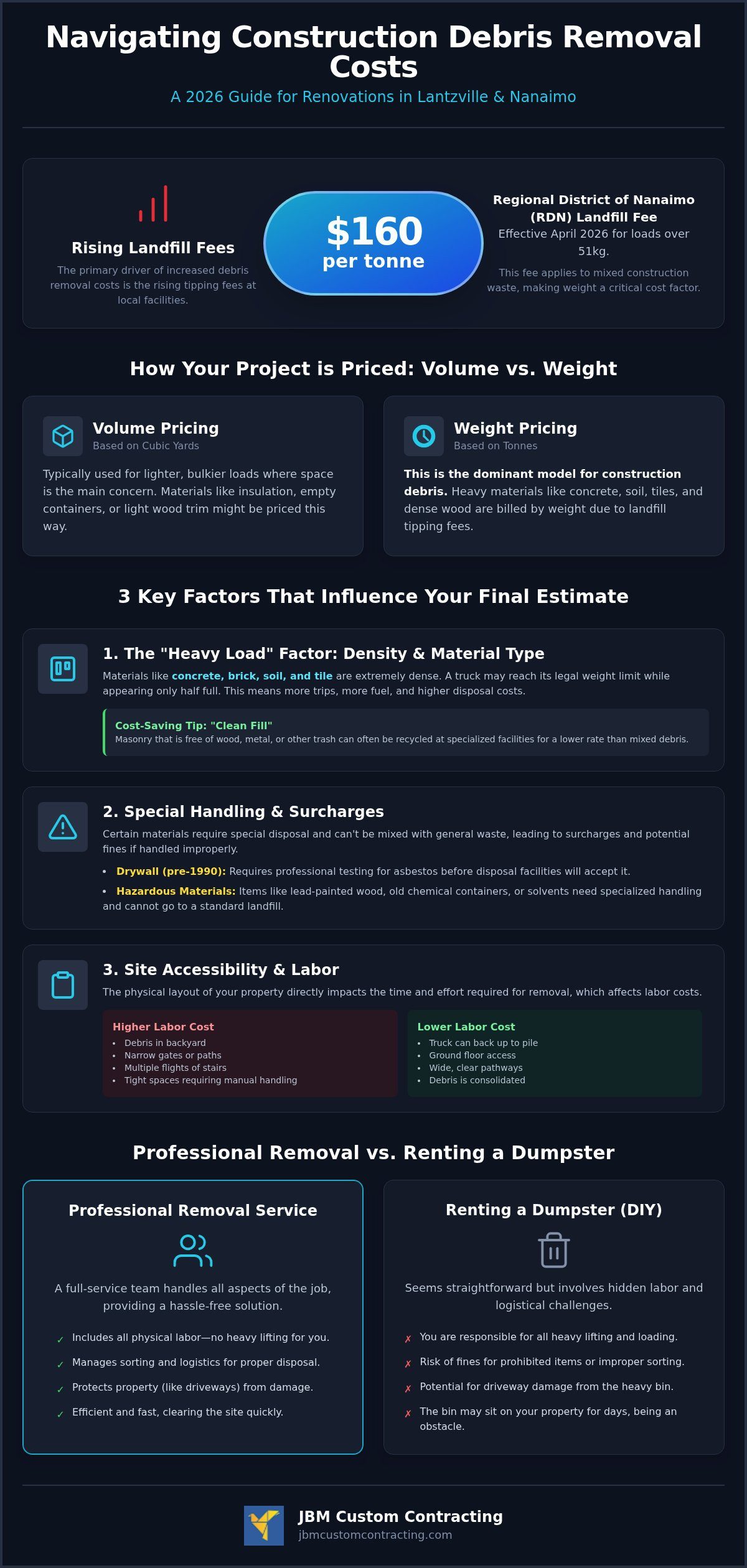
Most professional contractors use a "Volume vs. Weight" pricing model. While smaller loads might be quoted by the cubic yard, heavy materials like concrete or tile are usually billed by weight. This is because local landfills, such as the Regional District of Nanaimo (RDN) facility, charge by the tonne. As of April 1, 2026, the RDN tipping fee for municipal solid waste, which includes mixed construction waste, is $160 per tonne for loads over 51kg. When you factor in fuel surcharges and labor, the density of your Demolition waste becomes the primary driver of your final estimate. You can learn more about how we handle these materials on our junk removal service page.
Common Materials Found in Renovation Waste
The type of material you're tossing changes the price. Clean lumber is often cheaper to dispose of than treated wood or "dirty" loads mixed with insulation and plastic. Common items include:
- Structural wood and lumber: This includes framing, plywood, and trim.
- Masonry materials: Heavy items like concrete, brick, and ceramic tile.
- Interior waste: Old fixtures, cabinetry, and various types of flooring.
Why 2026 Costs Vary by Region
Your location on the Island plays a major role in your quote. Local municipal waste bylaws dictate how much of your load must be diverted from the landfill. For instance, some districts now require a 75% waste diversion target. If your site is in Lantzville but the nearest facility that accepts your specific material is further away, transportation costs will rise. Modern debris management also rewards sorting; separating clean wood from mixed waste can significantly lower your construction debris removal cost by avoiding the higher mixed-waste surcharges implemented in 2026.
Key Factors That Influence Your Final Estimate
Calculating your construction debris removal cost isn't as simple as measuring the height of a pile of wood. Several variables determine whether your quote stays on the lower end or climbs due to project complexity. While volume is the most obvious factor, the weight and accessibility of the site often carry more weight in the final calculation than the physical space the debris occupies.
The "Heavy Load" Factor: Concrete and Dirt
Density plays a massive role in hauling logistics. Materials like concrete, brick, and soil are significantly heavier than drywall or lumber. Most hauling trucks have strict legal weight limits for safety and road regulations. Even if a truck looks half-empty, it may be at its maximum capacity if it's loaded with masonry. This often means more trips to the disposal facility, which increases transportation time and fuel usage. Identifying "clean" fill, which is masonry free of wood, metal, or trash, is essential. Clean materials can often be recycled at specialized facilities for lower rates than mixed debris. If you're planning a project that involves breaking up old surfaces, our concrete services team can help manage both the removal and the new installation efficiently.
Drywall and Hazardous Material Surcharges
Vancouver Island has strict regulations regarding specific materials, particularly drywall. For any structure built before 1990, disposal facilities require professional testing to ensure no asbestos is present. You'll need to provide documentation before the material is even accepted at the gate. This requirement adds a necessary layer of planning to your project timeline. Beyond drywall, other hazardous materials like lead-painted wood or old chemical containers require specialized handling. These items cannot go into a standard bin. Failing to identify these early can lead to heavy fines or the refusal of your entire load at the landfill, which significantly disrupts your workflow.
Site Accessibility and Labor
The physical layout of your property affects how long the job takes. If a crew can back a truck right up to the debris, the work goes quickly. However, if the waste is located in a backyard with a narrow gate, or if it requires carrying heavy loads down several flights of stairs, the labor requirements increase. Tight spaces in older Nanaimo neighborhoods often require smaller equipment or more manual handling. These factors naturally influence the final estimate. Ensuring a clear path for the team is one of the best ways to keep your project moving forward and avoid unnecessary labor surcharges.
Professional Removal vs. Renting a Dumpster: A Cost Comparison
Deciding between a bin rental and a professional crew is a pivotal moment when planning your construction debris removal cost. While a dumpster might seem like a straightforward solution, it often ignores the physical toll and logistical hurdles that come with self-loading. A full-service team handles everything from the initial lift to the final sweep. In contrast, a rental bin leaves the heavy lifting entirely on your shoulders and can often sit on your property for days, creating a potential safety hazard and an eyesore for neighbors.
Beyond the labor, bin rentals often carry hidden complications that property owners overlook. If you don't have enough space on your driveway, you may need a municipal permit to place a bin on the street. There is also the risk of property damage; a heavy steel bin can crack asphalt or concrete if it isn't placed with extreme precision. Professional hauling teams arrive with specialized equipment, load the materials directly into their trucks, and depart within hours. This efficiency keeps your site clean and safe, preventing debris from obstructing your workflow for weeks at a time.
When to Choose Full-Service Removal
Professional removal is the superior choice for small to medium renovations where driveway space is limited. If your project involves heavy, awkward materials like old decking, masonry, or concrete, hand-loading a high-walled bin is physically demanding and risky. Homeowners who prioritize a "done-for-you" experience find that the speed of a professional crew allows the next phase of construction to begin immediately. It's about reliability and getting the job done without the hassle of managing a rental schedule or coordinating bin drop-offs and pick-ups.
The Real Cost of DIY Hauling
If you're considering hauling the waste yourself, the expenses go far beyond the landfill gate fees. You must account for truck rental costs, high fuel consumption, and the time spent waiting in long lines at the scales. There's also a significant risk of personal injury or damaging your own vehicle when loading sharp or heavy materials. When you calculate these factors, the perceived savings of DIY often disappear. For a detailed breakdown of how professional teams handle these challenges safely and efficiently, you can visit our JBM Junk Removal Services page. Letting experts manage the logistics ensures your site is cleared with operational excellence and total peace of mind.
How to Prepare Your Site to Minimize Removal Expenses
Your construction debris removal cost is heavily influenced by the efficiency of the loading process. A disorganized site where materials are scattered across a yard requires significantly more manual labor than a site where waste is consolidated. By taking a few proactive steps before the crew arrives, you can reduce the total labor hours billed and ensure the project stays within your budget. Organizing your debris into a single, accessible pile is the most effective way to speed up the hauling process and get your site ready for the next phase of construction.
Consolidating small, loose items into heavy-duty bags or boxes is another critical step. Loose debris like insulation scraps, tile fragments, or small wood offcuts are difficult to handle individually. When these items are bagged, a professional team can move them in bulk. This prevents the "loose debris" delays that occur when workers have to spend extra time raking or hand-picking small pieces from the ground. A tidy site allows the removal team to focus on the heavy lifting rather than cleaning up small messes, which keeps your project on schedule.
The Power of Pre-Sorting
Pre-sorting your materials provides a direct financial benefit. On Vancouver Island, regional districts apply heavy surcharges to mixed loads that contain recyclable materials. For example, in the Comox Strathcona region, loads with more than 10% recyclable materials are subject to a 150% surcharge. By separating clean wood from pressure-treated or painted lumber, you ensure that each material goes to the correct disposal stream. Recyclable metals like copper or aluminum should also be set aside. These materials can often be diverted at lower costs than general construction waste. This level of organization helps you avoid the high mixed-waste fees implemented at local landfills in 2026.
Optimizing Site Access
Ensuring clear access for the removal truck is vital for minimizing labor expenses. Every extra meter a crew has to carry heavy materials adds time to the job. If it's possible, move your debris to the driveway or a curbside location. This allows the team to back the truck directly up to the pile, which drastically reduces the "carry distance." Before the team arrives, clear any vehicles or equipment that might block the path. Communicating gate codes or parking restrictions in advance ensures there are no delays once the crew is on-site. A clear path isn't just about speed; it's about maintaining a safe work environment for everyone involved.
Schedule Your Debris Removal Assessment Today
Reliable Debris Removal Services on Vancouver Island
JBM Custom Contracting serves as your local partner for managing the logistical challenges of site cleanup. Based in Lantzville, our team brings a high level of dependability and operational excellence to every project in Nanaimo, Duncan, and the surrounding regions. Understanding the true construction debris removal cost requires more than just a truck; it requires a deep knowledge of local disposal regulations and a commitment to property safety. Because we already provide professional demolition services and renovations, we approach every debris pile with a contractor’s eye for precision and efficiency.
Our background in construction means we don't just haul waste; we manage your site. We understand how a cluttered workspace can delay your project and create safety hazards for other trades. We prioritize a thorough cleanup process that leaves your property ready for the next phase of development. Whether you're dealing with a small bathroom gut or a large-scale deck replacement, our hardworking team ensures the job is done correctly and without the hassle of hidden fees or property damage.
Serving Nanaimo, Duncan, and Surrounding Areas
We provide reliable service to a wide range of communities including Lantzville, Ladysmith, and Parksville. Our familiarity with regional waste district regulations is a significant advantage for our clients. For example, we stay current on the Regional District of Nanaimo (RDN) landfill fees, which are $160 per tonne for loads over 51kg as of April 2026. This local expertise allows us to provide more accurate estimates and helps you avoid the steep surcharges often applied to improperly sorted loads. If your project involves a teardown before the cleanup, you can view our Small Demolitions Pricing to see how we bundle these services for maximum value.
Requesting Your Professional Assessment
Getting a transparent, no-obligation quote is the first step toward a safe and professional job site. While some businesses offer generic estimates over the phone, we prioritize on-site assessments to ensure total accuracy. This allows us to evaluate site accessibility, material density, and any specific disposal requirements before the work begins. We believe in providing a reliable figure that reflects the reality of your project, ensuring there are no surprises once the hauling starts. Our process is designed to be straightforward and user-centric, moving you quickly from a cluttered site to a clean, usable space.
Contact JBM Custom Contracting to clear your site today.
Ready to Clear Your Site for the Next Phase?
Managing your construction debris removal cost effectively comes down to understanding the balance between material density and regional disposal regulations. By pre-sorting your waste and ensuring clear site access, you can significantly reduce labor time and avoid the steep surcharges often found at Vancouver Island landfills. Choosing a professional team means you don't have to risk property damage or personal injury with heavy lifting. It's about more than just hauling trash; it's about maintaining a safe and efficient workspace for your entire project.
As local Vancouver Island experts, JBM Custom Contracting provides a reliable and trustworthy service that national franchises simply can't match. We are certified and fully insured, giving you total peace of mind while we handle the heavy lifting. Whether you are in Nanaimo, Duncan, or Lantzville, our team is ready to help you transition from a demolition site to a finished home. We handle the logistical headaches so you can focus on the craftsmanship of your build.
Get a Professional Debris Removal Quote from JBM Custom Contracting
We look forward to helping you achieve a clean, safe site that's ready for whatever comes next. Your project deserves a professional finish from start to finish.
Frequently Asked Questions
How much does it cost to remove a cubic yard of construction debris in 2026?
Costs are calculated based on the physical volume and the weight of the load. Because the Regional District of Nanaimo landfill fees are $160 per tonne for loads over 51kg as of April 2026, the density of your debris is a major factor. A cubic yard of light insulation costs less to haul than heavy concrete. We recommend an on-site assessment to give you an accurate, transparent figure for your specific project.
Do construction debris removal companies handle hazardous materials like asbestos?
Standard debris removal services generally don't handle hazardous materials like asbestos or lead-based paint. On Vancouver Island, any structure built before 1990 must undergo professional asbestos testing before demolition or disposal. If hazardous materials are identified, you must hire a certified abatement specialist. We focus on the safe removal of non-hazardous building waste like lumber, masonry, and general renovation debris to keep your site clean and safe.
Can I save money by sorting my construction waste before the crew arrives?
You can significantly lower your construction debris removal cost by pre-sorting materials. Local landfills in areas like Duncan and Ladysmith apply heavy surcharges to mixed loads that contain recyclables. By separating clean wood, metal, and masonry from general garbage, you avoid these penalties. This organization also allows our crew to load the truck much faster, which reduces the total labor hours billed for your site cleanup.
What is the difference between junk removal and construction debris removal?
Junk removal typically involves clearing out household items like old furniture, appliances, or general clutter. Construction debris removal is a more specialized service that handles heavy, regulated materials from renovation or demolition sites. This includes structural lumber, concrete, and drywall. These materials require different handling techniques and are subject to specific regional waste diversion bylaws that don't always apply to standard household junk found in a garage or attic.
Are landfill tipping fees included in the initial quote?
Most professional quotes are structured to be transparent and easy to understand. While labor and transportation are usually fixed, landfill tipping fees are often billed based on the actual weight recorded at the facility scales. We provide a clear estimate of these costs based on our experience with similar materials in Nanaimo and Parksville. This ensures you only pay for the exact weight of the debris we haul away from your property.
How long does it typically take to clear a standard kitchen renovation mess?
A professional crew can typically clear a standard kitchen renovation mess in two to four hours. This timeline includes loading the truck and performing a final sweep of the area. Factors like site accessibility and whether the debris is already consolidated will affect the speed. Our experienced team in Lantzville uses efficient loading techniques to ensure your kitchen is ready for the next phase of construction as quickly as possible.
Do you offer debris removal for commercial construction sites in Nanaimo?
We provide reliable debris removal for commercial construction projects throughout Nanaimo, Ladysmith, and the Cowichan Valley. Our team is fully insured and experienced in handling the larger volumes of waste generated at commercial sites. Whether you need a one-time site clearing or ongoing maintenance during a renovation, we offer the operational excellence required to keep your commercial property safe and compliant with all local waste regulations.
What happens to the construction waste after it is picked up?
Once collected, your construction waste is transported to authorized regional transfer stations or recycling facilities. We prioritize waste diversion by taking wood, metal, and masonry to specialized processing centers. This helps meet Vancouver Island’s goal of diverting 75% of construction waste from landfills. By using professional disposal streams, we ensure that your materials are handled responsibly and in full compliance with local environmental bylaws and safety standards.