
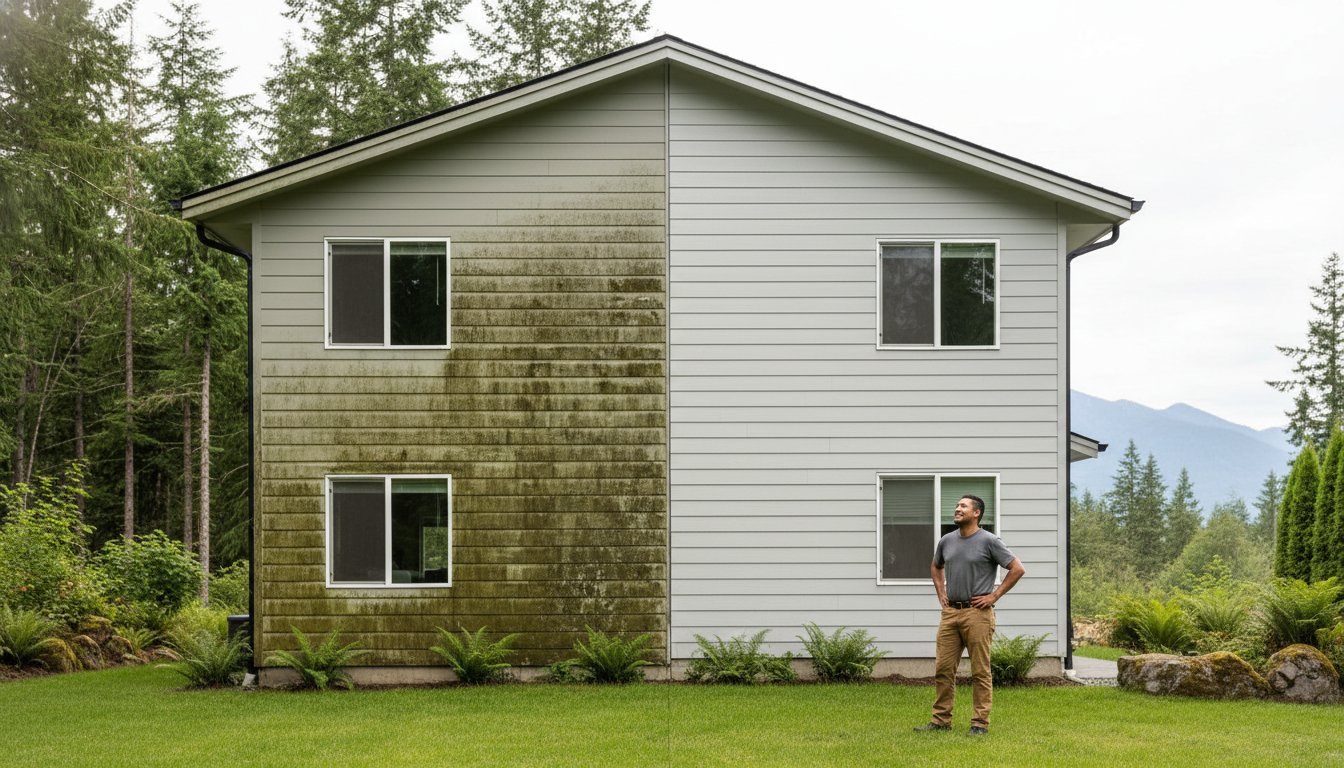

Blasting your home with high-pressure water might seem like the fastest path to a clean house, but it is often the most dangerous choice for your property. Many homeowners assume that sheer force is the best way to clean vinyl siding, yet professional experience shows that excessive pressure can actually crack panels or trap moisture behind your walls, leading to hidden mold. If you have noticed green moss or algae taking over your exterior due to our damp climate, you are not alone in feeling frustrated by the mess.
We understand the worry that comes with trying to restore your curb appeal without harming your landscaping or pets. You deserve a solution that works better than a quick rinse and lasts much longer. This guide will show you how to use the professional soft washing method to safely eliminate spores at the root without causing damage. We will also cover the latest water restriction updates for areas like Nanaimo and explain which cleaning solutions are truly safe for your garden, ensuring your home stays spotless and protected.
Why Vinyl Siding Gets Dirty (And Why Pressure Isn't the Answer)
Most people look at their home and see a solid, impenetrable wall, but that isn't how what is vinyl siding? actually works. It is designed as a "floating" system. This means the panels are hung loosely on the house to allow for expansion and contraction as the weather shifts. Because it isn't a watertight seal, the best way to clean vinyl siding involves more than just spraying water at the grime. You have to understand that the siding is meant to breathe through small gaps and vents.
When you use a high-pressure washer, you risk forcing water behind those panels. This trapped moisture often leads to wood rot or mold growth inside your walls where you can't see it. True professional cleaning focuses on using chemistry to break down dirt rather than using brute force to blast it away. This helps preserve the integrity of your home's exterior while achieving a much deeper clean than a standard garden hose can provide, a methodology championed by specialists like Poseidon Power Washing LLC for luxury and commercial properties.
To better understand this concept, watch this helpful video:
The Science of Siding Grime
Organic growth like algae and mildew doesn't just sit on the surface. It is a living organism that feeds on the dust, pollen, and organic sugars that settle on your home over time. On Vancouver Island, our high humidity and frequent rainfall create the perfect breeding ground for these organisms to thrive. You might also notice a white, powdery substance on your hands if you rub the siding. This is oxidation. It is a chemical reaction caused by constant UV exposure that breaks down the plastic's finish. Simply rinsing this won't fix the problem. You need a specific solution that can safely lift that chalky layer without stripping the color from the vinyl. If your siding's color has faded significantly over time, Long Island Windows and Siding offers a helpful guide on the most popular siding colors for 2025 to inspire your home's potential refresh.
The Mistake Homeowners Make Most
The most common error is pointing a pressure nozzle upward. Every vinyl panel has "weep holes" on the bottom edge designed to let condensation escape naturally. If you blast water into these holes, you're essentially flooding the space between your siding and your home's frame. This can cause long-term structural damage that is expensive to repair.
Another risk is using a narrow nozzle tip. These create a stream so powerful it can leave permanent "zebra stripes" or deep gouges in the plastic. These marks are often impossible to remove. Finally, many DIY attempts only clear the visible green mess. Without the right cleaning agents, the microscopic roots of the moss remain. This leads to rapid regrowth within just a few weeks. This is why the best way to clean vinyl siding is a low-pressure soft wash that kills the growth at the source.
For homeowners who would rather trust the experts to eliminate moss and algae safely, you can visit Snugs Services to explore their professional cleaning solutions available throughout the Portland and Vancouver metro areas.
Choosing the Right Cleaning Solution: DIY vs. Store-Bought
Selecting the right chemical solution is the most important step in avoiding high-pressure damage. While many people reach for whatever is under the sink, the chemical makeup of your cleaner determines how long your home stays clean. The best way to clean vinyl siding involves using a solution that kills organic growth rather than just moving dirt around. If you use the wrong mixture, you might leave behind microscopic spores that will bloom into a green mess again within a few months.
The Homemade Vinegar Solution
For light maintenance and general dust, a mixture of 70% water and 30% white vinegar is a reliable choice. This ratio is strong enough to cut through light dirt without posing a risk to your pets or garden. It's a great option for eco-conscious homeowners who perform regular wash-downs. If you find the solution is running off the vertical panels too quickly, add a small drop of biodegradable dish soap. This acts as a surfactant. It helps the liquid cling to the walls so the vinegar has time to work. Keep in mind that vinegar has limits. It often struggles to kill the deep-seated roots of black mold or stubborn lichen that has anchored into the siding texture over several seasons.
The Bleach Debate: Pros and Cons
When organic growth like algae is thick, a solution of one part household bleach to ten parts water is highly effective. This 1:10 ratio kills spores on contact and is widely considered the best way to clean vinyl siding when dealing with heavy infestations. You must follow strict safety rules with this approach. Never mix bleach with ammonia or certain soaps, as this creates toxic gas. To protect Nanaimo's local flora, always pre-wet your garden beds and grass with fresh water before you start. This prevents the plants from absorbing the cleaning solution. If you're concerned about using traditional bleach, oxygenated bleach is a safer alternative for nearby garden beds that still offers more cleaning power than vinegar.
Professional cleaners often use specialized surfactants that are far more effective than standard dish soap. These high-grade soaps allow the cleaning agents to dwell on the surface longer, ensuring the moss is actually dead before it is rinsed away. Protecting yourself is just as important as protecting your siding. Always wear safety goggles and gloves to prevent skin irritation from the runoff. If the process of mixing chemicals and climbing ladders feels like a hassle, you can always look into professional power and soft washing services to handle the job safely and efficiently. This ensures the right balance of chemicals is used to protect your landscaping while delivering a spotless result.
The Step-by-Step 'Soft Wash' Method for Beginners
Soft washing is the industry standard for a reason. It uses low-pressure water combined with specialized cleaners to kill moss and algae at the root. Unlike high-pressure blasting, this method protects your home's structural integrity and keeps water from getting behind your exterior walls. It is widely considered the best way to clean vinyl siding because it provides a deep clean without the risk of expensive water damage or cracked panels.
Before you start, walk around your home to prepare the site. Close every window and door tightly. Use plastic and tape to cover exterior electrical outlets and light fixtures to prevent shorts. Move your patio furniture and any delicate potted plants out of the splash zone. If you are looking to upgrade your outdoor living area, Tropicraft Patio offers high-quality furniture that can help showcase your home's fresh look. Taking these small steps now prevents accidents and ensures you can work quickly once the cleaning begins.
Tools You’ll Actually Need
You don't need to rent a heavy gas-powered machine for this job. A standard garden hose equipped with a high-flow nozzle is often sufficient for rinsing. For stubborn spots, a soft-bristle telescoping brush allows you to reach high peaks safely from the ground. The real secret weapon for a professional finish is a simple pump-up garden sprayer. These typically cost between $15 and $25 and allow you to apply your cleaning solution evenly across the panels without wasting product or creating a mess.
Execution: The Professional Workflow
Professionals follow a specific order to ensure a streak-free finish. Start by applying your cleaning solution from the bottom of the wall and working your way up. If you apply cleaner from the top down, the chemicals will run over dry siding and create permanent "run-off" streaks that are nearly impossible to remove. Work in manageable 10-foot sections so the cleaner stays wet while you work. This controlled approach is the best way to clean vinyl siding while maintaining a consistent look across the entire house.
Once the siding is coated, let it sit for 10 to 15 minutes. This "dwell time" gives the chemistry time to break down the organic bonds of the moss and algae. If you see a particularly dirty area, gently agitate the surface with your soft brush. Think of this as massaging the grime away rather than scrubbing it. Finally, perform a thorough top-down rinse. Starting at the roofline and working down ensures that all soap residue and loosened dirt are flushed completely off the house. Keep your hose pointed downward to avoid pushing water into window casings or the soffits under your roof.
Dealing with Vancouver Island's Toughest Stains: Moss and Lichen
Coastal living in Ladysmith and Parksville presents specific hurdles for keeping a house looking new. Our local environment is famous for "green walls" where moss and algae thrive in the damp air. This isn't just a cosmetic issue. Salt spray residue creates a film that dulls the original shine of your home over time. The best way to clean vinyl siding in these areas is to address both the biological growth and the mineral buildup from the ocean. If you leave these contaminants alone, they can become deeply embedded in the texture of the plastic panels.
Lichen is particularly dangerous for your exterior. Unlike moss, which sits on the surface, lichen has root-like structures that can etch into the vinyl if you don't treat it. This creates permanent pitting that ruins the finish. To keep your home protected, implement preventative measures before the winter rains begin. Clearing away organic debris and ensuring your siding can dry out is the first step toward a long-lasting clean.
Ensuring your home has a high-quality drainage system is another vital step in moisture management, and you can visit Copper Gutter Supply Company to discover premium gutter solutions that stand the test of time.
The North-Side Problem
If you live in Duncan or Nanaimo, you've likely noticed that the north side of your home stays dirty much longer than the rest. Because this side receives very little direct sunlight, it remains damp. This creates a perfect nursery for mold. One of the most effective ways to combat this is through strategic pruning. Trim back any shrubs or tree branches that sit within three feet of your walls. This simple move improves airflow and allows the siding to dry faster after a storm. We recommend performing a quick spot check of these shaded areas at least twice a year in our local rainforest climate.
Removing Lichen Safely
You should never try to scrape lichen off dry siding. Because it anchors itself so firmly, scraping it when dry can easily crack or gouge the vinyl. Instead, use a "saturated soak" technique. This involves keeping the affected area wet with your cleaning solution for a full 15 minutes to soften the lichen's grip. Once it has been properly hydrated, it should slide off with minimal agitation. In cases where the growth has been neglected for years, a standard garden hose might not provide enough volume to flush the debris. This is when a professional power washing approach becomes necessary to restore the surface without damage.
Managing these stubborn stains takes patience and the right equipment. If your home's exterior has become a haven for thick moss or lichen, it might be time for a professional assessment. Our team specializes in professional moss and gutter cleaning to ensure your home stays spotless and structurally sound throughout the year.
Professional Cleaning vs. DIY: When to Call JBM Custom Contracting
Deciding between a weekend of labor and hiring a professional often comes down to safety and results. While the steps outlined in previous sections provide a solid foundation for maintenance, the best way to clean vinyl siding on larger or multi-story homes is to hire an experienced team. Attempting to clean a second story from a ladder while managing a wet hose and slippery siding is a significant safety risk. Professional crews use specialized reach equipment and high-volume pumps that allow them to clean high peaks safely from the ground or stable platforms. To see how professionals handle other delicate exterior tasks like window frames, check out My Property Pros.
For busy homeowners in Qualicum Beach, the "time versus money" calculation is equally important. A thorough DIY soft wash can easily consume an entire Saturday and Sunday once you account for tool setup, chemical mixing, and cleanup. A professional team completes the task in a fraction of the time with much higher precision. Often, the best way to clean vinyl siding is part of a larger exterior maintenance plan that includes gutter cleaning services. Bundling these tasks ensures that debris from your roof doesn't wash down and ruin your freshly cleaned walls during the next rainstorm.
Signs You Need a Professional
- Heavy Oxidation: If touching your siding leaves a thick white powder on your hand, the vinyl requires a specialized restoration chemical that standard store-bought soaps cannot provide.
- High-Level Growth: When green algae or moss reaches the soffits or is tucked behind your gutters, it indicates a deep-seated moisture problem that requires professional-grade biocides to kill.
- Preparing for Sale: If you are listing your property, you need instant curb appeal. Professionals can remove years of coastal film and salt spray in a single visit, helping your home look its best for potential buyers. To see how professional oversight keeps real estate in peak condition, check out Van Treese Management.
The JBM Difference in Central Vancouver Island
We take pride in being a dependable and hardworking partner for homeowners across Central Vancouver Island. Our approach to power and soft washing is built on a foundation of safety and operational excellence. We don't just spray your house; we meticulously protect your landscaping and property throughout the entire process. Our team is fully insured, giving you total peace of mind while we handle the difficult jobs that require precision and care.
Choosing a professional service means you get access to commercial-grade surfactants that are more effective and longer-lasting than vinegar or basic bleach mixtures. These solutions are designed to be tough on moss but gentle on your home and the surrounding environment. If your siding has lost its luster or is covered in "green wall" growth, it is time to take action. You can request a professional assessment for your home's exterior needs to see how we can restore your curb appeal safely and efficiently.
Restore Your Home's Curb Appeal Today
Maintaining your home's exterior doesn't have to be a stressful or dangerous chore. You now know that a gentle, chemistry-led soft wash is the best way to clean vinyl siding while protecting your property from hidden water damage. By prioritizing safety and using the right solutions for our unique coastal climate, you can keep moss and lichen at bay for much longer than a simple pressure rinse ever could. This approach ensures your siding stays intact and your landscaping remains healthy.
Beyond the walls of your house, other household items also require meticulous care to stay in top condition. To learn more about Bancrofts Dry Cleaning and their expert approach to cleaning delicate patchwork quilts, explore their latest cleaning guides.
If you prefer to skip the ladders and chemical mixing, our team is ready to help. JBM Custom Contracting provides expert care for homeowners from Nanaimo to Duncan. As fully insured and certified eco-friendly soft wash specialists, we handle the tough jobs with precision and reliability. We ensure your landscaping stays safe while your home gets a professional-grade finish that lasts. You don't have to worry about the heights or the hassle when you have a dependable partner nearby.
Get a Free Professional Exterior Cleaning Estimate from JBM Custom Contracting and enjoy a spotless home without the hard work. Your property is a major investment, and it's time to let it shine again.
Frequently Asked Questions
Can I use a power washer on my vinyl siding?
You can use a power washer, but it is often risky for the average homeowner. High pressure can easily crack the plastic panels or blast water into the weep holes, leading to moisture buildup behind your walls. The best way to clean vinyl siding is a low-pressure soft wash. This method uses specialized cleaning solutions to do the work, protecting your home from the structural damage that high-pressure streams often cause.
What is the best homemade vinyl siding cleaner?
A mixture of 70% water and 30% white vinegar is an excellent choice for light maintenance and removing general dust. For homes with noticeable algae or mold, a solution of one part household bleach to ten parts water provides much more cleaning power. Adding a few drops of biodegradable dish soap helps these mixtures cling to vertical walls. This ensures the solution stays in contact with the grime long enough to be effective.
Will bleach damage my vinyl siding or kill my plants?
Bleach is safe for vinyl siding when it is properly diluted in a 1:10 ratio. It will not melt or discolor the plastic, but it can harm your garden if you don't take precautions. You must soak your plants and grass with fresh water before you start and rinse them again once you finish. This prevents the foliage from absorbing the cleaner. Many professionals use specialized surfactants to further protect your landscaping during the process.
Why does my siding look chalky after I clean it?
That powdery white film is called oxidation. It is a natural chemical breakdown of the vinyl caused by years of exposure to UV rays. While a standard wash removes the green moss and dirt, it often reveals this chalky layer that was hidden underneath. Removing oxidation requires a specific chemical treatment and a more intensive cleaning technique than a basic rinse to restore the siding's original appearance and color.
How often should I clean my home's siding in BC?
We recommend a thorough exterior cleaning at least once every year due to the high humidity on Vancouver Island. Our local climate is a perfect breeding ground for moss, algae, and lichen. Regular annual maintenance prevents these organisms from anchoring too deeply into the siding's texture. Keeping up with a yearly schedule also makes the best way to clean vinyl siding faster and more efficient as the growth doesn't have time to become stubborn.
Can I clean my siding in the winter?
Cleaning in the winter is possible, but you should wait for a day when temperatures are well above the freezing mark. Vinyl becomes much more brittle in cold weather, which makes it prone to cracking if it is hit with a strong stream of water or bumped by a brush. Additionally, most cleaning solutions are less effective in near-freezing temperatures. It is usually more reliable to schedule your exterior maintenance during the spring or fall.
What happens if water gets behind my vinyl siding?
Water trapped behind the panels can lead to serious issues like wood rot, mildew, and hidden mold growth inside your home's structure. Since vinyl is designed to breathe rather than be watertight, it is easy to accidentally force water behind it if you spray upward or use too much pressure. This is why professional techniques always emphasize spraying at a downward angle and using low-pressure equipment to keep the interior of your walls dry.
How do I remove bird droppings or spider webs without a full wash?
For small, localized messes, a simple spot clean with a garden hose and a soft cloth is usually sufficient. You don't need a full chemical application for minor debris like spider webs or bird droppings. Just be sure to use a soft-bristle brush or a microfiber cloth to avoid scratching the finish. A quick rinse with plain water is often enough to keep these small areas looking tidy between your scheduled professional cleanings.