

On Vancouver Island, a retaining wall is actually a drainage system first and a landscaping feature second. While it's tempting to focus only on the aesthetics of stacked stone or timber, ignoring water management is the primary reason these structures fail during our heavy winter rains. If you've struggled with a sloping yard that's hard to mow or watched your topsoil wash away after a storm, you know how important stability is for your property.
We understand that you want a yard that's both beautiful and functional. High-quality retaining wall construction does more than just hold back dirt; it creates level, usable space that increases your home's curb appeal and overall value. This guide will walk you through the process of building a wall that's structurally sound for decades. You'll learn which materials withstand our unique climate, how to handle drainage properly, and when local regulations in Nanaimo or Duncan require a permit for walls exceeding 1.2 meters. We'll give you the confidence to start your project knowing it's built to last.
Understanding Retaining Wall Construction and Why Your Property Needs One
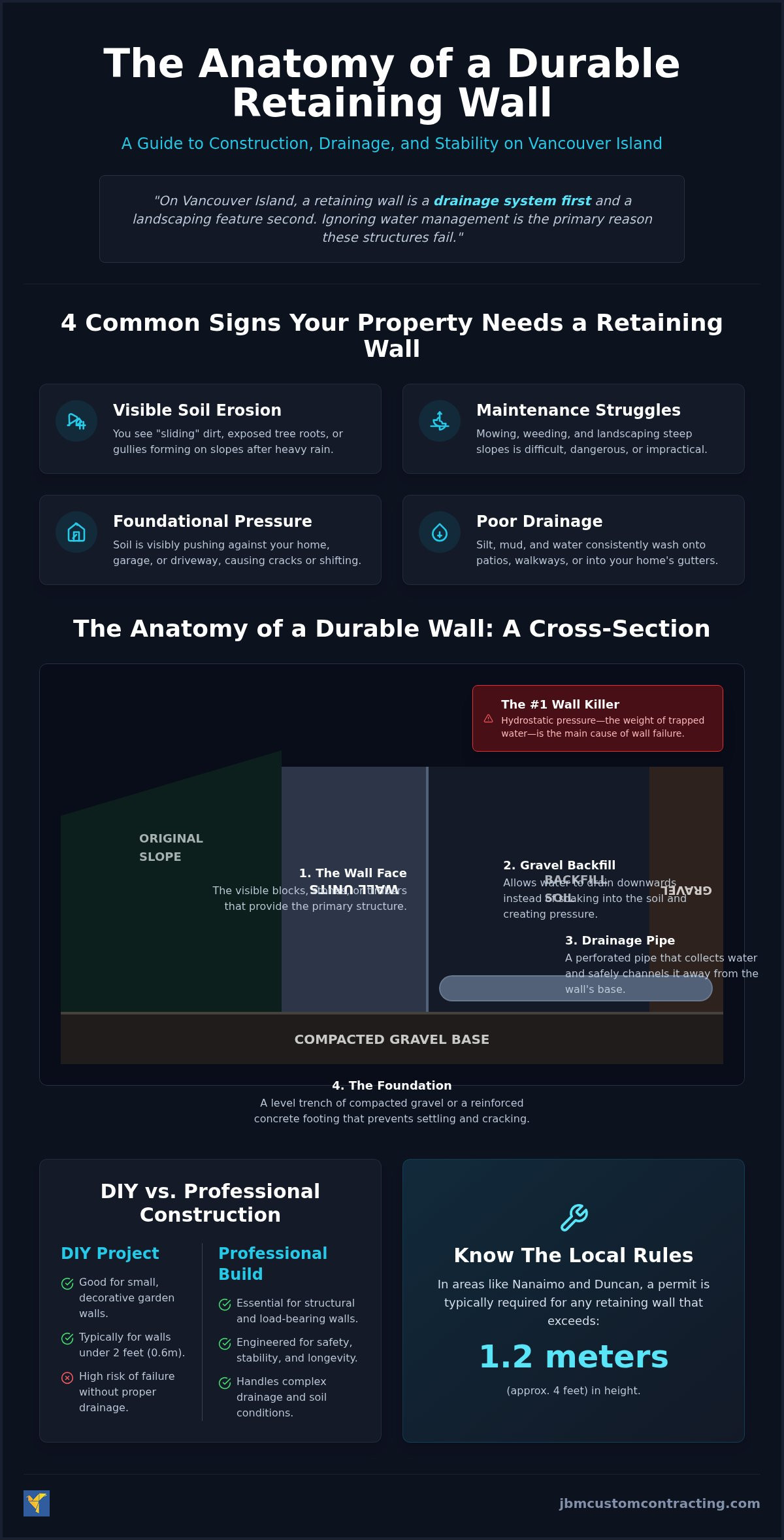
Retaining walls are rigid structures designed to withstand the lateral pressure of soil and manage significant changes in elevation. While they often look like simple decorative features, their primary job is to hold back earth and prevent it from sliding. This is a critical service for property owners across Vancouver Island. From the steep ridges of Nanaimo down to the rolling hills of the Cowichan Valley, our local terrain is rarely flat. Professional retaining wall construction provides the structural integrity needed to make these hilly landscapes safe and functional.
A well-built wall serves several essential purposes beyond just looking good. It prevents soil erosion, manages water runoff during our heavy rain seasons, and protects your home's foundation from the constant pressure of downhill earth. Investing in a dependable wall also adds significant value to your property. It boosts curb appeal and demonstrates to future buyers that the land is stable and well-maintained. We take a thorough approach to every project, ensuring the finished product is both beautiful and built to last for decades.
Common Signs You Need a Retaining Wall
You might not realize your property is at risk until the weather takes a turn. If you notice any of the following signs, it's time to consider a professional assessment:
- Visible soil erosion: You see "sliding" dirt or exposed roots after a heavy fall rainstorm.
- Maintenance struggles: You find it difficult or dangerous to mow and landscape steep slopes.
- Foundational pressure: Soil is pushing against your home, garage, or driveway, causing cracks or shifting.
- Drainage issues: Silt and mud wash onto your patio or into your gutters every time it pours.
Creating Usable Space in Your Yard
Many homeowners view a steep slope as "dead space" because it's impossible to use for a patio, playground, or garden. Terracing is a smart solution that transforms these awkward inclines into functional tiers. By breaking up one steep hill into several smaller, level sections, you can maximize every square inch of your property. This process makes a small yard feel much larger and more organized.
We offer a one-stop-shop experience for these transformations. Our team can handle the initial demolition of old structures, clear away debris with our junk removal service, and build a new, reinforced wall. Once the construction is complete, you can rely on our yard care services to keep your new garden beds and level lawn areas in top shape. We handle the heavy work so you can finally enjoy your entire yard.
The Anatomy of a Durable Retaining Wall: Beyond Stacking Blocks
A retaining wall is much more than a stack of heavy materials. It's a carefully engineered system where every layer serves a specific purpose. While the surface units like stone or block get all the attention, the real work happens underground. Professional retaining wall construction focuses on four main components: the base, the units, the backfill, and the drainage. If any one of these pieces is missing or poorly executed, the whole structure is at risk.
Choosing the right material is your first major decision. Concrete blocks are incredibly popular because they're uniform and easy to stack. Natural stone offers a timeless, rugged look that fits perfectly with the Vancouver Island landscape. Pressure-treated timber is a more affordable option, though it won't last as long as masonry. Each material has its own set of rules for installation to ensure it can handle the weight of the earth behind it. We always recommend choosing a material that matches your long-term goals for durability and maintenance. For those who want to enhance their new concrete surfaces with a professional finish, you can read more about epoxy coating options that provide both protection and style.
The Critical Role of Drainage and Backfill
When it rains on the Island, the soil behind your wall acts like a giant sponge. As it absorbs water, it becomes incredibly heavy and begins to push outward. Hydrostatic pressure is the weight of water trapped behind a wall, and it is the primary killer of retaining walls. To fight this, we use gravel backfill instead of dirt directly behind the wall. Gravel allows water to trickle down quickly rather than soaking into the soil and creating a heavy mess.
We also install "weep holes" or perforated pipes at the bottom of the structure. These outlets give the water a clear path to escape safely so it doesn't build up enough force to buckle the wall. Using modern retaining wall construction techniques, we ensure that water management is built into the core of the design. This attention to detail is what separates a professional wall from a DIY project that might lean after just one season.
Base Preparation: The Foundation of Success
You can't just set your first row of blocks on top of grass or loose dirt. Over time, the wall will settle unevenly and start to lean or crack. Every durable wall starts with a level trench filled with compacted gravel or crushed stone. This creates a solid, non-shifting platform that distributes the weight of the wall evenly across the ground.
For taller walls or those supporting heavy loads like driveways, a standard gravel base might not be enough. In these cases, we often utilize specialized concrete services to pour a reinforced footing. This provides a rock-solid foundation that won't budge regardless of the soil conditions. If you're unsure which foundation your property needs, we can provide a professional assessment to clear up the confusion and ensure your wall stands for decades.
DIY vs. Professional Retaining Wall Construction: Making the Right Choice
Many homeowners look at a weekend DIY project as a way to save money. For a small, decorative garden bed under two feet, this is often a great choice. You can pick up some blocks, spend a Saturday digging, and create a nice landscape feature yourself. However, structural retaining wall construction is a different beast entirely. It involves moving tons of material and calculating forces that can easily crush a poorly designed structure. Watching a professional crew at work reveals the sheer number of layers, compaction steps, and drainage checks required to do this right.
When to Call a Professional Contractor
When a wall reaches a certain height, it stops being a hobby and starts being a piece of infrastructure. On Vancouver Island, building permits are required for walls greater than 1.2 meters, or about four feet, in height. You should also call a pro if the wall is near your home's foundation or if the slope is particularly steep. We often see projects where an old, wooden wall has already started to rot or buckle. In these cases, we handle the small demolitions required to clear the site and haul away the debris before we even start the new build. It's much safer to have a certified team manage the heavy lifting and precise leveling.
The Risks of Improper Construction
The biggest risk of doing it yourself isn't just physical exhaustion; it's the high cost of failure. A wall that looks fine in July can start leaning or toppling within two or three years once the heavy Island rains arrive. If your wall fails and damages a neighbor's fence or property, you could be held liable for those repairs. This can turn a "cheap" DIY project into a legal and financial nightmare very quickly.
There are also hidden costs that most people forget to budget for. Renting a mini-excavator can cost over $1,000 for a single week, and you'll still need to pay for plate compactors and bins for dirt removal. When you add up these rental fees and the potential for a 10% to 15% over-purchase of materials due to inexperience, the price gap between DIY and professional work shrinks. Choosing a reliable contractor ensures the job is done correctly the first time, providing you with a structurally sound yard for decades.
Planning Your Project: Styles, Permits, and Site Preparation
Planning a successful project starts long before the first shovel hits the ground. On Vancouver Island, our diverse geography means you might be dealing with solid rock in one neighborhood and heavy clay in the next. A systematic approach to retaining wall construction ensures you don't run into legal or structural surprises halfway through the build. Taking the time to map out the footprint of the wall and identifying your goals for the space will save you significant stress and money later on.
Your first step is always safety. You must identify any underground utility lines by contacting local services before digging. Striking a water or gas line is dangerous and expensive. Once the area is marked, you need to clear the work zone completely. Professional retaining wall construction requires a clean slate to ensure the base is perfectly level. This often involves removing old, rotting fences, large rocks, or stubborn tree stumps that could interfere with the new foundation. We provide full site preparation to handle these messy tasks so the construction phase goes smoothly.
Local Permitting and Regulations on Vancouver Island
In municipalities like Nanaimo, Lantzville, and Parksville, specific bylaws govern how high you can build. The general rule is that any wall over 1.2 meters (roughly 4 feet) requires a building permit and a seal from a registered professional engineer. This threshold is strictly enforced to ensure public safety, especially for walls that support driveways or other heavy loads. Central Vancouver Island is also in a seismic zone, which means taller walls must be designed to withstand earthquake forces.
Working with a local team is a major advantage because we understand the "Nanaimo soil" challenges. Heavy clay expands when wet, putting immense pressure on structures. Before we start the new build, we often use our demolition services to remove failing structures and clear the site. This "one-stop-shop" benefit means we can demolish the old, build the new, and haul away all the junk without you needing to coordinate multiple contractors.
Selecting the Right Materials for Your Landscape
The material you choose should balance your budget with the look of your home. Concrete blocks provide maximum strength and require very little maintenance. They are ideal for modern homes or high-pressure areas where structural integrity is the top priority. Natural stone offers a timeless, rustic look that blends perfectly into the Island landscape. It is more labor-intensive to install but provides an incredibly durable and unique finish.
Timber is another option, often chosen because it's cost-effective initially. However, homeowners should be cautious. Pressure-treated wood is still prone to rot in our damp Pacific Northwest climate. Over time, moisture will find its way into the wood, leading to a shorter lifespan compared to concrete or stone. We can help you weigh these options during an initial walkthrough of your property to ensure you choose a material that fits your long-term maintenance goals.
Request a professional site assessment
Expert Retaining Wall Services with JBM Custom Contracting
At JBM Custom Contracting, we take a no-nonsense approach to every project we touch. We understand that retaining wall construction is a significant investment for your property. That is why we prioritize safety, precision, and reliability from the moment we arrive on-site. We aren't just stacking materials; we are building a structural defense for your landscape. Our team is certified and fully insured, giving you the peace of mind that your project is in professional hands. We focus on getting the job done correctly the first time so you don't have to worry about shifting soil or failing structures years down the road.
One of the biggest benefits of working with us is our "one-stop-shop" capability. Many contractors will build a wall but leave you to deal with the old debris or the mess left behind. We handle the entire lifecycle of the project. If you have an old, collapsing wooden wall, we can perform the demolition and clear the area before we start the new build. This streamlined process saves you the hassle of coordinating with multiple companies and ensures your project stays on schedule.
Our Process: From Assessment to Completion
Every successful wall starts with a thorough site evaluation. We don't believe in a one-size-fits-all solution. Our team examines your specific soil type and drainage patterns to determine the best reinforcement strategy. Once the plan is set, we move into the installation phase. We use industry-standard compaction techniques and high-quality materials to ensure the base and backfill are rock-solid. We pay close attention to the details that matter, like proper leveling and integrated drainage pipes.
We also take great pride in our "Clean Site" promise. Construction can be messy, but we don't think your yard should look like a disaster zone when we are finished. Once the wall is standing and secure, our dedicated junk removal team steps in. We haul away leftover dirt, old materials, and any other debris created during the process. We want you to be able to enjoy your new, level yard immediately without having to lift a finger for cleanup.
Serving Nanaimo and the Cowichan Valley
We are proud to be a local business serving our neighbors across Vancouver Island. Our service area stretches from Nanaimo and Lantzville down through Ladysmith, Cedar, and into the Cowichan Valley. Because we live and work here, we have deep expertise in the local terrain and climate. We know exactly how much rain to expect in a typical November and how that water will affect your property's stability. Our goal is to be the most trustworthy and hardworking contractor in the region.
Choosing the wrong contractor can lead to expensive mistakes and structural failure. We encourage you to avoid those risks by starting with a professional evaluation of your property. We will provide an honest, direct assessment of what your landscape needs to stay secure and beautiful for decades. If you're ready to transform your sloping yard into a functional and valuable space, we are ready to help.
Contact JBM Custom Contracting for a professional assessment
Secure Your Landscape for Years to Come
A well-built retaining wall is one of the best investments you can make for your property. It transforms unusable slopes into functional spaces and provides a critical defense against soil erosion. Successful retaining wall construction on Vancouver Island requires a deep understanding of local soil conditions and a heavy focus on drainage management. Cutting corners on the foundation or the backfill can lead to expensive failures when the heavy winter rains arrive. We've seen how proper planning and material selection make all the difference in structural longevity.
JBM Custom Contracting is here to ensure your project is handled with the highest level of professionalism. We are fully insured and certified, having spent years serving Central Vancouver Island from Nanaimo to Duncan. Our team provides a comprehensive service that includes site preparation, small demolitions, and a thorough cleanup once the job is done. You don't have to worry about the mess or the technical details; we manage the heavy lifting and precise engineering so you can enjoy a stable, beautiful yard for decades.
Request a Professional Retaining Wall Assessment from JBM Custom Contracting
Take the first step toward a safer and more valuable property by getting an expert opinion on your landscape needs today.
Common Questions About Retaining Walls on Vancouver Island
Do I need a permit for a retaining wall in Nanaimo?
A building permit is required in Nanaimo for any wall exceeding 1.2 meters, or about four feet, in height. This threshold is consistent across most Vancouver Island municipalities. If your wall is taller than this or supports a heavy load like a driveway, you'll also need a design reviewed by a registered professional engineer. We recommend checking with your local building department to verify specific setbacks and combined height regulations before starting your project.
How much does retaining wall construction cost per square foot?
Industry costs for retaining wall construction vary significantly based on the materials you choose and the complexity of your site. Timber is typically the most budget-friendly option, while concrete blocks and natural stone represent a mid-range investment. Poured concrete often requires a higher initial outlay due to the labor and forms required. Since site preparation and drainage needs change with every property, a professional assessment is the only way to get a realistic project estimate.
What is the best material for a retaining wall in the Pacific Northwest?
Concrete blocks and natural stone are the most durable materials for our wet Pacific Northwest climate. While timber is a cost-effective starting point, it's highly prone to rot over time due to our heavy rainfall. Masonry materials don't decay and can withstand the constant moisture found in Vancouver Island soil. Choosing stone or concrete ensures your landscape stays secure for decades without the need for frequent structural repairs or expensive replacements.
How long does a professionally built retaining wall last?
A professionally installed masonry or stone wall can easily last 50 years or more with minimal maintenance. In contrast, timber walls usually have a lifespan of 15 to 20 years before the wood begins to degrade. The longevity of your structure depends heavily on the quality of the initial retaining wall construction, specifically the drainage system. Proper water management prevents the pressure buildup that causes walls to shift, lean, or crack prematurely.
Can I build a retaining wall myself?
You can generally handle small garden walls under two feet as a DIY project. However, structural walls require specialized equipment like mini-excavators and plate compactors to ensure a stable foundation. Inexperience often leads to a 10% to 15% over-purchase of materials and potential safety risks. For anything taller than a decorative planter, hiring a certified contractor is the best way to ensure the structure is safe and meets all local building codes.
What happens if my retaining wall doesn't have proper drainage?
Without proper drainage, water builds up behind the wall and creates immense hydrostatic pressure. This trapped moisture makes the soil incredibly heavy, which is the leading cause of wall failure in our rainy climate. You might notice the wall beginning to lean, "blow out" at the bottom, or develop large cracks. We prevent this by using gravel backfill and perforated pipes to give water a clear path to escape the structure safely.
How do I know if my old retaining wall needs to be replaced?
Visible leaning, significant cracking, or crumbling masonry are clear indicators that your wall is failing. If you have an older timber wall, look for soft spots or fungal growth which suggest the wood is rotting from the inside out. You should also check for soil washing out from behind the wall after a storm. If the structure no longer looks level or secure, it's safer to replace it before it collapses and damages your property.
How close to my property line can I build a wall?
Setback requirements vary by municipality, but most local bylaws have specific rules about how close a wall can sit to the property line. In some areas, the combined height of a wall and a fence is also strictly regulated. It's essential to consult with your local building department in Nanaimo or Duncan to ensure your project doesn't encroach on easements. We can help you identify these requirements during our initial site evaluation to avoid legal issues.