
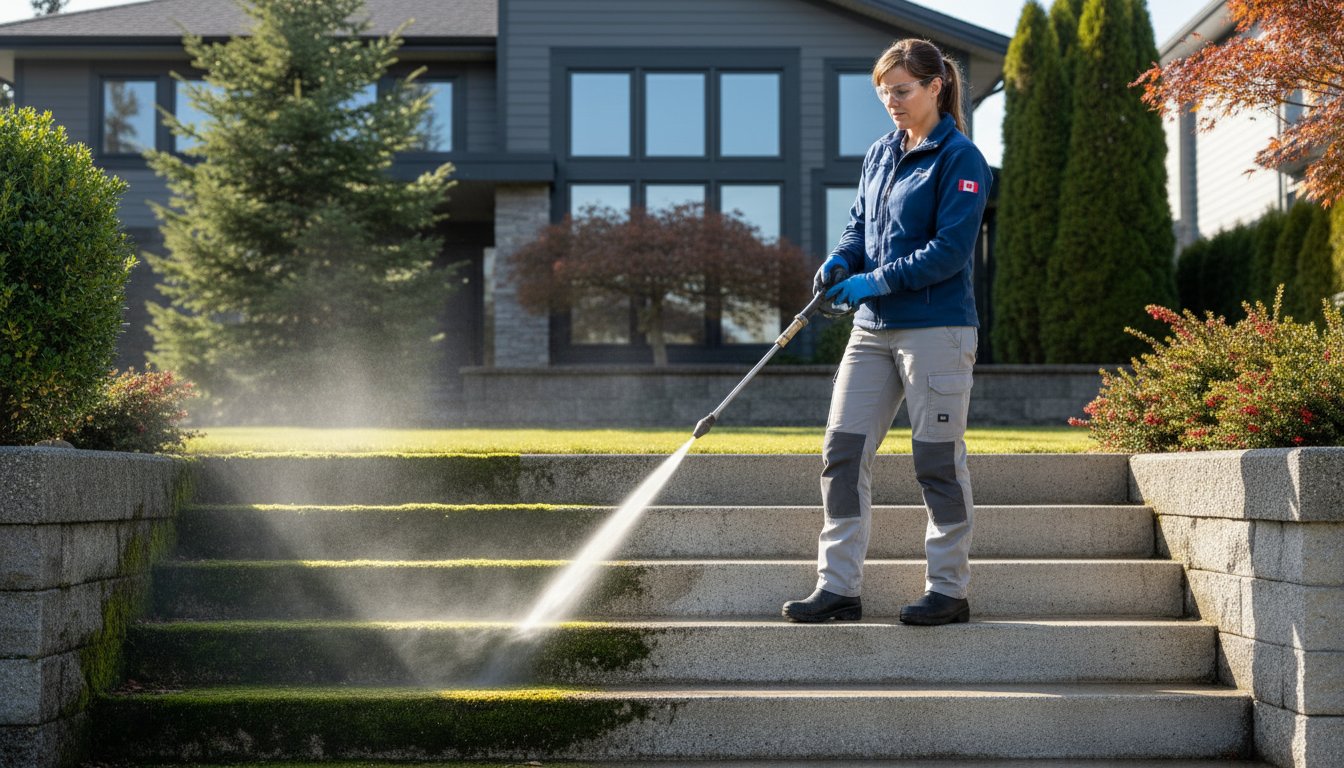

Last November, a homeowner in Ontario discovered that a thin layer of damp moss is all it takes to turn a standard entryway into a high-risk slip zone. Neglecting your exterior stairs doesn't just hurt your curb appeal; it creates a liability that could lead to costly medical bills or insurance claims. If you've noticed green growth or orange rust streaks, it's time to consider pressure washing concrete steps to restore both safety and beauty. You likely agree that keeping your family safe is your top priority, yet the fear of pitting your concrete with a high-PSI blast often leads to procrastination.
We promise to show you the exact professional techniques used to strip away grime and stubborn stains without causing a single surface pit. You'll learn how to choose the right nozzles and detergents to achieve a 95% improvement in brightness during your next weekend project. This guide covers everything from essential safety gear to long-term maintenance strategies that keep your steps looking clean and reliable for years to come.
Key Takeaways
- Learn why professional pressure washing concrete steps is essential for removing hazardous organic growth and restoring your home’s curb appeal.
- Master the "Top-Down" rule and professional preparation techniques to ensure a thorough, efficient clean without re-soiling finished areas.
- Understand the critical differences between high-pressure and soft washing to select the safest cleaning method for your specific concrete condition.
- Identify dangerous mistakes like the "ladder trap" and over-pressurization that can lead to personal injury or permanent surface erosion.
- Discover why hiring a certified and fully insured contractor is the most reliable way to achieve professional results for your property in Canada.
Why Pressure Washing Concrete Steps is a Maintenance Priority
Concrete steps are often the first point of contact for anyone visiting your home. They endure constant foot traffic while remaining exposed to Canada's harsh environmental elements. Over time, these surfaces accumulate layers of organic growth, oil stains, and sediment that a simple garden hose cannot budge. Professional pressure washing concrete steps is a maintenance necessity because it penetrates the porous surface of the concrete to lift deeply embedded contaminants. While a standard rinse might clear surface dust, pressure washing uses mechanical force to strip away years of oxidation and biological buildup. This process restores the material to its original state and ensures the structural integrity of your entryway remains intact for decades.
The Danger of "Slippery When Wet" Surfaces
Safety is the most urgent reason to prioritize this service. During the rainy seasons in provinces like British Columbia or the humid summers in Ontario, moss and algae thrive on shaded stairs. These organisms create a hazardous environment where even a light morning dew makes the surface incredibly slick. Biofilm is the primary biological coating consisting of bacteria and microorganisms that creates the root cause of slippery concrete stairs. For a Canadian homeowner, ignoring this buildup is a significant liability risk. A 2021 report on residential safety indicated that outdoor falls account for approximately 45% of all home-related injuries. Keeping your steps clean protects delivery drivers, guests, and family members from preventable accidents.
Preventing Long-Term Concrete Degradation
Routine cleaning is an investment in the longevity of your property. Moss and lichen aren't just cosmetic issues; their root systems physically expand into the micro-cracks of the concrete. As these roots grow, they exert pressure that widens the cracks, leading to structural crumbling over time. Beyond biological growth, Canadian winters require the heavy use of de-icing salts. These chemicals, such as calcium chloride, can be highly corrosive if left to sit on the surface. Professional pressure washing concrete steps effectively flushes out these salts and prevents the "spalling" or scaling that ruins concrete finishes. By removing these corrosive elements every spring, you avoid the C$3,000 to C$5,000 cost of a full concrete step replacement.
Maintaining clean steps also provides an immediate boost to your home's curb appeal. Real estate data from 2023 suggests that a clean, well-maintained exterior can increase a property's perceived value by as much as 8% to 11%. For a home valued at C$750,000, that translates to a potential gain of over C$60,000 in market appeal. A bright, clean entryway signals to neighbors and potential buyers that the home is cared for with precision and professional standards. This is a simple, cost-effective way to ensure your property remains a high-value asset while providing a safe, welcoming path to your front door. Our team focuses on delivering these results efficiently so you can enjoy a spotless property without the hassle.
The same principles of curb appeal and professional presentation apply to commercial properties, where a strong first impression is vital for attracting customers. A clean exterior combined with distinctive branding sets a business apart. For example, a specialist like Charlotte Sign Company can craft custom signage that enhances a building's facade and communicates a brand's identity, proving that a well-maintained exterior goes beyond just clean concrete.
This principle of a clean and welcoming environment extends to the interior as well. For instance, the high standards of commercial cleaning melbourne demonstrate how a professionally maintained space is essential for business success, regardless of location.
Once your hardscapes are clean, enhancing the surrounding garden is a natural next step for maximizing curb appeal. For those looking for professional landscaping and gardening ideas, you can discover Agents Green.
A well-maintained lawn is the foundation of great landscaping. For inspiration on professional lawn care that complements clean hardscapes, you can check out Ray Lawns, a family-owned company with decades of experience.
Proper tree maintenance is another key component of a safe and beautiful property exterior. For expert arborist services, companies like We Love Trees demonstrate the level of care needed to keep your landscape thriving.
Beyond the immediate grounds, the condition of the house itself is paramount for curb appeal. For those considering broader exterior updates like roofing or painting, it's helpful to see the standards set by experienced professionals; for instance, you can check out Brisbane Roof & Paint, a family-owned business with decades of experience.
When it comes to the core task of cleaning the concrete itself, seeing how specialists present their services can be very informative. For a good example, you can check out Warrens Power Washing; their guide to choosing a service provides a useful benchmark for homeowners anywhere.
Efficient water management is another vital aspect of property care that complements clean surfaces. For a practical guide on improving your home's drainage, Snugs Services explains the process of adding a downspout to your gutters.
While exterior drainage is key, internal plumbing health is equally critical for preventing water damage; for homeowners in the Pacific Northwest, finding an emergency plumber vancouver wa is a proactive step in protecting your property's foundation and interior.
Maintaining a high-quality environment often goes hand-in-hand with a dedication to personal wellness. For those who want their activewear to reflect the same premium standards as their home, you can discover JC London.
The Professional Step-by-Step Process for Cleaning Stairs
Cleaning stairs requires much more than just pointing a high-pressure wand at the concrete. It's a technical task that demands precision to avoid damaging the masonry or leaving unsightly streaks. A methodical approach ensures the job is done safely and efficiently. We follow a strict protocol that prioritizes property protection and high-quality results. Because stairs are high-traffic areas, they often accumulate salt from Canadian winters and organic growth that requires specific handling.
Step 1: Pre-Treatment and Protection
Preparation is the foundation of a professional finish. You must clear the area of all loose debris, including rocks, leaves, and twigs. A small pebble hit by a 3,000 PSI stream can travel at speeds exceeding 150 km/h, posing a risk to windows and bystanders. Once the area is clear, focus on the surrounding landscaping. Saturating nearby grass and shrubs with 5 to 10 litres of fresh water creates a protective barrier. This prevents plants from absorbing the cleaning solutions used during the wash.
- Wet the plants: Soak all vegetation for 2 to 3 minutes before applying any detergents.
- Clear the surface: Use a stiff-bristled broom to remove surface-level grit.
- Apply detergent: Use a concrete-safe, biodegradable cleaner to break down oil and carbon bonds. Let it dwell for 10 to 15 minutes, but don't let it dry on the surface.
Step 2: Mastering the Angle and Distance
Successful pressure washing concrete steps depends on your nozzle choice and physical technique. We recommend a 25-degree (green) or 40-degree (white) nozzle tip. Never use the 0-degree red tip on concrete; it's powerful enough to etch permanent lines into the surface or cause "spalling," where the top layer of concrete flakes off. Maintain a consistent distance of 15 to 30 cm from the surface. If you get too close, you risk "striping" the concrete with uneven clean lines.
Always follow the "Top-Down" rule. Start at the highest landing and work your way down to the bottom step. This ensures that dirty slurry flows over unwashed areas instead of ruining sections you've already cleaned. When handling the transition between the tread (the flat part you step on) and the riser (the vertical part), use a sweeping motion. Direct the spray into the corners where the two surfaces meet to flush out hidden dirt. If you're unsure about the right pressure for your specific masonry, our team provides professional property maintenance services to handle the heavy lifting for you.
Step 3: Final Rinse and Inspection
The final rinse is where many DIY projects fail. You must flush away the dirty water completely before it has a chance to dry. If the slurry dries, the dirt re-bonds to the concrete, making your hard work useless. Work from the top step down again, using a wide fan pattern to push the water toward a lawn or drainage point. In Canada, where de-icing salts are common, ensure you rinse the surrounding soil well to dilute any salt runoff.
- Check for shadows: Look for dark patches or "shadows" that indicate deep-seated organic growth.
- Verify uniformity: Ensure there are no visible wand marks or zig-zag patterns.
- Spot treat: Identify stubborn oil stains that may require a second, targeted application of a degreaser.
Once the rinse is complete, allow the stairs to dry for at least 24 hours. This is the only way to truly see the results of your pressure washing concrete steps. Wet concrete often hides missed spots. A clean, dry surface also allows you to inspect for cracks or structural issues that might need repair before the next winter season hits. Our reliable process ensures your steps look like new while maintaining the integrity of the material.
Choosing the Right Method: High-Pressure vs. Soft Washing
Selecting the correct cleaning technique is the difference between a pristine entrance and a costly repair bill when pressure washing concrete steps. Concrete is a porous material that changes as it ages, meaning a one-size-fits-all approach often leads to surface damage. Our team evaluates the structural integrity and age of the substrate before deciding between mechanical force and chemical treatment. A mistake here can lead to permanent etching or "wand marks" that are impossible to remove without resurfacing the entire staircase.
The decision rests on three specific factors: the age of the concrete, the type of contaminant, and the desired finish. Newer concrete can handle significant force, while older, weathered steps require a more delicate, chemistry-based solution. Understanding these nuances ensures your property remains safe and visually appealing for years to come.
When to Use High-Pressure
High-pressure washing typically operates at 2,500 PSI or higher. This method is a powerhouse for mechanical cleaning, making it the ideal choice for concrete poured within the last 10 years that remains structurally sound. It's the most efficient way to blast away 5 years of accumulated Canadian mud, stubborn clay, or old, peeling latex paint that has bonded to the surface. If you're dealing with deeply embedded inorganic stains, the sheer force of the water is often the only way to clear the pores effectively. For a deeper look at the technical differences between these cleaning styles, you can read our guide on Power Washing vs. Soft Washing.
The Benefits of Soft Washing for Older Steps
Older steps require a gentler touch to maintain their longevity. Soft washing uses pressures under 500 PSI, which is roughly the same force as a heavy rainstorm or a standard garden hose. This method relies on professional-grade chemistry rather than brute force. We typically use a 3% to 5% solution of sodium hypochlorite mixed with eco-friendly surfactants. This mixture kills organic growth like moss, algae, and lichen at the root, rather than just shearing off the tops.
- Prevents Spalling: Low pressure protects the "cream" or the smooth top layer of the concrete from flaking away.
- Safety for Specialty Finishes: It's the mandatory choice for stamped or coloured concrete stairs, which can cost upwards of C$25 per square foot to install.
- Long-Lasting Clean: Because the chemicals kill the spores, the regrowth cycle is delayed by 12 to 18 months compared to water-only methods.
The Professional Hybrid Approach
For the best results, we often utilize a hybrid method that combines the strengths of both systems. This ensures the pressure washing concrete steps process doesn't result in permanent surface scarring while still achieving a deep clean. We start by applying a soft wash solution to break down biological films and loosen oils. After a dwell time of 10 to 15 minutes, we use a medium-pressure rinse at approximately 1,200 PSI with a wide-angle nozzle. This dual-action process removes 99% of surface stains without risking the integrity of the aggregate. This professional strategy is particularly effective for high-traffic Canadian homes where salt and winter grime have been ground into the steps over several seasons.
Common Mistakes and Safety Hazards to Avoid
Safety is the most critical part of any home maintenance project. While pressure washing concrete steps looks like a simple weekend task, the equipment generates enough force to cause serious injury or property damage in seconds. Professional results require a cautious approach and an understanding of the physics involved with high-pressure water streams.
The "Ladder Trap" is perhaps the most dangerous mistake a homeowner can make. You should never operate a pressure washer while standing on a ladder. A standard gas-powered unit produces between 2,500 and 4,000 PSI of pressure. When you pull the trigger, the recoil or "kickback" can easily knock you off balance. Falls from heights remain a leading cause of residential construction injuries in Canada; stay on solid ground or the steps themselves while working.
Proper gear is just as important as your technique. Wet concrete is incredibly slick, especially when mixed with dislodged algae or moss. You need waterproof boots with high-traction, slip-resistant soles. Don't settle for running shoes that soak through and lose their grip. Additionally, chemical safety is a major concern. Many people mistakenly mix bleach with ammonia-based cleaners, which creates toxic gas. Always wear CSA-approved safety glasses to protect your eyes from flying debris and detergent splashback.
Avoiding Structural Damage
Pressure washing concrete steps requires a delicate balance of power. If you notice grey "sand" or fine sediment washing away with the water, your pressure is too high. This sediment is actually the "cream" or finished surface of your concrete. Once concrete is etched by high pressure, the damage is permanent. You must also be careful around expansion joints. A direct blast can blow out the flexible caulking or backer rod, leading to water infiltration and future crack issues during the Canadian freeze-thaw cycle.
Managing Runoff and Drainage
You have to control where the dirty water goes. In many Canadian municipalities, local bylaws prohibit wash-water containing detergents from entering storm drains, as these often lead directly to local waterways. Direct your runoff toward a lawn or garden bed that can act as a natural filter. If your steps lead toward a basement walkout or garage, use sandbags or a wet-vac to prevent pooling. Failing to manage drainage can result in a flooded basement and a repair bill exceeding C$10,000 for water damage restoration.
Avoiding these common pitfalls ensures your property stays in top condition without unnecessary repair costs. If the job feels too complex or you're worried about damaging your masonry, it's often safer to hire a professional team with the right equipment and insurance. We prioritize safety and precision on every project to give you peace of mind.
Professional Results with JBM Custom Contracting
While a DIY approach might seem tempting, hiring a "Certified & Fully Insured" contractor is the most responsible choice for your home. JBM Custom Contracting provides professional and reliable property maintenance that protects your investment. We understand the specific challenges Canadian homeowners face, from freeze-thaw cycles to heavy road salt accumulation. Our team arrives with specialized knowledge to ensure your property remains safe and undamaged throughout the process.
The difference between a weekend rental and professional-grade equipment is substantial. Most consumer-level electric washers produce about 1,500 to 2,000 PSI with a low flow rate of 5 litres per minute. In contrast, JBM uses commercial-grade units that deliver 4,000 PSI at 15 to 20 litres per minute. This high water volume is what actually lifts deep-seated grime and organic growth. When we perform pressure washing concrete steps, we don't just move dirt around; we extract it from the pores of the masonry. This professional power saves you hours of frustration and delivers a level of cleanliness that small machines simply can't match—a standard applied by specialists in many fields, from residential exteriors to mobile truck washing as seen at washify.com.au.
This commitment to professional standards extends to all areas of property maintenance, especially for commercial buildings where cleanliness is paramount. For business owners seeking comprehensive management of their cleaning needs, you can discover Nationwide Janitorial Connect, which specializes in coordinating janitorial services across the US.
Many cleaning professionals and dedicated DIYers turn to specialized suppliers like J Racenstein for the kind of high-performance gear needed to achieve these results.
Safety and precision are our top priorities. Being fully insured means you have total peace of mind while we work on your property. We follow strict safety protocols to protect your landscaping, siding, and entryways. Our "Concrete Solutions" go beyond a simple spray-down. We treat your steps as a critical part of your home's curb appeal and structural integrity, ensuring every corner and riser is meticulously cleaned.
Beyond Cleaning: Repair and Maintenance
Pressure washing often reveals hidden issues that were previously obscured by moss or dirt. During the cleaning process, our technicians often identify hairline cracks or scaling caused by harsh Canadian winters. It's vital to address these issues before water penetrates deeper and causes structural failure. You can refer to our Pro Concrete Repair Guide for detailed steps on fixing stairs once they're clean. Our safe and efficient approach ensures that we identify these vulnerabilities early, helping you avoid costly replacements in the future.
Get a Free Consultation Today
JBM Custom Contracting delivers dramatic results that instantly refresh the look of your exterior. Whether it's your front steps, a winding driveway, or a backyard patio, our professional cleaning removes years of wear in a single afternoon. We've helped hundreds of homeowners restore their concrete to its original glory, often increasing the perceived value of the home by thousands of dollars. We make the process simple and transparent from start to finish.
Ready to see the difference for yourself? You can book a free estimate to discuss your specific needs and receive a detailed quote in CAD. We provide clear timelines and dependable service you can trust. Don't let slippery moss or ugly salt stains ruin your home's appearance. Schedule your professional pressure washing service today! and let our hardworking team handle the heavy lifting for you.
Restore Your Property’s Safety and Curb Appeal Today
Dirty stairs are more than an eyesore; they're a significant liability. Accumulated algae and moss increase slip risks by 50% during wet Canadian seasons. Pressure washing concrete steps correctly requires the right balance of high-pressure and soft washing techniques to prevent surface erosion. By following a professional process, you ensure your entryway remains durable for decades. Avoid the 3 most common DIY mistakes by letting a specialist handle the heavy lifting with precision and care.
JBM Custom Contracting is your partner for high-quality exterior care. We're a Certified & Fully Insured business that prioritizes safety and precision on every job. Our team delivers professional and reliable property maintenance services you can trust, backed by safe and efficient before-and-after results that speak for themselves. We provide detailed quotes within 24 hours so you can start your project without delay. It's time to give your home the clean, welcoming entrance it deserves.
We look forward to helping you transform your home's exterior.
Frequently Asked Questions
Can I pressure wash concrete steps myself?
You can pressure wash concrete steps yourself if you have the right equipment and safety gear. While many homeowners in Canada rent units, those looking to invest in professional-grade tools can explore suppliers like J Racenstein. It's a task that requires steady footing and a focused approach to avoid etching the surface. If you're unsure about the pressure levels, hiring a professional ensures the job's done safely and efficiently without risking property damage.
Will pressure washing damage the mortar between my concrete steps?
High pressure can definitely dislodge or crumble mortar, especially in older Canadian homes built before 1990. Use a wide fan tip and keep the nozzle at least 30 centimetres away from joints. If you notice 2 millimetres or more of mortar loss, stop immediately. Professional cleaners use specialized techniques to protect these sensitive areas while still achieving a deep, thorough clean that won't compromise your home's structural integrity.
How long does it take for concrete steps to dry after washing?
Concrete steps typically take 24 to 48 hours to dry completely depending on Canadian humidity levels and sun exposure. If you plan to apply a sealer, wait the full 48 hours to ensure no moisture is trapped inside the pores. Walking on them is usually safe after 4 to 6 hours. Check the surface temperature; concrete should be below 30 degrees Celsius before you consider the drying process finished.
What is the best PSI for cleaning concrete stairs?
The ideal setting for pressure washing concrete steps is between 2,500 and 3,000 PSI. This range provides enough power to remove stubborn Canadian grime and salt deposits without pitting the surface. Use a 25 degree green nozzle tip for general cleaning. If the concrete is less than 2 years old, drop the pressure to 1,500 PSI to prevent surface cream damage and maintain a smooth finish.
How do I remove rust stains from concrete steps?
You can remove rust stains by applying a cleaner containing oxalic acid, which reacts with the iron oxide to dissolve the stain. Let the solution sit for 10 to 15 minutes before rinsing it away. For heavy rust from old iron railings, you might need a second application. This method is much more effective than high pressure alone, which often fails to lift deep orange discolouration from the concrete's pores.
Is it necessary to seal concrete steps after pressure washing?
Sealing your steps after pressure washing concrete steps is essential to protect them from Canada's harsh freeze-thaw cycles. A high quality silane-siloxane sealer prevents water from penetrating the surface, which reduces the risk of cracking by 85 percent. Apply the sealer once the concrete is bone dry. This simple step extends the life of your masonry and keeps it looking clean for much longer than unsealed surfaces.
How often should I have my concrete steps professionally cleaned?
Most Canadian homeowners should schedule a professional cleaning every 12 to 24 months to maintain safety and appearance. If your property has heavy tree cover or northern exposure, you'll likely see moss growth within 8 months. Regular maintenance prevents the buildup of organic matter that makes stairs slippery and dangerous. A professional service ensures a reliable result, and looking at the work of established companies, such as Lifestyle Home Service, Poseidon Power Washing LLC, or L&M Services LLP, can provide a good benchmark for the quality you should expect, regardless of your location.