

What if the secret to a spotless patio isn't actually more water pressure, but smarter technique? Most homeowners believe that "blasting" away grime is the only solution, but that's often how permanent surface damage begins. If you've ever tried pressure washing concrete patio areas yourself, you might have finished the job only to find ugly zebra stripes or deep pits in the stone. It's discouraging to deal with the thick moss and algae common in our damp BC climate, only to replace it with permanent scars that ruin your home's curb appeal.
If you are considering a complete redesign of your yard rather than just a seasonal clean, MRLM Construction specializes in Hardscaping and Outdoor Living Construction, providing professional installation for patios and walkways that are built to last.
We know you want a bright, inviting outdoor space that looks brand new without risking the integrity of your property or the health of your landscaping. This guide provides the professional steps needed to safely restore your concrete's original look without leaving streaks. You'll learn why a balance of chemical pre-treatment and uniform action is more effective than raw power. We also provide essential tips for cleaning responsibly during the current Stage 3 and 4 water restrictions affecting Vancouver Island this June. By the end, you'll have a clear plan for a damage-free clean that resists regrowth for months to come.
Key Takeaways
- Understand why concrete’s porous surface requires specialized cleaning to remove deep-seated mold and algae that a garden hose can't reach.
- Discover why high GPM (water volume) is the true secret to achieving a professional-grade clean without risking surface damage.
- Master the step-by-step process for a successful pressure washing concrete patio project, including the importance of detergent pre-treatment.
- Learn how to identify and avoid "etching," the permanent scarring caused by using the wrong nozzle or excessive pressure.
- See how professional-grade equipment and hot water systems provide a deeper, longer-lasting clean than standard residential rentals.
Why Your Concrete Patio Needs More Than Just a Garden Hose
A garden hose might rinse away loose dust or fresh grass clippings, but it lacks the mechanical force required to deep-clean masonry. A Pressure washer uses a high-pressure water spray specifically designed to strip away stubborn contaminants like mold, grime, and old paint. This level of force is essential for a pressure washing concrete patio project because standard household water pressure simply cannot penetrate the material's surface to reach the dirt hiding underneath.
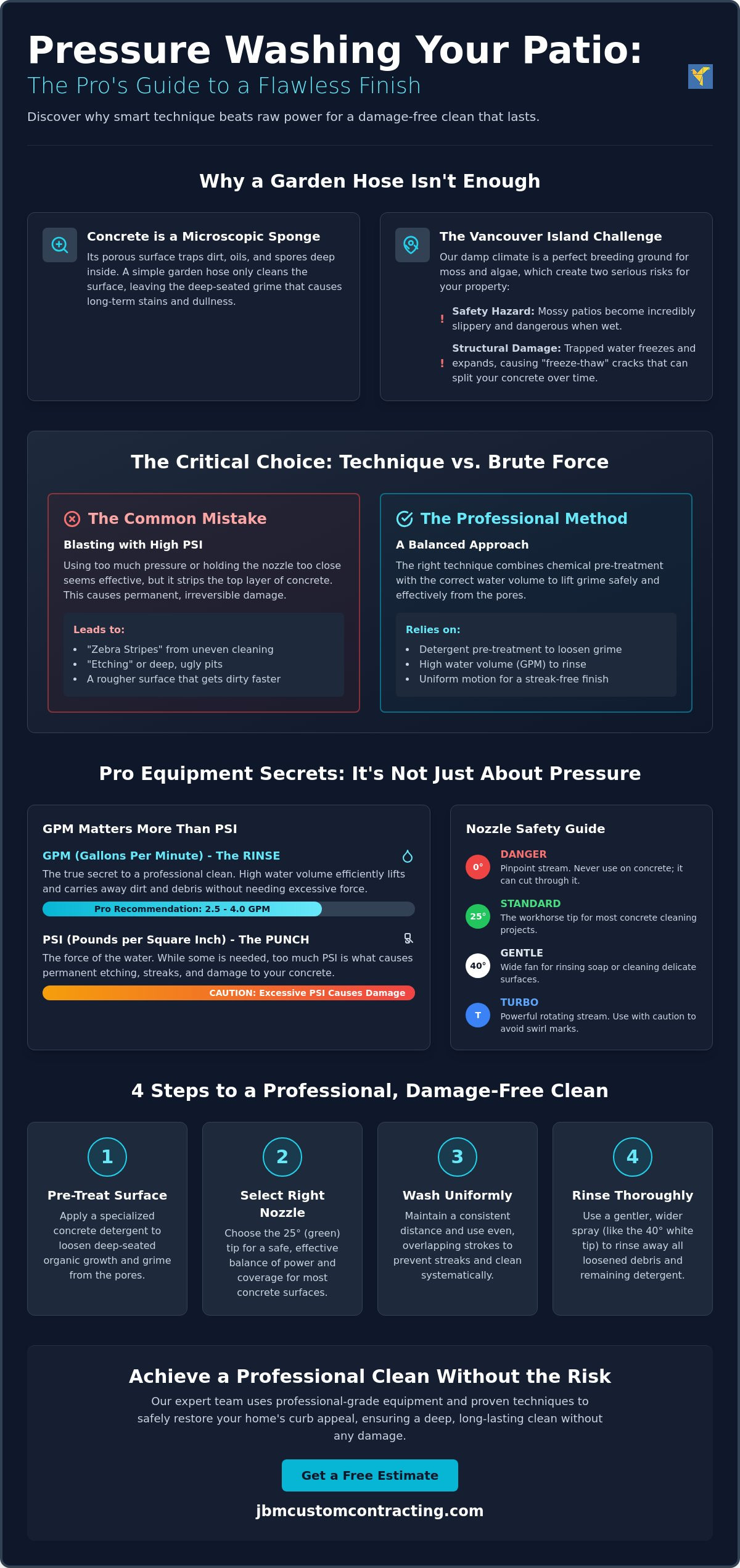
Concrete looks solid to the naked eye, but it's actually a highly porous material full of microscopic holes. These pores trap dirt, oils, and organic spores that a garden hose just glides over. Over time, these contaminants settle deep inside the slab, making them impossible to remove with a standard spray. If you don't address this buildup, your patio will remain dull and stained even after a long afternoon of scrubbing.
To see how this professional process looks in action, watch this helpful walkthrough:
The Problem with Porosity
Concrete essentially acts like a giant sponge for oils, tannins from fallen leaves, and microscopic spores. When these materials get trapped in the pores, they don't just ruin the look of your yard. They can actually weaken the concrete over time. Deep-seated stains and organic growth can lead to structural degradation over several decades as the internal pressure from roots and moisture expands. For delicate or older surfaces, we often recommend "soft washing," which uses specialized detergents and lower pressure. However, a standard pressure washing concrete patio approach is the most effective way to restore durable, high-traffic areas that have years of ground-in dirt.
Moss and Algae: The Vancouver Island Challenge
Residents across Vancouver Island deal with a unique set of environmental hurdles due to our damp, temperate climate. This weather provides the perfect breeding ground for green algae and thick, cushiony moss. These organisms do more than just make your patio look neglected. They create a significant safety hazard by making walkways incredibly slippery when wet. Beyond the slip risk, moss traps moisture directly against the concrete surface. When the winter temperature drops, this trapped water expands, causing "freeze-thaw" cracking that can eventually split your patio apart. Utilizing professional moss removal services ensures these organisms are neutralized at the root, preventing long-term structural damage and keeping your outdoor space safe for your family.
Choosing the Right Equipment: PSI, GPM, and Nozzles
Selecting the correct machinery is the most critical step in your project. Many homeowners focus solely on PSI (Pounds per Square Inch), which measures the "punch" or force of the water. While you need enough force to break the bond between dirt and stone, excessive PSI is exactly what causes permanent damage. GPM (Gallons Per Minute), on the other hand, measures the volume of water flowing through the machine. This is the "rinsing power" that actually carries the debris away. For a successful pressure washing concrete patio project, you want a machine that balances these two factors perfectly.
Your choice of nozzle also determines the safety of the job. Most machines come with a color-coded set of tips that vary by spray angle:
- 0-Degree (Red): This creates a pinpoint stream of water with incredible force. You should never use this on residential concrete, as it can cut through the surface like a saw.
- 25-Degree (Green): This is the standard tip for most concrete cleaning. It provides a wide enough fan to be efficient while maintaining enough pressure to lift grime.
- 40-Degree (White): A gentle, wide spray best suited for rinsing away soap or cleaning more delicate surfaces like wood or siding.
You may also encounter a "Turbo Nozzle." This attachment uses a zero-degree stream that rotates in a high-speed circle. It offers the cleaning power of a red tip with the coverage of a wider fan. While effective for deep stains, it must be used with extreme caution to avoid leaving circular "swirl" marks in the concrete.
Why GPM Matters More Than PSI
High GPM is the real secret to professional results. If your machine has a low GPM, you'll find yourself moving the wand very slowly or holding it too close to the surface to see results. Getting too close often leads to "etching," where the water strips away the cream coat of the concrete and exposes the rough aggregate underneath. We recommend using a machine with a minimum of 2.5 to 4.0 GPM. This volume allows you to work faster and keep the nozzle at a safe distance, ensuring a uniform finish without the risk of surface scarring.
Surface Cleaners vs. Traditional Wands
If you want a truly streak-free finish, a circular surface cleaner is a must-have attachment. Often described as looking like a small lawnmower or a hovercraft, these tools house two spinning jets inside a protective dome. Using a surface cleaner is roughly 10 times faster than using a standard wand. More importantly, it maintains a fixed distance from the ground, which eliminates the "zebra stripes" caused by the inconsistent height of a handheld wand. While wands are excellent for cleaning corners, vertical steps, or tight edges, the surface cleaner is the superior choice for the main body of the patio. If managing this heavy equipment seems like a daunting task, our professional pressure washing services can handle the heavy lifting for you.
Step-by-Step Guide to a Streak-Free Concrete Clean
Achieving a professional finish requires more than just pointing and spraying. If you rush the process, you'll likely end up with "zebra stripes," which are those uneven light and dark lines caused by inconsistent cleaning. To get the best results when pressure washing concrete patio surfaces, you must follow a systematic approach that starts long before you pull the trigger on your machine.
Begin by clearing the area completely. Move all furniture, potted plants, and decor to a safe distance. Sweep away loose debris, leaves, and dirt so your equipment can focus on the grime embedded in the pores. If you have delicate garden beds nearby, soak the plants and soil with fresh water from a garden hose first. This prevents the plants from absorbing any cleaning runoff, acting as a natural shield for your landscaping.
Chemical Pre-treatment: The Pro Secret
The secret to a deep clean isn't just pressure; it's chemistry. Professional contractors use surfactants to break the bond between the concrete and years of accumulated oils or organic growth. For homeowners in the Pacific Northwest, look for eco-friendly, biodegradable cleaners that won't harm your lawn or local Nanaimo waterways. Once you apply the detergent, you must allow for "dwell time." This means letting the solution sit on the concrete for 10 to 15 minutes without letting it dry. This window allows the chemicals to liquefy the dirt, making the high-pressure rinse significantly more effective.
The Art of the Overlap
When you start the actual pressure washing concrete patio pass, your technique determines the final look. If you're using a standard wand, use a wide, sweeping motion similar to a pendulum. Each stroke should overlap the previous one by 25 to 50 percent. This ensures that no thin strips of dirt are left behind, which is the primary cause of unsightly streaking. Maintaining a consistent distance means keeping the nozzle at the exact same height from the concrete throughout every single stroke to prevent uneven surface wear. If you find the wand difficult to control, a surface cleaner attachment is a much more forgiving tool for beginners.
Rinsing and Post-treatment
Once the main cleaning is done, rinse the entire surface thoroughly. Always work from the highest point of the patio toward the lowest to ensure dirty water doesn't pool in cleaned areas. If stubborn shadows or "ghosting" remain from old moss patches, you can apply a concrete brightener to even out the tone. Finally, patience is your best friend. Because concrete is porous, it can hold moisture for a long time. Wait at least 24 to 48 hours for the slab to dry completely before replacing your furniture. If you want to protect your hard work, this is the perfect time to consider professional concrete sealing to keep your patio looking new for years.
Common Mistakes: Avoiding "Etching" and Permanent Damage
Pressure washing concrete patio areas seems straightforward until you see the damage a split-second mistake can cause. Most homeowners assume that more pressure always equals a better clean, but that's a dangerous misconception. The most frequent issue we see is "etching," which is the permanent scarring of the concrete surface. This happens when the water pressure is high enough to physically carve lines into the stone. Unlike a surface stain, you can't scrub etching away. It's a permanent structural change to your patio's finish that ruins its aesthetic value.
The primary tool for this damage is the 0-degree red nozzle. This tip focuses the water into a tiny, laser-like stream. While it's great for cleaning heavy industrial equipment, it's far too aggressive for residential walkways. You also need to be extremely careful around expansion joints and edges. If you blast the edges of a slab too hard, you can chip the concrete or wash away the stabilizing sand in the joints. This leads to wobbly slabs and creates gaps where weeds will quickly take root.
The "zebra stripe" problem is another common headache for DIYers. These unsightly lines happen when the wand is held at varying heights or when the user doesn't overlap their passes correctly. Once these stripes appear, they're incredibly difficult to fix with consumer-grade equipment. Trying to "blend" them usually just results in more etching and a wider mess that requires professional restoration to correct.
The "Cream Layer" and Why You Must Protect It
When concrete is poured, a smooth, fine finish called the "cream layer" rises to the top. This layer gives your patio its clean, uniform look. If you use excessive pressure, you strip this layer away and expose the coarse aggregate, the rocks and sand, underneath. This leaves your patio with a rough, sandpaper-like texture that traps dirt even faster than before. To avoid this, always test your pressure on a small, hidden corner of the slab before you begin the main job. If the surface feels rough to the touch after a pass, you're either too close or the pressure is too high.
Safety Hazards of DIY Pressure Washing
Beyond property damage, there are real physical risks to consider. A high-pressure stream can cause "injection injuries," where water and debris are forced deep under the skin and into the soft tissue. These are serious medical emergencies that often require surgery. Never wear flip-flops or sandals while working; sturdy, waterproof boots are a requirement. You should also wear eye protection to guard against flying stone chips. Because of these risks, professional pressure washing services carry comprehensive insurance and use specialized safety protocols. If you want to avoid the risk of permanent damage or personal injury, reaching out for a professional assessment is the most reliable way to restore your patio safely.
Professional Patio Restoration on Vancouver Island
While the DIY approach can be tempting, achieving a flawless finish often requires more than a weekend rental can provide. Hiring a local Nanaimo expert like JBM Custom Contracting ensures your property is handled with the care it deserves. We understand that a pressure washing concrete patio project isn't just about removing dirt; it's about preserving your home's value. Our team uses commercial-grade equipment that delivers high GPM and hot water capabilities, which most residential rentals simply don't offer. This combination allows us to lift deep-seated oils and stubborn organic growth without relying on the excessive, damaging pressure that causes etching.
Taking a "complete exterior" approach is often the most efficient way to maintain your home. Many clients choose to bundle their patio cleaning with professional house washing to ensure the entire property looks cohesive and bright. You get peace of mind knowing our fully insured team understands the specific challenges of the Vancouver Island climate. Our professional service provides several key advantages:
- Commercial Equipment: Access to high-volume water flow that rinses away debris faster and more safely.
- Hot Water Capability: The ability to cut through grease and oil stains that cold-water machines can't touch.
- Local Knowledge: Expertise in treating Vancouver Island's specific moss and algae species.
- Insurance and Safety: A certified team that handles the risks of high-pressure work so you don't have to.
The JBM Difference: More Than Just Water
We take pride in being a dependable partner for homeowners in Lantzville, Parksville, and the surrounding areas. Our expertise goes beyond cleaning; if we discover cracks or structural issues during the process, we can integrate professional concrete services to handle repairs on the spot. We believe in transparency, which is why we provide clear pressure wash pricing so you know exactly what to expect before we begin. This thorough, no-nonsense approach is why local residents trust us to handle their most difficult property maintenance tasks correctly and without hassle.
Ready to Reclaim Your Outdoor Space?
A professional pressure washing concrete patio service does more than just clean a surface. It transforms your backyard into a functional, beautiful space ready for the summer hosting season. Removing slippery algae and unsightly stains immediately boosts your curb appeal and creates a safer environment for your family. Don't wait until the moss takes over again or the drought restrictions tighten further. Contact JBM Custom Contracting for a professional patio assessment today and let us restore your outdoor living area to its original glory.
Restore Your Patio's Original Beauty Safely
Cleaning your outdoor space shouldn't be a gamble with your property's value. Successful results come from prioritizing water volume over raw pressure and understanding how to protect the delicate top finish of your masonry. By choosing the correct nozzles and using systematic overlapping passes, you can avoid the common pitfalls of DIY work. Taking on a pressure washing concrete patio project requires patience, but the reward is a bright, inviting space that looks brand new.
If you prefer to leave the technical details to a professional team, JBM Custom Contracting is ready to assist. Our certified and fully insured property maintenance experts serve Nanaimo, Parksville, and the Cowichan Valley with pride. We utilize commercial-grade surface cleaning technology to ensure a deep, uniform finish that protects your investment from accidental etching or streaking. When you want guaranteed results and total peace of mind, Request a Professional Pressure Washing Quote from JBM Custom Contracting. We look forward to helping you reclaim your outdoor living area just in time for the summer season.
Frequently Asked Questions
Can pressure washing damage my concrete patio?
Yes, excessive pressure can cause permanent "etching" or strip away the smooth top finish of the stone. This damage usually happens when an operator uses a narrow 0-degree nozzle or holds the wand too close to the surface for too long. Professional-grade equipment avoids this by using high water volume to lift dirt safely without relying on destructive levels of raw pressure.
How often should I pressure wash my patio on Vancouver Island?
Most local properties benefit from a thorough clean once every one to two years to maintain curb appeal. Because of the high humidity and heavy seasonal rainfall in the Pacific Northwest, moss and algae accumulate much faster here than in drier climates. Regular maintenance prevents this organic growth from trapping moisture, which helps avoid winter freeze-thaw cracking in the slab.
Will pressure washing kill the moss between my patio pavers?
High-pressure water effectively removes the visible green cushions, but it doesn't always kill the microscopic spores hiding in the cracks. Without a specialized detergent pre-treatment to neutralize the roots, the moss will likely return within a few months. For a long-lasting result, we recommend combining mechanical cleaning with an eco-friendly soft wash treatment that prevents rapid regrowth.
Is it better to use hot or cold water for concrete cleaning?
Hot water is significantly more effective for lifting deep-seated oils and stubborn grease stains. While cold water works for general dust and surface dirt, professional hot-water systems liquefy grime much faster. This efficiency reduces the total water volume needed for the job, which is a vital consideration during the current Vancouver Island water restrictions and drought conditions.
How long does it take for a concrete patio to dry after pressure washing?
A concrete slab usually takes between 24 and 48 hours to dry completely depending on sun exposure and local humidity levels. You should wait until the surface is bone-dry before replacing heavy patio furniture or applying any protective sealants. Trapping moisture under a fresh layer of sealer can lead to a cloudy, unattractive finish that is difficult to fix.
Can I use bleach to clean my concrete patio?
You can use a diluted sodium hypochlorite solution, but it must be handled with extreme care to protect your property. Bleach is effective at killing mold spores, but it can easily kill nearby grass and flowers if the area isn't pre-soaked. We prefer using biodegradable, eco-friendly surfactants that provide a deep clean for your pressure washing concrete patio project without risking your landscaping.
What is the best time of year to pressure wash my patio in Nanaimo?
Late spring is typically the ideal time to clean your outdoor spaces, but you must follow local municipal regulations. As of June 2026, Nanaimo is under Stage 3 water restrictions, which currently prohibit the washing of driveways and patios. It's essential to check for the latest updates from the City of Nanaimo before starting any cleaning project during the summer months.
How do I remove oil stains from my concrete patio?
Removing oil requires a combination of a professional-grade degreasing agent and a hot-water rinse. Start by applying a concrete-safe degreaser to the spot and allowing it to dwell for at least 15 minutes without drying. For the most effective results, a professional pressure washing concrete patio service uses specialized equipment to pull the oil out of the porous stone rather than just spreading it around.