

Did you know that the City of Nanaimo is currently reviewing its noise bylaws to potentially limit construction sounds on Sundays and holidays? For many Vancouver Island property owners, the simple act of tearing down an old shed or deck can quickly turn into a source of stress. You're likely worried about managing demolition dust and noise so you don't end up with a hefty fine or an angry neighbor at your front door. It's a common concern, especially when you want to ensure the safety of your family and pets from airborne particles while staying compliant with strict BC safety standards.
We understand that you want a clean job site and a smooth process without any legal or social friction. That's why we've put together this guide to help you handle your project with confidence and precision. You'll learn professional strategies for containing debris and minimizing disruptions, ensuring your property remains tidy and your community relationships stay intact. We'll walk through the latest 2026 municipal regulations, essential safety requirements for older buildings, and the best ways to keep your project on the right side of the law.
Why Controlling Demolition Dust and Noise is Critical
Property owners on Vancouver Island often view demolition as a simple "tear down and haul away" task. However, the debris and sound waves generated during these projects don't stay confined to your property lines. Properly managing demolition dust and noise is essential because it protects your biggest assets: your home, your health, and your reputation in the community. Ignoring these factors can lead to unexpected costs that far outweigh the price of professional mitigation.
Beyond health, there's the risk of physical damage. Fine grit from masonry work acts like sandpaper. If it settles on siding or window glass and isn't cleaned properly, it can leave permanent scratches. In areas like Nanaimo and Ladysmith where coastal winds are common, this dust can travel surprisingly far. It can coat a neighbor's freshly washed car or find its way into your own HVAC system, leading to expensive cleaning bills or equipment failure. Taking a proactive approach ensures you avoid these unnecessary headaches.
To better understand the practical side of dust control, watch this helpful video showing how professionals handle these challenges:
Health Risks of Airborne Particulates
Demolition dust is a complex mixture of materials. When you break apart old structures, you release fine particles of drywall, wood, and even concrete silica into the air. These particulates are often so small that they bypass the body's natural filters and enter the lungs. For family members with asthma or for your pets, this can cause immediate respiratory distress. We recommend using dust abatement techniques such as misting and physical barriers to keep these clouds from spreading. High-quality N95 or P100 masks are a must for anyone on-site to ensure that indoor air remains breathable throughout the process.
Legal and Community Impact
Bylaws across Vancouver Island are becoming more strict. In Nanaimo, local officials recently reviewed noise regulations in June 2026 to address public concerns about construction disturbances. Towns like Duncan and Parksville also have specific rules about when you can operate heavy machinery. If you work outside permitted hours or create a nuisance, you risk facing significant fines or a mandatory work stoppage. Maintaining a "Good Neighbor" policy is your best tool for a stress-free project. Talk to your neighbors before the hammers start swinging. Let them know your timeline and what steps you're taking to keep the site quiet and clean. This simple communication prevents disputes and keeps your project on track.
Effective Strategies for Suppressing Demolition Dust
Managing demolition dust and noise starts long before the first wall comes down. Proper site preparation involves identifying wind patterns and potential dust traps on your property. On Vancouver Island, coastal breezes can carry fine particles across several lots in minutes. By planning your debris piles and equipment placement strategically, you can use existing structures or natural windbreaks to your advantage. This proactive approach ensures that your project remains a minor footnote in the neighborhood rather than a major disruption.
Wet Demolition and Misting Techniques
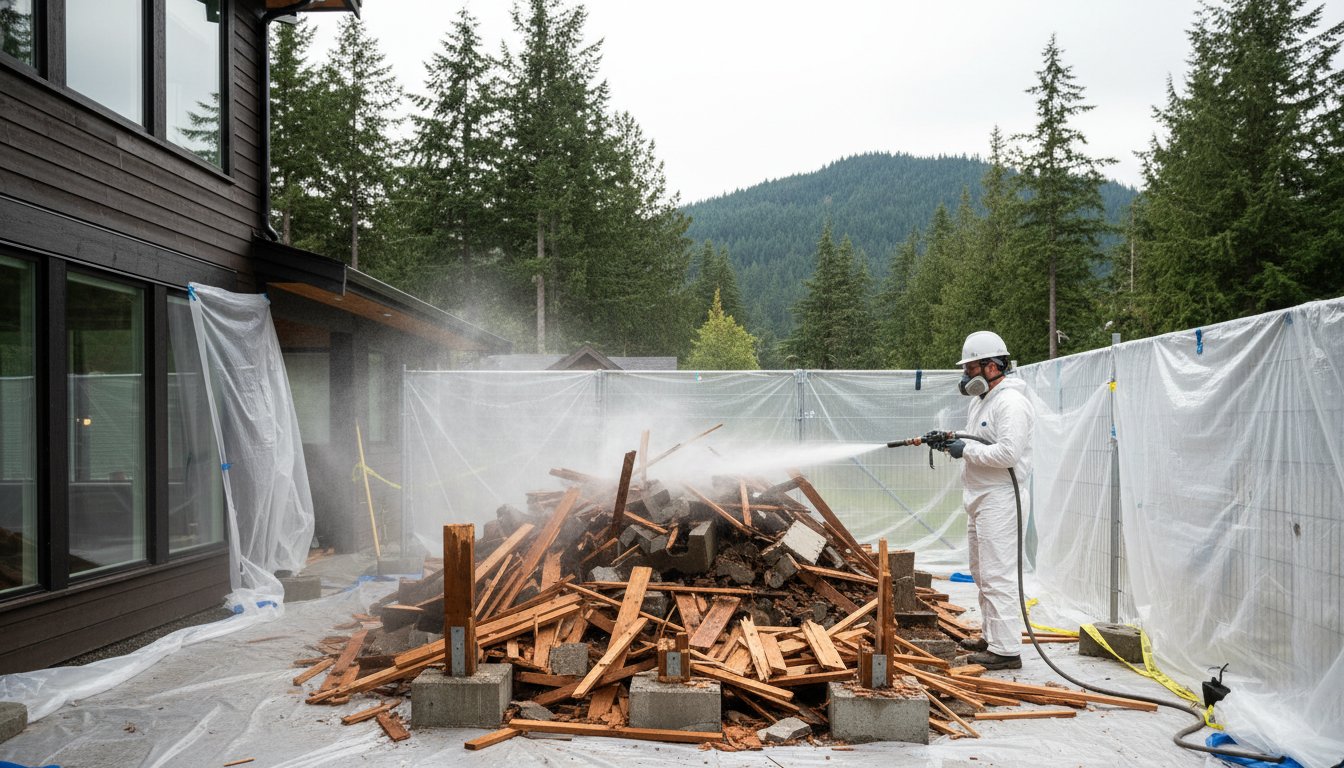
Wetting down materials is the most effective way to catch dust at the source. While many homeowners think a standard garden hose is enough, it often creates muddy puddles without actually suppressing the fine airborne silica from concrete or masonry. Professional misting systems create a fine fog that attaches to dust particles, making them heavy enough to fall to the ground immediately. This technique is especially critical during concrete work where fine particulates are most prevalent.
One critical detail often missed is managing water runoff. Excessive water can damage your lawn or wash sediment into local storm drains, which can lead to environmental fines. We use controlled, low-pressure misting to saturate the material without flooding the site. If you're planning a project, hiring professional demolition services ensures that both dust and water are handled responsibly. This balance keeps the air clean while protecting your landscaping and the local ecosystem.
Containment Barriers and Screening
Physical barriers act as your second line of defense. For interior projects, we use heavy-duty poly-sheeting to seal off doorways and HVAC vents. This prevents dust from migrating into your clean living spaces. For outdoor work, temporary fencing equipped with high-density wind-screens or debris netting is essential. These screens don't just block the view; they significantly reduce the speed of the wind passing through the site. This keeps dust from drifting toward your neighbor's property or your own freshly cleaned siding.
The job isn't finished when the structure is gone. Effective dust management must include a thorough post-demolition cleanup. This involves power washing hard surfaces and removing any fine grit that may have settled on nearby structures. Removing the dust from the site immediately prevents it from being kicked back into the air days later. This final step is what keeps your property truly clean and maintains the positive relationships you've built with your neighbors in the community.
Practical Ways to Minimize Construction and Demolition Noise
Managing demolition dust and noise effectively means looking at every phase of the project through the lens of your neighbors' comfort. While dust is a physical mess, noise is an invisible one that can penetrate walls and disrupt a quiet afternoon. Choosing the right methods can significantly lower the impact on the surrounding area. Whether you are removing a concrete patio or tearing down a small outbuilding, the goal is to be as surgical and quiet as possible. This approach doesn't just keep the peace; it also helps you stay compliant with local regulations that are becoming increasingly strict.
Temporary sound barriers are a highly effective tool for residential sites. Acoustic blankets or specialized sound-dampening mats can be hung on temporary fencing to absorb sound waves before they reach the street. These barriers are particularly useful when you're working in tight spaces where your project is only a few meters from a neighbor's window. Taking these extra steps shows a level of professionalism and care that residents in Nanaimo and Duncan truly appreciate.
Tool Selection and Technique
The tools you choose have a direct impact on the decibel levels produced. For concrete removal, "crushing" is often a much quieter alternative to "hammering." Using specialized attachments that squeeze and break material produces a low-frequency sound that is less jarring than the repetitive strike of a jackhammer. Manual disassembly is another great option for smaller structures. While it may take slightly longer, taking a building apart piece by piece with hand tools is nearly silent compared to heavy machinery. Regular equipment maintenance is also vital. A well-lubricated machine with tight fittings won't rattle or screech, which prevents unnecessary mechanical noise from bothering the neighborhood.
Scheduling and Communication
Timing is everything when you want to keep neighbors happy. In Nanaimo, current bylaws allow construction from 7 a.m. to 9 p.m. on weekdays. However, the City of Nanaimo began reviewing these rules in June 2026 to potentially limit noise on Sundays and holidays. To be safe, we recommend scheduling your loudest tasks between 9 a.m. and 4 p.m. This avoids the early morning and late evening hours when people are most sensitive to noise.
Provide your neighbors with a clear timeline of the work. If they know that the loudest part of the project will only last for two days, they're much more likely to be patient. You can also set up "quiet zones" on your site by placing noisy generators or compressors behind solid structures to block the direct path of the sound. These small adjustments make a massive difference in how your project is perceived by the community.
Planning Your Project: Regulations and Neighbor Relations
A successful project on Vancouver Island requires more than just a sledgehammer and a dumpster. Managing demolition dust and noise is a regulatory requirement that keeps you in the good graces of both city hall and your neighbors. In Nanaimo, for instance, a demolition permit for a single-family dwelling costs $40.00, but you also need to provide a refundable bond of $750.00 to cover potential damage to city property. Failing to secure these permits or ignoring local bylaws can result in project shutdowns and fines that far exceed the cost of doing things right the first time.
Every municipality has its own rhythm. If your property is in Langford, a new community standards bylaw passed in April 2026 requires you to demolish unoccupied premises within 120 days of rezoning approval. You then have only 10 days to remove all debris. These tight timelines mean your plan for managing waste and dust must be ready before you even apply for your permit. Being organized isn't just about efficiency; it's about staying compliant with the evolving rules of the Regional District.
Hazardous Materials and Compliance
Safety is our top priority, and that starts with understanding what is inside your walls. For any building constructed before 1990, the City of Nanaimo requires a Hazardous Materials Survey Report as part of your permit application. This is in line with WorkSafeBC regulations designed to protect everyone from asbestos and lead exposure. If hazardous materials are found, you cannot use standard demolition methods. You must implement specialized dust containment, such as sealed environments and HEPA filtration, to prevent toxic particles from escaping. Looking ahead, WorkSafeBC will also implement stricter combustible dust regulations on January 4, 2027, which will apply to all types of dust, not just wood. Following these provincial standards ensures your debris is disposed of or recycled safely at facilities like the RDN landfill.
Understanding these safety protocols is essential for any major renovation or recovery project. If you are interested in learning about the industry standards for managing contaminated environments, you can explore Property Restoration and Environmental Remediation to see how specialized teams handle complex site challenges.
Neighbor Notification Strategy
Your neighbors are much more likely to be supportive if they aren't surprised by the sound of breaking concrete at 8 a.m. We recommend sending out a simple notification letter at least one week before work begins. This letter should include the start and end dates, the hours of operation, and a direct contact number for any concerns. If a neighbor has a specific worry, such as a pet that is sensitive to noise or a newborn's nap schedule, you can often adjust your heaviest work hours to accommodate them. Handling these concerns professionally and quickly prevents formal complaints to bylaw officers. For more expert advice on navigating these steps, you can read our guide on hiring demolition contractors.
Planning a project shouldn't feel like a legal hurdle. If you need help organizing your site or want a professional assessment of your project's needs, our team provides reliable Demolition Services tailored to Vancouver Island's unique standards. We handle the heavy lifting and the compliance so you can focus on your property's future.
Professional Small Demolition Services in Nanaimo and Beyond
JBM Custom Contracting focuses on the specific needs of residential and commercial property owners across Vancouver Island. While many firms prioritize large scale industrial sites, we specialize in small to medium demolition projects. Whether you're removing an old garage in Cedar or clearing out a backyard shed in Ladysmith, managing demolition dust and noise remains our top priority. We understand that your project takes place in a neighborhood where people live and work. Our team uses a meticulous, service oriented approach to ensure your project is completed safely and without causing a disturbance to those around you.
Our expertise extends beyond just the teardown. We offer a comprehensive solution by combining our demolition work with professional junk removal. This means you don't have to coordinate multiple contractors or worry about debris sitting on your lawn for weeks. We serve a wide range of communities including Duncan and Nanaimo, providing a reliable point of contact for all your property needs. Our goal is to provide peace of mind through a process that is efficient, safe, and respectful of your community.
The JBM "Clean Site" Promise
We believe that a job isn't finished until the site is spotless. Our "Clean Site" promise means we use professional grade barriers and misting techniques on every project, no matter how small. This proactive containment strategy protects your siding, your landscaping, and your neighbors' air quality. By integrating our demolition services with our other property maintenance offerings, we provide a seamless transition from old structures to a fresh, clean slate. We take pride in leaving your property in better condition than we found it.
Ready to Start Your Project?
Starting a demolition project can feel overwhelming, but it doesn't have to be. Our team has deep local expertise in Vancouver Island regulations and municipal bylaws. We know exactly what's required for permits and hazardous material safety in your specific area. We offer free estimates for both residential and commercial small demos to help you plan your budget with confidence. We take a no nonsense, task oriented approach to every job, ensuring that no detail is overlooked.
If you're looking for a dependable, hardworking team to handle your next project, reach out to us today. We'll provide a professional assessment of your site and a clear plan for managing dust and noise. Contact JBM Custom Contracting to book your assessment and get your project moving forward safely and professionally.
Take Control of Your Next Demolition Project
Successful demolition on Vancouver Island requires a balance of technical skill and community respect. By prioritizing site preparation and using specialized containment tools, you can ensure your project stays on schedule without causing friction in your neighborhood. Proactive communication with your neighbors and strict adherence to local bylaws are just as important as the physical work itself. Managing demolition dust and noise effectively protects your property value and the health of those around you.
You don't have to handle these complex regulations and physical challenges alone. JBM Custom Contracting consists of fully insured and certified local professionals who specialize in small-scale residential and commercial demolition. We take pride in serving Nanaimo, Duncan, and the surrounding communities with a focus on safety and precision. Whether you're clearing a site for a new build or removing an old structure, we're ready to help you achieve a clean, professional finish.
Request a Professional Demolition Estimate from JBM Custom Contracting Today
We look forward to helping you transform your property with a stress-free, expertly managed demolition process.
Frequently Asked Questions
How do I stop demolition dust from entering my neighbors yard?
You can stop dust from traveling by using a combination of misting and physical barriers. Wetting the debris with a fine mist makes the particles too heavy to stay airborne. Adding wind-screens or high-density debris netting to your site fencing provides an extra layer of protection against the coastal winds common on Vancouver Island.
What are the legal noise limits for demolition in Nanaimo?
Nanaimo currently relies on a "disturbance" standard rather than specific decibel limits. As of June 2026, work is permitted from 7 a.m. to 9 p.m. Monday through Saturday. However, city council is currently reviewing these hours to address public concerns about noise on Sundays and statutory holidays, so checking for the latest updates is essential.
Do I need a permit for a small shed demolition on Vancouver Island?
Yes, you typically need a permit for any demolition on Vancouver Island. In Nanaimo, the permit fee for a single-family dwelling is $40.00. You'll also need to provide a refundable damage bond of $750.00 for residential properties. It is always best to visit city hall or their website to confirm requirements before you begin.
Is demolition dust dangerous for my pets?
Demolition dust can be very hazardous to pets due to their smaller lung capacity and proximity to the ground. Particles from old drywall or concrete silica can cause serious respiratory distress or long-term health issues. We recommend keeping pets inside with the windows closed or away from the property entirely while the work is being performed.
How can I tell if my demolition project contains asbestos?
The only reliable way to identify asbestos is through a professional Hazardous Materials Survey. If your home or building was constructed before 1990, Nanaimo regulations require this survey to be submitted with your demolition permit. You should never assume a material is safe based on appearance alone; professional testing is the only way to be sure.
What is the best way to clean up dust after a demolition is finished?
The best cleanup method involves HEPA vacuuming followed by a thorough power washing of all hard surfaces. This ensures that fine grit is actually removed rather than just moved around. Cleaning the site immediately prevents managing demolition dust and noise from becoming a long-term issue for your neighbors or your own family's health.
Can I do my own demolition if I follow these dust control tips?
You can do your own work, but managing demolition dust and noise effectively often requires professional-grade misters and sound blankets. Professionals also handle the complex WorkSafeBC paperwork and waste diversion requirements for the Regional District of Nanaimo. This helps you avoid the risk of bylaw fines or potentially damaging disputes with your neighbors.
How much does it cost to have a professional manage demo dust and noise?
Pricing depends on the project scope, the specific materials being removed, and any hazardous material requirements. Small shed removals will naturally cost less than full garage teardowns or concrete driveway removals. For an accurate number that reflects your specific site needs and local regulations, it is best to request a professional assessment from a local contractor.