
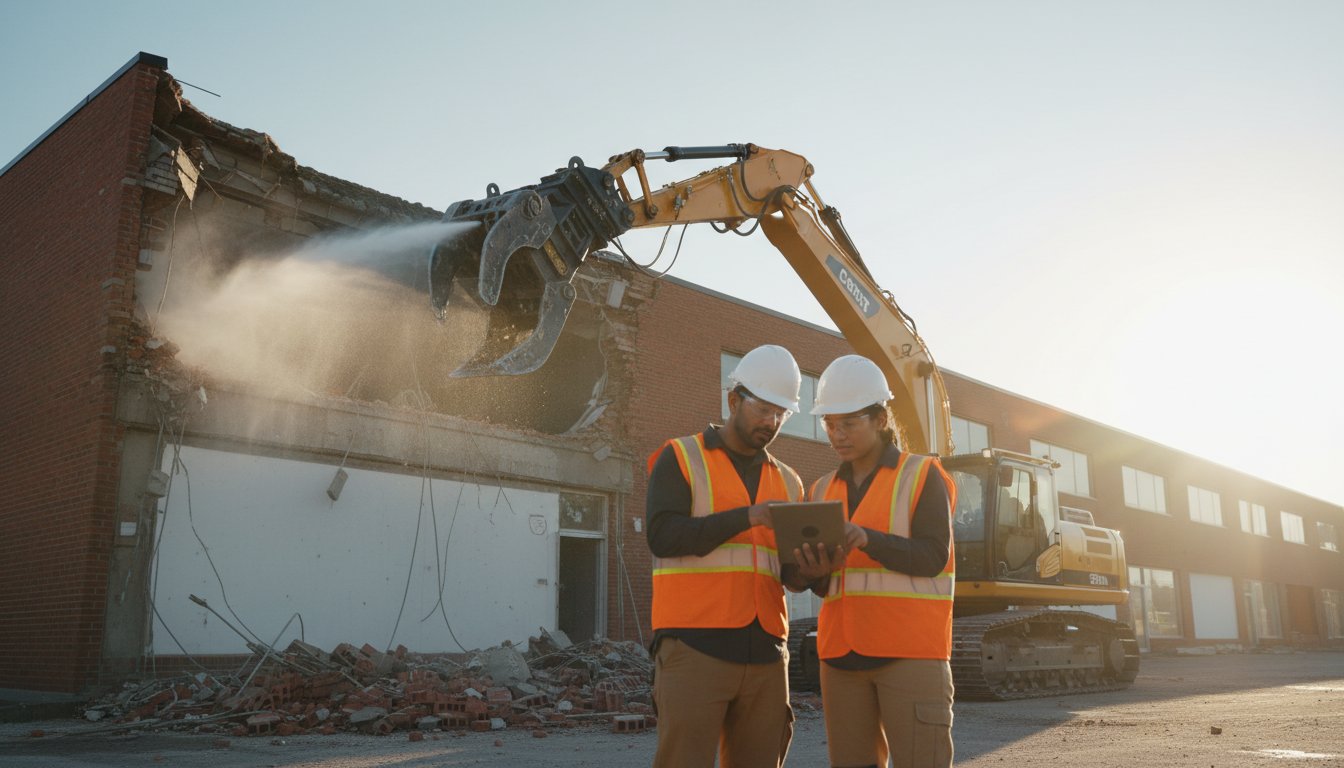

Choosing the right demolition contractor can feel overwhelming, especially when you’re concerned about hidden costs, complex permits, and the risk of property damage. The success of your project depends on finding a professional, reliable team that prioritizes safety and transparency from start to finish. It’s a significant undertaking, and you deserve the peace of mind that comes from knowing the job will be done correctly, on time, and without any unwelcome surprises.
This complete guide is designed to give you that confidence. We created this resource to help you navigate the entire process with clarity. You will learn how to identify the right type of service for your project, what to expect from the initial quote to the final site cleanup, and how to understand project costs in Canada. Most importantly, we’ll cover the essential safety qualifications and insurance credentials every reputable contractor must have, empowering you to find a safe, reliable partner for your project.
What Does a Demolition Contractor Actually Do?
When you think of demolition, an image of a wrecking ball swinging into a building might come to mind. While that can be part of the job, the role of professional demolition contractors is far more complex and precise. They are specialists trained to safely and efficiently dismantle and remove structures of all sizes, from a small residential shed to a large commercial building. Their expertise goes well beyond simple destruction, encompassing meticulous planning, strict safety adherence, and responsible waste management.
Unlike a junk removal company that only hauls away debris, or a general contractor who oversees a whole project, a demolition expert focuses specifically on the deconstruction phase. They bring the specialized knowledge, equipment, and certifications required to clear a site correctly, legally, and without incident, preparing it for its next chapter.
Scope of Work: More Than Just Wrecking Balls
A professional demolition project is a carefully managed process from start to finish. Before any heavy machinery arrives on site, a contractor performs several critical preliminary tasks to ensure a smooth and compliant operation. This foundational work is what separates a professional service from a simple teardown.
- Initial Assessment: A thorough site evaluation to understand the structure, identify potential challenges, and develop a precise demolition plan.
- Permits and Utilities: Securing all necessary municipal permits and coordinating the safe disconnection of services like gas, water, and electricity.
- Hazardous Material Abatement: In Canada, structures often contain materials like asbestos or lead paint. A contractor will arrange for professional testing and safe removal according to strict provincial regulations.
- Systematic Dismantling: The structure is taken down methodically. This systematic approach is a core part of the professional demolition process, ensuring safety and control from start to finish.
Key Skills and Equipment
Executing a demolition project requires a unique combination of technical expertise and powerful machinery. Professional contractors are equipped with the skills and tools necessary to handle diverse and challenging projects while prioritizing safety and environmental responsibility above all else.
- Structural Knowledge: A deep understanding of building engineering to predict how a structure will behave during dismantling and prevent uncontrolled collapses.
- Specialized Equipment: Proficiency in operating heavy machinery such as excavators, skid steers, and hydraulic shears, as well as precision tools for selective demolition.
- Safety Compliance: Strict adherence to Canadian safety standards set by provincial bodies like the Ministry of Labour or WorkSafeBC to protect workers and the public.
- Debris Management: Efficiently sorting materials on-site to maximize recycling of concrete, wood, and metal, thereby reducing landfill waste and environmental impact.
The reliability of this heavy machinery is paramount for project safety and efficiency. Keeping hydraulic systems and other components properly maintained is a critical, though often overlooked, aspect of a contractor's operations. For those interested in the technical side of equipment maintenance, you can read more.
Types of Demolition Services for Your Project
Demolition is far more than just tearing down a building; it's a precise and technical service tailored to specific project needs. Not every job requires a wrecking ball. Professional demolition contractors offer a range of services designed for different scales and complexities. Understanding these options is the first step in identifying the right solution for your property, ensuring your project is completed safely, efficiently, and on budget.
Here are the most common demolition services for residential and small commercial projects in Canada:
Interior or Selective Demolition
When you're renovating or remodelling, you don't need to tear everything down. Interior demolition focuses on surgically removing specific components while protecting the surrounding structure. This service is ideal for projects like kitchen and bathroom remodels, removing non-load-bearing walls to create an open-concept space, or gutting a commercial unit back to the studs for a new tenant. It requires skill and precision to avoid damaging plumbing, electrical systems, and structural supports.
Residential Demolition (Sheds, Garages, Houses)
For structures that are beyond repair or no longer needed, complete residential demolition is the solution. This service covers the full teardown of buildings ranging from small sheds and detached garages to entire houses. A professional crew manages the entire process, from obtaining permits to ensuring all work adheres to strict demolition safety standards to protect workers and neighbouring properties. The job often includes removing the foundation and grading the site to prepare it for your next project.
Concrete and Asphalt Removal
Old, cracked driveways, patios, walkways, or foundations can be a major obstacle for new construction or landscaping. Concrete and asphalt removal requires heavy-duty equipment like hydraulic breakers, excavators, and skid steers to break up and haul away the material. Reputable demolition contractors also handle the responsible disposal of the debris, often ensuring it is sent to a recycling facility to be processed into new aggregate materials.
The Demolition Process: A Step-by-Step Overview
Understanding the demolition project lifecycle demystifies the work and sets clear expectations from start to finish. A professional demolition process is not about uncontrolled destruction; it's a carefully planned sequence of events focused on safety, efficiency, and environmental responsibility. Experienced demolition contractors guide you through each step, ensuring clear communication is maintained from the initial call to the final site cleanup for a seamless and stress-free experience.
Phase 1: Consultation, Estimate, and Permitting
Every project begins with a thorough on-site consultation to assess the structure, identify potential challenges, and define the project scope. You will then receive a detailed, itemized quote that clearly breaks down all anticipated costs, including labour, equipment, disposal fees, and permitting. We handle the complex process of securing all necessary municipal permits within your Canadian jurisdiction, ensuring full compliance before finalizing a comprehensive contract and a realistic project timeline.
Phase 2: Site Preparation and Safety Measures
Safety is non-negotiable. Before any work begins, we coordinate the safe disconnection of all utilities like gas, water, and electricity. The site is then fully secured with safety fencing and prominent signage to protect our crew and the public. We take meticulous care to protect adjacent structures and landscaping, often using dust screens and protective barriers. This phase concludes with a mandatory on-site safety briefing for the entire team to review the plan and protocols.
Phase 3: Demolition and Debris Removal
With the site prepared and secured, the active demolition begins, executed with precision using the right equipment for the job. As the structure is dismantled, our team diligently sorts materials on-site, separating wood, metal, and concrete for recycling. This responsible approach minimizes landfill waste and aligns with best practices for managing construction and demolition materials. Debris is then efficiently loaded and hauled away, leaving your property clean and ready for its next chapter. Ready to start the process? Request your free consultation today.
How to Choose the Right Demolition Contractor: A Checklist
Selecting the right team for your demolition project is the most critical step toward a successful outcome. A professional contractor ensures the job is done safely, efficiently, and on budget. This checklist provides the essential criteria for vetting potential demolition contractors, empowering you to hire with confidence.
Verify Insurance and Licensing
Never hire a contractor without proof of proper coverage. This is non-negotiable and protects you from significant financial risk. Before signing any agreement, confirm they have:
- General Liability Insurance: This covers property damage or injuries that may occur on your site during the demolition process.
- Workers' Compensation Coverage: In Canada, this is managed provincially (e.g., WCB, WSIB). It protects their workers and releases you from liability if an employee is injured on your property.
Always ask for a current Certificate of Insurance as proof. Additionally, check with your local municipality for any specific business or trade licenses required for demolition work in your area.
Prioritize a Strong Safety Record
Demolition is inherently hazardous, making safety the number one priority. A reputable contractor will have a comprehensive safety program and be transparent about their protocols. Ask them about their employee training, adherence to provincial occupational health and safety standards, and their incident history. A company that prioritizes safety is a company that prioritizes quality and professionalism.
Review Experience and References
A proven track record is a strong indicator of reliability. Look for a contractor with specific experience in projects similar to yours, whether it’s a residential garage tear-down or a complex commercial interior strip-out. Ask for a portfolio of past work and a list of client references you can contact. Supplement this by checking online reviews on platforms like Google or HomeStars to get a well-rounded view of their reputation in the community.
Demand a Clear, Detailed Quote
Avoid vague, one-line estimates that leave room for ambiguity. A professional quote should be a detailed document that itemizes all anticipated costs, including labour, equipment, permit fees, and debris disposal or recycling. It must clearly outline the full scope of work, specifying what is included and, just as importantly, what is excluded. This transparency prevents surprise charges and ensures everyone is aligned on expectations from day one. A trustworthy contractor, like the team at JBM Custom Contracting, will always provide a clear and comprehensive estimate for your project.
Understanding Demolition Costs: Key Influencing Factors
One of the first questions clients ask is, "How much will my demolition project cost?" The answer is that there's no flat rate for demolition services. Every project is unique, and a professional quote reflects the specific labour, equipment, and safety measures required. Reputable demolition contractors provide detailed estimates because they understand that a transparent price is built on a thorough assessment of several key variables. Understanding these factors helps you see exactly what you are paying for: a safe, efficient, and compliant project from start to finish.
Size and Complexity of the Structure
The physical characteristics of the building are the primary driver of cost. A larger, multi-story structure requires more labour, larger equipment, and a more intricate demolition plan than a small, single-level building like a garage or shed. The construction materials also play a significant role. Demolishing a reinforced concrete building is more intensive and time-consuming than dismantling a simple wood-frame house, which directly impacts the project's timeline and budget.
Site Accessibility
How easily can we access the demolition site? A property with ample space allows for the use of large, efficient machinery, which can speed up the process. In contrast, a site in a dense urban neighbourhood or a tight backyard with limited entry points may require smaller equipment and more manual labour. Proximity to adjacent buildings or public walkways also demands greater precision and extensive safety protocols to prevent damage, all of which is factored into the final cost.
Material Disposal and Permitting Fees
A significant portion of any demolition budget is allocated to factors beyond the physical teardown. These essential costs ensure your project is completed legally and responsibly. Key expenses include:
- Debris Disposal: Landfill and recycling facility fees in Canada can be substantial, and they vary based on the type and weight of the materials being disposed of.
- Hazardous Materials: If materials like asbestos, lead paint, or mould are present, they require specialized abatement and disposal procedures by certified professionals to ensure safety and compliance with provincial regulations.
- Permitting: Every municipality has its own requirements and fee structure for demolition permits. We handle the entire permitting process to ensure your project meets all local bylaws.
The best way to understand the cost of your specific project is to get a detailed estimate. Get a transparent, no-obligation quote for your project from JBM Custom Contracting and let our team provide a clear, comprehensive breakdown.
Partner with the Right Experts for a Seamless Demolition
Choosing the right partner is the most critical step for ensuring your project is completed safely, on schedule, and within budget. The best demolition contractors don't just clear a site; they manage the entire process with precision, from initial assessment to final cleanup. Understanding the scope of work and verifying credentials are key to a successful outcome and peace of mind.
At JBM Custom Contracting, we provide professional and reliable services you can trust. As a Certified & Fully Insured team, we specialize in residential and small-scale demolition projects. Our integrated debris hauling and junk removal services ensure a complete, hassle-free solution, leaving your property clean and ready for what comes next.
Ready to take the next step? Get a Professional & Reliable Demolition Quote Today! Let our expert team handle the heavy lifting, clearing the way for your property's exciting new chapter.
Frequently Asked Questions About Demolition
Do I need a permit for a small demolition project like a shed or deck?
In most Canadian municipalities, a permit is required even for smaller demolition projects. These regulations ensure the work is done safely, utilities are properly disconnected, and local bylaws are followed. A professional contractor will verify local requirements and can often manage the permit application process on your behalf, ensuring your project is fully compliant from the start. Always confirm with your local building authority before beginning any work.
What is the difference between demolition and deconstruction?
Demolition is the process of rapidly tearing down a structure, typically with heavy machinery, to clear a site quickly. Deconstruction is the systematic and careful disassembly of a building piece by piece. The primary goal of deconstruction is to salvage as many materials as possible for reuse and recycling. While it takes longer, deconstruction is a more environmentally sustainable option that significantly reduces landfill waste.
For example, high-quality wood beams or logs salvaged during deconstruction can be given a new life. Specialized fabrication studios like Bourbon Bigfoot Woodworking offer services such as custom sawmilling to transform this reclaimed material into valuable lumber for future building or custom furniture.
How long does a typical residential demolition project take?
The timeline depends entirely on the project's scale. A small structure like a garage or shed can often be demolished and cleared in a single day. A full residential house demolition, from site preparation to final debris removal, typically takes between three to seven days. Factors such as the presence of hazardous materials like asbestos, site accessibility, and foundation removal can extend this timeframe.
What happens to all the debris and waste after demolition?
As professional demolition contractors, we manage all debris responsibly and in accordance with provincial regulations. Materials are sorted, with concrete, metal, and wood being sent to specialized facilities for recycling. Any non-recyclable waste is transported to an approved landfill. Our process prioritizes recycling to minimize environmental impact and ensure all materials are handled in a safe and compliant manner.
Is it safe to be on the property while demolition is happening?
For your safety, we strictly prohibit unauthorized access to the demolition site while work is in progress. A demolition zone contains heavy machinery, potential falling debris, and other hazards. Our certified team establishes a secure perimeter and follows rigorous safety protocols to protect our crew and the public. We will coordinate with you to arrange for safe, supervised site access if it is required.
Can a demolition contractor remove just a foundation or a concrete patio?
Yes, absolutely. We provide selective demolition services to remove specific structures. Whether you need an old concrete foundation, a cracked patio, a driveway, or an in-ground pool removed, our team has the specialized equipment and expertise to do the job. We perform these tasks with precision, ensuring minimal disruption to the rest of your property while preparing the site for its next phase.