
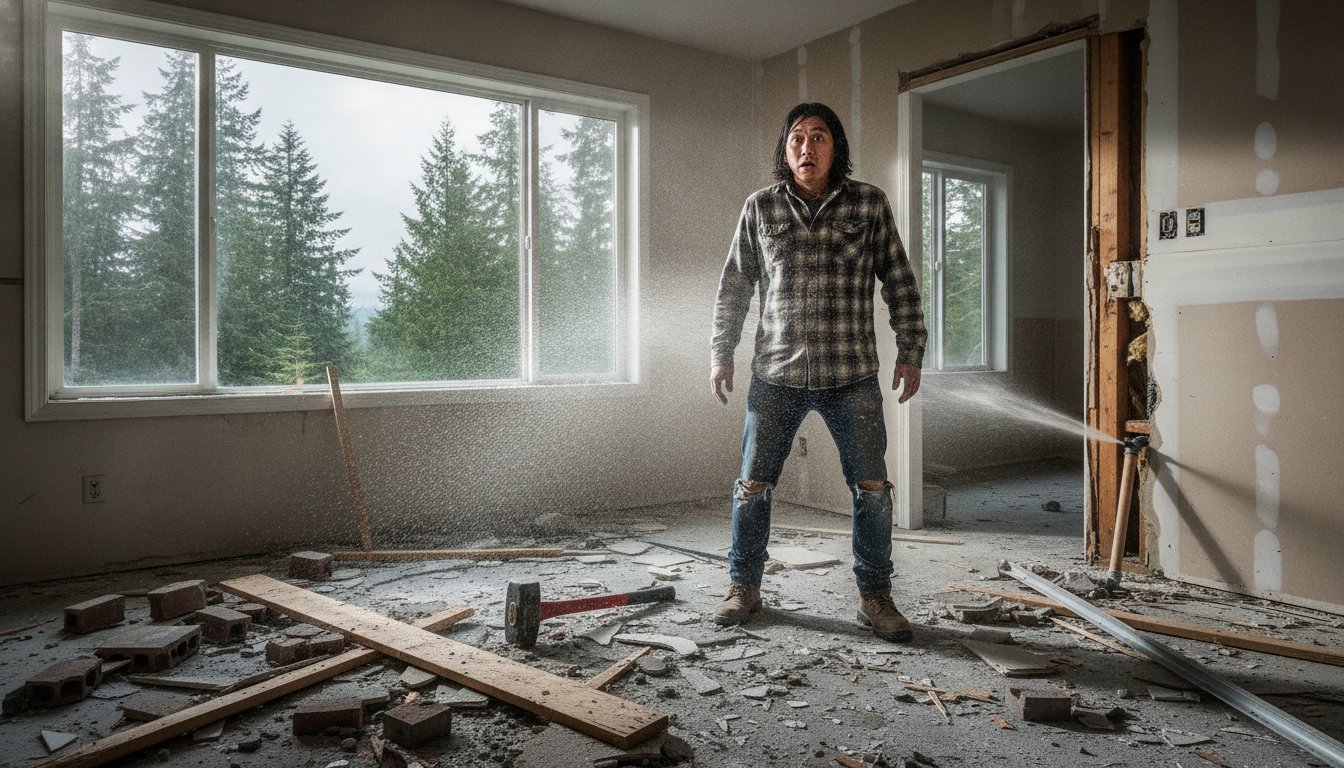

What if that first swing of the sledgehammer ends up triggering a $19,500 municipal fee you weren't prepared for? It's easy to see why so many homeowners want to grab a tool and start tearing things down themselves. It feels like a quick way to save money and get a head start on your dream renovation. However, the risks of DIY demolition often hide behind the drywall where you can't see them. You might feel worried about hitting a load-bearing beam or getting overwhelmed by massive piles of debris. You're right to be cautious because a simple mistake can lead to structural damage or expensive legal trouble.
In this article, you'll discover the serious safety, financial, and legal hazards that come with doing it yourself. We'll show you why hiring a pro for your demolition is actually the smarter, more reliable choice for your property. We'll look at everything from WorkSafeBC asbestos regulations to the true cost of disposal fees at the landfill. Our goal is to give you a realistic cost-benefit analysis so you can have total peace of mind. By the end, you'll understand how to ensure your renovation starts on a solid, professional foundation without any expensive surprises.
Why DIY Demolition Often Starts Fun and Ends in a Disaster
Most people get their inspiration for home projects from renovation shows. On screen, a kitchen is gutted in a 30-second montage set to upbeat music. This "HGTV effect" makes the process look like a fun weekend project or a great way to blow off some steam. In reality, the science and engineering of demolition is far more complex than just swinging a hammer. It's a controlled reversal of the construction process. You need to understand how the house was put together before you can safely take it apart.
To better understand these concepts, watch this helpful video:
The first hour of a demo project is usually the best. You're seeing immediate progress and clearing out the old space. But by hour three, the physical exhaustion sets in and the dust is everywhere. This is when the risks of DIY demolition start to appear. You might find hidden plumbing or electrical lines that weren't on your radar. Thinking "anyone can swing a hammer" is a psychological trap. It leads people to underestimate the technical skill required to remove a wall without dropping the ceiling. What starts as a quick Saturday task can easily turn into twenty hours of back-breaking labor and expensive mistakes.
The Difference Between Deconstruction and Destruction
Professional demolition services focus on what stays, not just what goes. An amateur might swing a sledgehammer and accidentally crack the drywall in an adjacent room or vibrate a tile floor until the grout pops. Experts use surgical precision to protect your home's structure. They ensure the site is left in a "clean" state. This means your carpenters and plumbers can start their work immediately. They won't have to waste time fixing collateral damage or pulling out thousands of leftover nails that you missed during your DIY attempt.
Small Demolitions That Carry Big Risks
Don't let a small shed, an old deck, or a simple fence fool you. These structures are often deceptively dangerous for homeowners to tackle. Over time, wood can warp and create significant "tension" in the frame. If you cut the wrong support beam, the structure can spring back with enough force to cause a serious injury. It might even collapse in an unexpected direction toward your house. Even these minor projects come with risks of DIY demolition, such as hitting underground utility lines or failing to meet local permit requirements. Handling it yourself might save a few dollars upfront, but the potential for property damage is high.
Physical Safety and Hidden Health Hazards You Cannot Ignore
Stepping onto a demolition site without professional training is like walking into a minefield of physical hazards. One of the biggest risks of DIY demolition is the immediate threat of flying debris and sharp objects. When you're tearing down a wall, shards of wood, plaster, and glass can travel at high speeds. A standard pair of hardware store safety glasses often isn't enough to stop a jagged piece of wood from causing a permanent injury. You also have to watch out for rusty nails that have been hidden for decades, which can easily puncture a standard work boot and lead to serious infections.
Beyond the visible dangers, you're also dealing with "invisible killers" like silica dust and old insulation. Many homeowners think a simple paper mask is enough, but full-scale tear-outs produce massive amounts of fine particulate matter. Inhaling drywall dust or fiberglass can cause long-term respiratory issues. Professionals use specialized P100 respirators and industrial-grade air scrubbers to keep the air breathable. Don't forget the ergonomic toll, either. Swinging a ten-pound sledgehammer for hours puts immense strain on your back, shoulders, and wrists. If you aren't used to this level of repetitive heavy lifting, you could end up with a debilitating injury before the first day is even over.
Asbestos and Lead Paint: The Vancouver Island Context
In communities like Nanaimo and Duncan, many homes were built before 1960. These older structures are highly likely to contain hazardous materials like lead paint or asbestos. According to WorkSafeBC regulations, you must have a certified surveyor inspect the site before any work begins. Disturbing asbestos-containing materials without proper containment can release toxic fibers into your home's HVAC system, putting your family's health at risk for years. Professional testing typically costs around $270 for six samples, which is a small price to pay for your safety. If toxins are found, hiring professional demolition services is the only legal way to ensure the material is handled and disposed of correctly.
The Danger of Falling Objects and Unstable Surfaces
Gravity is a powerful force that often works against an amateur. When you remove a support beam or a section of a chimney, the entire structure can become unstable in an instant. There are significant structural risks of removing walls that aren't always obvious to the untrained eye. If you pile heavy debris in one spot on an upper floor, the weight can cause the floor itself to collapse. Managing a site filled with jagged materials and uneven footing creates constant tripping hazards. It's much safer to have a professional team manage the site flow and keep the area clear of dangerous obstructions. If the mess starts to feel like too much, you can always look into professional junk removal to help clear the path and keep the workspace secure.
The Hidden Systems: Why Tearing Down One Wall Can Topple a House
You see a simple partition wall; a professional sees a structural spine or a highway for high-voltage wires. One of the most dangerous risks of DIY demolition is the assumption that every wall is just a divider. In reality, that single 2x4 stud might be the only thing keeping your roof from sagging or your second floor from shifting. When you swing a sledgehammer without a plan, you aren't just removing drywall. You're potentially disrupting the delicate balance of your entire home's skeleton.
Hidden systems like electrical and gas lines add another layer of extreme danger. It's a common mistake to assume that because a room's power is off at the breaker, every wire behind the wall is "dead." Many homes have overlapping circuits or wires passing through to other rooms that remain live. Cutting into one of these can cause an immediate arc flash or fire. Gas lines are even more unforgiving. A single spark from a metal tool hitting a hidden pipe can lead to a catastrophic event. These aren't just expensive repairs; they're life-threatening situations that happen in seconds.
Structural Integrity and Load-Bearing Logic
Many homeowners look for "signs" that a wall isn't structural, like checking if it runs parallel to the floor joists. While this is a common rule of thumb, it's often wrong in older, settled homes where previous renovations might have shifted the load. Removing a support without proper knowledge creates a "domino effect" where the weight of the house begins to crush lower frames. Our demolition services team uses temporary shoring to hold the weight of your house safely while the work happens. This ensures your home stays level and secure during the entire process.
Utility Mapping and Safe Disconnection
Before any wall comes down, a professional team performs a "safe-to-demo" assessment. This involves mapping out exactly where water, power, and gas lines enter and exit the work zone. In a DIY scenario, it's incredibly easy to nick a copper pipe and not notice it immediately. A slow water leak behind a new kitchen backsplash can cause thousands of dollars in mold damage before you ever see a drop of water on the floor. Proper utility mapping prevents these "plumbing surprises" and ensures that every disconnection is handled according to local safety codes. If you're unsure about what's behind your walls, it's always best to contact a professional for a site assessment first.
- Electrical: Prevents accidental contact with live high-voltage circuits.
- Plumbing: Avoids the high cost of burst pipes and hidden water damage.
- Gas: Eliminates the risk of leaks that can lead to explosions or fires.
- Structural: Keeps the roof and upper floors exactly where they belong.
Calculating the Real Price: Permits, Disposal, and Lost Weekends
Many homeowners assume the only cost of a demo is their own sweat equity. This is rarely true. You'll quickly find yourself spending hundreds of dollars on high-quality PPE, professional tool rentals, and heavy-duty disposal bags. One of the primary risks of DIY demolition is the massive time commitment that eats into your life. What looks like a one-day job often stretches into three or four lost weekends. When you factor in the physical exhaustion and the cost of renting equipment, the financial gap between DIY and hiring a pro starts to disappear very quickly. Your time has value, and spending it covered in dust isn't always the best investment.
The Junk Removal Nightmare
Waste disposal is where the "hidden" costs really start to climb. Vancouver Island facilities are incredibly strict about how you sort your debris. In the Regional District of Nanaimo, the tipping fee for municipal solid waste is $160 per tonne for loads over 51kg. However, if you fail to remove recyclables or have a mixed load in other areas like the CSRD, you could face fees as high as $350 per tonne. You can't simply put plaster and old wood in your residential bin. You'll need to haul it yourself, which means multiple trips to the landfill and hours spent waiting in line. Professional junk removal services take this burden off your shoulders by handling the sorting and hauling for you.
Municipal Rules and Insurance Gaps
Then there are the legal hurdles. In towns like Qualicum Beach or Ladysmith, even small demolitions often require specific permits. If you proceed without one, your municipality can stop your project and issue heavy fines. There's also the danger of insurance gaps. Most home insurance policies won't cover damage caused by unpermitted work. If a DIY mistake leads to a flood or structural failure, you're on the hook for the entire repair bill. One of the most frustrating risks of DIY demolition is that fixing a botched job usually costs double what a pro would have charged in the first place. This is because the professional has to undo your mistakes before they can even start the real work.
Save yourself the stress and the risk of expensive fines. Hire our professional demolition team to ensure your project is done safely and legally from day one.
- Tool Rentals: Costs for jackhammers, saws, and safety gear add up fast.
- Landfill Fees: High rates for mixed loads or unsorted waste on Vancouver Island.
- Permit Fines: Municipalities can halt your renovation if you lack the right paperwork.
- Insurance Risks: Unpermitted work can lead to a complete denial of future claims.
Safe, Professional Demolition Services on Vancouver Island
Demolition isn't just about destruction. It's the first step in creating something new, and doing it right sets the tone for your entire renovation project. While the temptation to DIY is strong, the risks of DIY demolition are simply too high for most property owners. JBM Custom Contracting brings professional precision to every project, ensuring that only what needs to go is removed. We treat your home with the respect it deserves, using controlled methods to protect the structures you plan to keep. Our team arrives with the right tools and a clear plan, so you don't have to worry about accidental damage or hidden costs.
Choosing a professional team means you're prioritizing safety and reliability. We follow certified procedures and maintain full insurance, providing you with peace of mind that a DIY approach simply can't offer. We also provide a convenient "one-stop-shop" experience. Instead of you having to coordinate multiple contractors or haul heavy debris yourself, we manage the entire process from the first swing to the final junk removal. When we're finished, you're left with a clean, safe site that's ready for the next phase of your build. This professional hand-off ensures your renovation starts on a solid foundation without any lingering hazards or messes.
Why Local Expertise Matters in Nanaimo and Cowichan
Our team has spent years working in homes across Nanaimo, Duncan, and the Cowichan Valley. We're familiar with the local building styles and the common structural challenges found in older Island properties. This local knowledge allows us to anticipate problems before they happen. We also maintain strong relationships with local disposal and recycling centers, which allows us to handle cleanup efficiently and responsibly. For those concerned about the budget, we offer clear and transparent small demolitions pricing. We believe you should know exactly what to expect before the work begins, with no "hidden" fees or surprises at the end of the day.
Your Next Steps: Getting a Professional Assessment
The best way to avoid the risks of DIY demolition is to get an expert opinion before you start tearing things down. A professional quote is the first step in any successful renovation, whether you're working on a residential home or a commercial space. Our demolition services are designed to be thorough, safe, and efficient. We'll walk through your site, identify potential hazards like load-bearing walls or utility lines, and provide a realistic plan for the work. Don't risk your safety or your property's value on a weekend project that's over your head. Contact JBM Custom Contracting today for a reliable estimate and let our hardworking team handle the heavy lifting for you.
- Precision: We remove only the necessary materials, protecting the rest of your home.
- Safety First: Full insurance and certified safety procedures protect your investment.
- Full Cleanup: We handle the debris hauling and recycling so you don't have to.
- Local Knowledge: Expert understanding of Vancouver Island's unique building codes and styles.
Start Your Renovation on a Solid Foundation
Starting your renovation should be an exciting milestone, not a source of stress or physical danger. We've explored how the risks of DIY demolition extend far beyond a few sore muscles. From disturbing hidden asbestos to accidentally compromising your home's structural integrity, the stakes are simply too high for a weekend project. You also have to consider the complex web of municipal permits and the rising costs of waste disposal at Vancouver Island landfills. It's easy to get overwhelmed when the debris starts to pile up and the technical challenges emerge.
Get a Professional Demolition Quote from JBM Custom Contracting and take the first step toward a successful, hassle-free renovation today. Your home is in safe hands.
Frequently Asked Questions
Do I need a permit for a small interior demolition in Nanaimo?
You generally need a permit if your project involves structural changes, or modifications to your home's plumbing and electrical systems. Even small interior projects can require a building permit to ensure the work meets safety codes. It's best to contact the City of Nanaimo's building department to confirm requirements before you begin to avoid potential fines or issues with your home insurance.
What is the most dangerous part of doing my own demolition?
Hidden utilities like live electrical wires and gas lines are the most immediate threats to your safety. These systems are often concealed behind drywall, making them impossible to see before you swing a hammer. Accidentally hitting a live wire can cause electrocution or a fire instantly. This is why the risks of DIY demolition are often much higher than homeowners realize.
How much does professional demolition usually cost compared to DIY?
Can I do the demolition myself and just hire someone for junk removal?
You can choose to handle the tear-out yourself and hire a professional for the hauling. This can reduce labor costs, but you still carry all the physical and legal risks of the demolition process itself. If you go this route, you must ensure all debris is properly sorted. Local landfills have very strict rules and higher fees for mixed loads that contain recyclables or hazardous materials.
How do I know if a wall is load-bearing before I start?
There is no simple way to be 100% certain without looking at the framing or original blueprints. While walls running perpendicular to floor joists are often structural, settled homes or previous renovations can change how weight is distributed. The only reliable way to identify a load-bearing wall is to have a professional contractor or structural engineer inspect the area before any work begins.
What should I do if I find something that looks like asbestos?
Stop all work immediately and do not touch or move the material. Asbestos is only dangerous when it's disturbed and the fibers become airborne. You should contact a certified surveyor to take samples for testing. In British Columbia, WorkSafeBC has strict regulations requiring professional abatement for any asbestos-containing materials to protect the health of everyone in the building.
Is it worth renting a dumpster for a DIY demo project?
Renting a dumpster can be helpful, but it often comes with hidden costs like overage fees for heavy materials like concrete or plaster. You also need a secure, flat location to store it, which can be difficult on many residential properties. For most small to medium projects, a professional team that provides both demolition and immediate hauling is a more efficient and less stressful choice.