
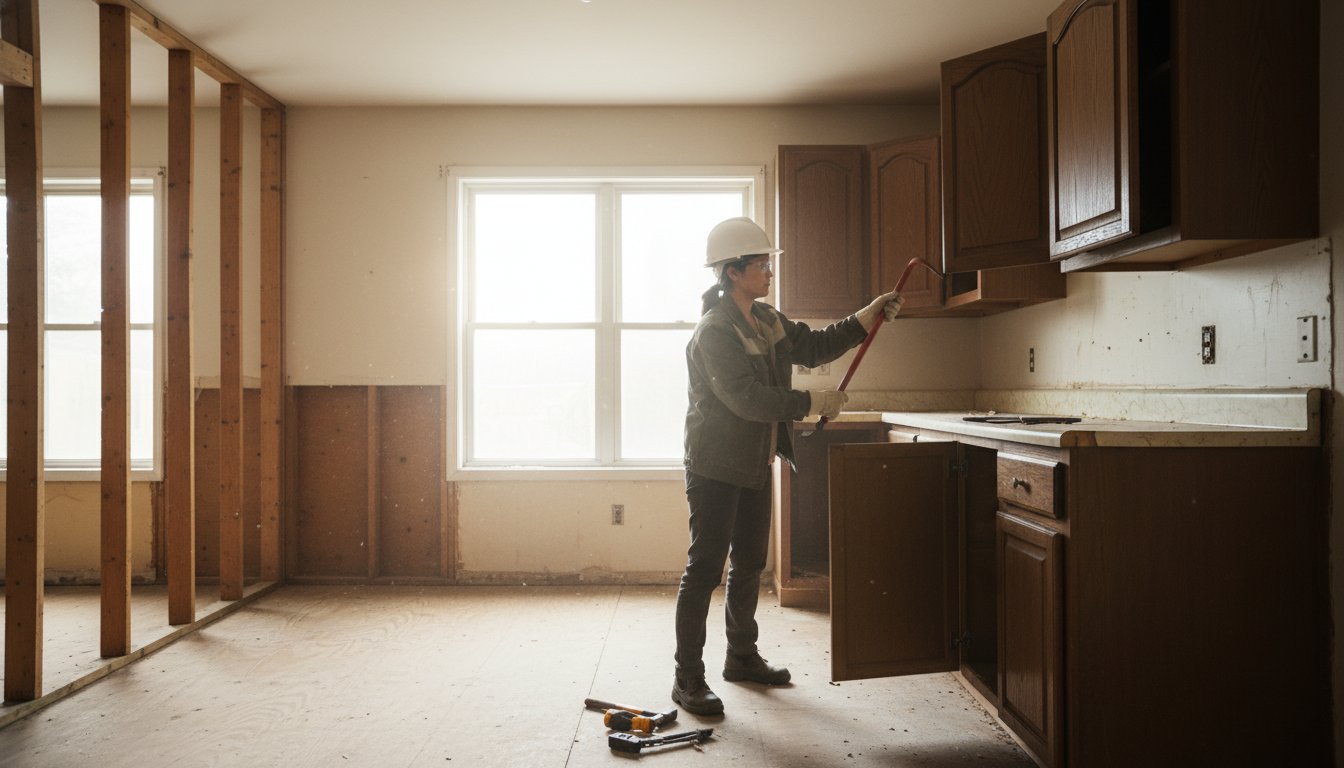

You have a vision for your next home renovation-a modern kitchen, a spacious open-concept living area, or a brand-new bathroom. But standing between you and that dream is the first, often intimidating, step: demolition. The questions immediately start to pile up. What can you safely tear down yourself? Are you about to cause hidden structural damage? This is where understanding the scope of professional light demolition is essential for a successful and stress-free project.
This complete guide is designed to give you confidence. We’ll explain exactly what this service includes, what you can expect from the process, and how to know when to call a professional for safe, efficient results. By the end, you’ll have a clear plan to get your space ready for its transformation-eliminating the risk of injury, avoiding unintended damage, and ensuring a clean slate for the beautiful renovation you’ve been planning.
Key Takeaways
- Understand the key difference between removing a kitchen island and taking down a load-bearing wall to ensure your project is properly classified.
- A professional light demolition project is a carefully planned process, from initial assessment and site preparation to clean-up and responsible disposal.
- Weigh the true risks of DIY demolition, including potential safety hazards and hidden damage, before deciding to hire a professional for a safe result.
- Learn which factors influence project costs in Canada, from the scope of work to local permit requirements, to help you create an accurate budget.
What Exactly Is Light Demolition?
When you hear the word ‘demolition,’ you might picture a wrecking ball and a collapsing building. However, most renovation projects begin with a much more precise and controlled process known as light demolition. This is the non-structural removal of interior or exterior elements to prepare a space for something new. It’s the crucial first step that creates a clean slate for your remodeling vision, ensuring a professional and efficient start to any project.
To see this process in action, here is a helpful overview:
Defining the Scope: Light vs. Heavy Demolition
Understanding the difference between light and heavy demolition is key. While the broad field of Demolition can include razing entire buildings, our focus is on surgical precision. Heavy demolition involves removing load-bearing walls, foundations, or entire structures. In contrast, light demolition is selective, focusing on components that do not compromise the building's structural integrity, such as:
- Non-load-bearing walls and partitions
- Kitchen cabinets and bathroom fixtures
- Flooring materials like tile, carpet, and hardwood
- Exterior structures like sheds, decks, fences, and patios
Common Light Demolition Projects for Your Home
This service is essential for many home improvement projects across Canada. It’s the clean-up work that happens before the beautiful new installation can begin.
- Interior Gut-Outs: Completely clearing a dated bathroom or kitchen to remove old cabinets, countertops, and flooring.
- Flooring Removal: Tearing out old carpets, cracked tiles, or worn-out laminate to prepare the subfloor for a new surface.
- Exterior Teardowns: Safely dismantling a worn-out wooden deck, removing an old garden shed, or taking down a fence.
In many kitchen renovations, the goal is to update the look without the cost and disruption of a full gut-out. If your cabinet boxes are still in good shape, professional refinishing can be a smart alternative to demolition. To see what this specialized process involves, you can check out Cabinet Refinishing Boulder. For broader insights and examples, homeowners can also explore resources like paintingkitchencabinet.com to help transform their space.
Key Benefits of Professional Light Demolition
While some small tasks can be a DIY job, professional services offer significant advantages for safety and efficiency. A reliable contractor provides peace of mind that the job will be done right.
- Safety First: Our trained professionals identify and safely manage hidden hazards like live wiring, plumbing lines, and unexpected materials, protecting you and your property.
- Efficiency and Precision: With the right tools and experience, a professional team completes the job quickly and cleanly, saving you valuable time and hassle.
- Proper Disposal: We handle all debris removal responsibly, sorting materials for recycling and ensuring everything is disposed of according to local Canadian regulations.
The Professional Demolition Process: A Step-by-Step Look
Professional demolition is far more than just destruction; it's a precise, methodical service designed to achieve a specific goal safely and efficiently. At JBM Custom Contracting, we follow a proven, multi-stage process for every light demolition project. This structured approach minimizes risk, contains mess, and ensures your property is treated with the utmost respect, leaving you with a clean slate ready for the next phase of your renovation or project.
Step 1: On-Site Consultation and Assessment
Every successful project begins with a thorough evaluation. Our team visits your site to assess the structure slated for removal and its immediate surroundings. We carefully identify potential hazards, such as live electrical wiring, plumbing lines, or the presence of hazardous materials like asbestos. This allows us to create a clear, detailed scope of work and provide you with an accurate, transparent estimate.
Step 2: Safety Preparations and Site Containment
Your safety and the protection of your property are our top priorities. Before any work begins, we ensure all relevant utilities-water, gas, and electricity-are safely shut off. To protect the rest of your home or business from dust and debris, we set up robust containment barriers. Following strict protocols that align with principles found in established guidelines like the OSHA demolition safety standards, we secure the work area to guarantee a safe environment for everyone involved.
Step 3: The Demolition Phase: Precision & Technique
This is where our expertise truly shines. Using specialized tools, we perform the light demolition with precision, making clean cuts to minimize disruption to adjoining structures. We dismantle elements methodically, often working from top to bottom to maintain structural control. Throughout this phase, materials are carefully separated to streamline the disposal and recycling process, ensuring an efficient and organized workflow.
Step 4: Debris Management and Final Cleanup
A clean finish is the hallmark of a professional job. Our team efficiently loads and hauls away all demolition debris from your property. We are committed to responsible disposal, sorting materials like wood, metal, and concrete for recycling whenever possible. We don't consider the job done until the site is broom-swept and completely clear, leaving you with a space that is ready for the next contractor. See how our professional process works. Request a Consultation today!
DIY Demolition vs. Hiring a Professional Contractor
When planning a renovation, one of the first decisions you'll face is whether to tackle the demolition yourself or hire a professional. While the DIY route can seem like a way to save money, it's crucial to weigh the convenience against the significant risks. Viewing professional services not as a cost, but as an investment in your safety, your property's integrity, and a high-quality final result is key to making the right choice.
When DIY Demolition Might Be an Option
For very small, low-risk projects, a hands-on approach can be manageable. Tasks like pulling up old carpet, removing a small bathroom vanity that isn't plumbed in, or dismantling simple shelving fall into this category. If you choose to proceed, always prioritize safety by using the proper gear:
- Steel-toed boots
- Safety goggles
- Heavy-duty gloves
- A dust mask or respirator
However, if you encounter anything unexpected-like strange wiring, signs of mould, or a wall that feels unusually solid-stop immediately and consult a professional.
The Hidden Risks of DIY Demolition Projects
Even a seemingly simple light demolition project can quickly become complex and dangerous. Homeowners often underestimate the following risks:
- Personal Injury: Without proper training and equipment, the risk of cuts, falls, or muscle strain is incredibly high.
- Structural Damage: Accidentally cutting into a load-bearing wall, a plumbing line, or electrical wiring can lead to catastrophic and expensive repairs.
- Hazardous Materials: Many older Canadian homes contain asbestos, lead paint, or mould. Disturbing these materials without proper containment protocols can pose serious health risks to your family.
- Disposal Hassles: The volume of debris is almost always more than anticipated. Renting a disposal bin can cost hundreds of dollars (C$), and improper disposal can lead to fines. Learning about Sustainable demolition waste management shows just how complex responsible cleanup can be.
Why a Certified Pro is Your Safest Bet
Hiring a certified and insured team like JBM Custom Contracting eliminates these risks and provides unmatched value. We deliver professional demolition services that are built on a foundation of safety and reliability.
- Insurance & Certification: We are fully insured, which means your property and everyone on-site are protected from start to finish. Our certification is your guarantee of professional, high-quality work.
- Expertise & Safety: Our experienced team can quickly identify structural elements and potential hazards you might miss, ensuring the job is done safely and correctly.
- Efficiency: We have the right tools and team to complete the job in a fraction of the time it would take to do it yourself, saving you days or even weeks of disruption.
- Complete Peace of Mind: We handle everything from the teardown to the final cleanup, leaving you with a clean, perfectly prepped space ready for the next phase of your project.
For safe, efficient, and reliable demolition services, trust the professionals. Learn more about how we can help at jbmcustomcontracting.com.
Planning Your Project: Costs, Permits, and Next Steps
Once you have a vision for your space, the next step is turning it into a reality. A professional demolition is the critical first phase that clears the way for new construction, renovation, or landscaping. Understanding the practical details-like costs and permits-ensures your project starts smoothly and efficiently.
Factors That Influence Light Demolition Costs
The cost of a light demolition project in Canada is not one-size-fits-all. Several key factors determine the final estimate, ensuring you only pay for the work required. A professional quote will typically account for:
- Size and Scope: Removing a small, non-load-bearing wall will be significantly less expensive than a complete kitchen or bathroom gut-out. The total square footage and complexity are primary cost drivers.
- Materials Involved: Tearing out drywall and wood studs is less labor-intensive than breaking up and hauling away heavy materials like concrete, tile, or brick.
- Site Accessibility: A project site that is easy to access with equipment and allows for simple debris removal will cost less than a job in a tight space, a high-rise building, or an area with limited parking.
- Hazardous Material Abatement: If materials like asbestos or lead-based paint are discovered, they must be handled and removed by certified professionals. This necessary safety step is a separate cost from the demolition itself.
This is especially true for concrete surfaces like patios or driveways. Before opting for a full teardown, consider whether a repair is a viable alternative. Sunken or cracked slabs can often be lifted and stabilized, saving you from the high costs and disruption of demolition. For homeowners exploring this option, services from specialists like Airlift Concrete Experts offer a modern solution to restore concrete instead of replacing it.
Understanding Permit Requirements
Many homeowners wonder if they need a permit for their project. For most small interior jobs, like removing kitchen cabinets or tearing up flooring, a permit is typically not required. However, you should always verify with your local municipal authority, as regulations can differ between cities and regions in Canada. A permit may be necessary for:
- Removing a load-bearing wall.
- Demolishing a structure like a large deck, shed, or detached garage.
- Any project that alters the building's structure or plumbing systems.
When you partner with a professional contractor, we handle the entire process. We determine if a permit is needed and manage the application, giving you complete peace of mind that your project is fully compliant.
After the Demo: Preparing for What's Next
The true value of a professional demolition service is the clean slate it provides. A properly cleared and prepared site is essential for the next phase, allowing architects, builders, and designers to work efficiently and without delay. Whether you are preparing for a stunning kitchen renovation, a spacious room addition, or a beautiful new garden, it all starts with a professionally cleared space. This foundational step ensures your new vision is built on solid ground.
Ready to take the first step? Let's clear the way for your dream project. Book Your Free Estimate!
Your Renovation Starts with a Clean Slate
Properly preparing your space is the most critical first step in any successful home renovation. As this guide has shown, what begins as a simple plan can quickly become complex, highlighting the value of professional expertise over a high-risk DIY approach. For any light demolition project, prioritizing safety, efficiency, and correct debris disposal ensures your renovation starts on solid ground, free from costly setbacks or delays.
Choosing a professional contractor means choosing peace of mind. At JBM Custom Contracting, our Certified & Fully Insured team provides the professional and reliable service you can trust. We handle every project with a focus on safety and precision, clearing the way for your vision without the hassle.
Ready to clear the way for your next project? Get a Free, No-Obligation Consultation from JBM. Let's build the foundation for your dream space together.
Frequently Asked Questions About Light Demolition
What kind of tools are used for professional light demolition?
Professional crews use a combination of hand tools and power equipment for precision and efficiency. Common tools include sledgehammers, pry bars, and reciprocating saws for dismantling structures, along with drills and grinders. For larger jobs, small machinery like a skid-steer might be used for debris removal. Using the right professional-grade tools ensures the job is done safely, minimizes damage to surrounding areas, and keeps the project on schedule and on budget.
How long does a typical light demolition project, like a deck removal, take?
A straightforward deck removal can often be completed in just one to two days. The exact timeline for any light demolition project depends on factors like the structure's size, the materials used, and accessibility for our crew and equipment. We provide a clear and reliable timeline during our free consultation, ensuring you know what to expect. Our focus is always on completing the job efficiently and safely, minimizing disruption to your property.
Is interior demolition of a kitchen or bathroom considered light demolition?
Yes, interior projects like gutting a kitchen or bathroom are prime examples of light demolition. This work focuses on removing non-structural elements such as cabinets, countertops, fixtures, flooring, and drywall to prepare the space for a renovation. It requires a precise and careful approach to avoid damaging plumbing, electrical systems, or structural components that will remain. Our professional team handles these projects with the necessary care and expertise.
What happens if you find hazardous materials like asbestos during demolition?
Safety is our highest priority. If we encounter suspected hazardous materials like asbestos or lead paint, we stop work immediately and secure the area. In Canada, handling these materials is governed by strict provincial regulations. We will advise you on the necessary steps, which involves bringing in a certified and licensed abatement company for safe testing and removal. We do not proceed until the area is professionally cleared and declared safe for work to resume.
What is the difference between demolition and deconstruction?
Demolition is the process of quickly tearing down a structure, with the resulting debris typically sent to a landfill. It prioritizes speed and efficiency. Deconstruction is a more meticulous method of carefully dismantling a structure piece by piece to salvage materials for reuse or recycling. While deconstruction can take longer and be more labour-intensive, it is a more environmentally sustainable option that reduces waste and preserves valuable building materials like lumber, fixtures, and doors.
How much noise and dust should I expect during the project?
Any demolition project will generate some level of noise and dust. However, our professional team takes every precaution to minimize its impact on your home or business. We use plastic dust barriers to seal off the work area, employ fans for ventilation, and sometimes use water to suppress dust at the source. We work efficiently to keep the noisy periods as short as possible and always conduct a thorough cleanup to leave your property tidy.