
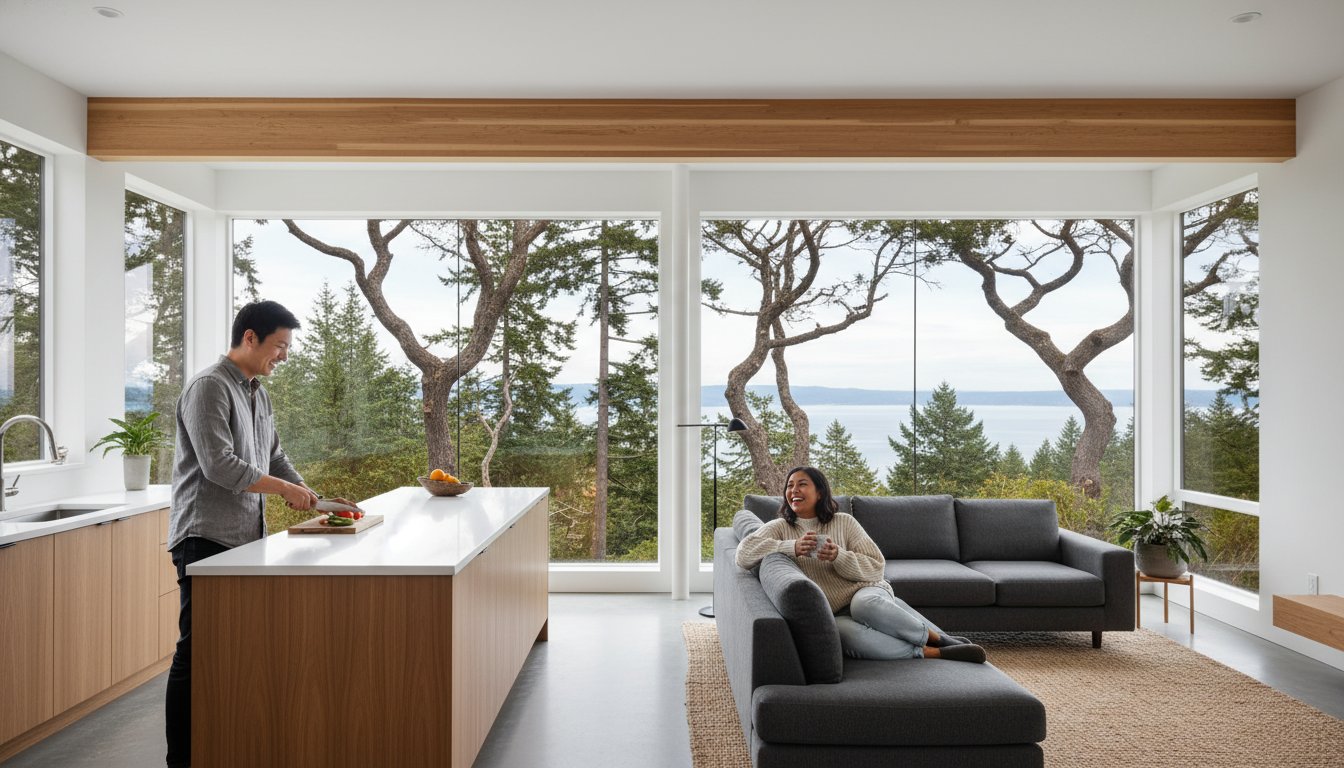

Taking a sledgehammer to a kitchen wall might look satisfying on home renovation shows, but in reality, removing a wall is a surgical procedure for your house that requires far more precision than power. If you are searching for a professional interior wall demolition service, you likely want that bright, open-concept layout without the nightmare of a sagging ceiling or severed plumbing lines.
It's completely normal to feel anxious about what is hidden behind your drywall. Most homeowners worry about hitting live electrical wires or dealing with layers of construction dust that never seems to go away. You want the extra space, but you also want the peace of mind that your home remains safe and sound throughout the process. We understand that your house is your biggest investment, and protecting its structural integrity is the top priority.
In this guide, you will learn how professional wall removal safely transforms your living area while strictly following BC building codes and WorkSafeBC safety standards. We will cover the critical differences between load-bearing and partition walls, the necessity of asbestos testing for older homes, and how a systematic approach ensures all debris is removed responsibly. Your path to a clean, open home starts with understanding the right way to take things apart.
Transforming Your Home with Interior Wall Demolition Services
There is a massive difference between "smashing a wall" and executing a professional demolition plan. While the visual results are exciting, the process requires a systematic approach to ensure your home remains stable. Removing a single, well-chosen wall can instantly increase your property's functionality and market value. Modern buyers look for homes that feel spacious and connected, and a professional removal ensures the job is done cleanly and safely.
To better understand the safety protocols involved in this process, watch this helpful video:
The Benefits of Professional Wall Removal
Opening up your home does more than just look good. It allows natural light to flow into previously dark hallways, which can significantly brighten your daily mood and reduce your reliance on lamps during the day. Better air circulation also helps your heating and cooling systems work more efficiently by removing barriers to airflow. Understanding the difference between Load-Bearing vs. Non-Load-Bearing Walls is the most critical part of this stage. A professional team ensures that your new layout fits your family's needs without compromising the roof over your head or causing the ceiling to dip.
Why "DIY" Demolition Often Costs More in the Long Run
It's tempting to grab a hammer and start swinging, but DIY mistakes are notoriously expensive to fix. Hidden electrical wires, gas lines, and plumbing pipes often live behind that drywall. If you accidentally sever a water line or nick a gas pipe, the resulting damage and emergency repair costs will far outweigh the price of a professional interior wall demolition service. Beyond the safety risks, the sheer volume of waste is a major hurdle for homeowners. A single interior wall can produce hundreds of pounds of drywall, wooden studs, and sharp nails. Managing this debris requires heavy-duty equipment and professional junk removal to keep your property clean and safe for your family.
- Unmapped utilities: Professionals use specialized tools to locate wires and pipes before the first strike.
- Structural Integrity: Misidentifying a support wall can lead to immediate structural sagging or long-term foundation issues.
- Debris Management: Professional services include the hauling and proper disposal of all construction materials, saving you multiple trips to the landfill.
The Critical Difference: Load-Bearing vs. Non-Load-Bearing Walls
Your home's structure is a complex puzzle where every piece plays a specific role. A load-bearing wall acts as a structural anchor, transferring the weight of the roof or the upper floors down to the foundation. In contrast, non-load-bearing walls, often called partition walls, simply divide rooms and don't support any weight from above. While they might look identical from the outside, mistaking one for the other during an interior wall demolition service can lead to catastrophic structural failure. If you are unsure about the walls in your own home, booking a professional demolition service is the safest way to get an accurate assessment.
Never assume a wall is "just drywall" because it feels thin or sounds hollow. Some walls that don't support vertical weight still provide lateral stability, which helps the house resist wind or seismic forces. This is particularly important in British Columbia, where building standards account for specific environmental pressures. Following guidelines for Professional Demolition Safety ensures that these structural nuances are respected before any physical work begins. A mistake here isn't just a cosmetic issue; it's a safety hazard that can compromise the entire building.
How Professionals Identify Structural Walls
Identifying a support wall requires a trained eye and a look at what's happening behind the scenes. Professionals start by checking the direction of floor joists and attic rafters. If the joists run perpendicular to the wall, it's a strong indicator that the wall is load-bearing. We also look for walls that sit directly above or below other supports, such as beams in the basement or walls on a second floor. Checking original architectural plans and inspecting the foundation provides the final confirmation needed to proceed safely.
What Happens if a Load-Bearing Wall Must Be Removed?
Removing a load-bearing wall is a major structural change, but it's entirely possible with the right approach. The process begins with temporary shoring. These are temporary support walls built to hold the weight of the house while the original wall is taken out. Once the old wall is gone, we install a structural beam, typically made of steel or Laminated Veneer Lumber (LVL), to bridge the new gap. This beam takes over the job of the wall, safely transferring the load to the side posts. Because this task involves heavy lifting and precise structural alignment, it requires a certified and insured team that understands local BC building codes.
- Temporary Shoring: Essential for preventing ceiling sag during the transition.
- Structural Beams: These provide the permanent support needed for an open-concept space.
- Precision Engineering: Every beam must be sized correctly based on the weight it will carry.
Professional Demolition vs. DIY: Why Precision Matters
Television renovation shows often feature homeowners swinging sledgehammers with reckless abandon, but this "smash first" mentality is the fastest way to cause thousands of dollars in property damage. A professional interior wall demolition service treats your home like a delicate environment, using precision cutting tools rather than brute force. While a sledgehammer creates unpredictable cracks and massive dust clouds, surgical cutting allows for the clean removal of drywall and studs without vibrating the rest of your house. This methodical approach is a core part of Our Step-by-Step Wall Removal Process, which focuses on deconstructing a space safely rather than just destroying it.
Precision isn't just about the tools; it's about what those tools might hit. Your walls are home to a network of live electrical wires, pressurized water lines, and occasionally gas pipes. Cutting into a live 240V circuit or a main water line can lead to immediate fire hazards or catastrophic flooding. When you hire a professional team, you aren't just paying for labor. You're paying for the technical knowledge to cap utilities safely and the security of professional liability insurance. This insurance acts as your safety net, ensuring that your renovation doesn't become a financial burden if something unexpected happens behind the drywall.
The "Invisible" Dangers Behind Your Drywall
Safety risks often hide in plain sight. In British Columbia, WorkSafeBC regulations require asbestos testing for any building constructed before 1990 before any demolition begins. Since January 2024, any company performing asbestos abatement must be licensed, and their workers must be certified. Beyond hazardous materials, professionals must manage live electrical circuits and HVAC ductwork. Accidentally blocking a return air vent or nicking a wire can compromise your home's climate control and safety systems. We identify these "invisible" elements early to prevent service interruptions or health risks for your family.
Site Protection and Dust Mitigation
The biggest complaint homeowners have after a renovation is the fine white dust that settles on every surface. Professional demolition teams use a "clean-as-you-go" philosophy to prevent this migration. We use heavy-duty plastic sheeting to seal off the work area and HEPA air scrubbers to pull dust out of the air before it can drift into your bedrooms or kitchen. Protecting your existing floors is also a top priority. We use specialized floor protection techniques to ensure your hardwood, laminate, or tile remains scratch-free during the heavy removal process.
- Dust Control: High-efficiency air filters and sealed barriers keep your air breathable.
- Floor Protection: Specialized mats and boards prevent damage from falling debris.
- Debris Management: Systematic removal of materials keeps the workspace clear and safe.
Finally, the volume of waste generated by a single wall is often shocking. A professional service handles all the heavy lifting and hauling, ensuring that drywall, wood, and metal are disposed of at the proper facilities. This saves you from the physical strain of multiple trips to the landfill and keeps your driveway clear of unsightly junk.
What to Expect: Our Step-by-Step Wall Removal Process
Many homeowners worry that an interior wall demolition service will leave their house in a state of chaos. This fear of dust migration and property damage is the most common reason people delay their renovations. We address this by treating the workspace like a controlled environment. Our process moves through three distinct phases designed to protect your home while delivering a perfectly cleared space for your next project.
A professional teardown is about more than just removing a barrier. It is about preparing the canvas for your new kitchen or living area. By following a rigid sequence, we ensure that every utility is accounted for and every surface is protected from the first cut to the final sweep.
Once the demolition is finished, the space is ready for the next phase of the project; for those looking for inspiration on the restoration and painting stages, 1st Class Painting & Restoration provides excellent examples of how professional finishing can complete a room's transformation.
Phase 1: Preparation and Safety
Before any drywall is touched, we perform a deep site assessment to map out utility lines. We mark clear cut-lines on the walls and shut down any necessary electrical or water circuits to prevent accidents. If our initial inspection identified the wall as structural, we install temporary shoring at this stage. The most important part of preparation is sealing the "hot zone." We use industrial-grade plastic sheeting and tension poles to create a dust-tight barrier. This ensures that construction debris stays inside the work area and away from your living room or kitchen.
Phase 2: Systematic Demolition
We don't believe in the "sledgehammer" approach. Our team starts by carefully removing trim, baseboards, and fixtures, which can often be saved for reuse. We then use specialized saws to make precision cuts along the studs. This method minimizes vibration throughout the rest of your home, preventing drywall cracks in adjacent rooms. As we work, we sort materials on-site. We separate recyclable metals and wood from general waste to ensure your renovation is as environmentally responsible as possible. This surgical method keeps the site organized and reduces the risk of hitting hidden pipes.
Phase 3: Debris Removal and Final Inspection
The job isn't finished until the site is ready for the next trade. We haul away every stud, nail, and scrap of drywall immediately. Our team uses high-powered vacuums to capture fine dust that traditional brooms miss. If you have other clutter in your home that needs to go, you can also learn more about our junk removal services to reclaim even more of your living space. We perform a final walk-through to ensure the area is clean, safe, and built to code. To get started on your own transformation, schedule your professional assessment today.
- Utility Mapping: Prevents accidental cuts to electrical or plumbing lines.
- Dust Barriers: Keeps your home livable during the demolition process.
- Precision Cutting: Protects the structural integrity of neighboring walls.
Safe and Reliable Interior Demolition in Nanaimo and Duncan
Choosing a local partner for your home transformation makes a significant difference in how smoothly your project moves forward. JBM Custom Contracting has become a trusted name for Vancouver Island property owners because we understand the specific needs of our coastal climate and local building styles. When you hire our interior wall demolition service, you aren't just getting someone with a hammer. You're hiring a team that is fully insured and committed to the highest safety standards, giving you total peace of mind while we work inside your home.
Local knowledge is especially important when it comes to disposal. The Regional District of Nanaimo and the Cowichan Valley have strict regulations regarding construction waste and hazardous materials. We handle the logistics of sorting and transporting debris to the correct facilities, ensuring your project remains compliant with all local bylaws. This takes the burden off your shoulders and keeps your property clean throughout the entire process. We don't just leave a pile of drywall in your driveway; we ensure every scrap is handled according to BC environmental standards.
Serving Our Local Communities
We take pride in serving the diverse neighborhoods across the Island. From the character homes in Ladysmith and Cedar to modern residences in Parksville and Qualicum Beach, we have the experience to handle various structural challenges. Older homes in our region often feature unique framing techniques that require a careful, no-nonsense approach to ensure nothing is damaged during the teardown. We stick to a reliable schedule so your larger renovation stays on track without unnecessary delays. Our team arrives ready to work, focusing on efficiency and operational excellence from start to finish.
Beyond the teardown itself, our clients often find value in combining our services. Whether you need professional junk removal to clear out a basement before the walls come down or yard care to tidy up the exterior after a big project, we offer a streamlined solution. This integrated approach saves you from managing multiple contractors and ensures a consistent level of quality across your property maintenance needs. We are here to handle the difficult jobs correctly, so you can focus on the exciting parts of your home renovation.
Start Your Renovation Today
Ready to see what your home looks like without that extra wall? The first step is a professional assessment to determine the best path forward for your specific layout. You can explore our full range of demolition services to see how we help with both residential and commercial projects. Don't leave your home's structural health to chance. Contact JBM Custom Contracting for a free demolition estimate and take the first step toward a safer, more open living space today.
Start Your Home Transformation Safely
Removing a wall is more than just a renovation step; it is the foundation of your new open-concept lifestyle. By prioritizing structural safety and identifying load-bearing elements correctly, you protect your home's long-term value and your family's safety. A professional interior wall demolition service provides the surgical precision and dust control that DIY methods simply cannot match. You don't have to worry about hidden utilities or messy cleanups when you work with experienced specialists who understand the local BC building codes.
As local Vancouver Island experts, JBM Custom Contracting brings a 5-star reliability rating to every project. We are fully certified and insured, ensuring that your property is in the most capable hands from the first assessment to the final debris haul. Our team handles the heavy lifting and proper disposal so you can move forward with your renovation without the stress of a construction mess. We take pride in being a dependable, no-nonsense partner for homeowners in Nanaimo, Duncan, and the surrounding areas.
Book Your Professional Demolition Consultation today to see how easily your living space can be transformed. Your dream home is just one safe, clean teardown away.
Frequently Asked Questions
Do I need a permit for interior wall demolition in Nanaimo or Duncan?
You generally need a building permit for any structural alteration in British Columbia. If the wall is load-bearing, local municipalities like the Regional District of Nanaimo require permit applications through their online web portal. Non-structural partition walls might not always require a permit, but it's best to verify with your local building department to ensure your project stays compliant with BC building codes.
How can I tell if a wall is load-bearing before calling a professional?
You can check the direction of the floor joists in your attic or basement to get a preliminary idea. If the joists run perpendicular to the wall, there is a high chance it's load-bearing. However, some walls provide lateral stability even if they don't support vertical weight. Because misidentifying a wall can lead to structural sagging, you should always have a professional inspection before you start swinging a hammer.
How long does a typical interior wall removal take?
Most non-load-bearing wall removals take one to two days to complete from the initial setup to the final cleanup. If the wall is load-bearing and requires the installation of a structural beam, the process usually takes three to five days. This timeline includes the necessary phases for site protection, utility capping, and hauling away all construction materials to leave the space renovation-ready.
Will the demolition process create a mess in the rest of my house?
A professional teardown shouldn't affect the rest of your home if proper dust mitigation is used. We use industrial-grade plastic sheeting to seal off the work area and HEPA air scrubbers to trap fine particles before they can drift. These barriers prevent drywall dust from migrating into your kitchen or bedrooms, keeping your living environment clean and breathable throughout the project.
What happens to all the debris after the wall is taken down?
All construction materials are sorted and hauled away immediately after the demolition is finished. We separate recyclable wood and metal from general drywall waste to ensure responsible disposal at local facilities. Our team handles the heavy lifting and transport, so you don't have to worry about a messy driveway or multiple trips to the landfill yourself.
Is it safe to stay in my home while the wall is being removed?
It's generally safe to stay in your home, provided the work area is properly sealed and ventilated. The process does create noise and vibration, so some homeowners prefer to be out of the house during the active cutting hours. We prioritize safety by containing all dust and securing the structure, allowing you to go about your day in other parts of the house without worry.
Can you remove a wall that has plumbing or electrical lines inside?
Yes, walls containing utilities can be removed, but they require careful coordination. An interior wall demolition service includes mapping out these lines and ensuring they are safely capped or rerouted. We identify these hidden hazards during our initial site assessment to prevent accidental leaks or electrical fires, ensuring the transition to an open space is handled correctly.
How much does interior wall demolition service cost on average?
The cost of an interior wall demolition service depends on whether the wall is load-bearing and if there are utilities like plumbing or electricity inside. Removing a simple partition wall is less complex than installing a structural beam for a support wall. Factors such as the wall's size, material type, and the total volume of debris disposal required will determine the final project estimate.