
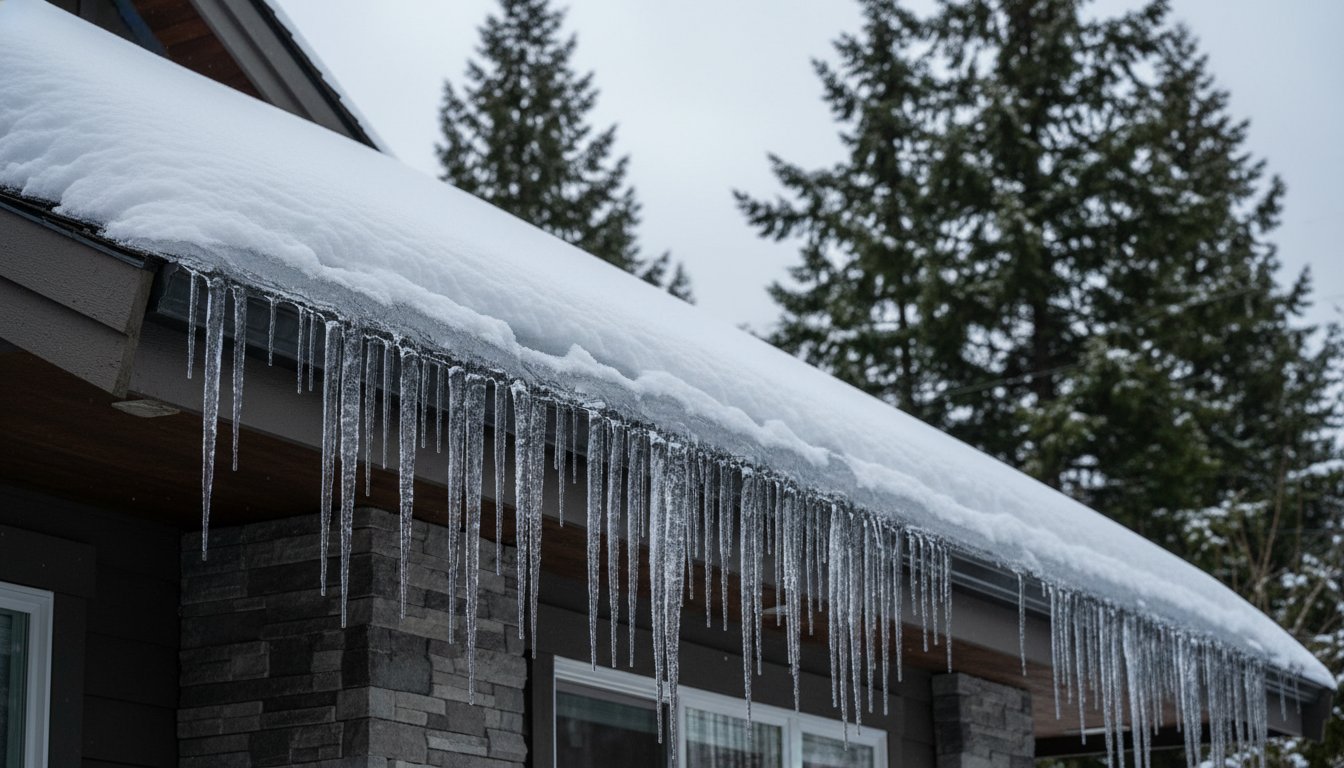

Imagine waking up on a freezing Tuesday morning in January to find a dark, wet stain spreading across your living room ceiling. For many Nanaimo and Duncan homeowners during the record-breaking cold snap of January 2024, this wasn't just a bad dream; it was the reality of an ice dam. It's a stressful situation that leaves you wondering how to prevent ice dams on roof surfaces before the next storm hits. We understand that your home is your biggest investment, and seeing water damage is genuinely alarming.
You want to stay safe on the ground rather than risking a fall from an icy ladder or guessing which chemicals are safe for your shingles. This 2026 guide provides practical, local strategies to keep your Vancouver Island home dry and secure all winter long. You'll discover clear maintenance steps you can do yourself and learn exactly when it's time to bring in a certified expert. We'll walk you through effective insulation techniques and the real pros and cons of using heat cables so you can move forward with confidence.
For readers interested in the standards of high-quality professional care across the Pacific Northwest, you can learn more about Advanced Roofing and their 40-year legacy of family-owned service.
Understanding Ice Dams in the Nanaimo and Duncan Climate
Ice dams aren't just a problem for the snowy prairies. In Nanaimo and Duncan, our unique coastal climate creates the perfect conditions for roof damage that many homeowners don't see coming. An ice dam is a ridge of ice that forms at the edge of a roof and prevents melting snow from draining off. The physical process of ice dam formation begins when heat escaping from your attic melts the snow on the upper parts of your roof. This water flows down to the cold eaves, where it refreezes into a solid barrier.
Vancouver Island's humid winter air plays a major role here. High humidity means the air holds more thermal energy, which can accelerate the melting process on your shingles even when the outside temperature is near freezing. In Nanaimo, we often experience a "back-up" effect. When the sun goes down, the temperature drops rapidly, and any standing water on your roof turns into ice. This cycle repeats daily, making it essential to understand how to prevent ice dams on roof structures before the weight and moisture cause structural issues.
While we focus on local solutions for Nanaimo and Duncan, looking at industry leaders like Third Coast Spray Foam can provide insight into how advanced insulation techniques effectively prevent ice dams in cold climates by sealing the attic from heat loss.
You can spot a developing problem by looking for these warning signs:
- Large, heavy icicles forming only on the gutters and not on other parts of the house.
- Dark spots or moisture stains on your exterior siding or interior drywall.
- Uneven snow melt where certain patches of the roof are bare while others are thick with snow.
- Water dripping from the soffits or behind the gutter line.
Why Vancouver Island Roofs Are Vulnerable
Our local weather is different from the rest of Canada. We rarely get dry, powdery snow. Instead, Nanaimo and Duncan get wet, heavy snow that packs down tightly. This heavy snow acts like an insulator, trapping attic heat and fueling the melt-freeze cycle. Many local homes also feature low-pitch roof designs. These styles don't shed snow as quickly as steep gables do, allowing moisture to sit longer. We also face the "Nanaimo Freeze," where a rainy 4°C afternoon turns into a -3°C night, flash-freezing runoff in your gutters and creating an instant dam.
This trapped heat is often the result of an inefficient or improperly vented heating system. To prevent your home from contributing to the melt-freeze cycle, you can explore Furnace Installation & Repair for solutions that improve your home’s overall thermal performance.
The Anatomy of a Roof Leak
When an ice dam forms, the backed-up water often finds its way under the shingles, where it can rot the roof deck and eventually leak into your home’s interior. This progression highlights the importance of professional inspections to catch minor issues before they become major failures. Even for homeowners in different regions, the principles of quality roof maintenance are universal; you can learn more about Supreme Roofing and Reconstruction and their approach to residential and commercial roof care.
The Crucial Connection Between Gutter Health and Ice Dams
In Ladysmith and Cedar, homeowners often overlook their gutters until a leak happens. However, clogged gutters are the primary catalyst for ice dam damage in our coastal region. When your gutters are full of organic debris, they can't do their job. Instead of channeling water away, they trap it right at the roof's edge. This is a critical step in understanding how to prevent ice dams on roof structures during a cold Vancouver Island winter.
Maintaining a functional drainage system is a cornerstone of residential roofing care, and thoughtfulroofer.com provides expert insights into professional gutter services and roof protection.
When meltwater from the warmer parts of your roof hits a gutter filled with frozen leaves, it has nowhere to go. It pools and freezes, creating a solid block of ice. This blockage eventually pushes water back under your shingles, leading to expensive interior repairs. Scheduling regular gutter cleaning services is the most effective way to break this cycle before the temperatures drop below freezing.
Debris as a Dam Foundation
Moss and fallen leaves act like a sponge, soaking up moisture and holding it against your fascia boards. This damp environment accelerates the freezing process. Once that slush turns to solid ice, the weight becomes a major concern. A standard gutter filled with ice can weigh over 15 kilograms per meter; this puts immense strain on your home's structural integrity. Professional moss removal is essential here. It eliminates the water traps that allow ice to gain a foothold on your roofline, preventing gutters from sagging or pulling away from the house entirely.
Ensuring Proper Drainage Flow
Downspouts are your roof's primary defense, but they're prone to the "ice plug" effect. If even a small amount of debris sits at the bottom of the spout, water backs up and freezes the entire column solid. Learning how to prevent ice dams on roof surfaces starts with a clear exit path for water. We recommend checking your gutter pitch before the first Nanaimo snowfall. If the angle is off by just a few degrees, water will pool instead of draining.
Professional cleaning is far more effective than a quick DIY sweep because experts check for these subtle structural issues. A reliable team ensures every drop of meltwater moves away from your foundation safely and efficiently. If you want to protect your home this winter, you can book a free consultation to ensure your drainage system is ready for the ice.
5 Practical Ways to Prevent Ice Dams This Winter
Keeping your home safe during a Vancouver Island winter requires a proactive approach. Learning how to prevent ice dams on roof structures starts with managing heat and moisture before the first freeze hits. Our team focuses on reliable solutions that stop ice at the source. Follow these five professional steps to protect your property.
- Keep your gutters clean: Remove 100% of autumn leaves and organic debris. Clogged gutters trap melting snow, which quickly freezes into solid blocks of ice when temperatures drop at night. This preventative maintenance is a core recommendation from professional roofing experts like Half Price Roof for protecting both residential and commercial structures across the United States.
- Improve attic ventilation: A cold roof is a safe roof. Proper airflow ensures the underside of your roof deck stays close to the exterior temperature, preventing the snow on top from melting unevenly. For professional residential HVAC assessments, Crome Mechanical offers expert services to help maintain optimal home ventilation.
- Use a roof rake: Safely pull heavy snow off your eaves from the ground. Removing the fuel for ice dams is an efficient way to prevent buildup during heavy cycles of snowfall.
- Install professional heat cables: For chronic problem areas, high-quality heat tapes provide a clear path for meltwater to reach the ground. These should be professionally installed to ensure they meet Canadian electrical safety standards.
Short-Term Fixes for Immediate Protection
If you're already seeing snow pile up in Parksville or Qualicum Beach, grab a long-handled roof rake. Stand safely on the ground; never climb a ladder in icy conditions. Clear the first 3 to 4 feet of snow from the eaves. We recommend following the 6-inch rule for coastal homes. Once the snowpack exceeds 15 centimetres, the weight and insulation value increase the risk of ice formation. If a dam has already formed, fill a pair of pantyhose with calcium chloride and lay it vertically across the ice. This creates a channel for water to escape. Avoid rock salt, as the sodium chloride corrodes shingles and kills your garden plants when it melts.
Long-Term Structural Solutions
Addressing the root cause of ice dams often involves structural improvements to your home's insulation. Proper thermal barriers prevent heat from reaching the roof deck in the first place. For those looking to understand high-level standards in thermal management and energy efficiency, mesch-protect.de provides an excellent overview of industrial-grade insulation and protection strategies.
In addition to insulation, upgrading to energy-efficient windows can further stabilize your home's internal temperature and reduce the heat escaping toward the roofline. For those interested in premium exterior upgrades, you can visit Window Galaxy USA to learn more about professional window replacement options.
When repairs and insulation are no longer enough to protect your home, a more permanent solution may be necessary. To ensure your property is fully equipped for the next cold snap, you can explore Roof Replacement as a way to upgrade your home's defense system and improve its overall value.
Safe Snow Removal: Why Professional Help Matters
Clearing snow from a roof is a high-stakes task that goes far beyond a simple weekend chore. On Vancouver Island, our "wet" snow is notoriously heavy and often hides a slick layer of ice underneath. Climbing onto a sloped roof in Nanaimo during a cold snap is a recipe for disaster. While you are likely researching how to prevent ice dams on roof to protect your investment, doing it yourself often leads to more harm than good. DIY attempts frequently result in personal injury or accidental damage to the home's exterior.
JBM Custom Contracting focuses on safety and precision for every winter property maintenance job. We understand that your roof is your home's first line of defense. Our team is Certified & Fully Insured, which means we bring the right tools and the right coverage to every site. You don't have to worry about the liability or the physical strain of managing heavy snow loads on your own.
Avoiding Roof Damage During Snow Removal
Metal shovels should never touch your roof surface. The sharp edges easily scrape away the protective granules on your shingles or puncture the waterproof membrane. This type of physical damage often voids manufacturer warranties, leaving you with a massive repair bill when spring arrives. We also see many homeowners try "ice picking" to clear frozen gutters. This aggressive tapping destroys gutter seals and bends the aluminum hangers. Our professional techniques involve using specialized poly-plastic tools and telescopic roof rakes. We clear the eaves without harming the structure, which is a critical step in how to prevent ice dams on roof by allowing meltwater to flow freely into the drainage system.
The Safety Factor for Homeowners
Don't risk a fall or a damaged roof this winter. Contact JBM Custom Contracting for professional snow removal services you can trust.
Reliable Winter Property Maintenance in Nanaimo & Duncan
JBM Custom Contracting understands the specific weather challenges homeowners face on Vancouver Island. From the heavy, wet snowfalls in Nanaimo to the freezing cycles in Duncan, your home endures significant stress every winter. We help you stay ahead of the storm by identifying vulnerabilities before the first frost hits. Our team focuses on practical solutions that keep your family safe and your property intact.
We proudly serve the local community from Ladysmith to Qualicum Beach. Our crew is local, certified, and fully insured, ensuring that every job meets high safety standards. We don't just show up; we provide "Professional & Reliable" services that Duncan and Nanaimo residents have come to trust for years.
While winter weather keeps the focus on roof safety, many homeowners also use the colder months to plan for future property enhancements. For inspiration on high-quality backyard transformations, you can learn more about Marlin Exteriors, Inc. and their approach to designing custom swimming pools that elevate a home's exterior.
Comprehensive Exterior Care
- Professional gutter clearing to ensure proper drainage.
- Safe snow removal that protects your roofing materials.
- Moss treatment to prevent moisture retention.
- Detailed site cleanup so you never have to pick up after us.
Book Your Free Consultation Today
Getting your home ready for winter shouldn't be a headache. We make scheduling simple for all residents across the Mid-Island region. Whether you need a detailed estimate for winter prep or urgent assistance with snow clearing, our team is ready to respond. You get the peace of mind that comes with hiring a local, trusted contracting partner who understands the local climate.
Don't wait until the ice starts to form and the gutters overflow. Take action now to secure your home against the elements. Contact JBM Custom Contracting for your free consultation!
Prepare Your Home for a Safe Nanaimo Winter
Protecting your property starts with a clear plan. You've learned that maintaining clear gutters and ensuring proper attic ventilation are the most effective strategies for a dry home. Environment Canada records show Nanaimo receives an average of 68 cm of snow annually, which creates frequent melt and freeze cycles on local rooftops. When you understand how to prevent ice dams on roof structures, you stop water from backing up under your shingles. Our team is locally owned and operated in Nanaimo, using professional equipment to manage these winter risks safely and efficiently.
For homeowners who want to see how these professional standards are applied in other regions, you can discover Thoughtful Roofer Inc. and their guide to protecting your home through quality roofing and maintenance.
We look forward to helping you keep your property safe and sound this year.
Frequently Asked Questions
Is it okay to have some icicles on my roof in Nanaimo?
Will salt melt ice dams without damaging my shingles?
How much snow on the roof is too much for a coastal home?
Coastal snow is often twice as heavy as dry prairie snow, so 30 centimetres of wet accumulation can put significant stress on your rafters. While Canadian building codes ensure roofs handle 40 to 50 pounds per square foot, slushy coastal snow reaches that limit quickly. You should consider professional snow removal once accumulation exceeds 15 centimetres to maintain safety and precision.
Does gutter cleaning really prevent ice dams?
Professional gutter cleaning is a foundational step in how to prevent ice dams on roof because it keeps drainage paths open. When 100% of your gutters are clear of debris, meltwater flows directly to the downspouts instead of pooling and freezing at the roof edge. Clogged gutters are a primary factor in 30% of ice dam cases in British Columbia.
Can I prevent ice dams from the inside of my attic?
Yes, addressing attic insulation is one of the most effective ways to prevent ice dams from the inside. By creating a strong thermal barrier, you keep heat from escaping and melting the snow on your roof. Even in different climates, the principles of thermal protection remain the same; you can check out Cape Coral Insulation to see how professional contractors ensure homes are properly insulated.
What should I do if water is already leaking into my house?
If water is leaking inside, your first priority is to stop the flow by cooling the roof from the inside. Aim a box fan at the leak in the attic to freeze the water and slow the ingress. Don't use a hammer or axe to break the ice from the outside, as 80% of DIY attempts result in punctured shingles and more expensive repairs.