

What if the messiest part of a renovation could be made more manageable with a clear plan before the first sheet of drywall comes down? It’s natural to wonder how much needs removing, how dust will affect the rest of the property, and what happens to the debris afterward. A professional drywall removal service should make those details part of the conversation from the start.
With JBM Custom Contracting, drywall removal fits into practical demolition and renovation work, supported by junk removal to help create a cleaner handoff to the next stage. JBM is certified and fully insured, serving Nanaimo and nearby Vancouver Island communities, including Lantzville, Ladysmith, Cedar, Parksville, Qualicum Beach, Cowichan, and Gabriola Island.
This guide explains how the removal scope is established, what you can do to prepare rooms and occupants, and how dust control, debris handling, and renovation handoff fit into the project. It also highlights an important first consideration for older buildings: drywall may need assessment for asbestos before removal and disposal. Knowing what to discuss ahead of time can help you plan with more confidence and keep the work moving safely.
When does a drywall removal service make sense for your property?
Renovating a kitchen, changing a room’s layout, or dealing with damaged wallboard can all raise the same question: should the drywall be removed, or can the work stay limited to a repair? A drywall removal service makes sense when the project needs a section or entire room opened up, rather than a small surface patch. The right scope depends on the renovation plan and the area affected.
Drywall is the familiar panel material that forms many interior walls and ceilings. Its composition and common types are outlined in this Drywall overview. Removal is a demolition step that clears the way for planned work. It doesn’t include rebuilding the wall or completing the renovation itself.
This video demonstrates the basic process of removing drywall:
Which projects commonly need drywall removed?
Removal is often part of a renovation when existing walls or ceilings need to come down before the next stage can begin. A room reconfiguration may call for opening a larger area to change the layout. Drywall may also need to be removed to provide access to a concealed area as part of planned work.
Visible damage can prompt a closer look at how much material the project actually needs to address. A small mark or isolated hole may call for a limited repair, while damage across a wider area may lead to consideration of a larger section. Appearance alone doesn’t establish what’s behind a wall or how far an issue extends, so the removal scope should reflect the project and the area being worked on.
When might repair be enough instead?
A small, isolated surface flaw may be manageable with patching or another surface repair, especially when the wall’s layout and surrounding material can remain in place. Broader removal is more relevant when the goal involves changing a room, replacing a larger affected area, or reaching a concealed space. The decision comes down to the work planned and how much drywall it requires, not simply whether a wall has a blemish.
For a wider renovation or small-demolition project, JBM Custom Contracting provides demolition services as part of the practical work needed to prepare a property. Debris removal can also support a cleaner handoff; explore junk removal in Nanaimo for that part of the project.
What happens during professional drywall removal?
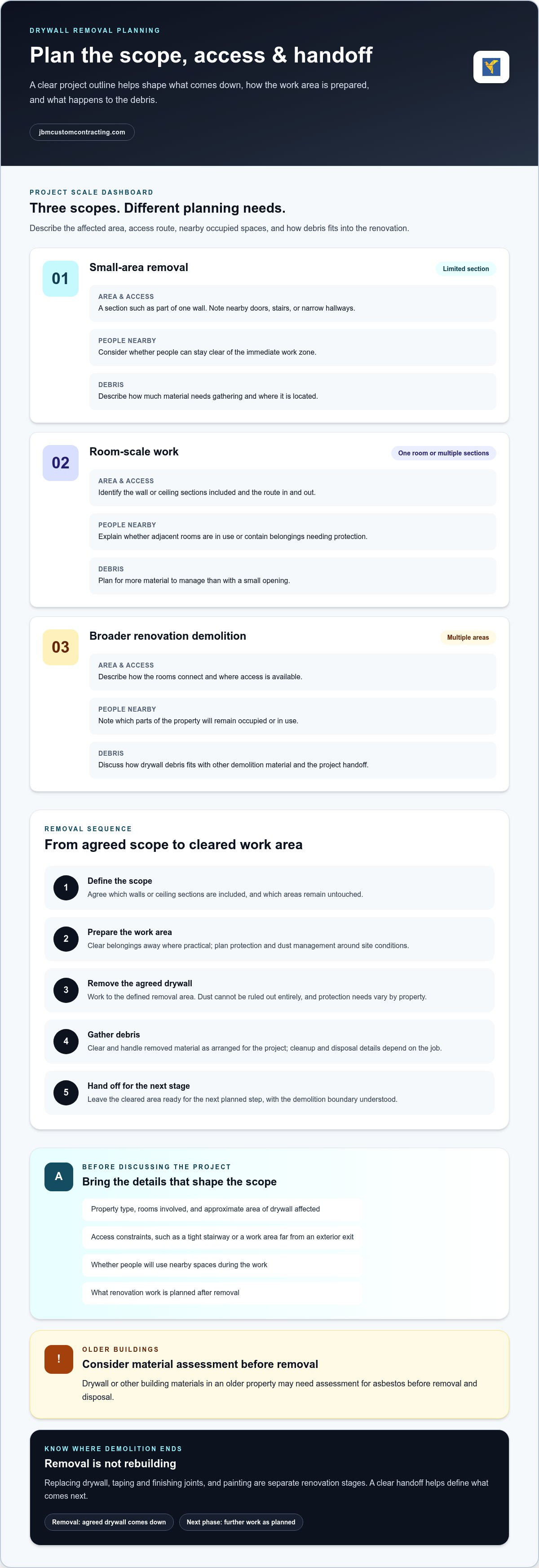
A professional drywall removal service follows a clear sequence: define what needs to come down, prepare the work area, remove the agreed material, gather debris, and leave the space ready for the next planned step. The details depend on the property, the removal area, and how occupants use nearby rooms. There’s no one-size-fits-all setup, and dust can’t be ruled out entirely.
How is the work area prepared?
Before removal begins, the scope and access route need to be understood. That means identifying which walls or ceiling sections are included, which areas should remain untouched, and how the work zone can be reached. Clear expectations help prevent confusion once demolition starts.
You can help by moving furniture, personal belongings, and other items away from the work zone where practical. Protection and dust management are then planned around the site conditions, including the layout and how closely occupied areas sit beside the removal area. These measures can help contain disruption, but the level of protection needed varies from property to property.
What follows the drywall coming down?
Once the agreed drywall is removed, the material needs to be gathered and the work area cleared as arranged for the project. Handling the debris is part of keeping the site orderly and making the next step easier to plan. Specific cleanup and disposal details depend on the project.
Removal is not the same as rebuilding. It doesn’t automatically include replacing drywall, taping and finishing joints, or painting. Those are separate stages of renovation, and the space may need further work before it’s ready for regular use. A clear handoff helps everyone understand where demolition ends and the next phase begins.
In brief: agree on the scope, prepare the work zone, remove the specified drywall, gather debris, and hand over the cleared area for the next planned stage.
For projects that also need unwanted material taken away, JBM’s junk removal service can support a cleaner project handoff. Discussing the removal area and what comes next helps shape a practical plan for the property.
How to assess scope, debris, and safety before booking
A useful project description goes beyond “one wall” or “a damaged room.” The affected area, access route, nearby occupied spaces, and renovation plans all help shape the removal scope and debris needs. This gives the work a practical starting point without guessing at cost or assuming every property can be approached the same way.
Use this comparison to organise the details before discussing a drywall removal service:
| Project scale | Area and access | Occupied spaces | Debris considerations |
|---|---|---|---|
| Small-area removal | A limited section, such as part of one wall; note nearby doors, stairs, or narrow hallways. | Consider whether people can stay clear of the immediate work zone. | Describe the amount and location of material to be gathered. |
| Room-scale work | One room or several wall and ceiling sections; identify the route in and out. | Explain whether adjacent rooms are in use or contain belongings that need protection. | Expect a larger volume to manage than with a small opening. |
| Broader renovation demolition | Multiple areas or a wider renovation scope; describe how the rooms connect and where access is available. | Note which parts of the property will remain occupied or in use. | Discuss how drywall debris fits with other demolition material and the project handoff. |
What project details help define the work?
Describe the property type, the rooms involved, and the approximate area of drywall affected. Include access constraints, such as a tight stairway or a work area far from an exterior exit, as well as whether people will be using nearby spaces. If the removal is part of a renovation, explain what work is planned next. A project-specific assessment can then set a suitable scope instead of treating every job as identical.
What if the drywall or building materials are older?
Age can be a reason to pause and consider what materials may be present before anything is disturbed. You can share the building’s age, if known, and any concerns about the materials with the project team. Don’t rely on appearance alone to identify what a material contains. If something raises a safety concern, stop before disturbing it and seek assessment from a qualified specialist. The scope and debris plan should account for any findings before removal proceeds.
Clear information up front helps align the removal area, access, occupied spaces, and debris needs. It also makes the handoff to renovation work easier to plan.
How to prepare for drywall removal in Nanaimo and nearby communities
A little preparation can make drywall removal easier to coordinate, especially if people will remain in the property while work is underway. Before a drywall removal service begins, clear details about the work area, access, and nearby rooms help shape a plan suited to the property. The exact preparation depends on which drywall is coming down and how the space is used.
What should you do before the crew arrives?
Use this checklist to get the area ready:
- Move belongings: Clear personal items, valuables, and furniture from the planned work area where practical. Remove fragile items from nearby surfaces if they could be affected by activity in the room.
- Identify access: Point out the entry route and any narrow passages, stairs, or access limits. Share parking considerations so arrival and movement around the property can be planned.
- Communicate with occupants: Let household members, tenants, or staff know which spaces may be affected. Make clear which areas should be avoided during the work.
- Explain what comes next: Share the renovation work planned after removal. This helps clarify the intended scope and the handoff needed for the next stage.
For broader planning, JBM’s demolition contractor hiring guide offers additional context for property owners preparing a demolition project.
How should Nanaimo-area customers plan the project?
JBM Custom Contracting serves Nanaimo and nearby Vancouver Island communities, including Lantzville, Ladysmith, Cedar, Parksville, Qualicum Beach, Cowichan, and Gabriola Island. Sharing the property’s location along with the removal area, access details, and whether rooms will remain occupied gives the project a clearer starting point. Planning is tailored to the property and the work involved, rather than relying on a one-size-fits-all setup.
If the project includes more than drywall removal, such as a wider renovation or demolition, describe the related work and the intended next step. This helps clarify how the removal fits into the overall project and what kind of handoff the space needs. Preparing occupants and clearing belongings ahead of time can also make the work area easier to manage.
Discuss your demolition project with JBM
Choose JBM Custom Contracting for a reliable drywall removal project
Drywall removal is one step in a larger property project. A dependable contractor helps keep that step connected to the renovation or demolition work around it, so the scope and next-stage needs are clear. JBM Custom Contracting is certified and fully insured, offering property owners in Nanaimo and nearby Vancouver Island communities a professional partner for demolition, renovation, and junk removal.
What makes JBM a practical project partner?
JBM’s experience with demolition and renovation supports practical coordination when drywall needs to come down as part of a broader project. Whether the work involves opening a specific area or preparing space for planned changes, the removal scope can be considered alongside the property’s goals and the work that follows.
Junk removal can also support the transition after demolition by helping address unwanted material as part of the project. The details depend on the work involved, so it’s useful to discuss the removal area and what the space needs to be ready for next. This keeps expectations focused on the actual project rather than assumptions about a fixed process or outcome.
What is the next step for your drywall removal project?
Start with a clear description of the property and the work you have in mind. Share which rooms or wall sections are affected, what prompted the removal, and whether the project is part of a larger renovation. Mention access considerations and what you hope to do after the drywall is removed. These details help shape a scope that fits the property and the intended handoff.
JBM Custom Contracting brings demolition, renovation, and junk-removal services together to support practical property projects. For a drywall removal service in Nanaimo, sharing the scope is a straightforward way to begin a conversation about the work.
Contact JBM Custom Contracting
Plan your drywall removal project with confidence
A successful drywall removal project starts with a clear scope. Decide which areas need to come down, consider how the work zone connects to occupied rooms, and share access details before work begins. If the building materials are older or raise a safety concern, pause before disturbing them and arrange an appropriate assessment.
Remember, removal is a demolition step, not the rebuild. Planning the debris handoff and the renovation work that follows can help keep the project moving in the right direction. JBM Custom Contracting is certified and fully insured, offering demolition, renovation, and junk-removal services in Nanaimo and nearby Vancouver Island communities.
Share which rooms are involved, what prompted the removal, and what you hope to do next. Those details can help shape a practical project scope.
With a clear plan and a dependable local team, you can take the next step toward a property that’s ready for its renovation.
Frequently Asked Questions
What does a drywall removal service include?
A drywall removal service typically covers agreeing on the removal area, preparing access and nearby spaces, taking down the specified drywall, and gathering the removed material. The exact scope depends on the property and renovation plan. Removal is a demolition step, not rebuilding: replacing drywall, finishing seams, and painting are separate work. Discussing what happens to debris and what the area needs for the next stage helps clarify the handoff.
How do I know if drywall needs to be removed or repaired?
Repair may be suitable for isolated surface damage, such as a small hole or scrape, if the project doesn’t need access behind the wall. Removal may make more sense if a renovation requires a larger area opened, a room layout changed, or a wider section addressed. Visible damage alone can’t show what lies behind the surface. The project goal and affected area guide the scope.
How should I prepare my home for drywall removal?
Move valuables, furniture, and personal belongings away from the planned work area where practical. Point out entry routes, stairs, parking considerations, and rooms that should remain undisturbed. Tell household members which spaces may be affected and help keep them clear during the work. If the property will remain occupied, mention that when planning so protection and access can be considered for the specific layout.
Is drywall removal dusty?
Drywall removal can create dust, so it’s best not to expect a dust-free process. The amount of protection and dust management needed depends on the removal area, access, and nearby occupied rooms. Moving belongings out of the work zone and identifying spaces that need protection can help with planning. Discuss how the rooms connect and how the property is used before work begins.
What should I do if I suspect asbestos in older drywall or building materials?
Don’t disturb material that raises an asbestos concern. Pause the planned work and arrange assessment by a qualified professional before removal proceeds. Building age can be useful context, but appearance alone can’t confirm what a material contains. JBM Custom Contracting does not provide asbestos testing or abatement, so any concern about suspect material needs to be addressed before ordinary demolition or debris handling takes place.
Does drywall removal include hauling away the debris?
Debris gathering and hauling arrangements depend on the project scope, so they should be part of the plan rather than assumed. JBM offers demolition and junk-removal services that can support project needs, but the work and handoff are specific to the property. Clarify what material is included, what the area should look like afterward, and how removal connects with the renovation stage that follows.
Does JBM Custom Contracting serve Nanaimo and nearby Vancouver Island communities?
Yes. JBM Custom Contracting’s stated service area includes Nanaimo, Lantzville, Duncan, Ladysmith, Cedar, Parksville, Qualicum Beach, Cowichan, and Gabriola Island. The company provides demolition, renovation, and junk-removal services and describes itself as certified and fully insured. For a project, share the property location, rooms involved, and renovation goals so the work can be planned around the specific site.