

What if the number of cabinets isn’t the biggest factor in your removal quote? The cost to remove kitchen cabinets can depend just as much on what needs to come out around them, how the cabinets are attached, and how debris will be handled. That can make it hard to tell whether an estimate covers cabinet removal alone or a larger demolition job.
It’s reasonable to want a clear scope before removal begins, especially when the work needs to fit around renovation plans or other trades. This guide explains the main factors that shape an estimate, how cabinet-only removal differs from wider kitchen demolition, and what project details help define the work.
JBM Custom Contracting provides demolition and renovation services in Nanaimo and communities across Vancouver Island, including Lantzville, Duncan, Ladysmith, Cedar, Parksville, Qualicum Beach, Cowichan, and Gabriola Island. Whether you’re removing cabinets as part of a renovation or planning a broader kitchen teardown, understanding the scope, site conditions, and debris handling can help you prepare.
What Determines the Cost to Remove Kitchen Cabinets?
A cabinet-removal estimate reflects the work involved in your kitchen, not a fixed amount for each cabinet. The cost to remove kitchen cabinets can change with the room’s layout, how the cabinets are built and attached, access to the work area, and whether the project includes demolition beyond the cabinets themselves.
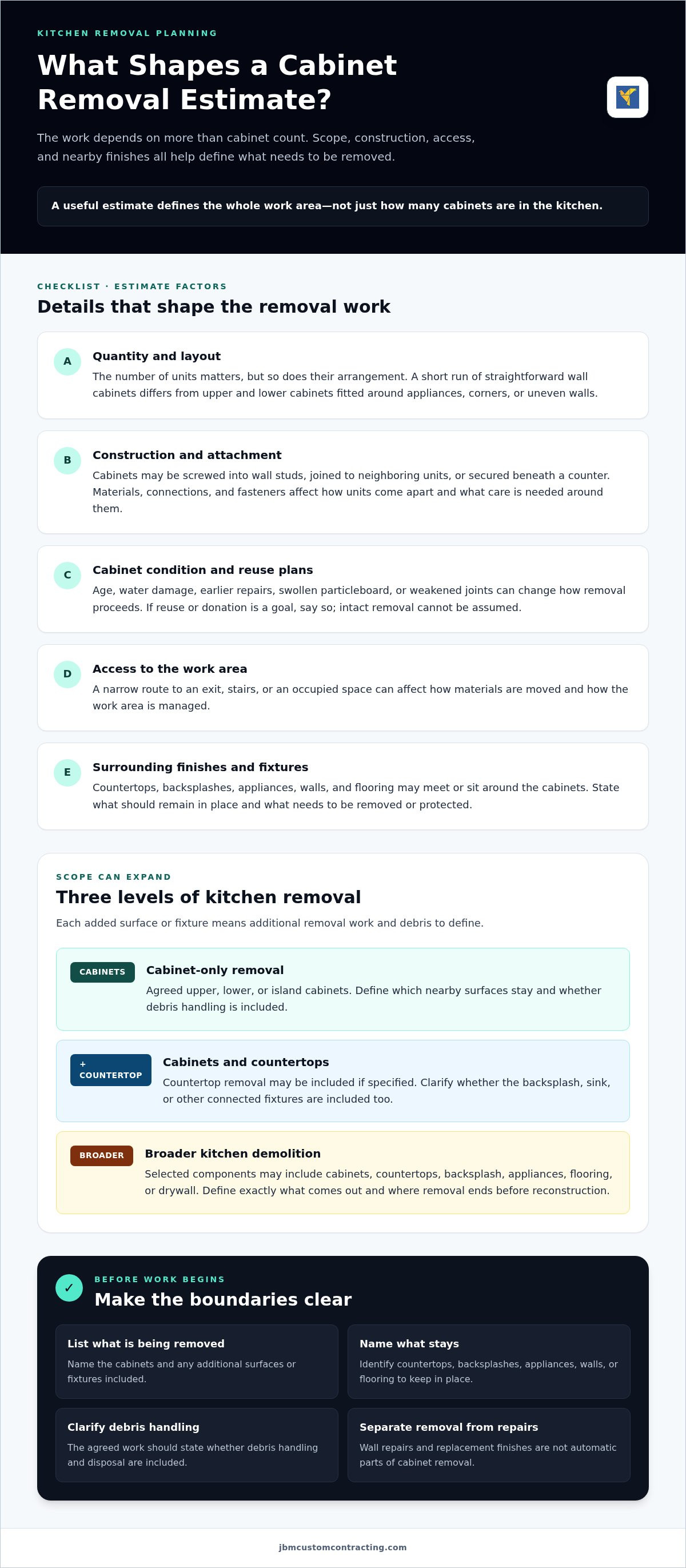
Removing a short run of straightforward wall cabinets is different from taking out upper and lower cabinets fitted around appliances, corners, or uneven walls. Cabinet materials and finishes can also affect how the units come apart and how carefully nearby surfaces need to be protected. A useful assessment considers the whole work area, not just the cabinet count.
Cabinet count alone can’t determine an estimate. Scope, construction, attachment, access, and surrounding finishes all shape the removal work.
Which details shape a cabinet-removal estimate?
Quantity and layout help establish how much needs to be removed, but site conditions matter too. Cabinets may be screwed into wall studs, joined to neighbouring units, or secured beneath a counter. Their construction, fasteners, and the condition of the wall can affect how removal proceeds and what care is needed to limit damage to surrounding finishes. For background on cabinet types, materials, and finishes, see Kitchen cabinet.
Access affects project logistics as well. A narrow route from the kitchen to an exit, stairs, or a space that remains occupied during work can affect how materials are moved and how the work area is managed. Share these details during an assessment to help define the job clearly.
What is included in cabinet-only removal?
Cabinet-only removal focuses on taking out the cabinets included in the agreed scope. It doesn’t automatically include removing countertops, backsplash, appliances, or flooring. These elements may be connected to or positioned around the cabinets, but each adds work and should be identified separately if it’s required.
The estimate should state what is being removed and what falls outside the agreed work. Wall repairs, replacement finishes, and other renovation tasks aren’t automatic parts of cabinet removal. Defining the scope helps coordinate the work with the next stage of your renovation and distinguishes a cabinet-only project from full kitchen demolition. For broader removal work, JBM Custom Contracting also provides demolition services.
How Cabinet Type, Condition, and Surrounding Finishes Affect Removal
Cabinets that look similar from the outside can be built differently behind the doors. Solid wood, plywood, and particleboard are common materials, but construction, connections, and condition all affect how a unit can be taken apart. These details help explain why the cost to remove kitchen cabinets depends on the work and care involved, not just the number of units.
Why cabinet material and condition matter
Different cabinet assemblies may call for different removal approaches. Some units can be loosened and taken down in sections, while others are joined closely together or secured in ways that make separation more involved. Material alone doesn’t determine whether cabinets can be removed intact.
Age, water damage, and earlier repairs can also change the task. Swollen particleboard, weakened joints, or areas affected by a leak may break apart more easily during removal. If you hope to reuse or donate the cabinets, mention that before work begins. Their condition and attachment will affect whether careful removal is practical, but intact removal can’t be assumed.
How nearby finishes change the work
Cabinets often meet other kitchen surfaces. A countertop may sit on the base cabinets, a backsplash may run down to the counter, and wall or floor finishes may continue behind or beneath the units. Separating these materials can affect how much work is involved and how carefully adjoining areas need to be handled.
Be clear about what should remain in place. For example, keeping the countertop while removing the base cabinets changes the requested scope compared with removing both. The same applies to backsplashes, walls, and flooring. Identifying these priorities early helps shape a clear plan and coordinate with the next renovation stage.
Cabinet removal and a fully stripped kitchen are different scopes. Removing cabinets doesn’t automatically include taking out countertops, backsplash, appliances, or flooring. Nor does removal automatically cover wall repairs or replacement finishes. Include those tasks in the agreed scope if they’re part of the project.
For a renovation or small-demolition project, assessing cabinet condition and adjoining finishes helps define the work before it starts. Explore JBM Custom Contracting’s renovation and demolition services as you plan your kitchen project.
Cabinet-Only Removal vs. Full Kitchen Demolition: Compare the Scope
The difference between removing cabinets and stripping a kitchen comes down to what the project includes. Each added surface or fixture can mean more removal work, different handling, and more debris. Comparing the scope helps you understand what an estimate covers before renovation work begins.
| Project scope | Work that may be included | Details to define |
|---|---|---|
| Cabinet-only removal | Taking out agreed upper, lower, or island cabinets. | Which cabinets are coming out, which nearby surfaces should remain, and whether debris handling is included. |
| Cabinets and countertops | Removing cabinets and, if included, the countertop. | Whether the backsplash, sink, or other connected fixtures are also part of the work. |
| Broader kitchen demolition | Removing selected kitchen components, potentially including cabinets, countertops, backsplash, appliances, flooring, or drywall. | Exactly which elements are being removed, how debris will be handled, and where removal ends before reconstruction begins. |
This comparison shows why the cost to remove kitchen cabinets can’t be estimated accurately without defining the scope. The items in the table are examples, not automatic inclusions. The agreed work should also describe debris handling and disposal so you know whether those tasks are included.
When is cabinet-only removal the right scope?
Cabinet-only removal may suit a project where you plan to keep features such as the flooring, backsplash, or appliances. Identify what must stay in place and what needs protection. Cabinets can be attached to or meet adjoining finishes, so keeping those surfaces doesn’t guarantee they’ll be unaffected. Clear priorities help set realistic expectations.
When does a project become broader kitchen demolition?
Adding countertop, backsplash, or fixture removal expands the task beyond taking out cabinets. A wider demolition scope can prepare the room for a renovation, but it isn’t the same as designing the new kitchen, installing replacements, or rebuilding surfaces. JBM Custom Contracting provides demolition services for planned removal work. For a related local pricing reference, see the small-demolitions pricing page.
How to Prepare for a Kitchen Cabinet Removal Estimate
A clear project description helps a professional understand what needs to come out and what should stay. Before requesting an assessment, gather details about your cabinets, kitchen access, and renovation plans. This gives the estimate a clearer starting point and helps define the removal scope.
What project details should homeowners gather?
Use this short sequence to organize the information:
- Mark the cabinets. Note which units need removal, including whether the request covers upper cabinets, lower cabinets, an island, or all of them.
- Identify connected items. List countertops, backsplashes, appliances, and other finishes that may be attached or nearby. Specify which ones should remain in place.
- Describe the condition. Point out visible water damage, loose sections, previous repairs, or other areas that may affect how removal is approached.
- Explain access. Note the route into and out of the kitchen, including narrow doorways, stairs, or areas that will remain occupied.
- Share clear photos. Include wide views of the kitchen and closer images of cabinet connections, damage, and the surfaces you want to keep.
These notes help show whether you’re planning cabinet-only removal or broader demolition as part of a renovation. The small-demolitions pricing information offers context for small demolition projects.
What happens during a professional assessment?
A professional assessment considers the requested scope alongside visible site conditions, cabinet layout, access, and nearby finishes. The discussion should clarify which items are included, what remains in place, and whether debris handling forms part of the agreed work. It also helps distinguish removal from separate repair or replacement work planned for later in the renovation.
Be direct about your priorities. If you’re keeping the counter or backsplash, say so, and share any concerns about damage or reuse. Clear information helps JBM Custom Contracting plan the project with care. JBM is certified and fully insured, giving homeowners added confidence as they plan demolition and renovation work.
Plan Kitchen Cabinet Removal with JBM Custom Contracting on Vancouver Island
Removing cabinets can be one stage of a kitchen renovation or a small-demolition project. JBM Custom Contracting provides renovation and demolition services in Nanaimo and nearby Vancouver Island communities, helping homeowners plan removal around the work that follows. A clear scope makes it easier to understand what the project involves and how it fits your renovation plans.
What to expect from a clearly scoped removal project
Before work begins, agree on which cabinets and other items are to be removed, and identify what should remain. For example, you may want the cabinets removed while keeping the countertop or flooring. Naming those priorities helps define the task, though adjoining surfaces may be affected by how they connect to the cabinets.
Debris handling is another point to include in the agreed scope. Clarify what happens to the removed materials so it’s clear whether handling and disposal are part of the work or a separate project task. JBM approaches removal as part of a carefully scoped renovation or demolition project, with the work shaped by the site and agreed requirements.
To learn more about the work JBM undertakes, visit the demolition services page. The small-demolition project information offers additional context for planning. The cost to remove kitchen cabinets depends on the details of your particular project.
How to take the next step with JBM
When you’re ready to plan, share which cabinets you want removed, what needs to stay, and how the work connects to your renovation. Clear photos can help show the room layout, visible damage, and nearby finishes. Include any plans for countertops, appliances, or other demolition so the project can be assessed with the full scope in mind.
JBM Custom Contracting is certified and fully insured, and provides demolition, renovation, and junk-removal services for homes and businesses. Homeowners in Nanaimo, Lantzville, Duncan, Ladysmith, Cedar, Parksville, Qualicum Beach, Cowichan, and Gabriola Island can plan removal as part of a renovation or demolition project.
Move Forward with a Clear Cabinet Removal Plan
The cost to remove kitchen cabinets depends on the full scope, not cabinet count alone. Cabinet construction and condition, access, nearby finishes, and debris handling can all affect the work. A clear estimate should state what’s being removed, what should remain, and which additional demolition tasks are included.
Before requesting an assessment, note whether you’re removing upper and lower cabinets, identify counters or finishes to keep, and share photos of the kitchen and any visible damage. These details help connect cabinet removal to the next stage of your renovation and make the project scope easier to understand.
JBM Custom Contracting provides demolition and renovation services across Vancouver Island communities. As a certified and fully insured company, JBM can help you plan removal as part of a carefully scoped project.
With a clear plan and professional support, you can take the next step toward a kitchen ready for its renovation.
Frequently Asked Questions
How much does it cost to remove kitchen cabinets?
There’s no single reliable figure without understanding the project. The estimate depends on cabinet quantity, construction and condition, access, adjoining finishes, and whether debris handling is included. Cabinet-only removal is a different scope from broader kitchen demolition that may include counters or other fixtures. Note what should come out and what needs to stay, then request a project assessment from JBM Custom Contracting.
What factors affect the cost of removing kitchen cabinets?
Cabinet layout and quantity, material, condition, and how units are attached all affect the removal work. Tight access or nearby countertops and backsplashes can also shape the plan, as can the agreed scope for handling debris. These details interact, so counting cabinet doors or units alone won’t define the job. Describe the kitchen and the items you want removed to help establish a practical project scope.
Does cabinet removal include countertop and backsplash removal?
Not automatically. Countertops and backsplashes are separate parts of a kitchen project, even though their connections to the cabinets may affect how removal is planned. The agreed scope should clearly state whether these items are staying or coming out. Identify which surfaces and fixtures you want retained and which should be removed to distinguish cabinet-only removal from broader demolition.
Can kitchen cabinets be removed without damaging the walls?
Careful removal can reduce the chance of damage, but a damage-free result shouldn’t be guaranteed before the cabinets and surrounding surfaces are assessed. Attachment points, cabinet condition, older repairs, and tight connections can all affect the wall. Point out finishes that need to remain and discuss them as part of the project scope. This helps set clear expectations and supports a careful plan for the work.
How long does it take to remove kitchen cabinets?
The time required varies with the number and layout of cabinets, their condition, access, and whether the project includes other kitchen elements. Without those details, a fixed timeframe wouldn’t be reliable. Cabinet removal is also separate from later repairs, replacement finishes, installation, or other renovation stages. Share the intended scope and site details when requesting an assessment so the work can be considered in context.
Should I remove kitchen cabinets myself or hire a professional?
The right choice depends on your experience, the cabinets’ condition, nearby finishes, access, and how removal fits into the wider renovation. A professional assessment can help define the scope and identify work beyond cabinet removal. JBM Custom Contracting provides demolition and renovation services, giving homeowners a professional option for planning removal as part of a larger project. The company is certified and fully insured.
What should I do before a cabinet-removal assessment?
List the cabinets to be removed, including whether upper and lower units are involved. Note which countertops, backsplashes, appliances, and finishes should stay, and describe visible damage and access to the kitchen. Clear photos of the room and entry route can help show site conditions. Explain whether the project is cabinet-only or part of a wider renovation. JBM serves communities including Nanaimo, Lantzville, Duncan, Ladysmith, Cedar, Parksville, Qualicum Beach, Cowichan, and Gabriola Island.