

Could the right cleanup plan be what gets your renovation moving again? When lumber, packaging, broken fixtures, or demolition debris crowd the work area, it’s easy to lose time sorting out what goes where and whether a rental bin or a construction debris removal service makes more sense.
That’s a real project concern. Debris can block access and slow the next stage, while a plan that doesn’t fit the job may mean extra handling. A practical approach starts with the materials, the amount to remove, site access, and when the area needs to be cleared.
This guide explains how to prepare a home or business site, organize debris, and compare removal service with a rental bin. You’ll learn what details help plan a cleanup and how to match the approach to your project stage. JBM Custom Contracting is certified and fully insured, providing junk removal and small demolition services in Nanaimo and communities across Vancouver Island.
Construction Debris Removal Service: When Does a Project Need One?
A room can be ready for its next renovation step, but leftover materials may still crowd the floor, doorway, or access route. A construction debris removal service helps clear project-related material from a work area. Unlike routine household junk pickup, it’s planned around the work underway, the debris involved, site access, and when the space needs to be ready.
On Vancouver Island, this can matter during a home renovation, a small demolition, or construction work at a business. A clear work area helps people organize the remaining tasks and reach the parts of the property where work is continuing. JBM Custom Contracting serves Nanaimo and nearby communities with junk removal and small demolition services.
Reducing leftover material starts with thoughtful planning. This video offers practical ideas for managing waste on a construction site:
What kinds of project debris may need clearing?
Renovation and construction work can leave behind familiar materials such as leftover lumber, packaging, drywall, or concrete. These are examples, not a guarantee that every material can be handled the same way. The work completed, the material’s condition, and the amount involved all help shape a practical cleanup plan. For a general overview of the sources and categories, see construction and demolition waste.
Keep project debris distinct from household items you’re simply replacing or no longer using. A box of unwanted belongings and a pile of materials left from a renovation come from different tasks, even if both are taking up space. Clear descriptions and photos of the materials can help explain what needs to be removed. JBM’s junk removal service supports property cleanup around Nanaimo and Vancouver Island.
Why does timely site cleanup matter?
When debris accumulates, it can make it harder to move through the work area, keep materials organized, or prepare for the next planned task. Clearing at a useful project milestone can help make room for the next renovation or construction stage. The right timing depends on the project’s sequence, the amount to clear, and how easily the work area can be accessed.
Construction debris removal is the planned clearing of leftover materials from renovation, demolition, or construction work so the site is ready for its next project stage. Consider the material, amount, access, and timing together; those details help make the cleanup plan more useful for a home or business.
How to Plan Construction Debris Removal Around Your Project
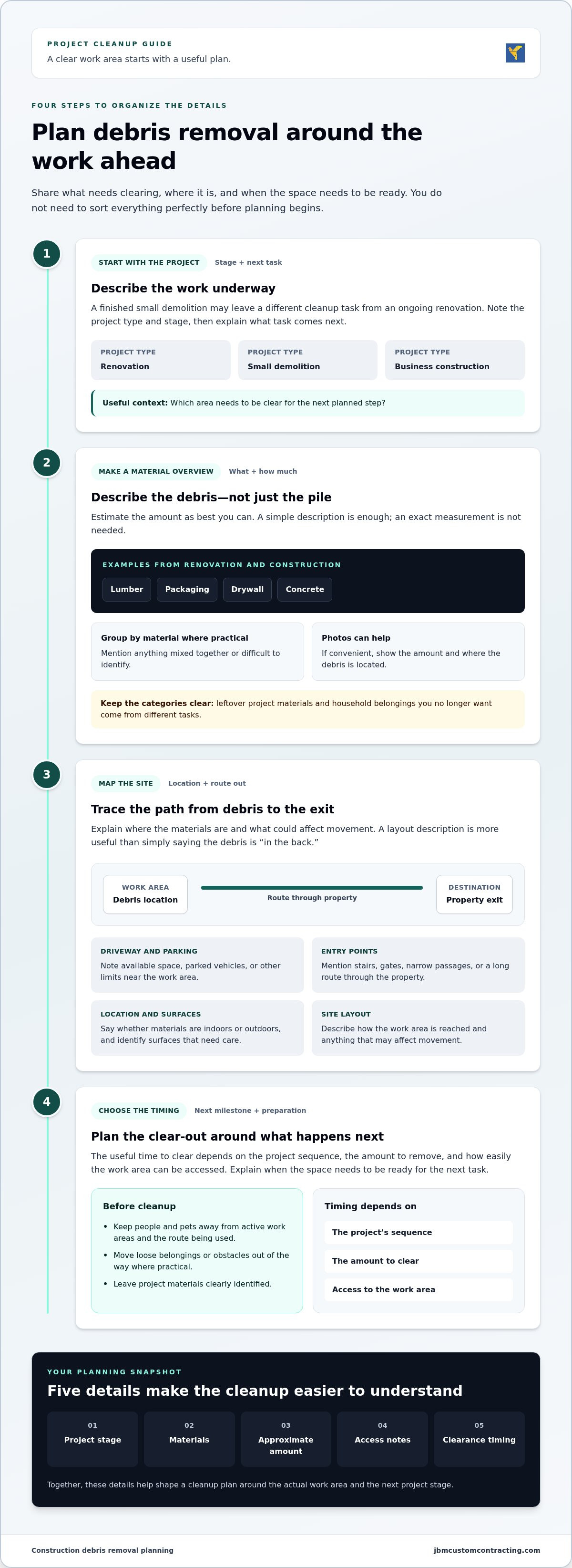
A useful cleanup plan starts with a clear picture of the job. Before arranging a construction debris removal service, gather a few practical details: what work is underway, what needs clearing, where it is, and when the area needs to be accessible. This helps JBM Custom Contracting understand the project and plan around its real conditions, whether it’s a renovation in Nanaimo or construction work elsewhere on Vancouver Island.
What project details should you organize first?
Start with the project type and stage. A small demolition that has just finished may leave a different cleanup task from an ongoing renovation that needs a clear work area for the next step. Then estimate the amount of debris as best you can. You don’t need a precise measurement; a simple description of the pile or area is useful context.
Where practical, group materials by type and describe what’s in each group. Note anything that is mixed together or difficult to identify. Photos can also help show the amount and location, if they’re convenient to take. The goal is to share a straightforward overview, not to sort everything perfectly before planning begins.
For broader ideas on reducing and managing construction materials, the U.S. Environmental Protection Agency’s Sustainable Management of Construction and Demolition Materials resource discusses approaches such as reuse and source reduction. Use it as general background, not as a guide to local Vancouver Island requirements.
How can you prepare the property and access route?
Trace the route from the debris to the property exit. Consider how the area is reached and what could affect movement. A short description of the layout can be more helpful than simply saying the debris is “in the back.”
- Driveway and parking: Note available space, parked vehicles, or other limits near the work area.
- Entry points: Mention stairs, gates, narrow passages, or a long route through the property.
- Location and surfaces: Identify whether materials are indoors or outdoors and point out surfaces that need care.
- Timing: Explain which project task comes next and when the area should be cleared to support it.
Before cleanup, keep people and pets away from active work areas and the route being used. Move loose belongings or obstacles out of the way where practical, while leaving project materials clearly identified. These simple steps help make the site easier to understand and prepare.
Once you’ve gathered the project stage, material overview, approximate volume, access notes, and timing, you have a useful starting point for planning. For related help clearing unwanted items from a property, explore JBM’s junk removal service.
Removal Service or Rental Bin: Which Cleanup Approach Fits?
Both a rental bin and a hands-on removal service can help clear renovation or construction debris. The better fit depends on whether you can load the material yourself, where a bin could sit, how the work is progressing, and how much of the cleanup you want to handle. Neither option is right for every project.
| Consideration | Rental bin | Removal service |
|---|---|---|
| Loading | You generally load debris into the bin. | A hands-on service can help clear accumulated debris. |
| Site access | You need a suitable place for the bin and access for its delivery and pickup. | The route from the debris to the exit matters, including stairs, gates, and narrow areas. |
| Timing | Can suit a project where debris builds up over time. | Can suit a cleanup planned around a project milestone. |
| Customer effort | You organize and load the debris. | You can choose a more hands-on approach to clearing the site. |
When might a rental bin suit the project?
A bin may be practical if there’s enough suitable space on the property and you’re comfortable loading debris as work continues. It can fit a renovation that produces material gradually, provided the site layout and project duration make having a bin there workable. Think about driveway use, access to the work area, and whether loading debris will fit into your project routine. A bin is one option, not the automatic choice for every cleanup.
When might a removal service be more practical?
A removal service may suit you if you’d rather have help clearing debris that has already accumulated, or if loading it yourself would add too much work to an already busy project. A construction debris removal service can be planned around details such as the material mix, the debris location, access through the property, and the stage of the work. The right arrangement depends on the job and how involved you want to be.
For homes and businesses around Nanaimo and Vancouver Island, JBM Custom Contracting provides junk removal as well as small demolition services. Learn more about its junk removal service or read the junk removal services guide for more on planning a property cleanup.
Waste diversion approaches differ by region. CalRecycle’s overview of local C&D diversion programs offers a California example, not guidance on Vancouver Island requirements. For help with a local cleanup, explore JBM Custom Contracting.
How to Prepare Construction Debris for a Safer, Smoother Cleanup
A little preparation can make a construction debris removal service easier to plan and help keep the cleanup area organized. Before work begins, identify where the debris is, what the route out looks like, and which parts of the property need care. You don’t need to take on a major sorting job. Clear notes and a few simple steps can give the removal team useful context.
What should you do before the removal team arrives?
- Clear a practical route. Move unrelated belongings where possible, and make the path from the debris to the exit easier to access.
- Point out tight or sensitive areas. Mention stairs, narrow passages, gates, fragile surfaces, or anything that could affect movement through the property.
- Mark areas to leave alone. Identify belongings, fixtures, or parts of the work area that should remain undisturbed.
- Keep children and pets away. Keep them clear of the active work area while cleanup is underway.
For example, if debris is behind a side gate or in an upstairs room, say so in advance. Clear directions help the team understand the layout and avoid confusion about which items are part of the cleanup.
How should different debris materials be handled in your plan?
Describe the materials as clearly as you can. If the debris includes separate groups, such as wood offcuts and packaging, keep them distinct where practical. Don’t mix an unknown substance into ordinary project debris. If you can’t confidently identify a material, point it out before handling or cleanup begins. Unusual or potentially hazardous materials need to be identified rather than treated as routine debris.
Clear communication matters especially after demolition, when a work area may contain a mix of materials and leftover items. JBM Custom Contracting provides small demolition services as part of its work for homes and businesses across its Vancouver Island service area.
Effective cleanup preparation means clearing access, describing materials honestly, protecting areas that should remain untouched, and keeping people and pets away from active work. These practical steps help everyone understand the site before removal begins.
If cleanup follows a demolition project, learn more about demolition services for home and business projects.
Explore JBM’s demolition services
Construction Debris Removal in Nanaimo and Vancouver Island with JBM
A renovation or small demolition can leave a work area crowded just when you need space for the next task. JBM Custom Contracting serves homes and businesses with junk removal and small demolition services, making the company a local option for project-related cleanup in Nanaimo and nearby Vancouver Island communities.
Its service coverage includes Nanaimo, Lantzville, Ladysmith, Cedar, Parksville, Qualicum Beach, Cowichan, and Gabriola Island. JBM is certified and fully insured, giving homeowners and business owners a local, professional point of contact for property cleanup.
How does JBM support a project cleanup?
Junk removal can help clear unwanted material that has built up during renovation or construction. If cleanup follows a small demolition, connecting the removal plan to the work completed can help clarify what needs attention and what should remain in place. The details matter: describe the project, the debris, its location, and any access considerations so the cleanup can be approached in a practical, straightforward way.
A practical removal plan matches the project details and debris access to the stage of work the property needs next.
Each site is different. Debris might be in a room, along a side yard, or near a business entrance. Stairs, gates, narrow passages, or limited parking can affect how the cleanup is organized. Sharing these details gives a clearer picture of the property without requiring you to plan every step yourself.
What is the next step for a local cleanup project?
Prepare a short overview before getting in touch. Include:
- Project type: renovation, construction, or small demolition.
- Debris description: the materials involved and an approximate amount.
- Location: your community and where the debris is on the property.
- Access details: stairs, gates, narrow routes, parking limits, or surfaces that need care.
These basics help connect the cleanup to your project’s needs and next stage. To discuss a local cleanup, contact JBM Custom Contracting with your project details.
Keep Your Vancouver Island Project Moving
A clear cleanup plan starts with the project itself: identify the debris, consider the site access, and choose between a rental bin and hands-on removal based on the space available and how much loading you want to do. Before cleanup begins, describe materials and access conditions, clear a practical route, and point out areas that should remain undisturbed.
A construction debris removal service can help make cleanup a planned part of your renovation or small demolition, rather than a task that gets in the way of the next stage. JBM Custom Contracting is certified and fully insured, providing junk removal and small demolition services for homes and businesses. Coverage includes Nanaimo, Lantzville, Ladysmith, Cedar, Parksville, Qualicum Beach, Cowichan, and Gabriola Island.
Share your project type, debris description, location, and access details to start planning a practical cleanup for your property.
With the right preparation and local support, you can take the next step toward a clearer work area and a project ready to move forward.
Frequently Asked Questions
What is a construction debris removal service?
A construction debris removal service clears materials left from renovation, construction, or demolition work. Unlike routine household junk pickup, the cleanup plan considers the project stage, the debris and its amount, and how the work area can be accessed. For a home renovation in Nanaimo or a business project in Ladysmith, sharing these details helps shape a practical plan to clear space for the next task.
Can construction debris be removed without renting a bin?
Yes. A rental bin isn’t the only option for clearing project debris. A removal service can be a practical alternative if you’d rather not load materials yourself or don’t have suitable space for a bin. JBM Custom Contracting provides junk removal for homes and businesses around Nanaimo and Vancouver Island. The project’s debris, site access, and timing help determine which approach fits your cleanup.
What types of construction debris can a removal service handle?
Project debris may include materials such as leftover lumber, packaging, drywall, or concrete, depending on the work completed. These are examples, not a promise that every material is handled in the same way. Describe what’s present, how much there is, and whether materials are mixed together. If something is unusual or you can’t identify it confidently, point that out before cleanup planning begins.
How should I prepare my property for construction debris removal?
Make the route to the debris as clear as practical, and move unrelated belongings out of the way where possible. Note stairs, gates, narrow passages, parking limits, fragile surfaces, and areas that should remain undisturbed. Describe where the debris is located and keep children and pets away from the active cleanup area. These steps help prepare homes and businesses in communities such as Cedar and Lantzville.
How much does construction debris removal cost?
The cost depends on the details of the specific cleanup, so there isn’t one price that fits every project. The debris description, approximate amount, location, and access conditions are useful information for understanding the job. For example, a pile beside a clear driveway presents different site details from materials inside a property with stairs or a narrow exit route. Share the project information to discuss your cleanup.
Does JBM Custom Contracting serve Nanaimo and nearby Vancouver Island communities?
Yes. JBM Custom Contracting serves Nanaimo and communities across Vancouver Island, including Lantzville, Ladysmith, Cedar, Parksville, Qualicum Beach, Cowichan, and Gabriola Island. The company provides junk removal and small demolition services for homes and businesses, and is certified and fully insured. Share your community and project details to help frame the cleanup around the property’s location and access.
When should construction debris be removed during a renovation?
Plan removal around the project’s work stages, especially when accumulated debris is crowding the work area or the next task needs clear access. The right timing depends on the renovation sequence and when the space needs to be ready. For example, clearing after a demolition phase may help prepare the area for the next planned renovation task. Discuss timing alongside the debris and site access details.