
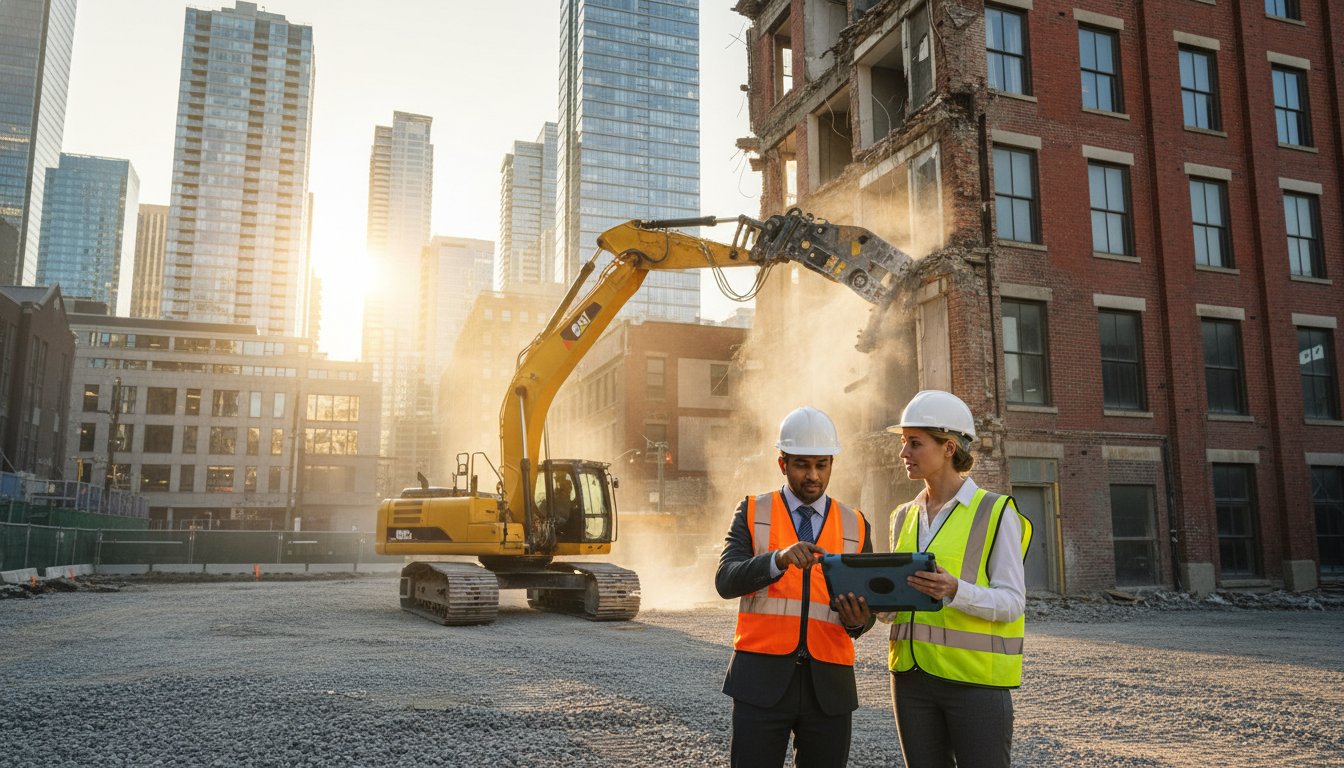

Planning a new build or a major renovation? The prospect of commercial demolition can feel overwhelming for any business owner. You're likely juggling questions about complex Canadian permitting processes, worrying about unpredictable project costs in C$, and searching for a reliable, insured contractor who prioritizes safety above all else. The path from an existing structure to a clean, construction-ready site can seem filled with potential pitfalls, from hidden fees to serious liability concerns.
We understand these challenges. That's why we created this complete guide-to give you confidence and clarity. Here, you will find a professional, step-by-step roadmap to navigate the entire demolition process. We’ll cover everything from initial planning and accurate budgeting to understanding regulations, hiring a trustworthy team, and ensuring a thorough site cleanup. Let's transform your uncertainty into a clear plan for a project that is safe, efficient, and successfully completed on budget.
Understanding Commercial Demolition: More Than Just Wrecking Balls
When you hear the word 'demolition,' the image of a wrecking ball might come to mind. However, professional commercial demolition is a far more precise and strategic process. For business owners and property managers in Canada, it's the critical first step in transforming a property. The primary goal isn’t just to tear something down; it’s to safely and efficiently clear a site to make way for renovation, new construction, or an entirely new land use. This process demands expert planning and execution to manage risks and ensure a clean slate for your next project.
To see what a large-scale, professional demolition operation involves, watch this insightful video:
Types of Commercial Demolition Projects
Commercial demolition isn't a one-size-fits-all service. Depending on your project's goals, the work can range from a complete teardown to a highly specific interior gutting. Our services are tailored to meet your exact needs:
- Total Demolition: This involves the complete removal of a freestanding structure, such as an old storefront, a detached workshop, or a small warehouse, clearing the entire footprint.
- Selective Demolition: A more surgical approach where specific structural components like walls, floors, or facades are removed while carefully preserving the rest of the building's integrity.
- Interior Demolition: Ideal for tenant fit-outs and remodels, this service guts the inside of a retail space or office, removing everything down to the studs to prepare for a new layout.
- Concrete Removal: We safely break up and haul away old concrete structures, including foundations, parking lots, walkways, and patios, to prepare the ground for new development.
Key Differences: Commercial vs. Residential
While both involve taking structures apart, commercial demolition operates on a different level of complexity. The scale and public-facing nature of commercial properties mean that the process is governed by stricter standards. For a detailed Demolition overview, you can see how methods and safety measures evolve with project size. Key distinctions include:
- Regulations & Permitting: Commercial sites in Canada are subject to more stringent municipal and provincial regulations, requiring complex permits for environmental compliance, utility disconnection, and public safety.
- Materials Handled: These projects often involve heavy-duty materials like reinforced concrete, structural steel, and complex HVAC and electrical systems that require specialized disposal methods.
- Equipment Used: Larger, more powerful machinery-from high-reach excavators to concrete crushers-is necessary to handle the scale of a commercial job safely and efficiently.
- Safety Protocols: The standards for protecting workers and the public are significantly higher, with mandatory site containment, dust control, and traffic management plans.
The Commercial Demolition Process: A Step-by-Step Guide
A successful commercial demolition project is built on a foundation of meticulous planning and professional execution. From the first phone call to the final site cleanup, a reliable contractor manages every detail to ensure the project is completed safely, on schedule, and within budget. This structured process eliminates surprises and prevents costly delays. Here’s a look at the four key phases you can expect.
Phase 1: Initial Consultation and Site Assessment
This foundational stage sets the entire project up for success. It’s where we align on your goals and create a clear, actionable plan. Key actions include:
- Project Scope Meeting: A detailed discussion to understand your objectives, timelines, and specific requirements for the site.
- Thorough Site Inspection: We assess the building’s structure, identify potential hazards like asbestos, and note any access challenges.
- Blueprint & Structural Review: Analyzing existing plans to understand the building's construction and plan the safest demolition method.
- Transparent Estimate: Providing a detailed quote that clearly outlines all anticipated costs associated with the project.
Phase 2: Permitting, Planning, and Site Preparation
With a clear plan in place, we handle all the critical preparations. This administrative and logistical work is essential for a safe and compliant project. We manage the securing of all necessary permits from your local municipality and province. While requirements vary across Canada, this guide to the demolition permit process shows the level of detail involved. We also coordinate utility disconnections (hydro, gas, water), develop a site-specific safety plan, and install security fencing and dust control measures to protect the surrounding area.
Phase 3: The Demolition Work
This is the active demolition phase, where our certified team executes the plan with precision and care. Using specialized equipment, we systematically dismantle the structure, whether it’s a complete teardown or a selective interior gutting. Safety is our top priority, with continuous on-site monitoring to maintain structural integrity and ensure full compliance with all safety regulations. Throughout this process, materials are sorted on-site to separate recyclables from waste, maximizing efficiency and environmental responsibility.
Phase 4: Debris Removal and Site Cleanup
The final phase of any professional commercial demolition is returning the property to a clean, usable state. Our team efficiently loads and hauls all debris from the site, with a strong focus on recycling materials like concrete, steel, and wood whenever possible. Once all materials are removed, we perform a final site sweep, leaving the property clear and ready for your next project. We conclude with a final walkthrough with you to confirm that the job has been completed to your total satisfaction.
For projects requiring an even higher standard of cleanliness before new construction begins, many developers partner with commercial cleaning specialists. While based in the UK, companies like That's Cleaning provide an excellent example of the deep cleaning services that make a site truly pristine and ready for the next phase.
Key Factors That Influence Commercial Demolition Costs
For any business owner, the primary concern when planning a renovation or new build is the budget. When it comes to commercial demolition, the final cost is determined by much more than just the building's square footage. A professional and reliable contractor will provide a detailed quote that breaks down every variable, ensuring you understand exactly what you are paying for. These key factors influence the final price in Canadian Dollars (C$).
Managing these complex project finances requires diligent bookkeeping. Services like Thank Heavens Bookkeeping specialize in helping small business owners maintain financial clarity, which is essential when undertaking a significant investment like a commercial demolition.
Project Size and Complexity
The overall scale of the project is a foundational cost driver. A larger footprint naturally requires more labour hours, extensive equipment use, and higher disposal volumes. However, complexity is just as important. A complete teardown of a freestanding structure is often more straightforward than a precise interior gut-out or selective demolition within an active commercial building, which demands careful planning to minimize disruption and protect remaining structures.
Building Materials and Accessibility
What a building is made of directly impacts the demolition process and cost. Dense, heavy materials are more challenging and expensive to break down and haul away. Key considerations include:
- Material Type: Demolishing reinforced concrete and structural steel is significantly more labour-intensive than clearing a wood-frame structure.
- Site Access: An open, easily accessible site allows for the efficient use of heavy machinery. In contrast, tight urban spaces or shared properties may require smaller equipment and more manual labour, increasing the project timeline and cost.
Hazardous Material Abatement
Safety and regulatory compliance are non-negotiable. Before demolition can begin, older buildings must be professionally assessed for hazardous materials like asbestos, lead paint, and mould. Abatement is a highly specialized process that must be completed separately by certified technicians to ensure the site is safe for workers and the public. Adhering to strict safety protocols, such as the comprehensive OSHA demolition safety guidelines, is critical. At JBM Custom Contracting, we coordinate seamlessly with certified abatement specialists to manage this crucial step efficiently and safely.
Permit and Landfill Fees
Administrative and disposal costs are a significant part of any demolition budget. Permit fees vary widely between municipalities across Canada and are required to ensure the work is done to code. Landfill or "tipping" fees are calculated by weight, and heavier debris like concrete costs more to dispose of. We prioritize recycling materials like metal, concrete, and wood whenever possible, which can sometimes help offset a portion of these disposal fees and contribute to a more sustainable project.
Understanding these factors is the first step toward planning a successful project. For a clear, itemized quote tailored to your specific needs, trust the professional team at JBM Custom Contracting.
How to Choose a Reliable Commercial Demolition Contractor
Selecting the right contractor is the single most important decision for the success of your project. While it can be tempting to choose the lowest bid, true value is found in a company's reliability, safety record, and efficiency. A professional partner prevents costly delays, manages risks effectively, and ensures the job is done right the first time. Use this checklist to vet potential contractors and find a team you can trust.
Verify Licensing and Insurance
This is a non-negotiable first step. A qualified contractor must provide proof of a valid local demolition license and a current Certificate of Insurance (COI). This certificate should confirm they carry comprehensive general liability insurance to cover property damage and worker's compensation to protect their crew. These policies shield you from financial liability in the event of an on-site accident, making them essential for any professional commercial demolition project.
Evaluate Their Experience and Safety Record
Experience in similar projects is a key indicator of competence. Ask for a portfolio of past work and client references to gauge their capabilities. Furthermore, inquire about their safety program and incident rate. A professional company like JBM Custom Contracting prioritizes safety above all else and will be transparent about their procedures and proud to share their track record of successful, incident-free projects.
Key Questions to Ask Before You Hire
Clear communication is crucial for a smooth process. Before signing any contract, be sure to ask a few fundamental questions to set clear expectations:
- Who will be my main point of contact throughout the project?
- How do you manage unforeseen issues or changes to the project scope?
- Can you provide a detailed project schedule with key milestones?
- What does your site cleanup and debris disposal process include?
A dependable contractor will provide clear, confident answers. At JBM, we believe in complete transparency from start to finish. Ready to partner with a professional team that meets every standard? Schedule your free, no-obligation consultation with JBM.
Your Trusted Partner for a Successful Demolition
As this guide has shown, a successful commercial demolition project hinges on meticulous planning and, most importantly, choosing the right professional partner. Understanding the process and key cost factors empowers you to make an informed decision, ensuring your project is completed safely, on schedule, and within your budget.
At JBM Custom Contracting, we are committed to being that reliable partner. As a certified and fully insured team, we bring a focus on safety, precision, and efficiency to every job site. We provide professional service you can trust, giving you complete peace of mind from start to finish.
Don't leave your project to chance. Take the first step towards a clean slate for your property. Request Your Free & Professional Demolition Estimate Today!
Frequently Asked Questions About Commercial Demolition
How long does a small commercial demolition project typically take?
A small-scale project, such as an interior strip-out of a retail unit or removing a small detached structure, can often be completed efficiently within 3 to 7 business days. However, the exact timeline depends on factors like the scope of work, the types of materials involved, site accessibility, and the need for any hazardous material abatement. A professional assessment will provide a reliable and precise schedule for your specific project, ensuring it is completed safely and on time.
Do I need to arrange for the demolition permits myself?
No, you should not have to handle the complex permitting process alone. A professional and reliable demolition contractor will manage all necessary permits as part of their service. We handle the paperwork and coordinate with local Canadian municipal authorities to ensure every aspect of the job complies with regional bylaws and provincial regulations. This ensures your project proceeds smoothly and legally, giving you complete peace of mind from start to finish.
What happens to all the waste and debris from the demolition?
As a responsible contractor, we have a clean and efficient process for waste management. All debris is carefully sorted on-site. Materials like concrete, metal, and wood are segregated and transported to certified facilities for recycling whenever possible. Any non-recyclable waste is disposed of in strict accordance with provincial environmental guidelines. Our goal is to minimize landfill impact and leave your site completely clean and clear upon project completion.
Is interior demolition disruptive to other tenants in a multi-unit building?
We understand that minimizing disruption is critical in an active commercial building. Our team takes professional measures to contain the impact of our work. This includes scheduling demolition during off-peak hours, erecting secure dust and debris barriers, and utilizing modern equipment to reduce noise levels. We communicate clearly with building management to ensure a smooth, safe, and considerate process for all tenants, maintaining a professional environment throughout the project.
What kind of insurance is essential for a demolition contractor to have?
It is crucial that your contractor is fully insured to protect your property and interests. In Canada, essential coverage includes Commercial General Liability (CGL) insurance, typically with a limit of at least C$5 million, to cover property damage or injury. Additionally, the contractor must have valid Workplace Safety and Insurance Board (WSIB) coverage for all their employees. Always ask for proof of these policies to ensure you are hiring a safe and professional company.
Can you demolish just one part of a commercial building selectively?
Absolutely. This service is known as selective or partial demolition, and it requires a high degree of precision. It is often used for renovations, additions, or structural repairs where only specific elements like an interior wall, a floor section, or the building's facade are removed. Our skilled teams use specialized techniques and equipment to perform this type of commercial demolition safely, ensuring the structural integrity of the remaining building is completely protected.
What's the difference between demolition and deconstruction?
While often used interchangeably, they are different processes. Traditional commercial demolition focuses on tearing down a structure quickly and efficiently, typically with heavy machinery. Deconstruction, on the other hand, is the systematic and careful disassembly of a building piece by piece. The primary goal of deconstruction is to salvage as many materials as possible-like beams, bricks, and fixtures-for reuse and recycling. It is more labour-intensive but significantly more environmentally friendly.