


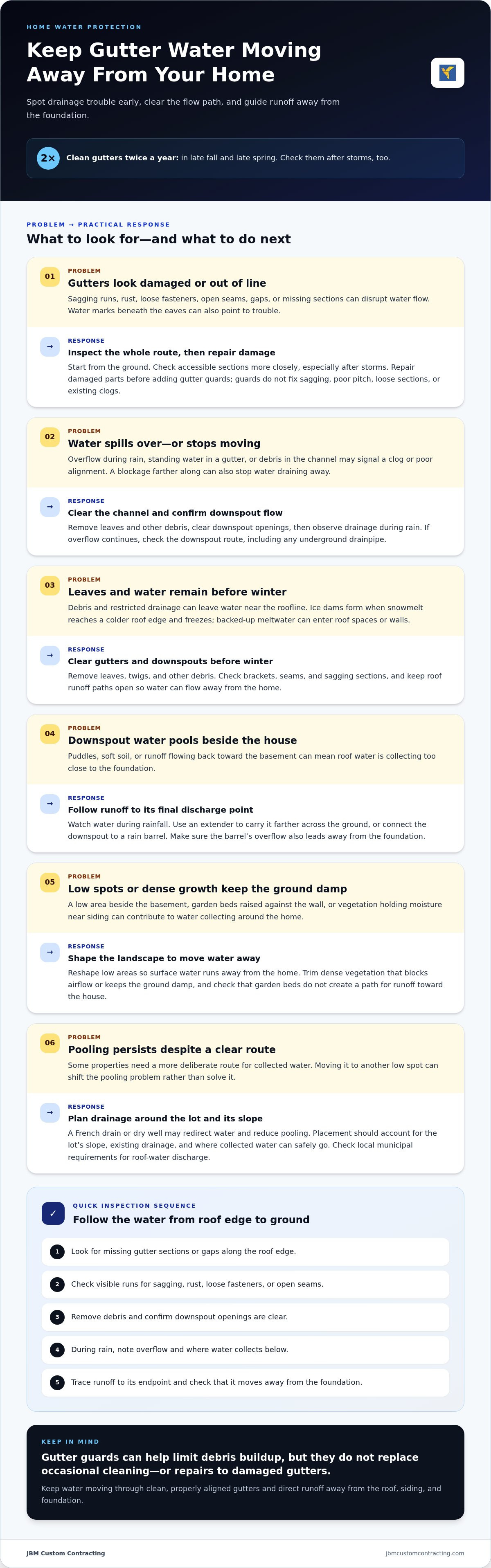
A gutter does not need to be completely blocked to put your home at risk. Avoiding water damage from gutters starts with checking for clogs, sagging, loose sections, and poor drainage, then addressing problems promptly. Clean gutters twice a year, in late fall and late spring, to help keep water moving away from your home.
It is easy to focus on leaves and debris, but damaged gutters or downspouts can also direct water toward your roof, siding, or foundation. This guide explains what to inspect, how to spot overflow, and which practical steps can help protect your home. You will also learn how landscaping, drainage improvements, and gutter guards can help manage water, and why guards do not eliminate the need for occasional cleaning.
Key Takeaways
- Inspect gutters after storms and look for sagging, rust, loose sections, or missing pieces that could disrupt water flow.
- Direct downspout water away from the foundation, and shape nearby landscaping to encourage runoff away from the home.
- Gutter guards can help limit debris buildup, but they don’t remove the need for occasional cleaning.
- Watch for overflowing gutters, unexplained puddles, or mud splashed on siding as signs of drainage trouble.
- Keep water moving through clean, properly aligned gutters to help protect the roof, siding, and foundation.
1. Checking and repairing gutter damage
A practical approach to avoiding water damage from gutters starts with an inspection. Begin from the ground, then examine accessible sections more closely. Check after storms, when wind and heavy rain may loosen fasteners, shift gutter sections, or leave debris behind. When buying a home in Canada, inspect the drainage system for clogged gutters, damaged downspouts, and missing sections before deciding what needs attention.
Look for sagging runs, rust, loose connections, and water marks beneath the eaves. These signs can point to damage, poor alignment, or a section pulling away from the roofline. During rain, watch whether water flows into downspouts or spills over the edges. A gutter holding standing water may be improperly pitched or blocked, so note where the water stops moving.
Clean gutters twice a year, in late fall and late spring. Remove leaves and other debris from the channels, then check that water can flow through each downspout. If overflow continues after cleaning, inspect the downspout opening and route. A blockage farther along, including in an underground drainpipe, can stop water from draining away.
Before winter, clear leaves, twigs, and other debris from gutters and downspouts. Check for loose brackets, open seams, sagging sections, and damage that could affect drainage. Make sure water can flow away from the home rather than collecting nearby. Addressing these issues in late fall helps reduce trapped debris and water before freezing weather arrives.
Ice dams form when snowmelt reaches a colder roof edge and freezes. As ice builds up, later meltwater can back up beneath shingles and enter roof spaces or walls. Frozen gutters can also restrict drainage, leaving meltwater near the roofline. Reduce these risks by clearing gutters and downspouts before winter and keeping roof runoff paths open. These steps help limit water intrusion during freeze-thaw conditions.
Use this inspection sequence to identify problems without overlooking connected parts:
- Look along the roof edge for missing gutter sections or gaps.
- Check each visible run for sagging, rust, loose fasteners, or open seams.
- Remove debris, then confirm that downspout openings are clear.
- Observe drainage during rain and note overflow or water collecting below.
Repair damage before adding guards. Guards do not correct sagging, poor pitch, loose sections, or existing clogs. Address those problems first, then reassess how water moves from the roof through the downspouts. Regular checks and simple maintenance help protect the roof, siding, and foundation from gutter-related water damage.
After storms, homeowners should check gutters and drainage systems for damage, including sagging, rust, or loose sections. Repair these problems promptly so damaged parts do not remain unaddressed. If cleaning is needed, professional gutter cleaners may be able to make minor gutter repairs while they work, which can help deal with small issues identified during the cleaning.
Before installing gutter guards, address damaged gutters, improper pitch, and heavy debris buildup. Guards do not replace repairs or clearing serious blockages. Once those issues are corrected, check the drainage system again to confirm water can move through the gutters and downspouts. This puts the condition of the gutter system first, before guards are added.
2. Landscaping and drainage away from the foundation
A downspout can carry roof water properly and still leave a wet foundation if it empties beside the house. Check where water lands during rainfall, then look for puddles, soft soil, or runoff flowing back toward the basement. The aim is to move roof runoff away from the home and prevent water from collecting around its base.
Canadian roof-drainage requirements depend on the rules that apply to the property and its location. Check local municipal requirements for where roof water may discharge, especially if the downspout connects to a drainage system or directs runoff toward a neighbouring property. The right route depends on the lot, nearby drainage, and how water flows across the ground.
There is no single recommended gutter slope or downspout-extension distance for every home. Gutters need a steady fall toward their outlets, while extensions should carry water far enough to prevent pooling beside the foundation or runoff flowing back toward it. Roof layout, outlet position, ground slope, and nearby drainage all affect the setup.
To assess the route, watch water during rainfall and follow it from the downspout to its final discharge point. If it pools against the house, use an extender to direct it farther across the ground, or connect the downspout to a rain barrel. Make sure the barrel’s overflow also carries water away from the foundation.
Ground grading matters, too. Shape the soil and landscaping so the surface slopes away from the home instead of forming a low spot beside the basement wall. Dense shrubs and other vegetation can trap moisture against siding, so trim growth that blocks airflow or keeps the ground damp. Check that garden beds have not raised soil against the wall or created a path for runoff toward the house.
Some properties need a more deliberate drainage route. French drains and dry wells can redirect water and reduce pooling around a foundation. Their placement should account for the lot’s slope, existing drainage, and where collected water can safely go. A drain that simply moves water to another low spot may shift the pooling problem rather than solve it.
Use this practical sequence after noticing wet ground or runoff near the house:
- Trace water from each downspout to where it collects.
- Use an extender or rain barrel where discharge lands beside the foundation.
- Reshape low areas so surface water runs away from the home.
- Trim dense vegetation that holds moisture against siding.
- Consider a French drain or dry well where pooling persists.
If roof runoff is contributing to damp ground, gutter cleaning services can help keep water flowing through the drainage system.
3. Gutter guards to reduce debris buildup
Gutter guards cover the channel to help limit leaves and other debris entering it. They can reduce buildup, but they don’t make a gutter maintenance-free. Every guard system still needs occasional cleaning, and no system is 100% foolproof. Twigs, roof grit, or wet debris can collect on top or around openings. Check the gutters after installation to see how water and debris move around your roof.
Before adding guards, make sure the existing gutters work properly. Clear debris, repair loose sections, and address sagging or poor pitch first. A guard will not fix a gutter that holds water or directs it away from the downspout. Installing one over a heavily clogged channel can also hide the blockage instead of solving it. Start with a clear, sound drainage path.
Heavy rain and snowmelt can expose problems that seem minor in dry weather. To help prevent overflow, keep debris from restricting the channel, maintain clear downspouts, and correct misaligned sections. Watch during rainfall: water spilling over one edge may point to a local clog or alignment issue. If several sections overflow, inspect the outlet and downspout route. A blocked underground drainpipe can also stop water from draining away.
Choose a guard based on the debris around the home and the roof’s layout. A property under deciduous trees may collect leaves, while nearby evergreens can shed needles. These materials affect guard openings differently. Check roof valleys and gutter corners, where runoff and debris can gather. Make sure the guard sits securely and does not obstruct water flowing into downspouts.
After installation, inspect the roof edge and ground during rain. Look for water crossing the gutter, dripping behind it, or pooling below the downspout. A guard may limit leaves entering the channel, but it cannot correct a blocked outlet or poor drainage beyond the downspout. Remove visible debris from the guard surface, then check the channel and outlets if water still overflows.
- Clear existing debris and repair gutter damage before installing guards.
- Check guard surfaces and downspout openings for collected debris.
- Watch the system during heavy rain and snowmelt for overflow.
- Investigate persistent overflow, including possible downspout or underground drainpipe blockages.
Keep seasonal maintenance on the schedule, even with guards in place. Cleaning twice a year, in late fall and late spring, helps reveal debris and drainage issues. After a storm, look for displaced guards, loose sections, and new blockages. These checks show whether the guards are reducing debris buildup or whether water still needs a clearer route through the gutters and downspouts.
Gutter guards are one option for reducing debris buildup. Treat them as a way to limit debris, not as a replacement for routine care. Their presence does not mean the gutters can be left unchecked.
Gutters with guards still need occasional cleaning. Keep cleaning in your maintenance plan and continue checking the gutters, so you can remove remaining debris instead of assuming the guards have eliminated the need for upkeep.
4. Overflow damage to roofs, siding, and foundations
Gutters collect roof runoff and carry it toward downspouts. When they clog, sag, or shift out of alignment, water may spill over instead. That runoff can wet roof edges, wash down siding, and collect beside foundations. During heavy rain, overflowing gutters may also send water beneath doors, shingles, or walls. A crawlspace can flood if runoff gathers around its openings or foundation.
Signs that gutters may be causing water damage include mud splashed on siding, unexplained puddles, and water cascading over the gutter during rain. Check for staining below the roof edge, damp areas near doors, or water collecting beside the foundation. These clues are especially relevant when they appear below a gutter or near a downspout. Note where they occur, then compare those spots with the gutter sections above.
Roof edges can be affected when water backs up or repeatedly spills over. Runoff may reach areas beneath shingles or enter along walls, especially when the gutter fails to carry water away. After rainfall, look for water marks near the eaves and check whether shingles are missing or damaged. A missing shingle can create another route for water, so distinguish roof damage from gutter overflow during your inspection.
Siding can reveal runoff patterns clearly. Mud splashes near the bottom of a wall may indicate water falling from above and hitting the ground. Streaks or damp patches beneath a gutter can point to repeated overflow or water running behind it. Check windows, doors, and wall edges where water could enter beneath the surface. Record the location and whether the signs appear during rain.
At ground level, unexplained puddles beside the house may signal poor discharge or overflowing gutters. Water that repeatedly collects near a foundation can reach crawlspace openings or find a route beneath doors and walls. Compare the puddle’s position with nearby downspouts. If it forms beneath a gutter joint, the source may be above; if it forms at the outlet, inspect the downspout’s path.
- At the roofline: Watch for water spilling over, staining, or damaged shingles.
- On siding: Look for mud splashes, streaks, and damp patches below gutters.
- Near the foundation: Note unexplained puddles or water near crawlspace openings.
Trace the water before deciding which part needs attention. During rainfall, observe where overflow begins and where the water lands. A single overflowing section may point to a local clog or misalignment, while runoff beside a downspout may indicate a drainage problem farther along its route. Check the nearby ground after the rain, too. Fresh puddles or mud splashes can help connect visible signs with their likely source. Addressing the gutter problem promptly helps limit further exposure to the roof, siding, and foundation.
5. How do gutters prevent water damage to a house?
Gutters protect a house by collecting rainwater at the roof edge and guiding it toward downspouts. Without that route, water can run down exterior walls, fall beside the foundation, or gather near basement openings. For example, a downspout emptying beside a basement window concentrates runoff in a vulnerable spot. A complete drainage path helps carry water away, an important part of avoiding water damage from gutters.
Keeping the gutter channel clear helps prevent water from backing up beneath the roof edge. Leaves, roof grit, and other debris can slow the flow, especially where a gutter meets a downspout. When the outlet is blocked, water may spill over or find another path. Check that the channel, outlet, and downspout work together instead of inspecting only the visible gutter surface.
Gutters also help limit repeated wetting of siding and exterior trim. A steady flow into the downspout reduces uncontrolled runoff across walls and around windows. If water overflows in one spot, it can mark siding and splash soil onto the wall. Inspect below that section after rain, then trace the flow to find where it leaves the intended route.
At ground level, the downspout’s discharge point matters. Directing roof water away from the foundation helps prevent pooling beside basement walls and crawlspace openings. An extender can move water across the ground, while a rain barrel can collect it for later use. The barrel’s overflow still needs a route away from the house. Observe the discharge during rain to see whether water drains or gathers nearby.
Water entering a home can lead to substantial repair, renovation, and replacement costs. Damage may affect several parts of the house. For example, overflowing water can affect siding, then reach a wall or crawlspace through an opening. A working gutter system helps reduce these exposure routes, though it cannot repair roof, window, or foundation damage on its own.
Think of the drainage path as a connected system: roof edge, gutter channel, downspout, and discharge point. If one part fails, water can leave its intended route. Check the path during rainfall and after snowmelt, then note where water first spills or pools. This helps distinguish a blocked channel from an outlet or ground-drainage issue. Restoring the route helps protect the home from gutter-related water damage.
- Keep the gutter channel open so water can reach its outlet.
- Check that each downspout carries water away from the foundation.
- Look for overflow or pooling during rain and snowmelt.
For help keeping roof runoff moving through clear gutters, arrange gutter cleaning.
JBM Custom Contracting: Renovations
JBM Custom Contracting can help with gutter maintenance when debris, moss, or visible damage affects drainage. Its Moss & Gutter Cleaning service helps keep gutters clear, while Renovations may suit broader home improvement needs after water-related damage. If you notice recurring overflow, blocked drainage, or signs of moisture around your home, addressing the gutter issue can be a practical first step before damage worsens.
For gutter cleaning support, explore gutter cleaning services.
To discuss your property maintenance needs, contact JBM Custom Contracting.
Make your next step a clear one
Protecting a home is easier when water problems are addressed before they spread. If runoff or moisture has affected your property, note where water collects and which areas show damage. That gives you a practical starting point for deciding what needs attention next. A reliable drainage routine can also support your longer-term plans for the home.
JBM Custom Contracting offers Moss & Gutter Cleaning to help maintain clear gutters, along with Renovations and Demolition Services for broader property work. These services can be relevant when gutter issues are part of a larger upkeep or improvement project. Taking action on the source of water trouble can help you move forward with greater confidence in your home.
With a practical plan and the right maintenance, you can keep caring for your home season after season.
Frequently Asked Questions
How should downspouts be positioned to direct water away from a foundation?
Position each downspout so its outlet sends water away from the foundation and does not discharge against a basement wall, doorway, or neighbouring property. If an outlet sits beside a paved path, for example, route runoff beyond the foundation without directing it across the walkway. Check the discharge area during rain: water should continue away rather than flowing back toward the house or collecting beside another structure.
Are gutter guards effective at preventing clogs and water damage?
Gutter guards can reduce debris entering gutters, but they cannot prevent every clog or stop water damage on their own. Their effectiveness depends partly on the debris around the home: leaves, needles, and roof grit may behave differently on the guard surface. After heavy rain, look for water spilling over or debris covering the openings. If overflow continues, the cause may be a blocked outlet, poor alignment, or drainage trouble beyond the gutter.
What is the recommended slope for gutters and distance for downspout extensions?
There is no single recommended slope or extension distance for every home. Gutters need a steady fall toward their outlets, and extensions should carry water far enough to prevent pooling beside the foundation or runoff flowing back toward it.


