
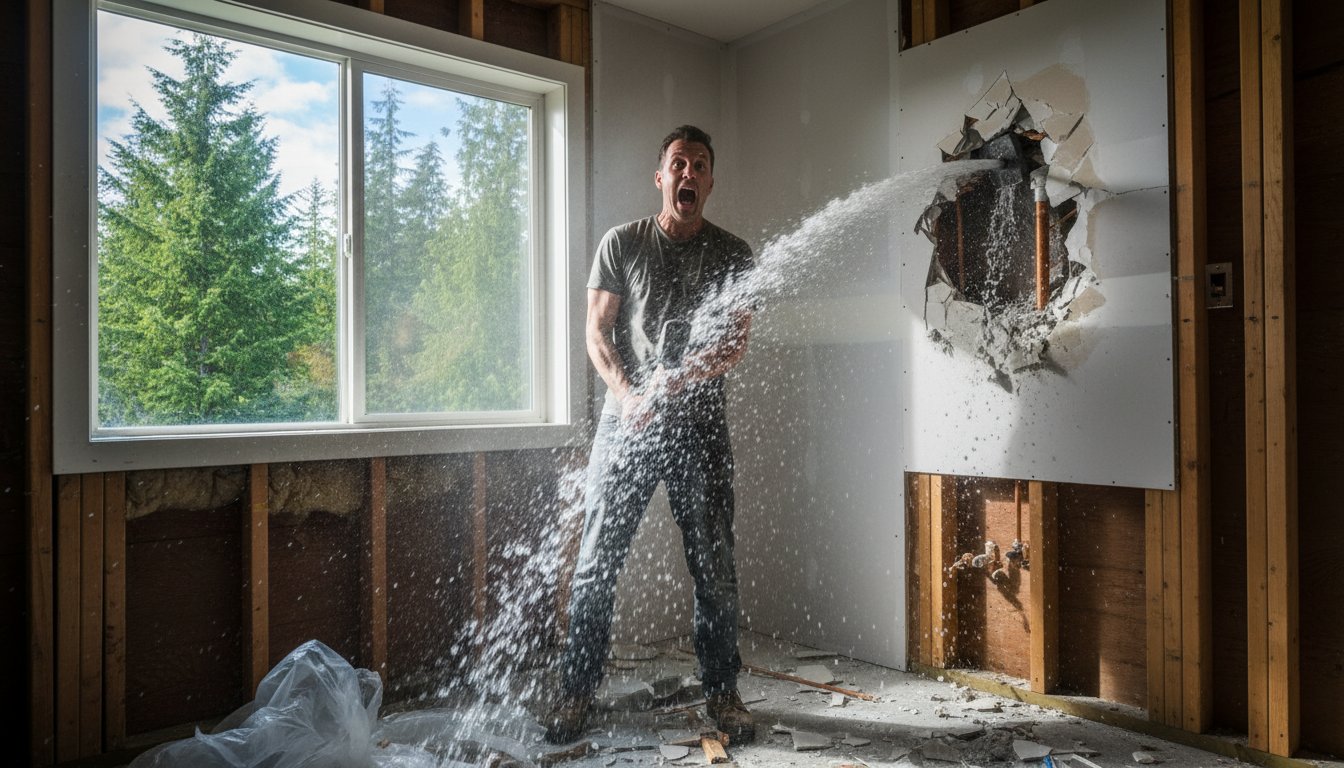

Last Tuesday, a homeowner in Duncan started a simple bathroom renovation and ended up with a C$5,000 repair bill after a single sledgehammer swing severed a hidden copper pipe. It's a stressful situation that happens more often than you might think on Vancouver Island. You likely believe that taking a DIY approach is the best way to save on renovation costs. In many cases, doing the work yourself is a great way to stay involved. However, without a professional plan, it's easy to overlook hidden hazards like live wires or load-bearing studs. To protect your investment, you need to know how to avoid DIY demolition mistakes before the first wall comes down.
While focusing on local requirements, it is also wise to explore Lead-Based Paint Inspection options to address lead paint, which is often found alongside asbestos in pre-1990 homes. Professionals like Pledge Environmental provide these essential assessments to help homeowners avoid toxic exposure during demolition.
We understand the anxiety that comes with opening up walls in older BC homes, especially since WorkSafeBC notes that asbestos was used in over 3,000 building materials in homes built before 1990. This guide provides the professional insights you need to navigate these risks safely and efficiently. You'll learn exactly when you need a permit in the Cowichan Valley, how to identify structural risks, and when it's time to call in a certified team. By the end of this article, you'll have a clear roadmap to ensure your Nanaimo or Duncan renovation starts on a solid, safe foundation.
Why DIY Demolition in Nanaimo Isn’t Always a Money-Saver
Many Nanaimo homeowners start a renovation project thinking they can save thousands by handling the demo themselves. It’s the classic "Demolition Myth" where you imagine a fun afternoon swinging a sledgehammer for free. In reality, professional demolition is a process of controlled deconstruction. It requires precision and planning to avoid DIY demolition mistakes that could compromise your home's structural integrity. While the desire to cut costs is understandable, breaking things is the easy part. The challenge lies in doing it safely without damaging essential systems hidden behind your drywall.
To better understand this concept, watch this helpful video:
The Real Cost of DIY Mistakes
A project that starts with a C$500 budget for a few tools and a dumpster can quickly spiral into a C$5,000 repair bill if you aren't careful. Hitting a hidden water main or nicking a gas line creates an immediate emergency that requires expensive, same-day professional repairs. You also have to watch out for scope creep. Scope creep in demolition refers to the unintended expansion of a project's workload caused by accidental damage to surrounding structures or systems. When you accidentally pull down more ceiling than intended or crack a subfloor, your "savings" vanish instantly.
Time vs. Reward: The Vancouver Island Perspective
Time is your most valuable asset during a renovation. A professional crew can clear a kitchen in four hours, while a weekend warrior might spend three full Saturdays just trying to keep up. You also have to consider the logistics of managing demolition waste at local facilities like the Regional District of Nanaimo (RDN) landfill or the Peerless Road Drop-off in Ladysmith. Sorting materials, renting a truck, and making multiple trips to the dump adds up fast.
- Disposal Fees: Tipping fees for mixed waste can be significantly higher than sorted recyclables.
- Tool Rentals: Industrial vacuums, floor strippers, and specialized saws cost hundreds per day.
- Project Delays: If your demo takes three weeks instead of two days, your entire renovation schedule gets pushed back.
When a project stretches into weeks instead of days, the stress and loss of your personal time often outweigh any initial savings. Choosing a professional service ensures the job is done efficiently, safely, and within a predictable timeline. We focus on being reliable and thorough so you can move on to the building phase without any lingering headaches or hidden damage.
The Hidden Dangers: Asbestos, Permits, and Utilities
To avoid DIY demolition mistakes, you have to look past the surface of your walls. In Nanaimo and Duncan, many older homes harbor hidden risks that lead to heavy fines or serious health issues. Demolition isn't just about clearing space; it's about following British Columbia safety laws and protecting your investment. Jumping in with a sledgehammer without a plan often results in costly delays that far outweigh the price of a professional crew.
Asbestos and WorkSafeBC Requirements
If your home was built before 1990, there's a high probability it contains asbestos. This mineral was commonly used in drywall joint compound, vinyl floor tiles, and attic insulation. When you disturb these materials during a renovation, you release microscopic fibers into the air. Understanding the health risks of asbestos is vital because breathing these fibers causes permanent lung damage and long-term illness.
WorkSafeBC requires a hazardous material survey before any demolition begins in BC homes. You can't simply toss asbestos-containing waste into a standard bin or take it to the Peerless Road Drop-off Store in Ladysmith without proper documentation. Local landfills have strict protocols for testing and disposal. If you're caught dumping hazardous materials illegally, you face significant environmental penalties and potential stop-work orders on your property.
Navigating Local Permits in Nanaimo and Ladysmith
Skipping the paperwork is a common way to fail when trying to avoid DIY demolition mistakes. In Nanaimo and the Cowichan Valley, you generally need a permit for structural changes, removing load-bearing walls, or tearing down outbuildings larger than 10 square meters (107 square feet). If you're caught working without a permit, the city can stop your project and charge fines that often double the original permit fee. Before you start, check this quick list for the Regional District of Nanaimo (RDN):
- Confirm if the structure is near a protected riparian area or steep slope.
- Verify if your property has specific zoning restrictions for accessory buildings.
- Ensure you have a plan for managing construction waste according to the RDN Solid Waste Management Plan.
Our team provides professional demolition services that include handling these logistics so you don't have to worry about legal setbacks or municipal inspectors knocking on your door.
Utility Locates and Safety
Hitting a gas line or an underground power cable is a nightmare scenario that happens more often than people think. Before any exterior digging or interior wall removal, you must contact BC 1 Call. This service is free and requires at least 3 business days of notice. In Duncan and Nanaimo, utility depths vary due to rocky terrain. Never assume a pipe is deep just because it's outdoors. Locating these lines protects your neighborhood from outages and keeps you safe from electrical shocks or gas leaks. Taking these steps ensures your project stays on track and your family remains safe during the process.
Structural Integrity: How to Tell if a Wall is Load-Bearing
You might look at a wall and see an obstacle to your new kitchen layout, but we see a structural component. It is vital to understand the difference between a partition wall and a load-bearing wall before you start swinging a hammer. A partition wall is a simple divider that only carries its own weight. A load-bearing wall is a functional part of your home's skeleton, supporting the floors above or the weight of the roof. To avoid DIY demolition mistakes, you must treat every wall as structural until proven otherwise.
Removing a support post without professional bracing leads to catastrophic results. We have seen cases in Nanaimo where a DIY project caused a roofline to sag within 24 hours of the wall being removed. Most "open concept" dreams require professional engineering to calculate the load and specify a replacement beam. The "just take it out and see" approach is a recipe for a collapsed ceiling and a massive repair bill. Professional demolition services ensure that your home remains standing while you chase that modern look.
Signs a Wall is Supporting Your Roof
Identifying structural walls takes some detective work in your attic or crawlspace. Look for walls that run perpendicular to your floor joists or attic rafters; these are almost always carrying weight. You should also check for walls that align directly above other walls or support beams in the basement. Exterior walls are nearly always load-bearing structures that keep your home stable against wind and snow. Learning how to tell if a wall is load-bearing is a great first step, but it doesn't replace a professional inspection. In older Duncan homes, previous renovations might have shifted loads in ways that aren't immediately obvious to the naked eye.
The Danger of Removing "Small" Supports
Size is often deceiving in home construction. A small post or a short section of wall can be crucial for weight distribution, funneling thousands of kilograms of pressure down to the foundation. To avoid DIY demolition mistakes, you need to recognize the early signs of structural failure. These include sagging ceiling drywall, new cracks in plaster, or doors that suddenly start sticking in their frames. These symptoms suggest your home's weight is shifting in ways it wasn't designed to handle. If you have even 1% doubt about a wall, consult a professional. It's much more affordable to pay for an expert opinion than to pay for a structural emergency repair after the damage is done.
Managing the Mess: Disposal and Junk Removal in Central Vancouver Island
Many homeowners underestimate the sheer volume of waste a small renovation generates. They focus on the demolition itself but forget about the four or five tons of debris left sitting on the subfloor. To effectively avoid DIY demolition mistakes, you need a waste management strategy before you pick up a crowbar. Thinking you can just throw everything into a single pile and haul it to the local landfill is a recipe for high fees, wasted hours, and potential rejection at the gate.
The Regional District of Nanaimo (RDN) and the Cowichan Valley Regional District (CVRD) have strict protocols for construction and demolition waste. Facilities like the Cedar Road Landfill in Nanaimo and the Peerless Road Recycling Centre in Ladysmith aren't just dumping grounds; they're highly regulated sorting hubs. These facilities prioritize the RDN's "zero waste" goals, meaning they expect you to divert recyclable materials from the garbage stream. If you arrive with a mixed load of wood, metal, and plastic, you'll likely be charged a "controlled waste" rate, which is significantly higher than the standard tipping fee.
Recycling isn't just about the environment; it's about project efficiency. Concrete, wood, and metal are valuable commodities. In Central Vancouver Island, clean wood is often ground into mulch or used for fuel, while scrap metal is melted down for new products. By keeping these materials out of the landfill, you reduce the pressure on our local infrastructure and help maintain the natural beauty of the island. Failing to plan for this separation is one of the most common ways people fail to avoid DIY demolition mistakes during a home project.
Sorting Your Waste for Lower Fees
Sorting your waste at the source is the most effective way to keep your budget under control. Landfills in BC charge premium rates for mixed loads to encourage recycling. You'll save a substantial amount of money by separating clean lumber, scrap metal, and cardboard into different piles. Be aware that specific materials like gypsum (drywall) are banned from general bins and require special bags or asbestos testing before disposal. If your project involves a driveway or patio, rent a dedicated bin for concrete. Concrete is incredibly heavy, and a standard 15-yard bin can easily exceed legal weight limits if filled with slab pieces.
The Logistics of Hauling Debris
Hauling your own debris is physically exhausting and potentially dangerous for your vehicle. A standard half-ton pickup truck isn't designed to carry multiple loads of heavy roofing shingles or concrete foundation blocks. Overloading a personal trailer can lead to blown tires, broken leaf springs, or compromised braking on the Island Highway. Beyond the mechanical risk, the physical toll of loading and unloading thousands of kilograms of waste by hand can take days. For a reliable and efficient cleanup that saves your back and your truck, JBM Junk Removal Services handles the heavy lifting and proper disposal for you.
Professional Demolition Services You Can Trust in Nanaimo
Taking on a home renovation project is exciting, but the teardown phase is often much more than a homeowner can handle alone. To avoid DIY demolition mistakes, you need a partner who brings more than just a sledgehammer to the job. JBM Custom Contracting provides professional demolition services that prioritize safety and precision. We don't just break things apart; we manage the entire process from the first strike to the final debris haul-away.
Our team utilizes professional-grade equipment like Bobcats and high-powered concrete saws to get the job done right. This machinery allows us to complete in a few hours what might take a homeowner several exhausting and dangerous days. Much like how Bassjunkies provides the specialized components needed for high-fidelity car audio, using the right tools for demolition ensures that structural integrity remains intact and prevents the accidental damage that frequently happens during amateur teardowns. We also provide a "clean site" promise. Once the heavy lifting is finished, we clear all debris and leftover materials. Your property will be left tidy and ready for the next phase of construction immediately.
Why Certification and Insurance Matter
Demolition is inherently risky work that requires a high level of accountability. Hiring a contractor who strictly follows WorkSafeBC regulations is the only way to ensure your project meets provincial safety standards. JBM Custom Contracting is fully insured, which protects you from liability if an accident occurs on your property. This certification offers a level of peace of mind that a DIY approach simply can't provide. You can rest easy knowing that every crew member is trained to handle structural challenges and potential hazards safely and efficiently.
From Small Sheds to Concrete Removal
We serve homeowners across Central Vancouver Island, covering regions from Qualicum Beach down to Duncan. Our team handles the "dirty work" so you can focus on the creative side of your new build. Whether you need to tear down an old garden shed or require heavy-duty concrete removal for a new patio or driveway, our services are reliable and thorough. If you are planning an investment property makeover after the demolition, you can visit Straight Edge Landscaping to see how professional project management can elevate your outdoor space. It's easy to underestimate the weight and volume of waste a small project generates. We take care of the sorting and disposal, ensuring everything is handled according to local environmental guidelines.
Don't risk your safety or your home's structural value by guessing. To avoid DIY demolition mistakes that could cost thousands in repairs, start with an expert evaluation. We offer a free consultation to look at your project before the work begins. We'll help you identify load-bearing walls, hidden utility lines, and the best path forward for a successful renovation. When you're ready to move from demolition to rebuilding, looking at the work of experts like Aureli Construction can help you understand the level of detail required for successful home additions and remodeling.
Take the Next Step Toward a Successful Renovation
Starting a home project in Central Vancouver Island is exciting, but the teardown phase requires precision. You've learned that overlooking a load-bearing wall or mishandling hidden asbestos can turn a weekend project into a costly disaster. When you choose to work with experts, you avoid DIY demolition mistakes that often lead to expensive structural repairs or safety fines from local authorities. Proper disposal of debris and concrete is also essential to stay compliant with regional environmental standards in Nanaimo and Duncan.
JBM Custom Contracting has served homeowners from Nanaimo to Duncan for years with a focus on safety and precision. We're a fully certified and insured team that understands the specific building codes of our local community. We are specialists in safe concrete removal and small structure demolition, ensuring your site is left clean and ready for the next phase of construction. For those planning a luxury transformation, following the lead of high-end builders like Diamond Construction and Remodel can help you visualize the potential of your newly cleared space. You don't have to risk your safety or your budget on a "guess and check" approach when reliable help is available.
Contact us today to discuss your plans and see how we can help you move forward with confidence. Get a Free Estimate for Your Demolition Project and let's get your property ready for its transformation safely.
Frequently Asked Questions
Do I need a permit to tear down a shed in Nanaimo?
You generally need a demolition permit in Nanaimo if the structure is larger than 10 square metres or about 107 square feet. If your shed is smaller than this and isn't attached to another building, you might not need one. It's always best to check with the City of Nanaimo’s Building Inspection Department first to avoid DIY demolition mistakes that could result in unexpected fines.
How do I know if my house has asbestos before I start demolition?
You can't identify asbestos by sight alone; you have to hire a qualified professional to perform a hazardous materials survey. In British Columbia, WorkSafeBC mandates this survey for any home built before 1990 before any demolition or renovation work begins. This process involves taking physical samples of materials like drywall mud, flooring, and insulation to test in a laboratory environment.
What happens if I accidentally hit a water pipe during DIY demo?
You must immediately turn off the main water shut-off valve to your house to prevent catastrophic flooding. Once the water flow stops, call a licensed plumber to repair the damaged section before you resume any work. This mistake can lead to thousands of dollars in water damage repairs if you don't act within the first 30 seconds of the pipe bursting.
Is it cheaper to do my own demolition and hire a pro for junk removal?
Doing the manual labour yourself saves on service fees, but it often increases your total expenses due to tool rentals and higher disposal surcharges. Professional teams work more efficiently and have commercial accounts at local landfills that offer better rates. When you factor in the 15 to 20 hours of heavy lifting required, hiring a full-service professional is often more cost-effective for Nanaimo homeowners.
Can I dispose of drywall at the Cedar Road Landfill?
The Cedar Road Regional Landfill accepts drywall, but it must be date-stamped as manufactured after 1990 or have a certified asbestos-free test result. You're required to separate drywall from other waste and pay specific tipping fees based on weight. If your drywall is older or lacks a stamp, it needs specialized disposal at a designated hazardous waste facility to comply with regional safety regulations.
What tools are absolutely necessary for a safe DIY demolition project?
You'll need a 30-inch wrecking bar, a 10-pound sledgehammer, and a reciprocating saw with high-quality demolition blades. Safety equipment is the most important part of the kit, including CSA-approved steel-toed boots, N95 respirators, and impact-resistant eye protection. Having these specific tools on hand helps you avoid DIY demolition mistakes like structural collapses or serious personal injuries.
How much does professional small demolition cost compared to DIY?
Professional small demolition projects in British Columbia typically range from C$500 to C$2,500 depending on the size and materials involved. DIY costs include equipment rentals at roughly C$120 per day and disposal fees that vary by weight at the landfill. While DIY looks cheaper on paper, a professional crew finishes the job in 6 hours rather than taking up 3 of your weekends.
Does JBM Custom Contracting handle the permit process for me?
Yes, our team manages the entire permit application process for our demolition clients in Nanaimo and Duncan. We take care of the paperwork and coordinate directly with local building officials to ensure every project stays compliant with municipal bylaws. This service provides peace of mind and ensures your project moves forward without any administrative delays or legal issues.