

Most homeowners think of a wrecking ball when they hear the word "demolition," but for a successful home addition, the most important tool is actually a scalpel. It isn't just about tearing things down; it's a surgical preparation that dictates the success of your entire build. If you're feeling a bit anxious about someone opening up your house, you aren't alone. It's natural to worry about structural damage or the stress of managing debris and hidden hazards like lead or asbestos.
We understand that your home is your biggest investment, and you want to protect it while making room for something better. This guide shows you how strategic demolition for home addition projects protects your existing structure while clearing the way for a fresh start. You'll learn how to achieve a clean, level site ready for the foundation crew without the headache of unexpected costs. We also cover the essentials of permit requirements and how to handle hazardous materials safely so your project stays on schedule and within your budget.
Key Takeaways
- Understand why professional demolition for home addition projects requires a surgical approach to protect your existing structure.
- Learn how to navigate essential permit requirements and hazardous material testing to keep your project on schedule.
- Compare selective and total demolition methods to choose the safest and most efficient path for your specific property needs.
- Get a clear preview of the "inside-out" demolition timeline so you know exactly what to expect from the first day to the final sweep.
- Discover the benefits of working with a dependable, local team that prioritizes safety and precision to ensure your site is foundation-ready.
Why Strategic Demolition is the Foundation of Your Home Addition
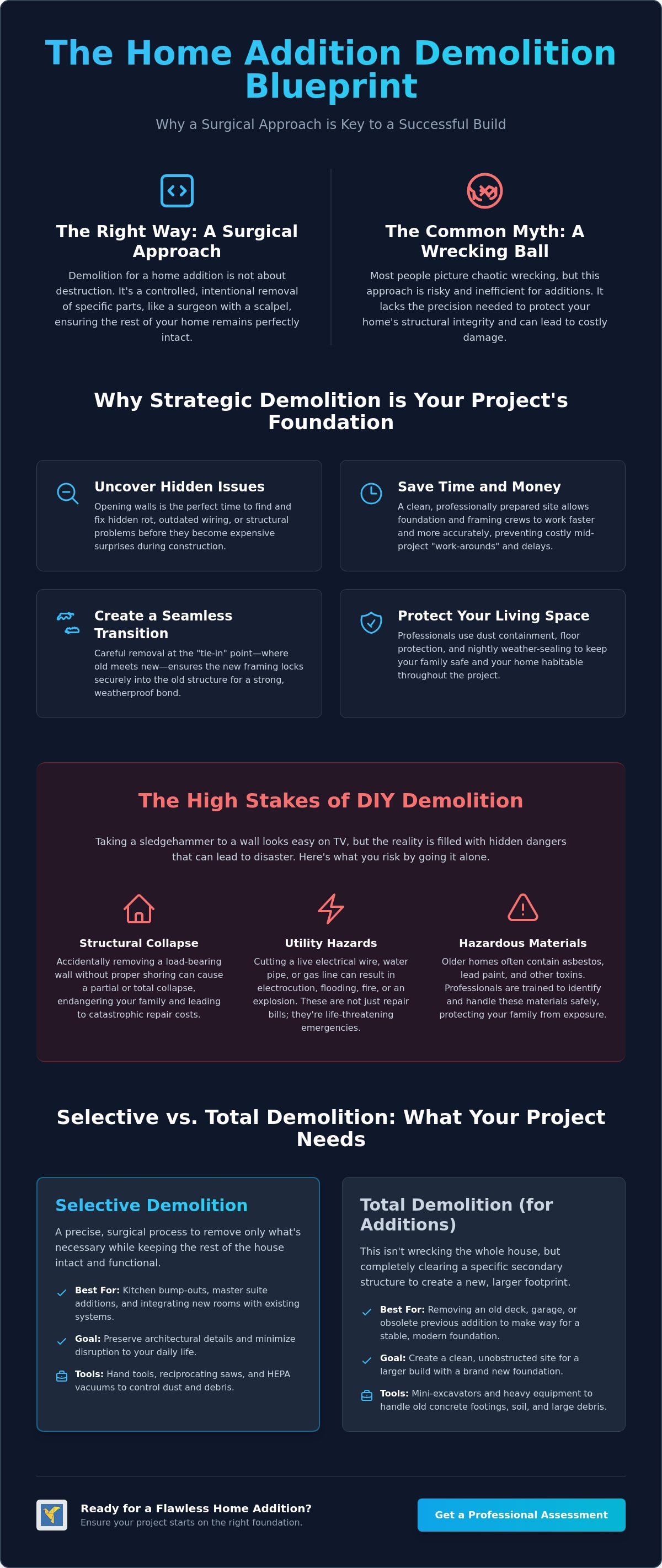
Strategic Demolition for a home addition isn't a chaotic act of destruction. It's the controlled, intentional removal of specific parts of your property to make room for something new. Unlike general wrecking, which clears a whole site, selective demolition is surgical. It requires a high level of precision to ensure the parts of your home you love stay perfectly intact while the obsolete sections are cleared away.
This phase is actually the most important part of your entire build. When you open up existing walls, you get a clear look at what's happening behind the scenes. It's the best time to find hidden rot, outdated wiring, or structural issues that weren't on the blueprints. Handling these problems now, rather than during the framing stage, keeps your project on track and prevents expensive delays later.
To better understand how this process works on a real job site, watch this helpful video:
Investing in professional demolition services saves you money in the long run. A clean, level site allows your foundation and framing crews to work faster and with more accuracy. When the site is prepared correctly, there's no need for mid-project adjustments or "work-arounds" that drive up labor costs. A well-executed demolition for home addition creates a seamless transition between the old structure and the new one.
The Risks of DIY Demolition for Additions
Taking a sledgehammer to a wall might look easy on television, but it's incredibly risky without the right training. One of the biggest dangers is accidentally removing a load-bearing wall without proper shoring. If the structure isn't supported correctly, you risk a partial collapse. You also have to consider active utility lines. Severing a gas pipe or a live electrical wire can lead to disasters that go far beyond a simple repair bill. Heavy materials like concrete and old-growth timber also require specialized equipment that most homeowners don't have in their garage.
Protecting the "Living" Part of Your Home
Your daily life shouldn't stop just because your house is expanding. Professional teams use specific methods to keep your living space habitable. This includes installing floor protection and high-quality dust containment systems to keep debris out of your kitchen and bedrooms. We also focus on weather-tightness. If the demolition for home addition opens up an exterior wall, it must be sealed properly every night to protect your interior from rain and wind. Finally, a secure site keeps your family and pets safe from sharp objects and heavy machinery while the work is underway.
Selective vs. Total Demolition: Which Does Your Project Need?
Choosing the right approach for your demolition for home addition depends on your existing structure and your goals for the new space. Selective demolition is a precise process where we remove only what's necessary while keeping the rest of the house intact. This is common for interior remodels or side extensions. Total demolition in this context usually refers to clearing a specific secondary structure, like an old deck or shed, to make room for a larger footprint. It's about deciding what stays and what goes to create the most stable foundation for your build.
The equipment we use varies based on the scope of the work. For selective interior work, we rely on hand tools, reciprocating saws, and HEPA vacuums to keep the air clean and the site tidy. When we move outside for a side-yard extension, we might bring in a mini-excavator to handle old concrete footings or heavy soil. Regardless of the tools, following standards for demolition worksite safety is non-negotiable to protect both the crew and your property during the transition.
One of the most technical parts of the job is the "tie-in" point. This is the exact location where the old house meets the new addition. We have to carefully strip away siding and roofing at this junction to ensure the new framing can lock into the old structure securely. It's a delicate balance of removing enough material to create a strong bond without compromising the weather seal of your current home. If you're unsure which path is right for your property, our team can provide a professional demolition assessment to help you decide.
When Selective Demolition is the Right Choice
Kitchen bump-outs or master suite additions often require selective work. We focus on "chasing" utilities like plumbing and electrical back to the main stack or breaker panel. This ensures your new addition integrates perfectly with your home's existing systems. It's also the best way to preserve architectural details, such as matching trim or unique window placements, so the new room looks like a natural part of the house rather than an afterthought. This surgical approach minimizes the mess and keeps your home functional during the build.
Total Demolition for New Footprints
Sometimes, it's actually more cost-effective to tear down an old structure than to try and save it. If you have a crumbling detached garage or a rotted porch, a total tear-down is often the better choice. This is especially true if you're planning a detached garden suite or a carriage house. Starting from scratch allows us to properly grade the soil and prepare a fresh foundation slab. This ensures your new demolition for home addition project sits on a stable, level base that will last for decades without shifting or settling.
Navigating Permits, Hazardous Materials, and Safety
You can't just start swinging a hammer the moment you decide to expand your living space. In Nanaimo and Duncan, getting your demolition permit is usually the first step before your building permit is even considered. This process ensures your project meets local safety and environmental standards from the very beginning. A professional demolition for home addition requires this legal foundation to avoid work-stop orders or heavy municipal fines that can stall your progress for weeks.
Safety on a job site isn't just about wearing hard hats; it's about managing liability. WorkSafeBC has strict requirements for all residential demolition projects to protect both workers and the public. As a homeowner, you must ensure your contractor is fully insured and compliant with these provincial standards. If an accident happens on a site that isn't properly managed, the legal and financial burden can fall back on you. While State-specific regulations in other regions offer a glimpse into how debris is managed, our local Vancouver Island bylaws are specifically designed to protect our coastal environment and community health.
Asbestos and Lead: The Hidden Renovation Killers
Many older homes across British Columbia contain hazardous materials that aren't visible to the naked eye. Drywall mud, vinyl floor tiles, and attic insulation from previous decades often contain asbestos. These aren't just "old house" quirks; they're serious health risks. In 2022, asbestos exposure was responsible for 61 of the 181 work-related deaths in British Columbia. Because of this, as of January 2024, all asbestos abatement companies in BC must be government-licensed. Homes built before 1990 almost always require professional hazardous material testing before any structural work begins.
There's a massive difference between professional abatement and standard junk removal. Abatement involves sealing off the work area, using negative air pressure, and wearing specialized respirators to prevent fibers from spreading through the rest of your home. Standard removal doesn't offer these protections. If you're planning a demolition for home addition, skipping this testing can lead to contaminated living spaces and long-term health issues for your family.
Local Permit Requirements for Vancouver Island
The application process in Nanaimo, Lantzville, and Parksville is fairly straightforward but requires specific documentation. You'll need a site plan that clearly marks the "limit of disturbance." This tells the city exactly where the work will happen and how you'll protect the surrounding soil and trees. You also need to coordinate with BC 1 Call for utility locates before any heavy machinery arrives. Digging into a gas line or an underground electrical cable will shut your project down instantly and create a dangerous situation for the whole neighborhood. Checking these boxes early keeps your timeline moving and your neighbors happy.
The Demolition Process: Step-by-Step Site Preparation
A successful demolition for home addition follows a logical sequence. It begins with the first hammer swing and ends with a final sweep of a level, clean site. This orderly approach ensures that the transition from a teardown to a precise build is seamless. We don't just smash things; we dismantle them in a way that respects the environment and your property's integrity. Sorting debris is a key part of this responsibility. Materials like wood, metal, and concrete are separated for recycling rather than being sent straight to a landfill. This keeps your project compliant with local waste regulations while reducing the environmental impact of your build.
Phase 1: Utility Disconnection and Shoring
Before any major structural work starts, we have to make the site safe. This means safely capping plumbing lines and rerouting electrical circuits so your main house stays powered and dry. We also install temporary structural supports, known as shoring, to prevent ceiling sag or wall shifts during the transition. It's vital to verify that the "demo zone" is completely isolated from the rest of your home with heavy-duty plastic barriers. This step is essential to keep dust and debris where they belong and away from your family's living space.
Phase 2: The Controlled Tear-Down
Once the utilities are safe, the systematic removal begins. We take out interior finishes like drywall and flooring first to expose the framing. This "inside-out" method allows us to handle structural elements with full visibility. Managing heavy materials, such as old chimneys or concrete steps, requires patience and the right equipment. To keep the site walkable and safe for everyone, we use professional junk removal services throughout the process. This prevents the buildup of dangerous piles of wood and metal that can cause accidents or slow down the build.
Phase 3: Site Grading and Foundation Prep
The final phase involves clearing the ground where your new rooms will sit. We remove old footings and any organic material like roots or grass that could rot under a new slab. Rough grading is the last step. We shape the soil to ensure proper drainage away from your existing home, which prevents future basement leaks or foundation settling. Once the site is clear and level, you're ready for the concrete services that will form the base of your new addition. If you're ready to clear the way for your next project, our team provides a complete demolition assessment to get you started on the right foot.
Professional Demolition Services in Nanaimo and Vancouver Island
JBM Custom Contracting is the local expert for Nanaimo and the surrounding areas. We take a "No-Nonsense" approach to property maintenance and renovations. When you start a demolition for home addition, you need a team that understands the local landscape and building requirements. We don't just clear space; we prepare your property for its next chapter. By hiring a company that handles both the initial tear-down and the final site preparation, you ensure a smoother transition to the construction phase. Our team prioritizes safety and professional standards, providing the peace of mind you need when major work happens on your property.
Why Vancouver Island Homeowners Trust JBM
We've built our reputation on reliability and hard work across the island. Our service areas include Lantzville, Duncan, Ladysmith, and Qualicum Beach. We know the specific challenges of Vancouver Island properties, from steep grades to dense coastal soil. One of our key advantages is how we integrate small demolition services with professional junk removal. You won't have to worry about old lumber or concrete sitting in your yard for weeks. We also stand by our "clean site" guarantee. This means we leave your property in better condition than we found it, with every scrap of debris cleared away so the foundation crew can start immediately.
Get a Professional Assessment for Your Addition
A successful demolition for home addition starts with a clear plan. Before you ever pick up a tool, a professional walkthrough is essential. This assessment helps identify potential structural hurdles or utility issues that could cause delays. It also gives you a realistic view of the project scope. We believe in transparency, which is why we encourage clients to review our small demolitions pricing while planning their budget. Knowing the costs upfront helps you avoid the stress of hidden fees later in the build.
Your home is likely your most valuable asset. Entrusting it to a team that focuses on safety and precision is the best way to protect that investment. We handle the difficult jobs correctly so you can focus on the exciting parts of your new addition. If you're ready to get your project moving with a dependable local partner, Contact JBM Custom Contracting today for a reliable demolition quote. We're ready to help you build something great.
Start Your Home Expansion with Confidence
Taking the first step toward a larger home is exciting, but it requires a solid plan. We've explored how a surgical approach protects your current structure while creating a clean slate for your new space. Remember that navigating permits and testing for materials like asbestos isn't just a legal hurdle; it's the best way to keep your family safe and your project on schedule. A successful demolition for home addition sets the stage for every trade that follows, ensuring the foundation and framing stages go off without a hitch.
JBM Custom Contracting has served Nanaimo and Central Vancouver Island for years. As specialists in selective, surgical demolition, we ensure your property is treated with the care it deserves. We're fully certified and insured, giving you total peace of mind throughout the teardown. Don't leave your home's structural integrity to chance. Request a Professional Demolition Quote from JBM today to get your project moving. Your dream addition is closer than you think, and we're ready to help you start it right.
Frequently Asked Questions
Do I really need a permit for a small demolition for a home addition?
Yes, you almost always need a permit for any structural demolition. Local municipalities like Nanaimo and Lantzville require these permits to ensure the work meets safety standards and environmental regulations. This permit is often a prerequisite for your building permit. Skipping this step can lead to heavy fines and work-stop orders that will stall your project for weeks.
How long does the demolition phase of an addition usually take?
Most residential demolition projects take between three to seven working days to complete. The exact timeline depends on the complexity of the project and whether we need to perform surgical interior work. Simple exterior removals are quite fast. However, projects that require extensive shoring, utility rerouting, or hazardous material abatement will take more time to ensure the site is safe and precise.
Can I stay in my house during the demolition process?
You can usually stay in your home if the work zone is properly isolated from your living area. We use heavy duty plastic barriers and negative air pressure to keep the construction site separate from your kitchen and bedrooms. While you should expect some noise and vibration during the day, we prioritize maintaining your home's weather-tightness and safety so your daily life stays comfortable.
How do you prevent dust from getting into the rest of my home?
We use a multi-layered containment strategy to manage dust and debris. This includes sealing off HVAC vents, using high quality floor protection, and installing temporary dust walls. Our crews also use HEPA filtered vacuums and specialized tools to capture particles at the source. These professional measures keep your indoor air clean and prevent fine dust from settling on your furniture and electronics.
What happens if you find asbestos during the tear-out?
Work stops immediately if we encounter suspected asbestos that was not identified in the initial survey. As of January 2024, British Columbia regulations require licensed professionals to handle all asbestos abatement. We coordinate with specialists to test the material and perform a safe removal. This ensures your demolition for home addition remains compliant with WorkSafeBC health standards and protects your family's safety.
Will you haul away all the debris, or do I need to rent a bin?
We handle all debris management and hauling as a core part of our service. You don't need to worry about renting a bin or coordinating disposal schedules. Our team sorts materials on-site to maximize recycling and hauls everything away to authorized facilities. This keeps your driveway clear and ensures your property looks professional and tidy from the first day to the final sweep.
How do you ensure you don’t damage the existing foundation?
We use a surgical approach to protect your home's structural integrity. This involves manual disassembly near the foundation and using precise, smaller equipment for exterior work. By carefully exposing the existing footings, we ensure the new foundation integrates perfectly without causing cracks or shifts in your current home. This meticulous preparation is vital for a stable and long lasting addition.
Is professional demolition covered by my home insurance?
Standard home insurance often requires a specific rider or "course of construction" policy for major renovation work. While our company is fully insured to cover our own work and liability, you must notify your insurance provider before starting a demolition for home addition. They will confirm your coverage limits and ensure your investment stays protected during the entire construction process.