
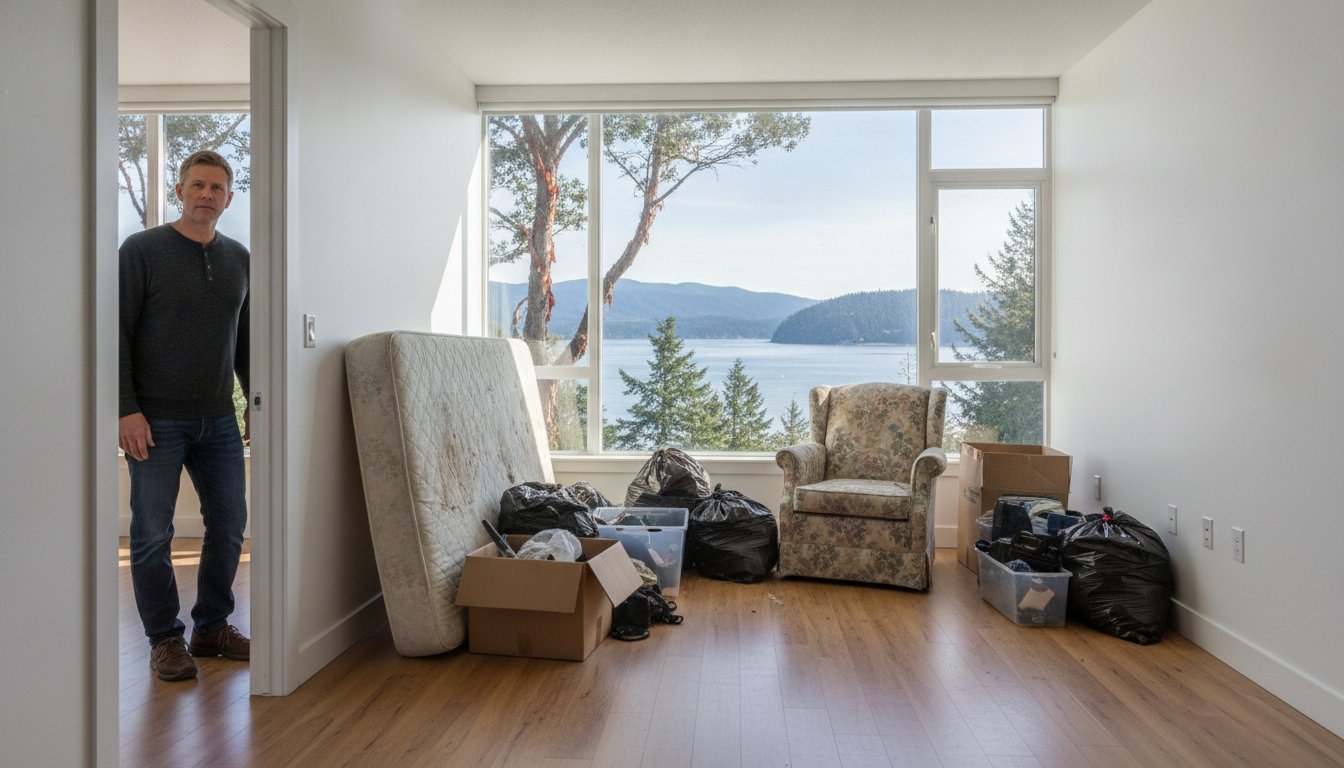

You open the door to your rental unit on move-out day, expecting a clean slate, but instead, you find a mountain of old mattresses, bags of clothes, and broken electronics. It's a frustrating situation that many landlords face, and your first thought is likely, "tenant left stuff behind what to do?" You want the junk gone so you can start collecting rent again, but the fear of a potential lawsuit from a former tenant can be paralyzing.
It's completely understandable to feel overwhelmed by the physical burden of hauling heavy furniture and the stress of navigating BC's strict tenancy laws. You deserve a clear path forward that protects your property and your wallet. In this article, we'll explain the legal requirements for handling abandoned belongings in British Columbia, including the critical $1,000 value threshold and the mandatory 30-day storage rule. You'll learn how to stay compliant with the Residential Tenancy Act while quickly clearing your space for the next occupant. We'll provide a straightforward roadmap to help you regain your peace of mind and get your property back in top shape efficiently.
Understanding Abandoned Property Rules in British Columbia
Finding a pile of unwanted belongings after a tenant moves out is a major headache. You want the unit ready for a new renter immediately, but you have to stay within the law. Understanding the rules for abandoned property is your first step toward a clean unit and legal safety. In British Columbia, the Residential Tenancy Act (RTA) provides very specific instructions for landlords. You cannot simply change the locks or throw everything on the curb the moment a tenant disappears. These laws exist to protect tenants' rights while giving you a clear path to reclaim your space.
To better understand this concept, watch this helpful video:
The law makes a clear distinction between actual trash and personal property. Even if an old sofa looks like junk to you, it still has a perceived market value. Under the March 4, 2026, updates to BC regulations, you must evaluate the total value of the items. If the belongings are worth $1,000 or more, you face much stricter storage and notice requirements. Items with personal value, such as family photographs, medical equipment, or legal documents, can never be treated as simple trash, regardless of their monetary worth. Ignoring these details can lead to expensive disputes at the Residential Tenancy Branch.
When is Property Officially Considered Abandoned?
Determining if a tenant is truly gone or just away for a week is vital. If you are wondering when a tenant left stuff behind what to do, look for specific legal triggers. Property is abandoned if the tenancy has ended and the tenant has moved out. It's also considered abandoned if the tenant hasn't paid rent for at least one continuous month and has removed most of their belongings. You must have a reasonable basis to believe they aren't coming back before you touch anything. Under British Columbia law, property is officially abandoned when a tenant has vacated the premises after the tenancy has ended or has been absent for one month without paying rent while removing most of their belongings.
Shared Spaces: Garages, Yards, and Porches
Junk doesn't always stay inside the four walls of an apartment. When items are left in garages, shared yards, or on porches, they still fall under your responsibility as a landlord. You must secure these items just as you would if they were inside the unit. This prevents theft and keeps the property looking professional for potential new renters. Leaving furniture or bags on the sidewalk, often called 'curbing', is a risky move. Municipalities like Nanaimo and Duncan have strict bylaws against this. You could face significant fines for illegal dumping or creating a public nuisance. It's always safer to follow the legal storage period and then hire professional Junk Removal to clear the space properly. This keeps you compliant with both provincial law and local city ordinances.
The 3-Step Legal Process for Handling Tenant Belongings
Once you confirm the property is abandoned, you must follow a specific legal sequence to protect yourself from future liability. Moving too fast can lead to legal claims, while moving too slow keeps your unit empty and unprofitable. Following the Residential Tenancy Act ensures you handle the situation with professional precision. This three-step process creates a clear paper trail and protects your investment.
The first step is a thorough inventory. You need a complete list of every item left behind. Don't just look at the big furniture; check every closet, drawer, and crawlspace. Second, you must determine the total market value of the items. According to updated BC regulations as of June 2026, the threshold is $1,000. If the total value is less than this amount, you can generally dispose of the items immediately. However, if the value exceeds $1,000, you move to the third step: the mandatory 30-day storage period. During this time, you must keep the items safe and provide the tenant with a formal notice of abandonment. This gives them a final chance to reclaim their property after paying for your storage and removal costs.
Documenting the Condition of Left-Behind Items
High-quality documentation is your best defense against claims that you damaged or lost valuable property. Take clear, well-lit photos of every room and every significant item. If a sofa is stained or a table is broken, capture that detail specifically. Create a written log that a third party could easily understand. Using a witness during this process adds an extra layer of reliability to your records. If the sheer volume of debris is too much to handle alone, professional Junk Removal teams can help clear the non-valuable clutter so you can focus on the items that require legal storage.
Serving Notice and Communication Requirements
If you determine the goods are worth $1,000 or more, you must serve a formal notice. This document should list the items, the location where they are stored, and the date the 30-day storage period ends. You must send this to the tenant's last known address or any forwarding address they provided. To ensure the 30-day clock starts correctly, use a delivery method that provides proof of service, such as registered mail. If the tenant remains unresponsive, keep a record of all your attempts to reach them. You are required to maintain these detailed records for at least two years to stay fully compliant with BC law. This meticulous approach ensures you have peace of mind when you finally clear the property for your next renter.
Evaluating the Items: Keep, Store, or Toss?
Once you have your inventory, the next task is sorting. You need to decide which items are worth storing and which can be cleared immediately. This decision hinges on the total estimated market value of the belongings. When you are staring at a room full of clutter and wondering about the rules for abandonment of personal property, you must prioritize legal compliance over convenience. The law requires you to be objective; your personal opinion of a tenant's "junk" doesn't matter as much as what that item might fetch at a local sale.
The threshold for immediate disposal in British Columbia is currently $1,000. If the total value of the items is less than this amount, you can legally dispose of them without a formal notice and sale process. However, this rule does not apply to items with significant personal value. You also have the right to recover costs. You can charge the tenant for the actual expenses of removing and storing the items, as well as any outstanding rent or debts owed under the tenancy agreement. This ensures you aren't left paying out of pocket for a tenant's decision to leave their belongings behind.
The Valueless vs. Valuable Debate
Estimating the market value of used furniture or old electronics can be a challenge. You should look at what similar items sell for on local marketplaces to get a realistic idea of their worth. If a sofa is torn beyond repair or an old television doesn't turn on, its value is likely zero. Such items qualify as junk and can be removed to make room for your next tenant. In British Columbia, a landlord may dispose of abandoned tenant property without a formal notice process if the total estimated market value of the belongings is less than $1,000 and the items do not have personal value. If you are unsure if a tenant left stuff behind what to do, always lean toward caution and store the items if they seem to have any resale potential.
Handling Sensitive Items and Documents
Certain items require extra care regardless of their monetary worth. Birth certificates, passports, bank statements, and family photographs are not junk. You must store these documents and personal items securely for the full 30-day period required by BC law. Medical devices like wheelchairs, nebulizers, or prescription medications also fall into this protected category. You cannot toss these simply because they don't have a high resale value. If you find something illegal or highly sensitive, don't hesitate to contact the local authorities for guidance. Keeping detailed records of these items for at least two years ensures you are protected if a dispute arises later through the Residential Tenancy Branch.
Disposing of Junk and Preparing for the Next Tenant
Once you've navigated the legal notice periods and completed your inventory, you're left with the physical reality of a unit full of clutter. This is often the point where landlords feel the most pressure. Every day the property sits full of debris is another day of lost rental income. Clearing out large furniture, old appliances, and piles of miscellaneous bags requires a strategic approach. You need to move from the legal phase into the restoration phase quickly to get your investment back on the market.
In the Cowichan Valley and Nanaimo, disposing of specific items like mattresses and old refrigerators requires extra care. Local recycling facilities often charge surcharges for these items, such as $20 for a mattress or $35 for a fridge. Managing these drop-offs yourself involves renting a truck, finding help for the heavy lifting, and spending hours at the landfill. If you're still wondering about the physical side of a tenant left stuff behind what to do, the answer is to focus on efficiency and safety. Professional teams handle the logistics while you focus on vetting your next high-quality renter.
Efficient Junk Hauling for Fast Turnaround
Attempting to haul away heavy furniture alone is a recipe for property damage. Scuffed walls, scratched floors, and strained backs are common outcomes of DIY cleanouts. Professional junk removal services provide a safer and faster alternative. These experts have the equipment to navigate tight hallways and the knowledge to sort recyclables from actual trash. This speed is essential because a fast turnaround minimizes your vacancy rate and gets your cash flow moving again. It's the most reliable way to ensure the job is done correctly without risking your own health or the integrity of your building.
Exterior Cleanup and Curb Appeal
A messy move-out often extends beyond the front door. Departing tenants frequently leave behind old tires, broken yard equipment, or bags of garden waste in the driveway. Restoring the exterior of your property is just as important as cleaning the interior. Utilizing power washing can instantly strip away years of grime, oil stains, and moss from siding and walkways. This makes the property look new and well-maintained to prospective tenants.
Don't forget to look up. Clogged gutters and moss growth on the roof are signs of neglect that can scare off responsible renters. A comprehensive exterior wash and yard clearing ensure your property stands out in a competitive market. If you need help getting your unit ready for a new lease, contact us for professional Junk Removal and property clearing to reclaim your space without the hassle.
Fast Property Turnaround with JBM Custom Contracting
Landlords in Nanaimo and Duncan often feel the clock ticking once the legal storage period starts. If you're struggling with a tenant left stuff behind what to do, you need a partner who understands the urgency of a rental turnaround. JBM Custom Contracting provides the heavy lifting and logistical support needed to clear a property safely and quickly. We take the physical burden off your shoulders, allowing you to focus on the legal documentation and finding your next tenant. Our team acts as a bridge between the legal requirements you've just navigated and the profitable future of your rental unit.
Our team is fully insured and professional, ensuring the removal process doesn't cause any new damage to your investment. We offer fast assessments and estimates, which is vital when you're trying to meet a strict 30-day deadline. Whether it's a single room of debris or a whole house full of abandoned furniture, we handle every job with operational excellence. We know that peace of mind is just as important as a clean property, so we prioritize reliability and clear communication from start to finish.
Comprehensive Property Maintenance Solutions
We don't just stop at interior junk removal. JBM offers a total property refresh by combining debris clearing with exterior cleaning services. This integrated approach ensures your property looks its best from the sidewalk to the back fence. Our commitment to safety and precision means every item is handled responsibly. We understand the local landscape and provide dependable service across several key areas on the Island. Our primary service locations include:
- Duncan
- Ladysmith
- Cedar
- Nanaimo
- Parksville
- Qualicum Beach
Demolition and Concrete Removal
Sometimes, the problems left behind are structural. If a former tenant built an unauthorized shed that is now rotting or poured a DIY patio that doesn't meet code, you need more than just a hauling crew. Our demolition services are designed to handle these specific challenges. We can safely tear down and remove unstable structures, leaving your yard clean and ready for use. This prevents future liability and restores the original layout of your property.
Move-outs can also lead to cracked driveways or damaged walkways that need immediate attention. Our expertise in concrete work allows us to repair these issues while we are on-site for the cleanup. By handling both the debris removal and the structural repairs, we provide a one-stop solution for landlords who want their property restored to peak condition without juggling multiple contractors. We make sure your property is safe, clean, and ready for a new lease as quickly as possible.
Take Control of Your Property Turnaround
Navigating the legalities of abandoned belongings can feel daunting, but you now have the roadmap to handle it correctly. Staying compliant with the Residential Tenancy Act protects your business from unnecessary risks. By documenting every item and respecting the required storage periods, you ensure a smooth transition between tenants. When you are stuck wondering about a tenant left stuff behind what to do, remember that legal safety and physical efficiency go hand in hand.
JBM Custom Contracting is ready to step in and restore your property. We are a certified and fully insured team that has been serving the region from Nanaimo to Duncan. Our comprehensive maintenance solutions range from professional junk removal to complete exterior cleaning, giving your unit the fresh start it needs. We handle the heavy lifting so you can focus on your next lease and move forward with confidence.
Book Your Reliable Junk Removal and Property Cleanup Today to minimize your vacancy time. You have the tools to reclaim your space; now it's time to get your rental income flowing again.
Frequently Asked Questions
Can I throw away my tenant's stuff if they haven't paid rent?
No, you cannot immediately toss items simply because rent is unpaid. You must first determine if the belongings are worth more or less than $1,000. If the items are valuable or have personal significance, like family photos or medical gear, you must follow the 30-day storage rule. Unpaid rent doesn't give you the right to skip these legal steps, though you can eventually use sale proceeds to cover the debt.
How long do I have to store a tenant's belongings in BC?
You must store abandoned property for at least 30 days if the total market value is $1,000 or more. This mandatory period gives the tenant a fair opportunity to reclaim their goods. For items worth less than $1,000 that carry no personal value, the law allows for immediate disposal. Always double check for items like passports or birth certificates, which must be kept regardless of their monetary worth.
Can I charge the tenant for junk removal and storage costs?
Yes, you have the right to be reimbursed for the actual costs of removing and storing abandoned items. You can require the tenant to pay these expenses before they are allowed to take their property back. If the tenant never returns and you sell the items after the 30-day notice period, you can use that money to settle the storage fees and any outstanding rent or utility debts.
What should I do with a tenant's abandoned car or vehicle?
Vehicles are generally treated as abandoned property under the Residential Tenancy Act, meaning the $1,000 valuation and 30-day storage rules apply. You should check the Personal Property Registry to see if there are any existing liens on the car. If the vehicle remains on your property after you've followed the legal notice process, you can hire a towing service to move it to a professional storage lot at the tenant's expense.
Do I need to involve the police if a tenant leaves personal items behind?
Usually, the police don't need to be involved in standard cases where a tenant left stuff behind what to do. However, if you discover illegal substances, weapons, or evidence of a crime while clearing the unit, you should contact local authorities immediately. For routine abandoned property like furniture or clothing, the Residential Tenancy Branch is the correct resource for guidance rather than local law enforcement.
What is considered 'junk' that I can toss immediately?
Junk includes items with a total market value of less than $1,000 that hold no personal or sentimental worth. This often includes broken electronics, stained mattresses, or bags of household refuse. You must be very careful not to toss "personal value" items like legal IDs, bank statements, or prescription medications. These specific items require 30 days of secure storage even if they have no resale value on the open market.
Can I sell the tenant's abandoned items to cover unpaid rent?
Yes, you can sell abandoned property worth $1,000 or more once the 30-day storage and notice period has passed. You are allowed to use the proceeds to cover your storage costs, disposal fees, and any rent the tenant owes. If there is money left over after you've settled these specific debts, you are legally required to send the remaining funds to the BC Unclaimed Property Society.
How do I document abandoned property to avoid a lawsuit?
Protect yourself by creating a comprehensive inventory and taking high-quality photographs of every item. Keep a written log of your valuation process and every attempt you made to contact the former tenant. You must maintain these detailed records for at least two years. This documentation is your best defense if a tenant later disputes how you handled the situation when a tenant left stuff behind what to do.