

Did you know that the most critical part of your new build is the work that disappears before the foundation is even poured? When you start preparing a site for construction, you aren't just clearing dirt; you're setting the stage for every permit, pipe, and pillar to follow. It's completely normal to feel overwhelmed by piles of debris, complex 2026 local permit requirements, or the fear of hitting a massive rock that blows your budget. You want a clean, stable lot without the stress of unexpected delays or hidden costs.
We understand that you need a reliable plan to turn raw land or a messy lot into a build-ready site. This guide provides the clarity you need to handle everything from initial clearing to final grading safely and efficiently. We'll walk through the essential steps to ensure your property is ready for the builder on schedule. You will learn how to identify if you need a full demolition or just a professional cleanup, helping you avoid the common pitfalls that stall projects before they truly begin.
Key Takeaways
- Understand why a clean, stable surface is the non-negotiable foundation for any successful build.
- Learn how to navigate local zoning and building permits in areas like Nanaimo and Parksville to prevent costly legal delays.
- Discover the most efficient steps for preparing a site for construction, including professional demolition and debris sorting.
- Master the critical difference between grading and leveling to protect your property from drainage issues.
- Identify how to establish clear access points and temporary utilities to keep your project moving without interruption.
What is Site Preparation and Why Does It Matter?
Site preparation is the physical work done to your land before any building materials arrive. Think of it as the transition from raw acreage or a cluttered lot into a functional, buildable workspace. When you're preparing a site for construction, you're essentially clearing the slate so that your architect's plans can be realized on a stable foundation.
A solid build requires more than just good blueprints; it needs a clean, level, and stable surface. Skipping this step or cutting corners often leads to disastrous results later in the project. You might face foundation cracks, chronic drainage issues, or expensive project delays that could've been avoided with a bit of foresight. By investing in professional prep now, you prevent the stressful "surprises" that typically pop up once the concrete is poured and the budget is already tight.
To better understand how this process sets the stage for a successful project, watch this helpful video:
The Goal of a Build-Ready Site
The main objective is to eliminate any variables that could threaten the integrity of your new structure. This involves removing physical obstacles like old stumps, rocks, or derelict buildings that block heavy machinery. Beyond just clearing space, the process ensures the ground can support the weight of the new structure without shifting. Safety is also a major factor in preparing a site for construction. By following established construction site safety protocols, we create a secure environment where your crew can work without tripping over debris or worrying about unstable slopes.
Who Involved in the Process?
Preparing your land is a team effort that requires several different experts. You'll likely start with surveyors to mark property lines and soil engineers to test the ground's load-bearing capacity. While the planning is technical, the execution requires specialized equipment and years of experience. Local contractors like JBM Custom Contracting are essential for the heavy lifting, especially for demolition and site clearing. As the property owner, your responsibility lies in the planning phase. You'll need to coordinate these professionals to ensure your lot is ready before the main builder arrives to start the foundation.
The Critical First Steps: Site Evaluation and Local Requirements
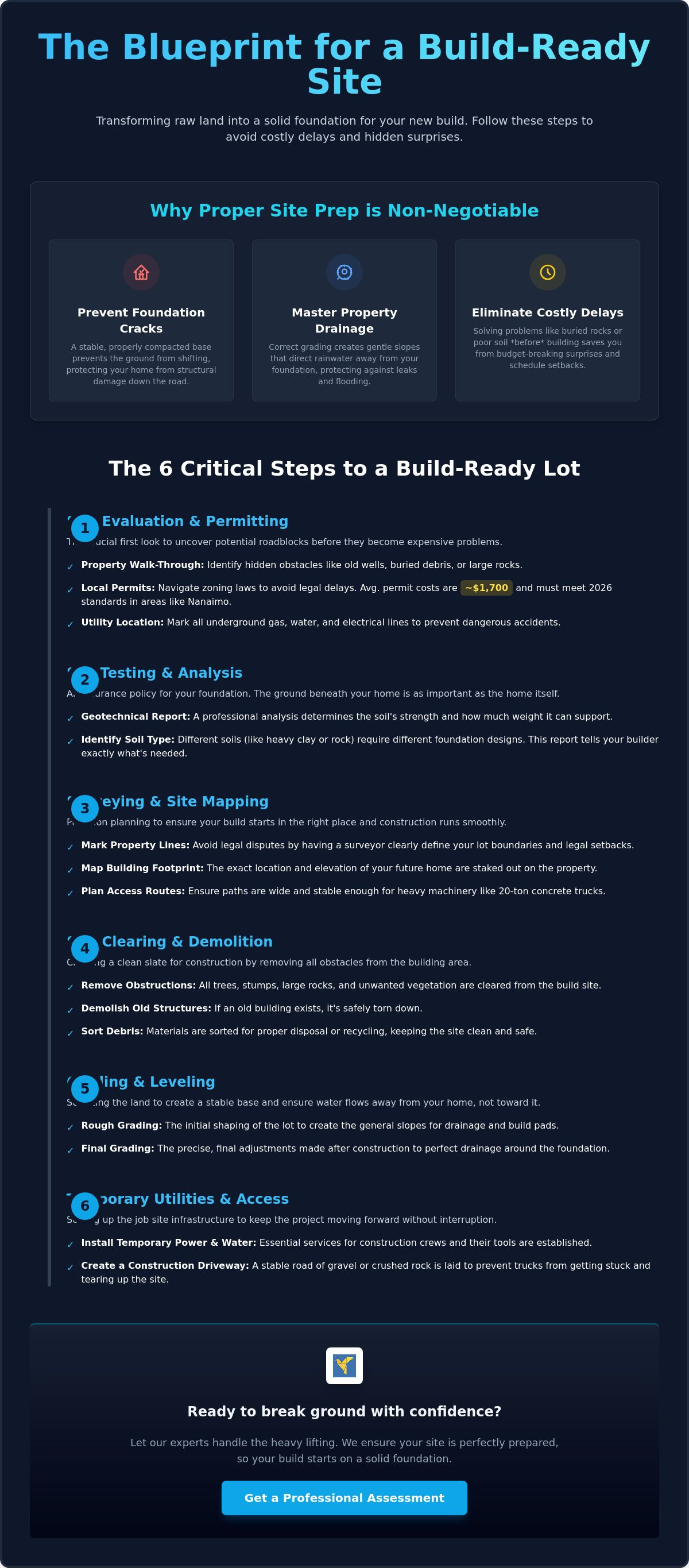
Before any heavy machinery arrives, you must conduct a thorough walk-through of the property. This isn't just a casual stroll. You're looking for hidden challenges that don't appear on a map, such as old wells, buried debris, or unexpected rock outcroppings. Preparing a site for construction effectively requires identifying these physical hurdles early to avoid mid-project budget spikes. These early observations help you decide if you need a simple cleanup or a more intensive intervention.
In Nanaimo and Parksville, local zoning and building permits are strict. As of 2026, permit applications must comply with updated building standards, and the average cost for these permits is approximately $1,700. Failing to account for local setbacks or environmental regulations can halt your project before it starts. If the paperwork feels overwhelming, you might want to reach out for a professional assessment to ensure your plan is viable and compliant with current 2026 codes.
Identifying underground utilities is another non-negotiable step. Even if the land looks raw, there could be old water lines, gas pipes, or electrical conduits beneath the surface. Striking these is a safety hazard and a massive financial liability. You should always coordinate with local utility companies to flag these lines before any shovel hits the ground.
Soil Testing and Geotechnical Reports
Soil testing acts as the ultimate insurance policy for your foundation. On Vancouver Island, soil quality varies wildly. In Cedar and Lantzville, you're likely to encounter either heavy, moisture-retaining clay or solid rock formations. A geotechnical report determines the load-bearing capacity of your specific lot. This data dictates whether you need a standard concrete foundation or a specialized design to handle the island's high rainfall and unique geology. Without this report, you risk foundation settling or drainage failures within just a few years of completion.
Surveying and Mapping the Site
Professional surveyors mark your property lines and legal setbacks with precision. This prevents boundary disputes and ensures your build stays within the law. They also establish the exact footprint of the future building on the ground. A comprehensive site plan also maps out access points for delivery trucks and concrete mixers. You need to ensure the path is wide enough and the ground is stable enough for 20-ton vehicles to move safely. Creating this roadmap now prevents logistical nightmares once the main construction crew arrives.
Clearing the Path: Demolition and Debris Removal
Once you've marked your boundaries and tested the soil, the physical work of preparing a site for construction begins. This phase is about more than just moving dirt; it requires a surgical approach to removing the physical clutter that stalls projects. While many property owners focus on clearing trees, man-made obstacles often present the biggest hurdles. You might find yourself staring at an old, rotting shed or a pile of "inherited" junk from a previous owner. These items don't just block progress; they create safety hazards for your crew and can hide serious ground issues like old wells or unstable soil.
The process follows four logical steps to ensure efficiency. First, we assess which existing structures are genuinely in the way of the footprint or the heavy machinery access points. Second, we sort materials for recycling versus disposal. In 2026, sustainability is a priority, and keeping concrete separate from wood helps manage disposal costs while meeting environmental standards. Third, we execute the demolition using professional equipment to ensure no damage occurs to surrounding trees or structures. Finally, we haul everything away to leave you with a clean, build-ready slate.
Small-Scale Demolition for Renovations
Taking down an old garage or a dilapidated deck is a high-risk job for a DIYer. One wrong move can damage your home's siding or sever a hidden utility line. Professional demolition services offer the precision needed to clear space without the headache of property damage. We focus on efficiency and safety, providing clear small demolitions pricing so you know exactly what to expect before the first hammer swings. This professional approach keeps your timeline intact and prevents the delays that occur when a DIY project goes sideways.
Professional Junk and Debris Removal
A lot littered with organic debris, old fencing, or construction waste makes it impossible for surveyors to work with total accuracy. It also presents a danger to workers navigating the site. Removing this "junk" is the first step in reclaiming your space and preparing a site for construction properly. Whether it's piles of old tires or heaps of yard waste, our junk removal services ensure the land is pristine. A clean site isn't just about aesthetics. It's about providing a safe, unobstructed environment where your builders can focus on the foundation rather than navigating a mess.
Earthworks: Grading, Leveling, and Managing Drainage
Once the lot is clear of old structures and debris, the heavy equipment begins the process of shaping the land. This phase, known as earthworks, is where the technical precision of preparing a site for construction truly matters. Many property owners use the terms grading and leveling interchangeably, but they serve different purposes. Leveling creates the perfectly flat pad needed for your foundation, while grading establishes the subtle slopes required to manage water flow across your entire property.
On Vancouver Island, drainage is the number one priority for any construction project. With the heavy rainfall common in areas like Duncan and Ladysmith, an improperly graded site will quickly lead to basement flooding or foundation damage. We focus on moving water away from your future home and toward designated runoff areas. This prevents the "pooling" that can turn a beautiful yard into a swampy mess during our wet winters.
Compacting the soil is another critical step. We use heavy machinery to press the earth down, ensuring the ground won't shift or sink once the weight of the building is added. To protect your investment during the build, we also implement erosion control measures. These prevent your topsoil from washing away into local storm drains during a sudden downpour, keeping your site stable and compliant with local environmental bylaws.
Grading for Proper Water Runoff
A build-ready site must account for the natural path of rainwater. We carefully calculate slopes to ensure every drop moves away from the new foundation. This is especially vital in hilly island terrain where runoff from a neighbor's property could impact your lot. By handling this correctly now, you save thousands in future landscape repairs and waterproof treatments. Properly managed runoff protects your yard, your driveway, and the longevity of your home's exterior.
Excavation and Leveling
Our team starts by stripping away the organic topsoil to reach the stable subsoil layer beneath. This subsoil provides the strength needed to support a heavy structure. Through a process of "cutting and filling," we move earth from high spots to low spots to create a perfectly balanced pad. This meticulous leveling is the essential precursor for high-quality concrete work, ensuring your slab or basement is poured on a surface that won't fail. If you're ready to start the digging, contact JBM Custom Contracting for a professional site assessment.
Final Logistics: Setting Your Project Up for Success
The heavy lifting of earthworks and demolition is complete, but your lot isn't quite ready for the main crew yet. The final phase of preparing a site for construction involves managing the logistics that keep a project moving smoothly. A build-ready lot is useless if the concrete truck can't reach the foundation or the framing crew has no power for their saws. These finishing touches ensure that once the builder arrives, they can focus entirely on construction rather than solving site problems.
Temporary utility connections are a top priority during this stage. Your crew will need reliable access to water for mixing materials and dust control. They also need a temporary power pole to run tools and charging stations. Additionally, you must consider site security. Installing professional safety fencing is often a local requirement in Nanaimo and Parksville to prevent unauthorized access and protect the public. A secure site reduces your liability and keeps your materials safe from theft or vandalism.
Before the first delivery of lumber arrives, conduct a final inspection. You need to ensure the site meets the exact specifications provided by your builder. Check the compaction of the soil one last time and verify that all utility markers are clearly visible. Taking an hour to walk the site now prevents a day of standing around later when a sub-contractor realizes they can't fit their equipment where it needs to go.
Creating Construction Access
You must establish clear access points that can handle the extreme weight of 10-ton delivery trucks and concrete mixers. If your temporary driveway is too soft, these vehicles will get stuck, leading to expensive towing fees and project delays. We often recommend a layer of crushed rock to stabilize the path and protect the underlying soil. It's also vital to plan for material storage areas. You need a flat, dry space where lumber and windows can be staged without blocking the flow of traffic or damaging your neighbor's property.
Hiring the Right Site Prep Team
When you're preparing a site for construction on Vancouver Island, local knowledge is your biggest asset. A local team understands our unique soil conditions and knows the most efficient dump locations for debris. There's a massive benefit to hiring a "one-stop shop" that can handle everything from the initial demolition to final yard care and site clearing. This streamlined approach keeps your timeline tight and your communication simple.
A professional assessment is the best way to avoid the hidden costs of rock removal or drainage failures. If you're ready to transform your property into a stable, build-ready site, we're here to help. Contact JBM Custom Contracting today for a reliable quote and a clear plan for your 2026 project.
Ready to Build? Start with a Solid Foundation
Success in any building project starts long before the first wall goes up. By focusing on professional grading, clearing man-made debris, and securing your permits early, you've already avoided the most common causes of project failure. You now have a clear roadmap for transforming your land into a stable, build-ready lot that protects your investment for years to come. Professional preparation isn't just a checkbox; it's the security your future home depends on.
When you're ready to take the next step in preparing a site for construction, you don't have to do it alone. JBM Custom Contracting is fully insured and certified, offering specialized expertise in everything from demolition to property maintenance. We proudly serve Vancouver Island from Nanaimo to Duncan, helping property owners navigate difficult terrain and local requirements with ease. Our team handles the heavy lifting so you can focus on the exciting parts of your new build.
Get a Professional Site Assessment from JBM Custom Contracting and ensure your project starts on the right foot. Your dream home deserves a foundation built on professional excellence and local experience. Let's get to work on your site today.
Frequently Asked Questions
How much does it cost to prepare a site for construction in 2026?
Costs depend on the size of your lot and the amount of debris that needs removal. You'll generally pay based on the square footage of the area being worked or a flat rate for specific tasks like demolition. Factors like hidden rock formations or steep slopes will influence the final price; so a professional on-site quote is the only way to get an accurate number for your budget.
Do I need a permit just to clear trees or junk from my land?
You usually need a permit for tree removal or significant land clearing in most municipalities. While removing loose junk or surface debris might not require one; any work that disturbs the soil or removes protected tree species will. As of 2026, the average cost for permits can be around $1,700 depending on your specific location and project scope. It's best to check with your local building department in Nanaimo or Parksville before you start clearing to avoid heavy fines.
How long does the site preparation process typically take?
Most site preparation projects take between one and four weeks to complete from start to finish. This timeline includes the initial evaluation, clearing, grading, and final inspections. Delays can happen if you encounter unexpected underground obstacles or if local permit approvals take longer than anticipated during a busy building season. Having a clear plan and a professional team helps keep the project on schedule.
Can I do my own site preparation to save money?
You can handle surface-level cleanup; but professional equipment is necessary for grading and excavation. DIY mistakes in preparing a site for construction often lead to foundation settling or drainage failures that cost much more to fix later. Hiring a certified team ensures the ground is stable and meets the strict safety standards required by your main builder and local building codes.
What is the difference between land clearing and site preparation?
Land clearing is just the first step where we remove trees, brush, and debris from the surface. Site preparation is a much broader process that includes soil testing, grading, leveling, and establishing utility connections. Think of clearing as cleaning the room and site prep as building the stage for your construction project. Both are essential for a build-ready lot.
What happens if we find rock or old buried debris during excavation?
Finding large rocks or buried trash requires specialized machinery and often changes the project's scope. We typically use hydraulic hammers or larger excavators to remove these obstacles safely and efficiently. Identifying these surprises early during the evaluation phase helps you adjust your budget before the foundation crew arrives. It's a common part of working with the varied terrain on Vancouver Island.
Is soil testing really necessary for a small shop or garage?
Soil testing is highly recommended even for smaller structures like shops or detached garages. On Vancouver Island, the soil can shift or hold water in ways that cause concrete slabs to crack over time. A quick test confirms the ground can handle the weight; giving you peace of mind that your new building will stay level and stable for decades.
How do I know if my site needs a professional drainage plan?
You likely need a professional drainage plan if your lot has steep slopes or if water pools on the surface after a heavy rain. Since preparing a site for construction involves managing runoff; an expert evaluation identifies where water will go once your home is built. Proper planning prevents expensive basement leaks and yard erosion during our wet West Coast winters.