
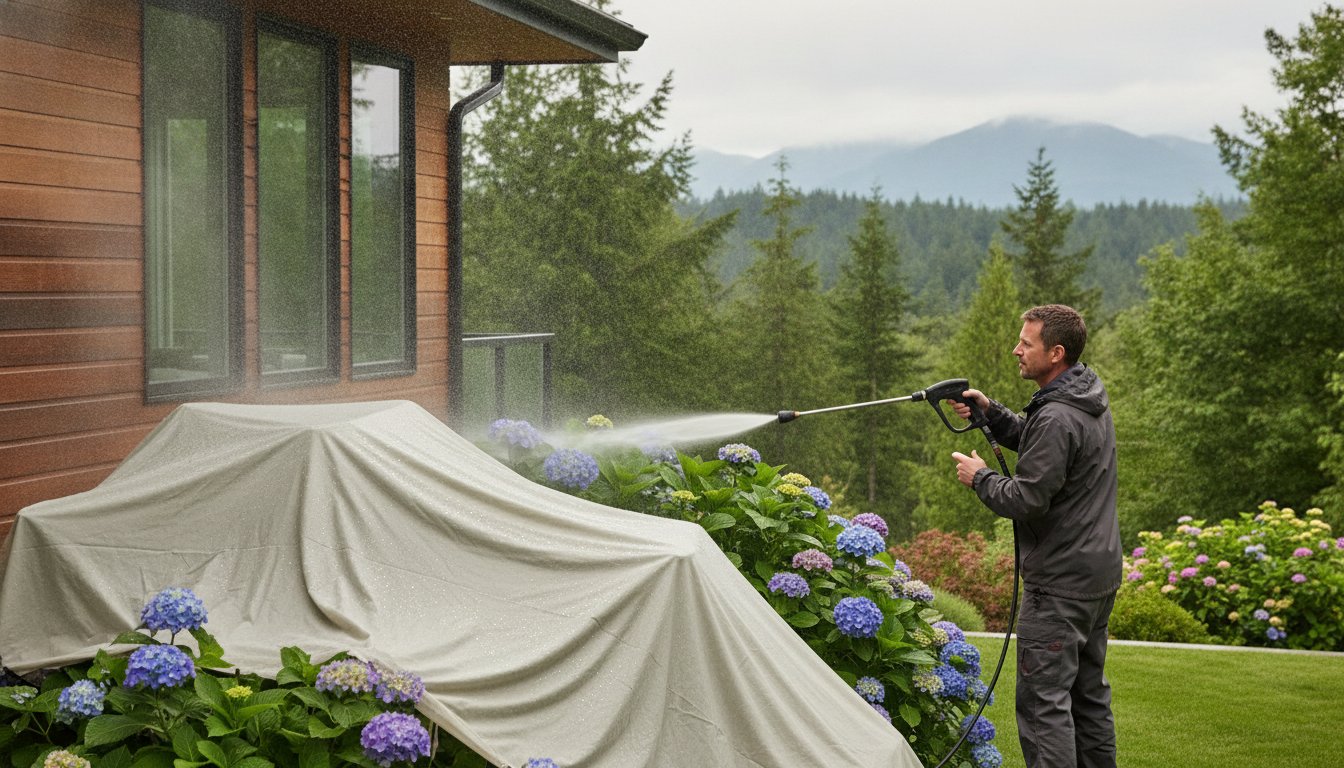

Imagine spending an entire weekend pruning your hydrangeas only to watch them turn brown and shrivel forty-eight hours after your house gets a fresh wash. It's a common nightmare for homeowners who want a sparkling exterior but fear the consequences of harsh chemicals and high-pressure streams. You shouldn't have to choose between a clean home and a thriving garden. Learning how to protect plants during power washing is the key to maintaining your curb appeal without sacrificing your landscaping.
We understand that your yard is an investment of both time and money. It's frustrating to deal with "plant-safe" labels that don't live up to the hype or pressure settings that snap delicate stems. This guide promises to give you the professional techniques needed to keep your garden safe and vibrant during your next project. We'll walk you through the critical pre-wetting process, the best ways to shield sensitive flowers, and how to neutralize runoff so your soil stays healthy. Whether you're planning a DIY weekend or looking to hire a pro who treats your property with care, you'll have the confidence to ensure your home and garden both look their best.
Key Takeaways
- Identify the dual risks of high-pressure impact and chemical burns to stop damage before it starts.
- Master the pre-wetting process to learn how to protect plants during power washing by creating a natural water shield for leaves and roots.
- Choose breathable landscape fabrics over plastic covers to protect your garden without accidentally cooking your plants in the sun.
- Execute a proper final rinse and neutralization step to clear away any remaining detergent residue safely.
- Learn why professional soft washing techniques offer the most reliable way to clean your home while keeping your greenery vibrant.
Understanding the Hazards: How Power Washing Can Harm Your Garden
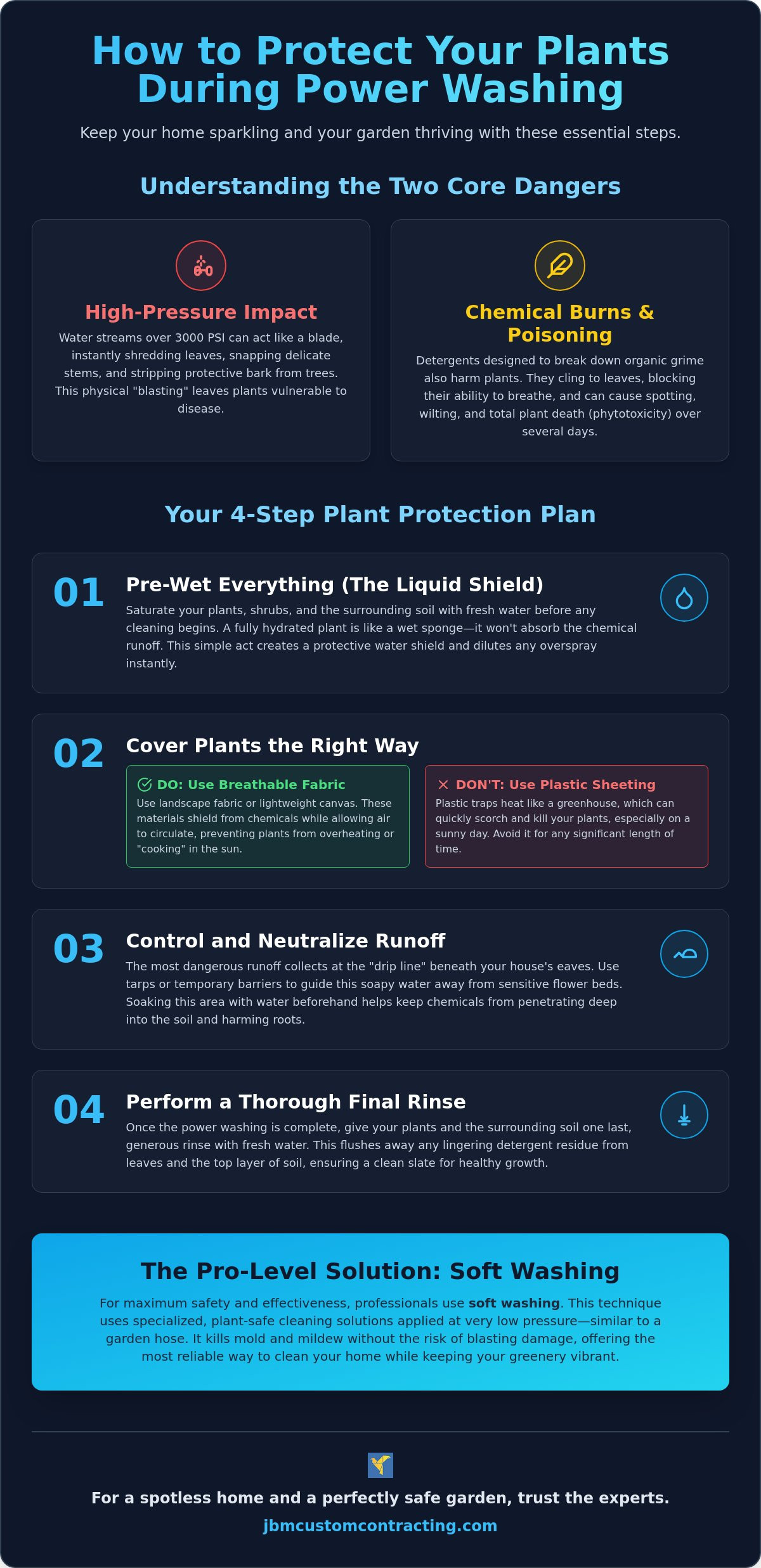
Most homeowners view a pressure washer as a simple cleaning tool, but it's actually a high-powered machine that can act like a demolition device for your garden. High-pressure water, often exceeding 3000 PSI, can easily strip the protective bark from ornamental trees or snap the delicate stems of your favorite perennials in an instant. This mechanical damage happens so quickly that you might not even notice the spray has wandered off target until the damage is done. It's a physical "blasting" effect that leaves soft foliage shredded and vulnerable to disease.
Beyond the physical impact, the detergents used to eliminate mold and mildew pose a silent threat. These solutions are specifically designed to break down organic material, and your shrubs and flowers are made of that exact same material. Understanding these specific hazards is the first step in learning how to protect plants during power washing. If you aren't careful, a routine cleaning can turn into an expensive landscaping disaster.
To better understand how these risks manifest in a real-world setting, watch this helpful video:
Chemical Burn vs. Physical Impact
The difference between a physical tear and a chemical burn is often a matter of timing. While a high-pressure stream causes immediate visible damage, chemical burns can take days to appear. Many cleaning agents contain surfactants, which are chemicals that make soap "sticky." This allows the cleaner to cling to your siding and dissolve grime, but it also means the soap sticks to leaves and blocks their ability to breathe. Phytotoxicity is the poisonous effect of chemicals on plant growth. When these chemicals sit on a leaf, they cause spotting, wilting, and eventually total plant death. It's a chemical suffocation that can be far more lethal than a few broken branches.
The Problem with Runoff and Soil Contamination
The most dangerous part of the process is often what you can't see happening beneath the surface. When soapy water runs off your siding, it naturally follows the path of least resistance, which often leads directly into your flower beds. This runoff can drastically alter the soil pH, creating an environment that is too acidic or too alkaline for your plants to survive. Root systems are incredibly sensitive to these shifts. Additionally, many common cleaning agents contain salts that linger in the soil for days after the job is finished. This salt buildup dehydrates plants from the inside out by drawing moisture away from the roots, even if you are watering them regularly. Directing runoff away from your landscaping is essential for maintaining a healthy yard. For homeowners who want the best results without the risk, hiring a professional for house washing ensures that these drainage issues are handled with expert precision.
The Critical First Step: Pre-Wetting Your Landscape
If you want to keep your flowers alive, start with the hose. Many people think that covering a plant is the only way to keep it safe, but professional cleaners know that water is your best defense. Pre-wetting is the most critical step in how to protect plants during power washing. By saturating your landscaping before the first drop of detergent hits the siding, you create a liquid shield that prevents chemicals from ever entering the plant's system. It's a simple task that requires thoroughness rather than specialized equipment.
The Science of Saturation
Think of your plants like dry sponges. If you pour a chemical cleaner onto a dry sponge, it soaks in immediately. However, if that sponge is already dripping wet, the chemical simply sits on the surface or runs off. Plants operate the same way. When a plant is fully hydrated, its cells are turgid and less likely to absorb external liquids through the leaves or root system. This is the fundamental secret of how to protect plants during power washing.
Additionally, water on the leaf surface provides instant dilution. Even if a small amount of "plant-safe" soap or bleach overspray lands on a wet leaf, the water already present breaks down the concentration before it can cause a burn. Maintaining this hydration also helps with transpiration, which is the process of water moving through a plant and evaporating from leaves. A well-hydrated plant can continue this natural cooling and breathing process even when the surrounding environment is temporarily disturbed by cleaning agents.
You must pay special attention to the "drip line." This is the area directly beneath the eaves of your house where the runoff is the heaviest and most concentrated. If the soil here is dry, it will pull cleaning chemicals deep into the root zone where they can do the most damage. Flooding this area with fresh water creates a "water barrier" that forces the runoff to stay on the surface where it can be rinsed away safely.
A Step-by-Step Pre-Wash Checklist
Before you start your machine, follow this routine to ensure nothing is left to chance. Professional results come from following a consistent process.
- Step 1: Clear the area. Move all potted plants, hanging baskets, and lawn furniture at least 20 feet away from the house.
- Step 2: Soak the foliage. Use a standard garden hose to soak every leaf of your shrubs and flowers from top to bottom.
- Step 3: Flood the ground. Water the soil until it's visibly muddy. You want the ground to be so saturated that it cannot absorb any more liquid.
- Step 4: Search for hidden targets. Check for small plants growing under decks or tucked behind larger bushes that might be caught in the crossfire.
Don't forget to keep the plants wet throughout the entire job. On hot, sunny days, the water can evaporate quickly, leaving your garden vulnerable mid-wash. If you're worried about managing the technical details yourself, hiring a professional for pressure washing can provide the peace of mind that every plant is properly prepared and protected from start to finish.
Using Physical Barriers: When and How to Cover Your Plants
While pre-wetting provides an excellent first line of defense, some delicate garden features require a physical shield. Using barriers effectively is a refined skill in how to protect plants during power washing. It isn't as simple as throwing a tarp over your bushes and hoping for the best. In fact, using the wrong material at the wrong time can often cause more harm than the cleaning chemicals themselves.
Choosing the Right Material for Vancouver Island Gardens
In our local climate, we often deal with lush ferns, rhododendrons, and sensitive shrubs that thrive in moist, cool conditions. For these plants, breathability is your best friend. Lightweight fabrics like old bedsheets or specialized landscape fabric are ideal because they allow air to circulate while still catching the majority of accidental overspray. Canvas drop cloths are another solid choice for larger hedges because they stay in place better than light sheets.
Avoid heavy plastic sheeting whenever possible. While plastic is completely waterproof, it has zero breathability. If you have small, individual flowers that need protection, consider using simple cardboard boxes as temporary shields. They are easy to place, don't trap heat, and can be recycled once the job is finished. The goal is to create a barrier that stops the "stickiness" of surfactants without suffocating the plant.
The Danger of Overheating
The most common mistake homeowners make is leaving covers on for too long. On a sunny day, the temperature under a plastic tarp can rise by 20 degrees in just a few minutes. This creates a "greenhouse effect" that can literally cook your plants from the inside out. Signs of heat stress include sudden wilting, curling leaves, or a "steamed" appearance that looks different from a chemical burn.
To prevent this, you must be strategic with your timing. Covers should only be on during the active "soaping" phase when the risk of chemical exposure is highest. As soon as the cleaning solution has been applied and the house is being rinsed, remove the barriers. This allows the plants to benefit from the final fresh-water rinse. If you are managing a large property with complex landscaping, our team at JBM Custom Contracting can help with professional yard care to ensure your garden stays healthy year-round.
When securing your covers, use stakes or stones to keep the fabric from resting directly on the foliage. If a chemical-soaked cloth touches a leaf, it can transfer those toxins directly through the plant's surface. By keeping a small air gap between the cover and the plant, you maximize safety and ensure a successful exterior clean.
Post-Wash Recovery: Rinsing and Neutralizing Cleaning Residue
The silence after the power washer stops doesn't mean your work is finished. The next thirty minutes are just as vital as the preparation phase. Residual soap or bleach left on leaves will continue to act on the plant tissue as the water evaporates, leading to concentrated chemical burns. This is a key part of how to protect plants during power washing. You must be diligent about clearing away every trace of cleaning solution before it has a chance to dry.
The Final Rinse Protocol
Once the siding is clean, you should rinse your plants for twice as long as you think you need to. Soap residue is incredibly sticky and can hide in the crevices of bark or the folds of leaves. Pay special attention to the "splash zone," which is the area of soil and foliage within three feet of your home's foundation. This area receives the highest concentration of runoff. Our team follows this exact protocol for our house washing Nanaimo services to ensure your property remains pristine and your garden stays healthy.
Don't just spray from the top down. Use a gentle setting on your garden hose to rinse the undersides of leaves. Chemicals often mist upward during the cleaning process and settle underneath, where they are shielded from a standard overhead rinse. If these residues remain, they can slowly eat away at the plant's cuticle over several days.
Neutralizing Agents and Soil Health
If you used heavy bleach-based solutions to tackle stubborn mold, a simple water rinse might not be enough. Professional neutralizing agents, often containing sodium thiosulfate, are designed to stop the oxidative action of bleach instantly. While many DIYers skip this step, it's a wise investment if you have high-value specimen plants or sensitive annuals near the work area. These agents effectively "turn off" the bleach so it can no longer harm organic material.
If you suspect heavy runoff occurred, you can naturally help balance the soil pH by flushing the area with fresh water for several minutes. This dilutes the concentration of salts and cleaning agents in the root zone. A few days after the cleaning is done, applying a light liquid fertilizer can provide a much-needed nutrient boost to help the plants recover from the stress of the day. This proactive approach ensures that your soil remains a healthy environment for future growth.
Monitor your greenery closely for at least 48 hours after the project. Look for signs of yellowing, drooping, or unusual spotting on the leaves. Early detection of stress allows you to provide extra water or care before the damage becomes permanent. If you want to ensure your home gets a deep clean without any of these risks, request a professional assessment from a team that prioritizes your landscaping as much as your siding.
Professional Soft Washing: The Safest Choice for Your Home
While the DIY steps outlined in this guide provide a solid foundation for safety, the most reliable way to ensure your garden survives a house wash is to choose the right method from the start. Traditional power washing relies on brute force to strip away dirt, but this high-velocity approach is often overkill for residential siding. Soft washing is a modern alternative that prioritizes the integrity of your home's exterior and the health of your surrounding landscape. Hiring a professional team that utilizes soft washing is often the most effective answer to the question of how to protect plants during power washing. For example, Pressure Pros of Palm beach specializes in these gentle techniques to ensure roofs, decks, and pavers are cleaned without damaging the surrounding environment.
How Soft Washing Differs from Traditional Power Washing
The primary difference lies in the pressure settings. Soft washing operates at a gentle 60 PSI, which is roughly the same pressure as a standard garden hose. In contrast, traditional power washing blasts surfaces at 3000 PSI or more. This massive difference in force means that soft washing won't shred leaves, strip bark, or uproot flowers if the wand accidentally drifts toward a garden bed. Instead of using pressure to "blast" away grime, this method uses specialized, biodegradable soaps to dissolve organic growth at the root.
This approach is particularly superior for moss removal on Vancouver Island. Our local climate creates a moss-heavy environment that requires a delicate touch to clean effectively without damaging shingles or siding. Because the soaps do the heavy lifting, the rinse phase is much safer for your greenery. You can check our pressure wash pricing to see how professional estimates compare to the cost of potential landscape replacement if a high-pressure DIY project goes wrong.
The JBM Custom Contracting Advantage
We believe that property maintenance should never come at the expense of your yard's beauty. Professional crews like ours use dedicated "ground-men" whose sole job is to manage plant safety while the technicians clean the house. This person monitors the drip line, manages the pre-wetting process, and ensures that covers are used correctly and removed promptly. This level of attention to detail is what sets a professional service apart from a standard "splash and dash" operation.
Our team serves homeowners in Lantzville, Nanaimo, Duncan, and Ladysmith with a focus on reliable, trustworthy service. We treat your yard with the respect it deserves, ensuring that your home looks fresh and your garden remains vibrant. Hiring a local expert who understands the specific plant needs of Vancouver Island saves you the stress and expense of dealing with brown, dead foliage after the job is done. Contact JBM Custom Contracting for a safe, professional exterior clean today and give your home the care it needs without the risks.
Enjoy a Brighter Home and a Thriving Garden
Maintaining your home's exterior shouldn't feel like a gamble with your landscaping. You now have the professional techniques for how to protect plants during power washing, from the essential pre-wetting phase to selecting breathable barriers that won't overheat your greenery. By focusing on root saturation and careful post-wash rinsing, you can prevent chemical burns and ensure your property remains vibrant long after the cleaning is finished.
If you prefer a hands-off approach, our team of fully insured and certified property maintenance experts is ready to assist. We serve Vancouver Island communities from Nanaimo to the Cowichan Valley using specialized soft-wash systems designed specifically to protect your landscaping. We handle every technical detail and plant safety check so you can relax. Get a Professional Exterior Cleaning Quote from JBM Custom Contracting today. You've worked hard on your garden; let's keep it looking its best while giving your home the professional deep clean it deserves.
Frequently Asked Questions
Will bleach-based house wash kill my grass?
Bleach can kill grass if it's applied in a high concentration, but proper dilution makes it much more manageable. You should soak your lawn with fresh water before starting the house wash. This prevents the grass from absorbing the cleaning solution. Once you finish the job, rinse the entire area again. These steps ensure the bleach stays at a safe, non-toxic level for your lawn's long-term health.
How long can I safely leave my plants covered with a tarp?
You should only leave covers on for the duration of the soaping and scrubbing phase. This usually means 30 to 60 minutes at most for a standard project. On a hot day, plastic covers can trap heat and damage a sensitive plant in less than 15 minutes. Remove all barriers as soon as you begin the final rinse to let the plants breathe and receive fresh water.
Are there truly "plant-safe" pressure washing soaps available?
Many products are labeled as biodegradable, but "plant-safe" doesn't mean the product is "plant-proof." Even eco-friendly soaps can suffocate leaves if they dry and form a film over the surface. Learning how to protect plants during power washing involves more than just buying the right soap. You must still use pre-wetting and thorough rinsing protocols to ensure no soapy residue remains on your garden or soil.
What should I do if I see my plants wilting after a power wash?
Start by flooding the soil around the base of the plant with fresh water immediately. Wilting is often a sign of dehydration or chemical stress in the root zone. Heavy watering helps dilute any toxins that reached the soil during the wash. You should also gently rinse the foliage again to ensure no soap is still clinging to the leaves. Monitor the plant closely for the next 48 hours.
Do I need to protect my trees during a house wash?
Yes, trees still require attention, especially younger ones with thinner bark or delicate leaves. High pressure can strip bark and damage the vascular system of the tree. While you don't need to wrap a massive oak, you should rinse the trunk and the soil at the base; for specialized advice on maintaining the health of your trees, you can discover We Love Trees and their professional arborist guides. This prevents the tree from absorbing concentrated cleaning runoff through its root system and keeps the bark safe.
Can I use a vinegar solution to neutralize bleach runoff?
You should never use vinegar to neutralize bleach because the combination creates dangerous chlorine gas. This is a serious safety hazard for both you and your plants. Instead, use a professional neutralizing agent or simply flush the soil with plenty of fresh water. Dilution is the safest and most effective way for a homeowner to manage bleach runoff without creating a toxic environment.
How far away from the house should I move my potted plants?
Move your potted plants at least 20 feet away from the work area before you begin. This distance protects them from both direct spray and the fine chemical mist that can travel on a light breeze. It's much easier to move a pot than it is to nurse a chemically burned plant back to health. Clear the area completely to ensure your landscaping remains vibrant and safe.
Is it better to power wash on a cloudy day to help the plants?
Cloudy days are much better for both your siding and your garden. When the sun is hidden, cleaning solutions stay wet longer on the house. This prevents them from baking onto your plants or drying too quickly. It reduces the risk of chemical burns significantly. It also prevents your plants from getting too hot if you need to use temporary covers during the soaping phase.