


What if that bulky, outdated brick structure in your living room could disappear to make way for the open, modern space you've always wanted? Most homeowners feel stuck with a non-functional hearth because the thought of fireplace removal demolition seems like a structural nightmare involving thousands of pounds of soot and heavy rubble. It's true that old masonry is incredibly heavy. The fear of damaging your home's foundation or leaving a permanent mess is a valid concern for any property owner.
You don't have to live with wasted floor space or the safety risks of an aging chimney. This guide shows you how a professional approach turns a daunting teardown into a clean, flat wall that's ready for new flooring or a modern electric unit. We'll walk through the essential structural considerations, local Vancouver Island regulations, and the logistics of hauling away tons of debris. You'll learn exactly what it takes to reclaim your home safely and efficiently, leaving you with a blank canvas for your next renovation project.
Key Takeaways
- Discover how removing an old hearth can reclaim up to 20 square feet of floor space for your next renovation.
- Learn why the specific fuel type of your unit changes the entire scope of a fireplace removal demolition project.
- Understand the critical difference between simple debris hauling and the structural precision needed to protect your home's integrity.
- Identify common hidden hazards in older chimneys and the essential permits required for a safe, compliant teardown.
- Find out how professional site protection and waste management keep your living area clean and ready for new flooring.
Why Consider Fireplace Removal for Your Vancouver Island Home?
Fireplace removal demolition is far more than just swinging a sledgehammer at a stack of bricks. It's the systematic deconstruction of the hearth, the decorative surround, and the internal chimney stack. Many homeowners across Nanaimo are choosing this path as they transition away from wood-burning units toward highly efficient heat pump systems. It's a practical move that modernizes the home while removing the burden of ongoing maintenance. You'll no longer need to worry about annual chimney sweeps, creosote buildup, or expensive masonry repairs that come with aging stone and mortar.
To better understand the physical work involved in this process, watch this helpful video:
When you begin planning your project, it's essential to look at professional demolition methods that prioritize the structural integrity of your house. A fireplace is often tied into the very skeleton of a building; removing it incorrectly can lead to sagging ceilings or cracked drywall in other rooms. Utilizing expert demolition services ensures that every brick is removed with precision. This careful approach protects your investment and prepares the site for a seamless renovation.
Reclaiming Square Footage for Modern Living
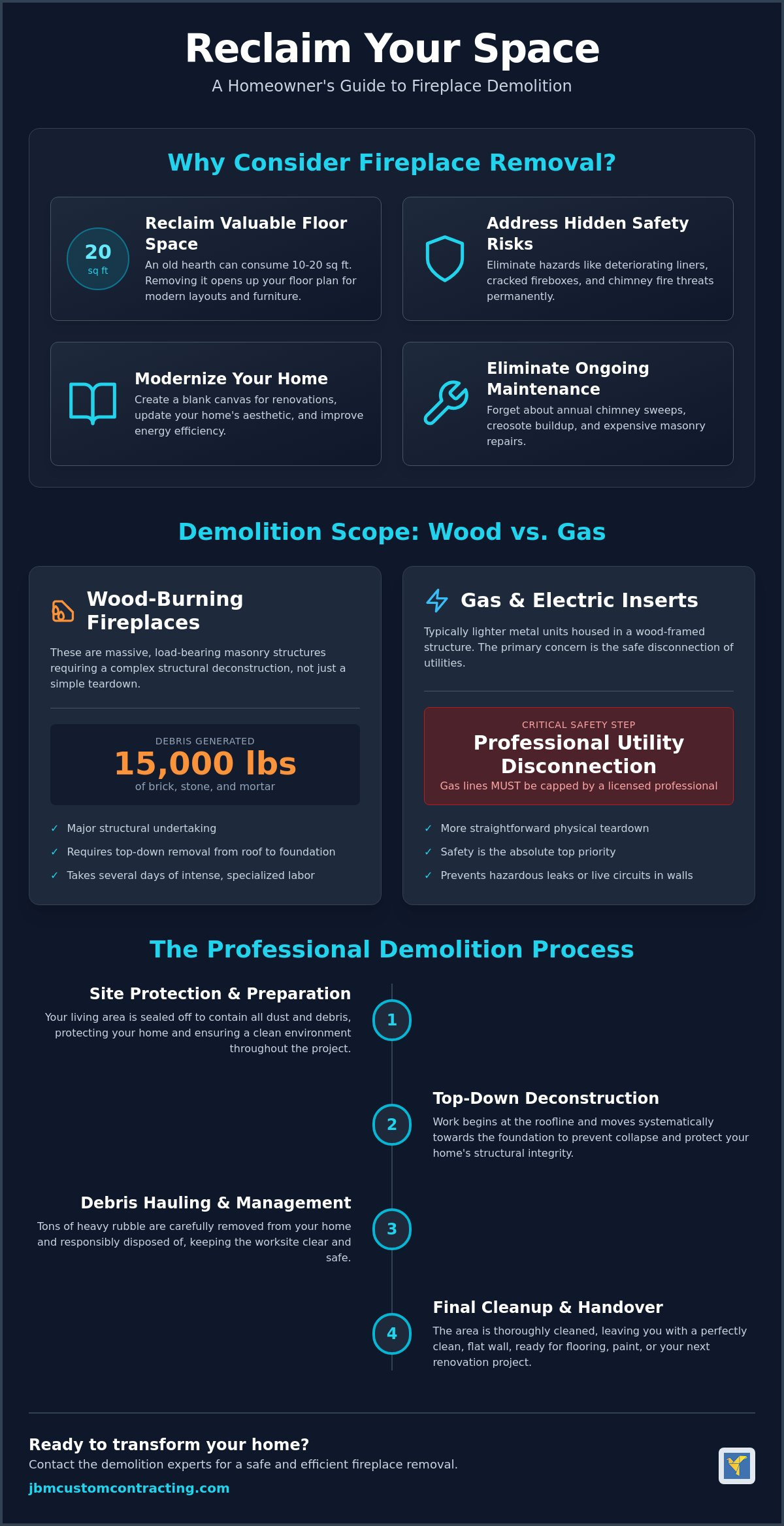
A traditional masonry fireplace typically consumes between 10 and 20 square feet of valuable floor space. In smaller Vancouver Island floor plans, this bulky footprint often dictates where you can place sofas and tables, often ruining the natural flow of the room. By removing the hearth, you open up the floor plan and create a blank canvas for modern, wall-mounted entertainment centers or minimalist shelving. If your home features a floor-to-ceiling masonry block, taking it out can also significantly increase natural light by removing a massive visual obstruction, making the entire living area feel twice as large.
Addressing Safety Concerns and Outdated Systems
Older homes in areas like Ladysmith or Cedar often hide serious risks within their chimneys. Deteriorating liners and cracked fireboxes are more than just eyesores; they're significant fire hazards that can go unnoticed for years. By opting for a full fireplace removal demolition, you permanently eliminate the threat of chimney fires in your property. Furthermore, many older units have drafty dampers that leak expensive heat during the winter and allow pests to enter. Removing these outdated systems improves your home's energy efficiency and provides long-term peace of mind for your family's safety.
Understanding the Scope: Gas vs. Wood-Burning Fireplace Demolition
The fuel source is the single most important factor in your fireplace removal demolition plan. Wood-burning fireplaces are typically massive, load-bearing masonry structures. In contrast, gas fireplaces are often lighter metal inserts housed in a wood-framed "chase" or bump-out. If you have a traditional wood-burning unit, you're dealing with thousands of pounds of brick, stone, and mortar. Gas units require careful utility management and professional capping before any physical deconstruction starts. Understanding which system you have dictates whether the project is a straightforward teardown or a complex structural deconstruction.
The Complexity of Masonry and Chimney Removal
Removing a floor-to-ceiling brick fireplace is a major structural undertaking that produces an overwhelming amount of debris. Professional teams always work from the top down, starting at the roofline and moving toward the foundation. This method prevents the chimney from collapsing inward or damaging your roof. You must also account for the "smoke shelf," a heavy masonry ledge inside the chimney designed to prevent downdrafts. Safely removing this shelf and the heavy iron dampers requires specialized equipment and precision. Unlike simple wood-framed surrounds that can be removed in a few hours, a full masonry teardown often takes several days of intense labor to complete safely.
Safe Disconnection of Gas and Electric Components
Safety is the primary concern when utilities are involved. Before the first tool touches the hearth, you must ensure all active lines are dead. For gas units, this is never a DIY task. A licensed professional must cap the gas line at the source to prevent hazardous leaks. Electric inserts also require careful handling of associated wiring to ensure no live circuits are left behind a newly finished wall. Properly decommissioning the gas valve and ensuring it's safely hidden or removed is a standard part of a professional demolition service. This step ensures your home remains safe long after the renovation is finished.
Every project must adhere to strict OSHA demolition safety standards to protect the structural integrity of the home. This includes managing the incredible weight of the materials. Research shows a single chimney deconstruction can generate approximately 15,000 lbs of rubble. If you only opt for a "facade removal," the structural chimney remains hidden behind the wall. While this is faster, it doesn't reclaim the full floor space. A full deconstruction is the only way to achieve a completely flat, renovation-ready wall. This process requires an engineering mindset to ensure the roof and floor joists are properly supported as the weight of the masonry is removed.
Professional Demolition vs. DIY: Assessing the Risks
Fireplace removal demolition is often mistaken for a standard junk removal project. While hauling away the bricks is part of the job, the actual deconstruction is a complex structural task. A fireplace isn't just sitting in your living room; it's integrated into the walls, floors, and sometimes the roof. Professional teams treat this as a surgical procedure rather than a blunt demolition. They understand that a single mistake can cause thousands of dollars in collateral damage to your home’s finished surfaces. Without a plan, you risk more than just a mess; you risk the very stability of your house.
Structural Integrity and Load-Bearing Considerations
The most significant danger in a DIY attempt is misidentifying load-bearing elements. In many older Vancouver Island homes, floor joists or ceiling rafters may rely on the masonry for vertical support. Even if the chimney isn't carrying a vertical load, it often provides essential lateral support that keeps the house from shifting during high winds. Removing these structures without proper temporary bracing can lead to sagging floors or cracked walls in adjacent rooms. If there's any doubt about how the fireplace interacts with the home's skeleton, you should consult a structural engineer before the first brick is loosened. Our demolition services prioritize these structural assessments to ensure your home remains safe throughout the process.
Managing Dust, Debris, and Hazardous Materials
The sheer volume of dust generated during masonry work is overwhelming. A standard shop-vac isn't enough; its filters will clog instantly, and the exhaust will blow fine soot and silica dust into every corner of your home. Professional contractors use zip-walls and negative air pressure machines to keep the "splash zone" contained. This is especially critical because homes built before 1990 may contain asbestos in the mortar, chimney lining, or drywall mud. In Nanaimo, a Hazardous Materials Survey Report is often required for these older properties to ensure safe handling demolition debris. Using HEPA filtration during masonry grinding is a non-negotiable safety step for protecting your family's health.
Beyond the air quality, you must protect your physical property. Masonry is incredibly heavy and abrasive. Dropping a single stone can shatter a ceramic tile or gouge a hardwood floor. Professionals use heavy-duty floor protection, such as reinforced plywood or specialized impact-resistant sheeting, to create a safe path for debris removal. This level of site protection ensures that when the demolition is finished, the rest of your home still looks pristine. Taking these precautions turns a potentially disastrous project into a smooth transition for your next renovation phase.
The Step-by-Step Process of a Professional Fireplace Deconstruction
A successful fireplace removal demolition begins long before the first tool is used. Professional planning is mandatory to ensure every stage of the project meets local safety standards. In Nanaimo, for example, you'll need a demolition permit for this type of structural work. If your home was constructed before 1990, you must also secure a Hazardous Materials Survey Report to check for asbestos or lead. Parksville homeowners should also verify local bylaws regarding chimney alterations. Completing this paperwork upfront prevents legal delays and ensures your renovation remains on schedule.
Preparation and Site Protection
Once the permits are in place, the focus shifts to protecting your living space. The "splash zone" around a fireplace can extend several feet, so every inch of nearby flooring must be covered. We use heavy-duty protection like reinforced plywood or high-impact sheeting to prevent cracked tiles or scratched hardwood. Dust management is equally critical. Professionals seal all HVAC vents in the room to prevent fine soot and masonry particles from circulating through your home's air system. We also establish a clear, protected path for hauling debris directly to the exterior, minimizing the footprint of the work inside your house.
The Demolition and Material Salvage Phase
The physical teardown follows a strict "top-down" sequence to maintain stability. If the chimney extends through the roof, the deconstruction starts there to prevent a structural collapse. Inside the home, the process begins with the systematic removal of the mantel, the decorative facade, and the hearth. Breaking down the internal firebox and masonry requires precision to avoid damaging the surrounding wall framing or subfloor. Careful deconstruction allows for better material sorting and recycling than a chaotic smash-and-grab demo. This methodical approach ensures that bricks, metal dampers, and wood surrounds are separated for proper disposal or salvage.
After the masonry is removed, a final inspection of the newly exposed wall and floor is essential. Once the thousands of pounds of stone are gone, we check the subfloor for levelness and inspect the wall studs for any historical moisture damage. This leaves you with a clean, structurally sound space that's ready for your next project. If you're ready to clear the way for a modern living room, our team provides reliable demolition services to handle the heavy lifting for you. We ensure the site is left spotless and ready for your flooring or drywall contractors to begin their work immediately.
Completing the Project: Post-Demolition Cleanup and Site Prep
The final phase of a fireplace removal demolition is often the most surprising for homeowners. While the physical teardown is intense, the volume of waste left behind is staggering. A single masonry chimney can produce up to 15,000 lbs of rubble, consisting of heavy brick, concrete, and soot-covered mortar. Managing this mountain of debris isn't just about moving heavy objects; it's about efficient site management and ensuring your home is ready for the next trade to step in. We focus on a "broom-clean" finish so your renovation can continue without delay.
Integrated Junk Removal and Debris Hauling
Disposing of masonry waste requires more than a standard pickup truck. Professional junk removal is essential for safety and efficiency. We systematically sort materials like brick, metal dampers, and concrete to ensure they reach the correct Vancouver Island recycling centers. This reduces the environmental impact and keeps hazardous soot contained. Our small demolitions pricing typically accounts for these disposal fees, saving you from the surprise of high landfill rates for heavy controlled waste. Professional hauling also protects your driveway and property from the damage often caused by overloaded trailers or dropped debris.
Preparing the Space for Your Next Renovation
Once the masonry is gone, the focus shifts to restoring the home's envelope and interior structure. This transition is critical for a seamless renovation. You'll need to address several key areas:
- Exterior Restoration: Patching the roof and siding where the chimney once stood is a priority to prevent water ingress.
- Floor Leveling: Most traditional hearths are recessed into the floor. We ensure the subfloor is leveled and reinforced to support new hardwood, tile, or laminate.
- Wall Framing: We inspect and prepare the wall studs, ensuring they're ready for drywall or a new modern feature like a slim electric unit or an entertainment center.
Clearing the way for a modern space requires a thorough approach. By integrating the demolition with professional cleanup, we eliminate the gap between a "construction zone" and a "renovation-ready" room. Your contractors can begin their work immediately on a clean, flat wall and a level floor. This methodical finish ensures that your vision for a reclaimed living area becomes a reality without the headache of leftover debris or structural surprises.
Ready to Reclaim Your Living Space?
Reclaiming your home’s footprint starts with a clear plan and the right expertise. You've seen how a successful fireplace removal demolition requires more than just physical strength; it demands structural precision, strict permit compliance, and a commitment to safety. By moving away from bulky, inefficient masonry, you unlock the potential for a modern living area that's brighter and far more functional. It's about turning a structural obstacle into a blank canvas for your next design project.
Our fully insured and certified demolition team is ready to help you navigate this transition. We serve homeowners across Nanaimo, Duncan, and the Cowichan Valley, providing a seamless experience from the first permit application to the final debris hauling. We don't just tear things down; we provide integrated junk removal to ensure your site is left in a mess-free, "broom-clean" condition. This allows you to focus on the exciting part of your renovation, such as choosing new flooring and finishes for your newly opened space.
If you're ready to transform your home, Get a Professional Quote for Your Fireplace Removal today. Let’s clear the way for your dream living space.
Frequently Asked Questions
Do I need a permit for fireplace removal in Nanaimo or Duncan?
Yes, you generally need a demolition permit for this type of structural work in Nanaimo or Duncan. Local municipalities require these permits to ensure the project complies with the British Columbia Building Code and that any hazardous materials are managed correctly. It is best to check with your local building department to confirm the specific requirements for your property before you begin any physical deconstruction.
How much dust should I expect during a fireplace demolition?
You should expect a significant amount of fine masonry dust throughout the deconstruction process. While professional teams use zip walls and negative air pressure to contain the debris, some fine particles can still migrate if the area is not sealed perfectly. This is why we prioritize sealing HVAC vents and using HEPA filtered vacuums to minimize the impact on your home's air quality and cleanliness.
Will removing my fireplace decrease my home’s resale value?
Removing an outdated or non-functional fireplace often increases home value by reclaiming usable floor space and modernizing the layout. Most modern buyers on Vancouver Island prefer open floor plans and the efficiency of heat pumps over old masonry hearths. However, if a working fireplace is a highly desirable feature in your specific neighborhood, you should consider how its removal might affect the appeal to certain traditional buyers.
Can I remove just the fireplace insert and keep the brick surround?
Yes, it is possible to remove just the fireplace insert while leaving the brick or stone surround intact. This is a common choice for homeowners who want to upgrade to a more efficient electric unit without the cost of a full teardown. You will still need a professional to safely disconnect the existing unit and ensure the chimney flue is properly capped or vented for the new system you choose.
How long does a typical fireplace removal project take?
A typical fireplace removal project takes between two and five days to complete depending on the size and material of the structure. A simple gas insert removal might only take a single day of labor. A full masonry chimney deconstruction requires more time for a systematic teardown and debris hauling. This timeline includes the initial site protection and the final cleanup to leave the area renovation-ready.
What happens to the hole in my roof after the chimney is removed?
The hole left in your roof must be professionally framed, sheathed, and shingled to match your existing roofline once the chimney is gone. This step is critical to prevent water leaks and maintain your home's thermal envelope. We ensure the exterior is completely weather-tight and the interior ceiling is ready for new drywall as part of the restoration phase of the project.
Is it possible to remove a load-bearing fireplace?
It is possible to remove a load-bearing fireplace, but it requires temporary structural shoring and the installation of a permanent support beam. A structural engineer must assess how the masonry supports the floor joists or roof rafters above. This ensures that the weight is safely transferred to the foundation once the fireplace removal demolition is finished, which prevents any structural sagging or failure in your home.
How do I handle the gas line if I want to remove a gas fireplace?
You must have a licensed gas fitter cap the line at the source before any fireplace removal demolition begins. It is not enough to simply turn off the valve near the unit. The professional will ensure the line is decommissioned according to safety codes, often burying the capped end safely within the wall or floor where it will not interfere with your new renovation finishes.