

What if the hardest part of concrete removal isn’t breaking the slab, but planning how to reach it and what the space will be used for afterward? For concrete removal Nanaimo property owners can plan with confidence, access, the concrete’s size and location, and the next use for the area all matter. Thinking these details through early helps clarify the work and reduce surprises.
It’s understandable to wonder how much of your yard or driveway will be affected, how the concrete will be moved, and what happens to the debris. This guide explains what removal can involve, which property details shape the project scope, and how to prepare. You’ll also learn what to look for when comparing quotes so you can understand what each one includes.
JBM Custom Contracting provides concrete work and demolition services in Nanaimo and nearby communities, including Lantzville, Duncan, Ladysmith, Cedar, Parksville, Qualicum Beach, Cowichan, and Gabriola Island. The company is certified and fully insured. Read on to get a clearer picture of the process, plan around your property, and make an informed choice for your project.
Concrete Removal in Nanaimo: When a Property Needs a Clear, Safe Reset
A cracked patio, an uneven walkway, or a slab that no longer suits the property can make an outdoor area harder to use. Sometimes the concrete is damaged; in other cases, the owner wants a new layout or room for a different feature. Concrete removal Nanaimo projects can range from a small path section to a larger patio or driveway. Planning should account for the property and what comes next.
Concrete removal means breaking up and clearing unwanted concrete from a property. The scope depends on the feature’s condition, size, and location, as well as what will replace it. A small, accessible walkway presents different planning needs from a large slab beside a building or an area with little working space. The intended replacement matters too: the area may be cleared for new concrete, landscaping, or another property improvement.
Concrete removal clears the existing feature; new concrete installation creates its replacement. They’re related parts of a project, but involve different work. Planning them together can help make the transition from the old surface to the next use clear.
Which concrete features may need removal?
Residential projects may involve patios, paths, driveways, steps, or old slabs. Commercial properties may have walkways, pads, or other concrete areas that no longer suit how the site is used. Cracks, uneven sections, or an unwanted layout can prompt an assessment, but a visible flaw alone doesn’t determine whether removal is the right answer. The property’s plans help guide that decision.
- Condition: Is the concern limited to one area, or does the feature have broader damage?
- Size and location: How much concrete needs clearing, and how close is it to buildings, access routes, or other property features?
- Next use: Will the space be repaired, rebuilt, landscaped, or left open?
These details help define the work instead of treating every slab or walkway as the same job. For background on how concrete rubble can be processed for reuse, see Concrete Recycling. If concrete removal is part of a broader improvement, JBM’s concrete services on Vancouver Island can connect the removal plan with the work that follows.
Concrete removal versus concrete repair
Removal clears a concrete feature from the property. Repair keeps the feature in place and addresses a problem in a limited area. The extent and location of the damage matter: a localized issue may call for a different response than widespread deterioration or a layout the owner wants to change. The replacement plan also helps determine whether keeping the existing concrete makes sense.
For example, if a walkway has one uneven section but still fits the property’s needs, repair may be worth considering. If the path is no longer wanted or the plan calls for a different route, removal may better support the goal. Concrete removal Nanaimo work is easier to plan when the decision reflects how the property will be used next. If a wider property clear-out is also part of the project, JBM’s junk removal in Nanaimo may fit alongside the concrete work.
What Shapes a Concrete Removal Project in Nanaimo?
No two concrete removal jobs have quite the same scope. A small, separate pad in an open yard is different from a thick, reinforced slab connected to a long walkway beside a building. For concrete removal Nanaimo property owners can plan, it helps to describe the feature clearly and consider the whole work area, not just visible cracks or the surface.
A removal plan is shaped by the concrete’s thickness, area, reinforcement, condition, access, nearby features, debris volume, and the site’s next use. Each factor can affect how the work is organized and what needs to be included in the project scope.
How concrete type, size, and condition affect the scope
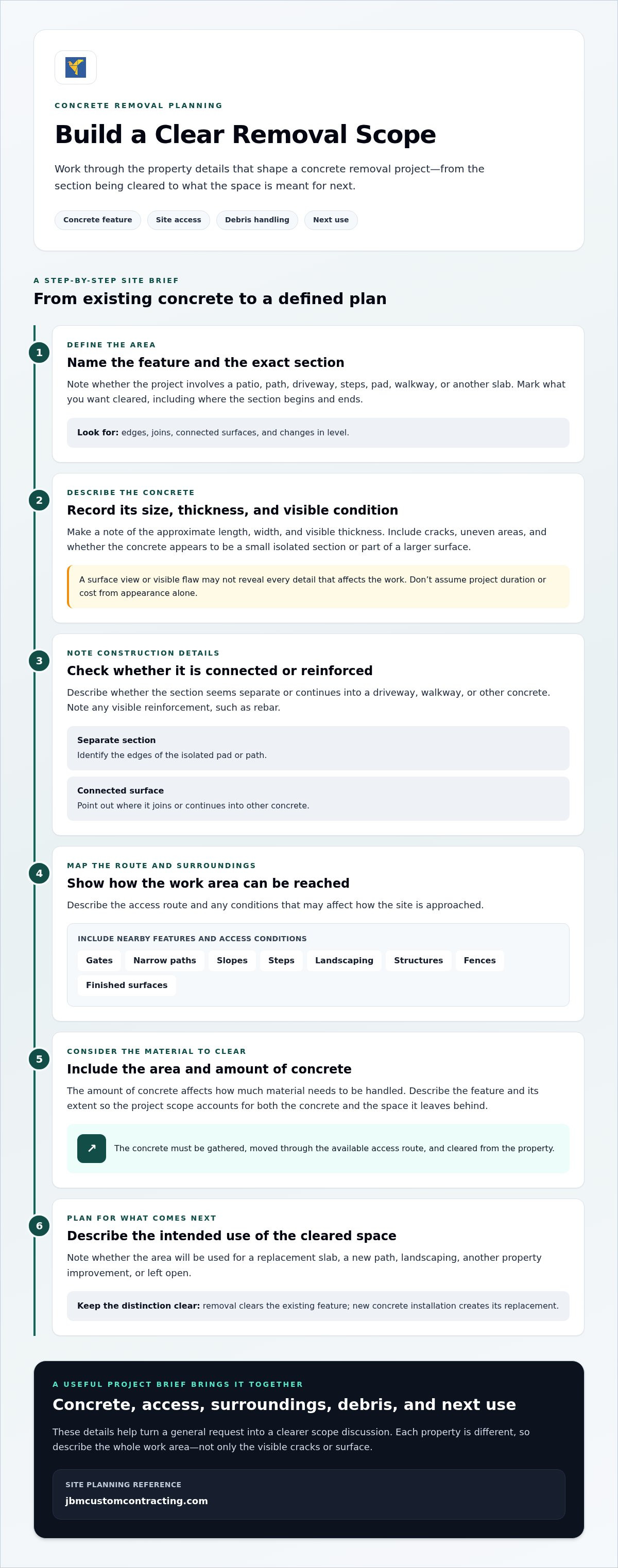
Start by noting whether the concrete is a small, isolated section or part of a larger connected slab. A separate pad may be easier to define than a surface that continues into a driveway or walkway. Thickness and reinforcement, such as rebar, also affect planning. Photos can show the area, but a surface view may not reveal every detail that shapes the work.
Visible condition matters, but it doesn’t tell the whole story. A crack may appear in one spot while the feature extends beyond it, or the surface may look intact even though the plan calls for clearing a larger connected area. Record what you can see, including edges, joins, and changes in level, and identify the exact section you want removed. Project duration and cost depend on site details, so don’t assume them from appearance alone.
Why access and nearby features matter
The route to the concrete can affect the work sequence. Note gates, narrow paths, slopes, steps, and other access restrictions. Also identify nearby landscaping, structures, fences, and finished surfaces that need consideration as the work area is organized. Describing these conditions helps set realistic expectations about how the site will be approached.
Think about what happens after the concrete is cleared. A replacement slab, a new path, or a landscaped area may call for different planning around the site and debris. The amount of concrete affects how much material must be handled, so the scope should account for both the feature and the space it leaves behind. JBM’s concrete services on Vancouver Island can fit into a broader project that includes removal.
To prepare useful project details, gather a few simple notes:
- The feature’s approximate length, width, and visible thickness.
- Whether it appears separate or connected to other concrete.
- Any visible reinforcement, cracks, uneven areas, or nearby obstacles.
- The access route and the space’s intended next use.
These details turn a general request into a clearer scope discussion. Reviewing JBM’s property and contracting services can also help you consider how concrete work fits into a wider property project.
DIY or Professional Concrete Removal: Which Fits Your Nanaimo Project?
Could a small piece of concrete be handled as a DIY task? A limited, accessible section may seem manageable, but breaking it up is only one part of the job. The concrete still has to be gathered, moved through the available access route, and cleared from the property. Heavy material, nearby features, and restricted space can make a project more demanding than its surface appearance suggests.
Use this comparison to think through the whole task, not just the visible area:
| Factor | Smaller, accessible work | Larger or more complex work |
|---|---|---|
| Project size | A limited, separate section with clear edges | A broad slab or concrete connected to other surfaces |
| Access | Open route with room to move material | Narrow paths, slopes, gates, or restricted space |
| Workload | Less material to break up and handle | More concrete, reinforcement, or nearby features to account for |
| Debris handling | A manageable amount to collect and clear | A larger volume requiring more planning for removal from the site |
When a small removal may appear manageable
A small, separate concrete section in an open area is not the same project as a large patio or a slab joined to a walkway. Even with limited work, consider how the pieces will be collected and carried out, where they will go, and whether the access route will stay clear. Debris handling is part of the job, not an afterthought. If it’s difficult to plan, professional help can clarify the full scope.
When professional planning can reduce hassle
Professional planning is especially useful when concrete is extensive, reinforced, close to structures or landscaping, or difficult to reach. A defined scope helps organize removal around the property’s next use, whether the area is being cleared for new concrete or another improvement. It also helps everyone understand what is included, including debris handling and the condition the site should be left in.
JBM Custom Contracting is certified and fully insured, and provides concrete and demolition services for concrete removal Nanaimo projects. The work can be planned with the site’s intended next step in mind. For broader context about working with concrete demolition contractors, use the guide to hiring concrete demolition contractors.
If you’re weighing the options, write down the area to be cleared, access limitations, nearby features, and what you want the space to become. Those details make it easier to describe the job and compare proposed scopes. Explore JBM’s property and contracting services as you plan the next step.
How to Prepare Your Property for Concrete Removal
A little preparation can make the project discussion clearer and help everyone understand what the site needs. Before arranging concrete removal in Nanaimo, identify the feature, consider how people and materials can reach it, and decide what you want the area to become. You don’t need a technical report. A few accurate details and clear photos can help explain the job.
What to share when describing the project
Describe where the concrete is, how large the area is, and what you can see about its condition. Include nearby landscaping, structures, fences, access points, and narrow routes or other restrictions. Photos taken from a few angles can show how the feature fits into the property. JBM can tailor the project discussion to the site layout and removal scope.
Use this simple sequence to get ready:
- Define the area. Identify the exact slab, walkway, patio, or other concrete feature you want removed. If only part of a larger surface is involved, make that clear.
- Describe what you see. Note the approximate area and visible cracks, uneven sections, edges, or joins with nearby concrete. Share photos that show the full feature and its surroundings.
- Point out access and constraints. Mention gates, narrow paths, slopes, nearby structures, landscaping, and surfaces that may affect how the work area is approached.
- Clear movable items where practical. Move patio furniture, planters, tools, vehicles, and other loose belongings away from the area if convenient. This helps make the work zone easier to understand and prepare.
- Explain the next use. Say whether you plan to landscape, rebuild, or use the space another way. This helps frame the removal scope and expectations for clearing the site.
Planning the area after removal
Think beyond the concrete itself. If the area will be landscaped, the project discussion can focus on clearing space for that plan. If you intend to rebuild or install a different feature, describe the intended use so the removal work can be considered in context. The next-use plan also helps set expectations about debris handling and the condition of the area after removal.
Keep your description straightforward. For example, explain that you want a specific patio cleared and intend to use the space for landscaping, or that a section of walkway needs removal before planning a new layout. JBM’s project discussion can account for the property’s layout, access, and scope rather than rely on a one-size-fits-all assumption.
If exterior surfaces need attention as a separate property-maintenance task after site work, Nanaimo house washing may be relevant to your cleanup plan.
Arrange Concrete Removal in Nanaimo with JBM Custom Contracting
Once you’ve identified what needs to go, the next step is a clear conversation about the property and the result you want. JBM Custom Contracting provides demolition and concrete services in Nanaimo and nearby communities, including Lantzville, Duncan, Ladysmith, Cedar, Parksville, Qualicum Beach, Cowichan, and Gabriola Island. Project details help shape the scope. You don’t need every answer before discussing the work. A straightforward description of the feature, its location, and your plans for the space is a useful place to start.
What to expect when discussing the job
Describe the concrete feature and why you want it removed. Is it a patio, a section of walkway, a slab, or another feature? Note where it sits on the property, its approximate size, and any visible concerns about its condition. Photos can help show its boundaries and how it relates to the surrounding area.
Access and nearby features matter too. Mention gates, narrow paths, slopes, landscaping, structures, and other constraints that could affect how the work area is approached. Then explain what you hope to do with the space afterward. These details give the project conversation useful context without assuming every site follows the same process.
Move from a concrete problem to a clear next step
Keep the decision path simple: define the area, note access limits and nearby features, and explain the site’s intended use. If removal is connected to other demolition work, such as clearing a related structure, JBM’s small demolition services may fit the wider project. Discussing the work as a whole helps the removal scope make sense alongside what comes next.
For example, a property owner planning to replace an old patio can describe its location, the route to reach it, and whether the cleared area is intended for new concrete or landscaping. That gives the conversation a practical focus. If you’re unsure how to describe the condition or boundaries, start with what you can see and share clear photos. The project discussion can then be tailored to the property’s layout and scope.
Concrete removal Nanaimo projects are easier to plan when both the requested work and the desired result are clear. JBM brings its concrete and demolition services to the discussion, connecting removal with the property’s next step. A concise description of the feature, its location, access, and your plans for the area is enough to begin.
Take the Next Step Toward a More Usable Space
Once you’ve decided to make a change, start by identifying the area and what you hope to gain from it. That goal can keep the project focused, whether you’re making room for a future improvement or ready to move on from an unwanted surface.
For concrete removal Nanaimo property owners can plan around, the next step is to turn that goal into a project discussion. Note any questions that matter to you, such as how the work relates to the surrounding property or what you want the finished area to be ready for. A clear starting point makes it easier to consider the right path forward.
With a practical goal in mind, you can approach the project one decision at a time and move toward a space that better suits your plans.
Frequently Asked Questions
How much does concrete removal cost in Nanaimo?
There isn’t one set price for every concrete removal project in Nanaimo. A useful quote should reflect the work included for your property, rather than rely on a broad estimate that may not fit the job. When reviewing a quote, check that it clearly describes the concrete being removed and what happens to the resulting material. If the plan changes, ask for the revised scope in writing so you can compare like with like.
How long does concrete removal take?
The schedule depends on the work involved, so don’t assume a fixed completion time before the project scope is understood. If the area needs to be ready for another trade or a planned property project, mention that timing requirement during the discussion. This gives the team useful context for planning. Ask how changes to the agreed scope could affect the schedule, and leave room for the next stage of work.
Can concrete be removed without damaging nearby landscaping?
Careful planning can help reduce the chance of disturbing plants, but no one should promise that landscaping will be untouched. Before work begins, identify the plants, garden edges, or other features you most want preserved, and make those priorities clear in the project plan. Once the work area is established, keep personal items and people away from it. A clear understanding of what should remain helps set practical expectations.
What happens to concrete after it is removed?
After removal, concrete is gathered and taken away for handling based on its condition and the requirements of the receiving facility. Some concrete may be suitable for recycling or reuse, while mixed material or embedded metal can affect how it is accepted. If material recovery is important to you, raise that before the work is arranged. Also clarify whether the project scope includes clearing all removed concrete from the property.
Is concrete removal noisy?
Yes, breaking concrete can be noisy. The sound may disrupt people working or resting nearby, so consider the timing of calls, meetings, or quiet activities around the work. If neighbours are close by, a brief heads-up can help avoid surprises. Noise levels and duration vary with the job, so a precise estimate isn’t possible without project details. Plan for some interruption while the concrete is being broken up.
Can JBM remove a concrete patio or walkway?
Yes. JBM provides concrete removal as part of its concrete and demolition work, including patios and walkways. If your project involves only part of a feature, be clear about the boundary you want removed. Mention any attached steps or borders so they’re considered in the scope. JBM Custom Contracting is certified and fully insured, and provides concrete removal in Nanaimo.
Should I remove cracked concrete or repair it?
Not every crack means the concrete needs to be removed. Consider whether the surface still works for its intended purpose and whether the crack is creating a practical concern, such as water collecting or a raised edge underfoot. Note if the crack appears to be changing, and share that observation when discussing the issue. Repair may suit a limited problem, while removal may better fit a broader change to the property.