
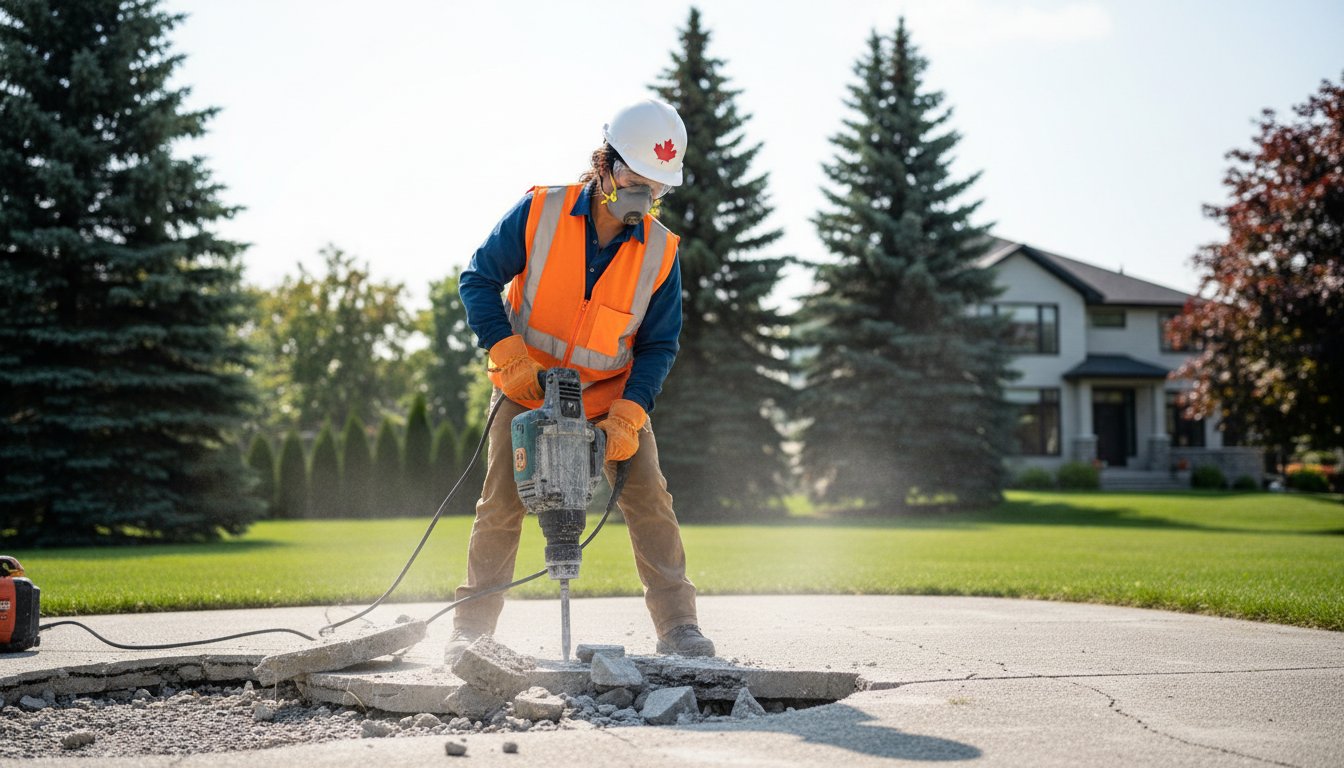

That old, cracked concrete patio has to go. You’re ready for a fresh start, but the thought of swinging a sledgehammer brings up serious questions: What if I damage my home’s foundation or hit an underground utility line? How do I manage all that heavy debris? These are valid concerns, because a safe concrete patio removal is about more than just brute force-it requires careful planning, the right equipment, and a deep respect for safety to avoid costly mistakes and personal injury.
In this professional's step-by-step guide, we provide the reliable information you need to get the job done right. We'll cover the essential tools for an efficient demolition, the safety measures required to protect yourself and your property, and the correct methods for breaking up and legally disposing of concrete here in Canada. You'll gain the confidence to tackle the job yourself or recognize when calling in a certified professional is the smartest, safest choice for achieving a clean, project-ready space.
Key Takeaways
- A professional site assessment is the critical first step to identify hidden risks like rebar or utility lines before you begin demolition.
- Understand the non-negotiable Personal Protective Equipment (PPE) required to protect yourself from flying debris and concrete dust.
- The secret to safe concrete patio removal lies in a strategic, step-by-step process that begins with creating a weak point for efficient breaking.
- Learn why managing and disposing of extremely heavy concrete debris is often the biggest challenge when deciding between DIY and hiring a professional.
Before You Start: Essential Safety Planning & Assessment
Before a single sledgehammer swing or jackhammer burst, a thorough professional assessment is the most critical step in ensuring a successful and safe concrete patio removal. Rushing into demolition without a clear plan can lead to property damage, personal injury, or costly, unexpected repairs. This planning phase is not just about the demolition itself; it involves evaluating the slab's condition, identifying potential hazards hidden beneath the surface, and meticulously planning for debris removal and site security.
To get a visual understanding of the challenges involved, this video provides a practical overview of the concrete removal process:
Checking for Hidden Dangers: Utilities, Drains, and Rebar
What you can't see can cause the most harm. In Canada, it is a legal requirement to contact your provincial “Call Before You Dig” service to locate and mark any buried public utility lines like gas, electrical, and communications. Beyond these, you must also account for privately installed lines that won't be marked by the public service, such as:
- Underground sprinkler systems
- Electrical conduits for landscape lighting or outlets
- Buried drainage pipes or plumbing lines
Finally, inspect the concrete for signs of reinforcement like steel rebar or wire mesh. These are often visible at cracked edges or may cause rust-coloured stains on the surface and will require heavy-duty cutting tools for removal.
Assessing the Concrete Slab's Integrity
The condition and construction of your slab dictate the tools and techniques required. Start by measuring its thickness-drilling a small pilot hole in an inconspicuous area can give you an accurate measurement. A standard patio is 4 inches thick, but custom slabs can be much thicker. Look for deep, structural cracks or uneven surfaces, which can be signs of settling from frost heave. Most importantly, determine if the patio is a "floating" slab or is doweled directly into your home’s foundation. A patio attached to the foundation requires a much more delicate removal process to avoid causing serious structural damage to your home.
Creating a Safe and Secure Work Zone
A controlled environment is fundamental to any demolition project. Protect vulnerable areas by covering nearby windows and siding with plywood. Use caution tape or temporary fencing to create a clear boundary, keeping children, pets, and visitors safely away from the active work zone. Establishing these protocols is a core principle of proper construction site safety and is essential for a project free of incidents. Ensure you have a stable, level surface to operate equipment from and a pre-planned, unobstructed path to haul away heavy debris efficiently.
In addition to physical barriers, clear communication through signage is key for site safety, especially on larger or more complex jobs. For ideas on professional safety decals and warnings, you can find resources at Graphic Cabin.
Gearing Up: The Right Tools & Personal Protective Equipment (PPE)
A successful demolition project begins long before the first swing of a sledgehammer. Proper preparation is the foundation of safe concrete patio removal, and that means equipping yourself with the right tools and safety gear. Using inadequate equipment is not only inefficient but can lead to serious injury and costly property damage. Understanding the difference between basic hand tools and professional-grade machinery will help you determine the most effective and reliable approach for your project.
Essential Personal Protective Equipment (PPE)
Safety is non-negotiable. Before starting any demolition work, ensure you are fully protected with the right PPE. This gear is your first and most important line of defense against common job-site hazards.
- Steel-Toed Boots: Heavy-duty, certified boots are essential to protect your feet from falling concrete chunks and sharp rebar.
- ANSI-Rated Safety Glasses: Protect your vision from flying debris, dust, and concrete chips. Goggles offer more complete protection.
- Thick Work Gloves: Heavy-duty leather or reinforced synthetic gloves will prevent blisters, cuts, and scrapes from sharp concrete edges.
- Hearing Protection: When operating jackhammers or concrete saws, earplugs or industrial-grade earmuffs are critical to prevent permanent hearing damage.
Manual Demolition Tools for Smaller Jobs
For thin, unreinforced concrete slabs or very small patios, manual tools can be effective. This approach is labour-intensive but avoids the cost of renting heavy equipment. Your basic toolkit should include a 10-20 lb sledgehammer for breaking, a long pry bar for leverage to lift stubborn pieces, and a heavy-duty wheelbarrow to haul away the debris.
Professional Powered Equipment for Efficiency and Power
For most patios, especially those with thick, reinforced concrete, powered equipment is necessary for an efficient and safe demolition. An electric jackhammer makes quick work of breaking up the slab, while a concrete cut-off saw can create clean edges and control joints. For large-scale projects, a skid steer is invaluable for both breaking large sections and loading debris. Managing this waste professionally is crucial; experts often follow best practices for Sustainable C&D Materials Management to ensure materials are recycled or disposed of responsibly.
While renting this equipment is an option, professionals who own their machinery rely on expert maintenance to prevent breakdowns. Services like Ms. Hydraulics LLC specialize in keeping heavy equipment running, which is a crucial factor for project timelines. For DIYers, however, consider the hidden costs of renting. In Canada, daily rental for a jackhammer can run C$80-C$120, plus delivery fees, fuel, and a hefty damage deposit. For a one-time project, these expenses add up quickly, often making it more cost-effective and far safer to hire a professional service that comes fully equipped.
The Professional Removal Process: A Step-by-Step Breakdown
While DIY demolition might seem like a matter of brute force, professionals approach the job with a clear, methodical strategy. This focus on process is what guarantees an efficient and, most importantly, safe concrete patio removal. A systematic approach minimizes physical strain, prevents damage to surrounding property, and ensures the work area remains organized and free of hazards from start to finish. It’s about working smarter, not just harder.
Step 1: Create or Identify a Starting Point
Every solid slab has a weak point, and the first step is to find it or create one. Attacking the centre of a large, intact slab is inefficient and exhausting. Instead, a professional team will assess the patio to identify the path of least resistance. This often involves:
- Using an existing corner or large crack as a natural starting point where the concrete is already compromised.
- Undermining an edge by digging away soil with a shovel. This creates a void underneath, making it much easier to break the first piece with a sledgehammer or get a pry bar underneath for leverage.
- Cutting a control line with a concrete saw to isolate the section you are working on from the rest of the slab or nearby structures.
Step 2: Systematically Break Up the Slab
Once a starting point is established, the demolition begins in a controlled manner. Working from the edges inward, professionals break the slab into manageable pieces. This physically demanding step requires strict adherence to safety protocols, as outlined in comprehensive resources like the Concrete and Masonry Construction Safety Guide, to prevent injury and manage dust. A sledgehammer is used with a swinging, angled motion to crack and fracture the concrete, while a jackhammer makes quick work of thicker interior sections. The key is to let the tools do the work and maintain a clean area to prevent tripping on debris.
Step 3: Pry, Lift, and Separate the Pieces
As the concrete breaks apart, the pieces must be separated and removed. Long steel pry bars provide the necessary leverage to lift and shift heavy chunks. If the patio was reinforced with rebar or wire mesh, these materials must be cut using heavy-duty bolt cutters or an angle grinder with a metal-cutting blade. Throughout this stage, proper lifting technique is non-negotiable-always lift with your legs, not your back, to avoid serious injury. Removing debris as you go is a crucial part of the process, ensuring a clear and safe workspace for the next step.
Debris Management & Disposal: The Overlooked Challenge
You’ve successfully broken up your old patio, but now you’re facing a mountain of heavy, awkward rubble. For many DIYers, this is where the project stalls. Managing and disposing of concrete debris is often the most physically demanding and logistically complex part of the job. Breaking the concrete is only half the battle; hauling it away safely and responsibly is what completes the project.
Calculating Debris Weight and Volume
To plan effectively, you must first understand the sheer weight you're dealing with. A simple formula to estimate this is: Length (m) x Width (m) x Thickness (m) x 2,400 kg/m³ = Total Weight (kg). A small 3m x 3m patio that's 10cm thick weighs over 2,100 kg (2.1 tonnes). Underestimating this massive weight can lead to overloading vehicles or ordering an undersized dumpster, resulting in extra costs and significant delays.
Disposal Options: From Dumpsters to Pro Hauling
Once you know the scale of your debris, you can explore disposal solutions. Each has its own requirements and challenges:
- Renting a roll-off dumpster: A common choice, but you must select the right size. Ask rental companies in your area about "concrete only" or "clean fill" bins, which can be more cost-effective than mixed-waste dumpsters.
- Self-hauling: This requires a heavy-duty truck capable of handling several tonnes. You'll also need to locate a landfill or recycling centre that accepts concrete from the public and be prepared for potential tipping fees.
- The all-in-one solution: The most efficient path to a clean site is hiring a professional service. A team with the right equipment handles the entire process, from demolition to final cleanup. This approach ensures a truly complete and safe concrete patio removal.
Concrete Recycling: An Eco-Friendly and Smart Choice
Your old patio doesn’t have to end up in a landfill. Most concrete can be recycled by crushing it into Recycled Concrete Aggregate (RCA), a valuable material used for road bases, new concrete mixes, and landscaping. Choosing to recycle is not only environmentally responsible but can also be cost-effective. Reputable demolition experts, like JBM Custom Contracting, prioritize recycling as a key part of our professional and reliable service, ensuring your project is handled responsibly from start to finish.
DIY vs. Hiring a Professional: A Realistic Comparison
Deciding between a DIY project and hiring a professional is often a question of budget versus expertise. While tackling a concrete patio removal yourself might seem like a way to save money, it’s crucial to weigh the full scope of the job. This is a physically demanding, high-risk project where professional experience ensures a truly safe concrete patio removal and prevents costly mistakes.
Cost Analysis: The Hidden Price of a DIY Project
The initial quote from a contractor can seem high, but a DIY approach has its own set of expenses that add up quickly. Before you start, consider the real costs in Canada:
- Equipment Rentals: A heavy-duty jackhammer or breaker can cost C$100-C$150 per day, and a concrete saw adds another C$120+.
- Disposal Fees: Renting a disposal bin for heavy materials like concrete typically starts at C$400-C$600 in many Canadian municipalities.
- Supplies & Fuel: This includes personal protective equipment (PPE), fuel for tools, and your vehicle for transport.
- Your Time: A seemingly simple patio can take an entire weekend or longer. How much is your time and physical labour worth?
Furthermore, accidental damage to your home’s siding, foundation, or landscaping can lead to repair bills that far exceed the cost of hiring a professional in the first place.
A professional service also offers a seamless transition to the next phase of your project. After removal, you might be looking to install a new surface. Many full-service contractors handle both demolition and installation, offering everything from new concrete pads to professional asphalt paving lubbock tx. Engaging a single expert for the entire job ensures a cohesive and high-quality result, even if you draw inspiration from specialists in other regions.
As you plan for the next phase of your home's exterior, it's a good time to consider other potential upgrades. For more insights on renovations that can improve your home's value and efficiency, you can check out Exterior Specialist LLC for their guide on energy-efficient windows.
Risk Assessment: Your Health and Your Property
Demolition is inherently risky. Without proper training and equipment, you face a high potential for injury, including severe back strain from lifting heavy slabs, deep cuts from hidden rebar, and eye damage from flying debris. More critically, if your patio slab is attached to your home, an inexperienced hand can easily cause cracks or structural damage to your foundation-a catastrophic and expensive error. The peace of mind that comes with a fully insured and experienced contractor is invaluable, protecting both your property and your well-being.
When You Must Call a Professional Contractor
Some projects are simply not suited for a DIY approach. It is essential to call a professional for a safe and efficient removal if any of the following apply:
- The concrete slab is thicker than 4 inches or is heavily reinforced with rebar or wire mesh.
- The patio is directly attached to or flush against your home’s foundation.
- You lack the physical strength, time, or appropriate tools to complete the job safely.
Don't risk your safety or your home's integrity. For a professional assessment and a job done right, get a free consultation from JBM.
Trust the Experts for Your Concrete Removal Project
Removing a concrete patio is a demanding job where safety and precision are non-negotiable. As this guide has shown, the process involves more than just brute force; it requires meticulous planning, the right equipment, and a clear strategy for debris disposal. While the DIY route may seem tempting, achieving safe concrete patio removal demands expertise to prevent costly property damage and personal injury.
Why leave such a critical task to chance? At JBM Custom Contracting, we provide professional and reliable demolition services you can trust. As a certified and fully insured company, we prioritize safety and precision on every job, giving you complete peace of mind. We handle everything from the initial break-up to the final cleanup, ensuring your property is protected and ready for its next chapter.
Trust the Professionals. Get Your Free Demolition Estimate Today!
Let us handle the heavy lifting so you can start planning your beautiful new outdoor space.
As you consider what will replace the old concrete, looking at professional garden designs can spark creativity. For comprehensive landscaping and design inspiration, the work of specialists like Helyers of Hampshire showcases what's possible for a complete garden transformation.
Similarly, for those envisioning a sleek, modern outdoor living area, the custom aluminum structures offered by specialists like Elite L.A. Patios provide excellent inspiration for what's possible with premium materials.
If that new outdoor space involves a custom deck, seeing examples from specialists can provide excellent inspiration. For a portfolio of high-quality deck designs, a great resource is thedeckguys.ca.
Frequently Asked Questions About Concrete Patio Removal
How much does it cost to have a concrete patio removed professionally?
In Canada, professional concrete patio removal typically costs between C$3 and C$6 per square foot. The final price depends on several factors, including the patio's thickness, the presence of rebar or wire mesh, and site accessibility for heavy equipment. A smaller, thinner pad with easy access will be on the lower end of that range. For a precise and reliable quote that includes safe disposal of all debris, it is best to schedule a professional consultation.
Can I put broken concrete in my regular trash or recycling bin?
No, you cannot place broken concrete in your regular municipal trash or recycling bins in Canada. Most municipalities consider concrete to be construction and demolition waste, which requires special disposal. It must be taken to a designated transfer station, landfill, or a concrete recycling facility. Hiring a professional service ensures all debris is handled and disposed of correctly and in compliance with local environmental regulations, saving you the hassle and potential fines.
What is the hardest part about removing a concrete patio?
The most difficult part of removing a concrete patio is typically the physical labour involved in breaking it up and hauling away the heavy pieces. Concrete is dense and often reinforced, requiring powerful tools like a jackhammer. Ensuring safe concrete patio removal also means managing airborne dust and protecting the surrounding property from damage. The sheer weight of the debris makes transportation and disposal a significant challenge for most homeowners, which is why professional assistance is highly recommended.
Do I need a permit from my city to remove a concrete patio?
In most Canadian municipalities, a permit is not required for a simple surface-level patio demolition that doesn't affect your home's structure or grading. However, rules can vary. If the patio is part of a load-bearing structure or if the removal will significantly alter drainage on your property, a permit might be necessary. It is always a reliable and professional practice to check with your local city or municipal planning department to confirm their specific requirements before starting work.
How long does it take a professional crew to remove a standard patio?
A professional and efficient crew can typically remove a standard-sized residential concrete patio (e.g., 10x12 feet) in just one day. This timeframe includes breaking up the slab, loading the debris, and performing a thorough site clean-up. Larger or thicker patios, or those with difficult access, may extend the project into a second day. Our goal is always to complete the job safely and with minimal disruption to your property, delivering reliable and timely results.
What should I do to prepare my yard for a demolition crew's arrival?
To ensure a smooth and efficient demolition process, please clear the patio of all furniture, planters, and grills. It is also helpful to clear a wide path from the patio to the street or driveway for our equipment and debris removal. If you have pets, please ensure they are safely secured indoors. Taking these simple steps allows our professional crew to get to work immediately and complete the job safely and on schedule.
Is it cheaper to remove a concrete patio or cover it up?
Covering a patio with pavers or a deck can seem cheaper upfront, but it is often a temporary fix. If the underlying concrete slab is cracked or uneven, these problems will eventually transfer to the new surface, leading to more costly repairs later. A complete and professional removal provides a clean, stable foundation for your new project. While the initial cost may be higher, removing the old slab is the more reliable, long-term solution for a high-quality result.