
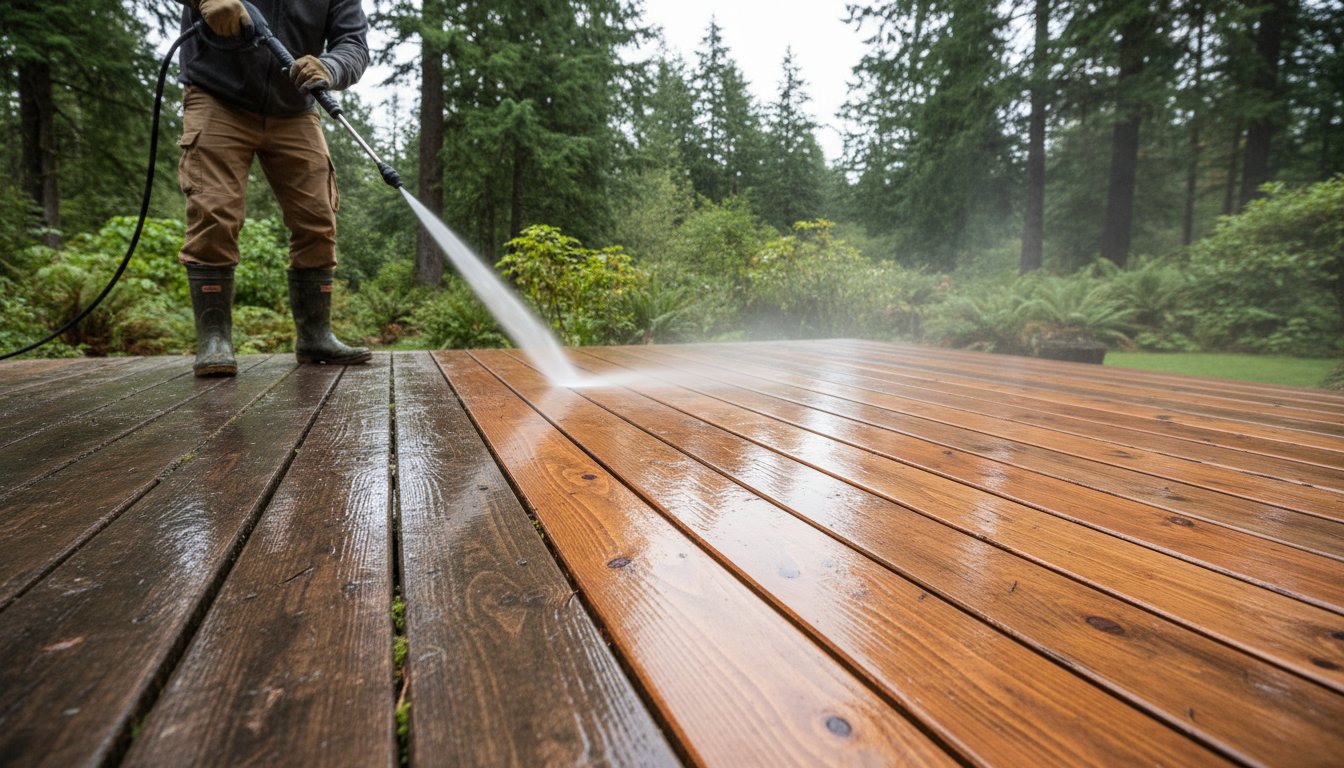

Think of your pressure washer as a precision tool rather than a high-pressure blasting machine. Many homeowners believe that more power leads to a better clean, but when it comes to a pressure washing wooden deck project, excessive force is your biggest enemy. It is a precision treatment that relies on the right balance of chemistry and technique rather than raw power.
We understand the hesitation you feel. You want to remove slippery moss and grey oxidation, but you don't want to deal with "furring" or splintered wood that ruins your summer. It is frustrating to feel confused by PSI settings or worry about whether cleaning chemicals will harm your garden. This guide teaches you how to restore your deck’s beauty using professional techniques that prevent permanent damage. You will learn how to use the recommended 1,000 to 1,500 PSI range to make your outdoor space look brand new while extending the life of your wood stain.
We will cover everything from nozzle selection to Nanaimo’s May 2026 Stage 2 water restrictions. Since the average professional cleaning costs about $150 according to March 2026 data from Angi, we will also help you decide when to DIY and when to call in a certified expert to ensure your property stays safe and beautiful.
The Risks and Rewards of Pressure Washing Your Wood Deck
Vancouver Island's damp climate makes moss growth an inevitable battle for homeowners. A pressure washing wooden deck project is often the only way to strip away that slippery green layer before it leads to structural rot. While it's incredibly efficient, the line between a clean surface and a ruined one is thin. Many homeowners fear the tool because they've seen wood that looks "fuzzy" or splintered after a DIY attempt. Those horror stories usually stem from using the wrong nozzle or holding the wand too close to the boards.
The goal is to remove surface contaminants without obliterating the wood's "pulp" or lignin. While Pressure washing is a standard practice for many exterior surfaces, wood requires a specific approach that prioritizes chemistry over sheer force. When you hire a professional, they focus on breaking down the bond between the dirt and the wood fibers safely. This precision ensures you don't end up with "furring," which happens when the high-pressure stream tears the soft summerwood fibers away from the harder grain.
To better understand how to clean your outdoor surfaces safely, watch this helpful video:
A professional clean provides a massive financial return. By removing organic growth that traps moisture, you can extend your deck's lifespan by five to ten years. This prevents the need for a full replacement, which can cost thousands of dollars. It's a reliable way to protect your investment while keeping your outdoor space safe for your family.
Why "Power" Isn’t Always Better
The Aesthetic Impact of a Deep Clean
UV rays and rain turn wood a dull, weathered grey. A deep clean reveals the vibrant natural grain hidden for years. This is the essential first step for maintenance. If you plan to stain your deck, which Angi reports costs between $550 and $1,250 as of March 2026, the surface must be clean. A professional pressure washing wooden deck service restores curb appeal and creates a perfect foundation for sealants without the need for expensive, time-consuming board replacements.
Choosing the Right Equipment and PSI for Wood
Selecting the right machine is the first step toward a successful pressure washing wooden deck project. Electric pressure washers are often the safest choice for homeowners because they typically cap out around 2,000 PSI, making it harder to accidentally damage the wood. Gas powered units offer more mobility and higher water flow, but they require a steady hand and a precise pressure regulator. If you use a gas machine, you must dial it down to ensure you don't exceed the 1,500 PSI limit for hardwoods or the even lower limits recommended for softwoods.
Proper cleaning is just the preparation phase for long term protection. To ensure your deck stays protected after it dries, consult the USDA guide to wood deck finishes to choose a product that offers the best UV and moisture resistance. If you're worried about finding that perfect balance between power and safety, our professional power washing team can handle the technical settings for you.
Nozzle Selection: Color Coding Simplified
The white tip (40 degrees) is your most reliable tool for wide, gentle cleaning. It allows you to sweep away dirt and algae without concentrating too much force on a single spot. The green tip (25 degrees) should be used with extreme caution and only on tough stains or harder woods. Avoid the "Turbo Nozzle" at all costs on residential decks. While it's great for concrete, its rotating high pressure stream is far too aggressive for wood and will likely leave circular scarring across your boards.
Cedar vs. Pressure Treated: Different Wood, Different Rules
Cedar is a soft wood that requires lower pressure and specialized, pH balanced cleaners to maintain its integrity. For the soft cedar decks common across Nanaimo and Duncan, the ideal pressure range is between 500 and 1,000 PSI to prevent damage. Pressure treated pine is slightly harder, but it's still susceptible to splintering if over washed. Regardless of the wood type, always keep the wand moving and maintain a consistent distance of at least 12 inches from the surface.
A Step-by-Step Guide to a Professional Deck Restoration
Before you pull the trigger on your pressure washing wooden deck project, you need to prepare the workspace. Clear all furniture, grills, and potted plants from the area. Use plastic sheeting or drop cloths to cover delicate garden beds and shrubs. Even if you use biodegradable cleaners, the concentrated runoff from years of accumulated grime can stress sensitive foliage. Once the area is clear, a thorough pre-soak with a wood-safe cleaner is essential. This step allows chemistry to do the heavy lifting, breaking down organic growth so you don't have to rely on damaging high pressure later.
Consistency is the secret to a professional finish. You should maintain a steady distance of 6 to 12 inches between the spray tip and the wood at all times. If you get too close, you risk gouging the boards; stay too far away, and the clean will be uneven. Always follow the "Grain Rule" by moving your wand in the same direction as the wood fibers. This technique ensures that any minor abrasion blends into the natural texture of the wood rather than creating cross-grain scars that stand out after staining.
A common mistake found in many online tutorials is the claim that you can wash and stain in the same afternoon. This is a recipe for failure. Professional standards, backed by industry guides like FieldCamp's 2026 report, suggest that wood needs at least 48 hours of dry weather to reach the proper moisture levels for sealant. If you apply stain to damp wood, the finish will likely peel within a few months. Taking the time to do it right protects your investment and ensures the results last for years.
Chemicals and Cleaners: What Actually Works
Oxygen-based bleaches are generally safer for your lawn and surrounding soil than standard chlorine bleach. These cleaners effectively lift deep-seated algae and lichen without stripping the wood's natural color. Many professionals use surfactants to help the cleaner cling to vertical surfaces like railings. After the deep clean, applying a wood brightener helps neutralize the pH balance. This step is vital because it opens the wood pores, ensuring your expensive stain bonds perfectly to the surface.
Technique: Avoiding the "Stop-Start" Marks
You should never stop the wand or change direction while the spray is hitting the middle of a board. This creates "lap marks" or permanent "stop-start" scars that ruin the look of the deck. Instead, use a long, sweeping motion. Start the spray a few inches away from the wood, sweep across the entire length of the board, and lift the wand away before releasing the trigger. Overlap each stroke by about 25 percent to ensure a consistent, streak-free finish across every square foot of your outdoor space.
Common Mistakes: Avoiding the "Furred Wood" Effect
Wood furring is a common issue that occurs when the pressure setting is too high for the wood species. This fuzzy, velvet-like texture is actually the result of destroying the wood's lignin. Lignin acts like the natural glue that holds wood fibers together. When high-pressure water blasts this "glue" away, the fibers detach and stand up, creating a splintery surface that is uncomfortable to walk on and difficult to stain. If you notice your deck boards looking "hairy" after a pressure washing wooden deck session, you have likely used too much force or held the nozzle too close to the surface.
Another frequent error is "wandering" with the pressure wand. If you don't maintain a consistent distance, the water stream will create permanent etching marks or gouges. These marks often look like jagged lightning bolts across the wood. Similarly, "lapping" is a visual defect caused by uneven drying. If you stop the spray in the middle of a board or fail to overlap your strokes, the wood will dry with dark and light blotches. These spots are extremely difficult to hide even with a high-quality semi-transparent stain. If you want to avoid these permanent mistakes, it is often safer to book professional power washing services from a team with the right experience and equipment.
If you encounter minor furring, you can usually fix it once the wood is bone dry. Use a light sanding with 60 to 80 grit sandpaper to smooth out the raised fibers. Do not use a higher grit, as this can "burnish" or seal the wood pores, preventing your stain from soaking in properly. Sanding should always be done in the direction of the grain to maintain the natural look of the boards.
The Moisture Trap: Why Drying Time Matters
The 48-hour rule is a vital part of the restoration process. You must wait at least two full days after washing before you apply any sealer or stain. Trapping moisture under a fresh coat of sealer is a primary cause of wood rot. The water becomes stuck inside the wood fibers, leading to internal decay and mold growth that ruins the structure from the inside out. Professionals often use a moisture meter to verify the deck is below 12 percent moisture content before they begin the staining phase.
Safety First: Protecting Yourself and Your Property
Why Professional Deck Maintenance Wins in Nanaimo & Duncan
Living on Vancouver Island means your outdoor surfaces are constantly under attack from the Pacific Northwest's damp climate. The heavy moss and algae growth found in Nanaimo and Duncan isn't just an eyesore; it's a slip hazard that can lead to wood rot. Successfully pressure washing wooden deck boards in this environment requires more than just a rented machine. It requires an understanding of local wood species and the specific organic growth common to our coastal region. Without professional experience, it's easy to mistake deep-seated rot for simple dirt, leading to further damage during the cleaning process.
JBM Custom Contracting provides professional and reliable property maintenance services you can trust. Our equipment features adjustable pressure regulators that allow us to switch between soft washing for delicate cedar and higher pressure for concrete surfaces. Being Certified & Fully Insured means your property is protected while we handle the heavy lifting. You can skip the frustrating weekend of trial and error and go straight to enjoying a deck that looks brand new. We take pride in delivering dramatic results while ensuring the safety and precision of every project.
Local Expertise for Nanaimo and Ladysmith Residents
Our local expertise helps Nanaimo and Ladysmith residents navigate tight weather windows and municipal regulations. For example, we ensure your project aligns with the City of Nanaimo's noise bylaws, which prohibit disturbing noise before 7:00 am on weekdays. Even during Stage 2 water restrictions, like those announced on May 6, 2026, our professional services remain available as businesses requiring water for normal activities are typically exempt. This local knowledge ensures your project is completed efficiently and legally. Our soft-washing approach is specifically designed to preserve the integrity of older coastal decks that have been weathered by salt air and rain. Contact JBM for a free consultation on your next exterior cleaning project.
Beyond Cleaning: Comprehensive Property Care
We offer more than just deck restoration. By combining your deck cleaning with moss and gutter maintenance or yard care, you get a comprehensive property refresh. This one-stop-shop approach is highly efficient for homeowners in the Cowichan Valley who value their time. We focus on results that prevent water damage and eliminate moss at the source. Our team is dedicated to high-quality work that extends the life of your home's exterior features. Get a Free Estimate from JBM Custom Contracting today to see how we can restore your property's beauty safely and reliably.
Ready to Restore Your Outdoor Living Space?
Restoring your deck doesn't have to be a stressful project filled with the fear of splintered wood. By sticking to the 1,500 PSI limit and following the 48-hour drying rule, you ensure your pressure washing wooden deck project results in a surface that looks brand new and is ready for a long-lasting stain. These professional techniques protect the wood's structural integrity while effectively removing the stubborn moss and algae common to our Vancouver Island climate.
JBM Custom Contracting provides professional and reliable property maintenance services you can trust. We are Certified & Fully Insured, serving homeowners from Duncan to Qualicum Beach with precision and care. Let our team handle the technical details and heavy lifting so you can get back to enjoying your beautiful outdoor space. Book Your Professional Deck Cleaning Consultation in Nanaimo today for a high-quality finish that lasts.
Your deck is a major investment in your home. Taking the right steps now will protect the wood and keep your property looking its best for years to come. If you're also considering interior renovations to further increase your home's value, click here for expert bathroom and kitchen remodeling services.
Frequently Asked Questions
Is it better to power wash or soft wash a wooden deck?
Soft washing is the superior choice for most residential wooden decks because it prioritizes chemical cleaning over high-pressure force. While traditional pressure washing wooden deck boards can strip away dirt, it also risks gouging the wood. Soft washing uses specialized cleaners to kill moss and algae at the root. This method protects the wood's structural integrity while delivering a deep, professional clean that lasts longer than water alone.
Will pressure washing my deck remove the old stain?
Pressure washing will often remove loose or peeling stain, but it shouldn't be your primary method for total stripping. If you use enough force to blast off all old finishes, you will likely damage the wood fibers underneath. A professional approach involves using a chemical stripper followed by a low-pressure wash. This combination removes the old product safely without causing the "furred" effect that ruins the wood's appearance.
How much PSI should I use for a cedar deck?
You should use a pressure setting between 500 and 1,000 PSI for a cedar deck. Cedar is a relatively soft wood species common on Vancouver Island, and it can't handle the same force as concrete or even pressure-treated pine. According to the Window Genie Blog from February 2, 2026, staying within this lower range prevents splintering. Always use a 40-degree white fan tip to distribute the water evenly across the surface.
Can I pressure wash a deck that has moss and algae?
Yes, you can pressure wash a deck covered in moss and algae, and it's actually the most efficient way to prevent rot. These organic growths trap moisture against the wood, which leads to decay over time. We recommend applying an oxygen-based cleaner first to loosen the bond. This allows you to wash away the slippery green layer safely using much lower pressure than would be required with water alone.
How long does a wooden deck need to dry after pressure washing?
A wooden deck needs at least 48 hours of dry weather to dry completely before you apply any sealant or stain. Even if the surface feels dry to the touch, the internal wood fibers often retain moisture. Professionals use moisture meters to ensure the wood is below 12 percent moisture content. Trapping water under a new coat of stain can cause the finish to peel or lead to internal wood rot.
What happens if I use too much pressure on my deck?
Using too much pressure will cause "wood furring" and permanent etching marks on your boards. This happens because the high-velocity water destroys the wood's lignin, which is the natural glue holding the fibers together. Once the lignin is gone, the fibers stand up and become splintery. These gouges and scars are often permanent and require extensive sanding to smooth out, which can significantly thin your deck boards over time.
Do I need to sand my deck after pressure washing it?
You only need to sand your deck if the pressure washing wooden deck process has caused the wood fibers to raise or "fur." If the wood feels fuzzy or rough once it's bone dry, a light sanding with 60 to 80 grit sandpaper will smooth it out. Don't use a higher grit, as this can seal the wood's pores and prevent your stain from soaking in properly. Always sand in the direction of the grain.